
The Dying Gaul

Antique Shell Cameo Depicting a Roman Statue Set in Gold, c. 1845


€ 2,190.00 *
Content 1 piece
Incl. VAT, Shipping
Antique Shell Cameo Depicting a Roman Statue Set in Gold, c. 1845
Description
This description was automatically translated from German. If you have any questions about this piece of jewellery, we will be happy to help!
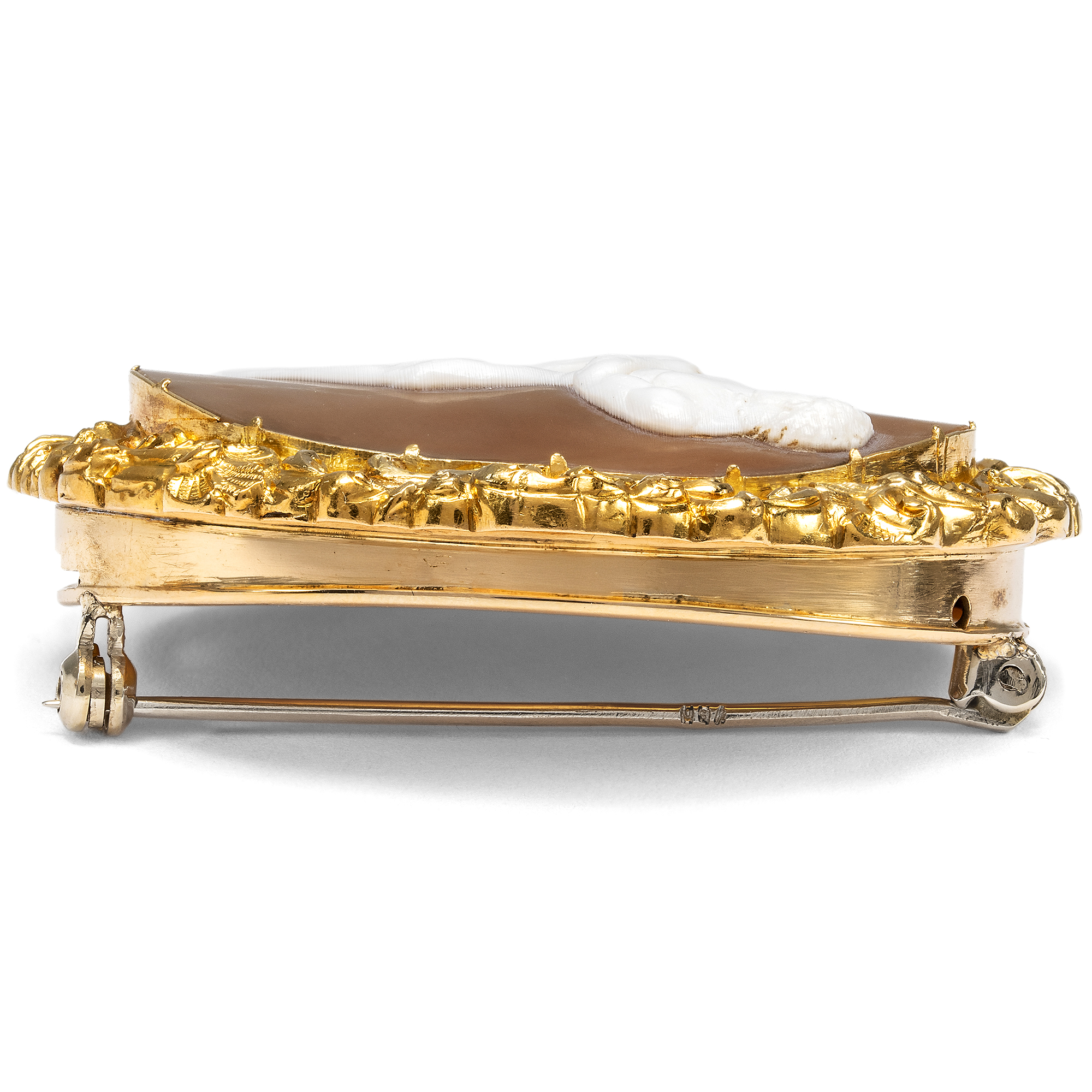
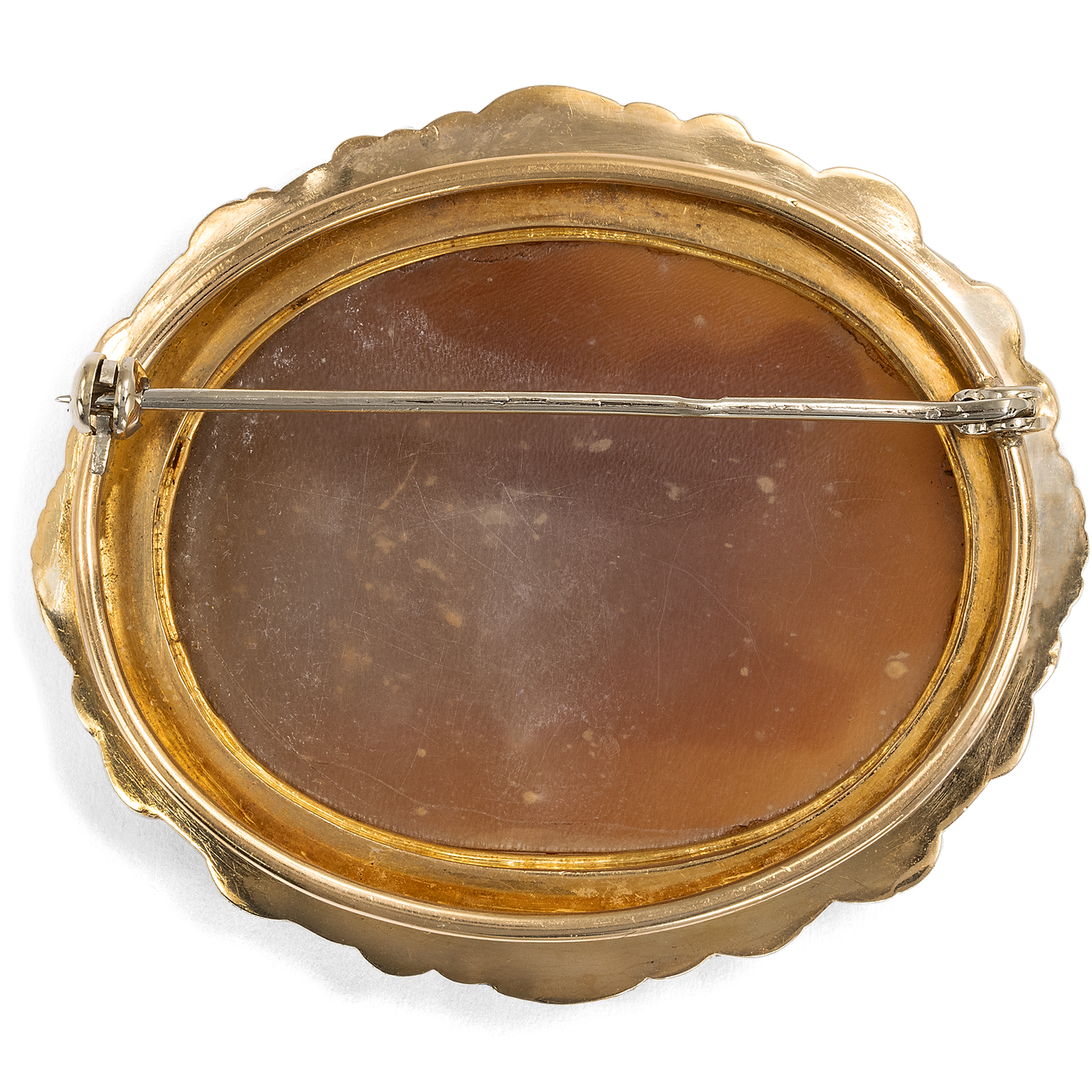
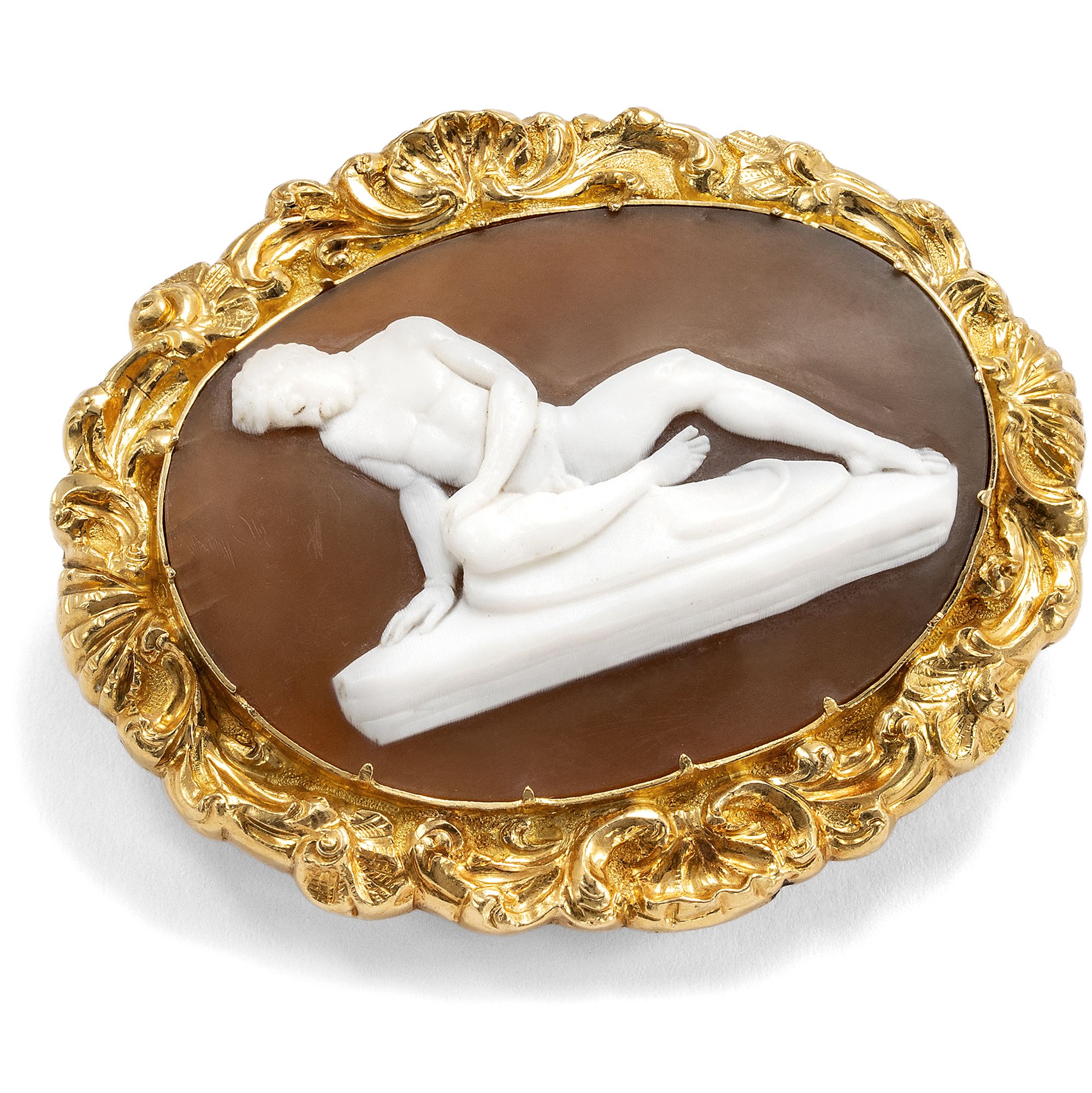
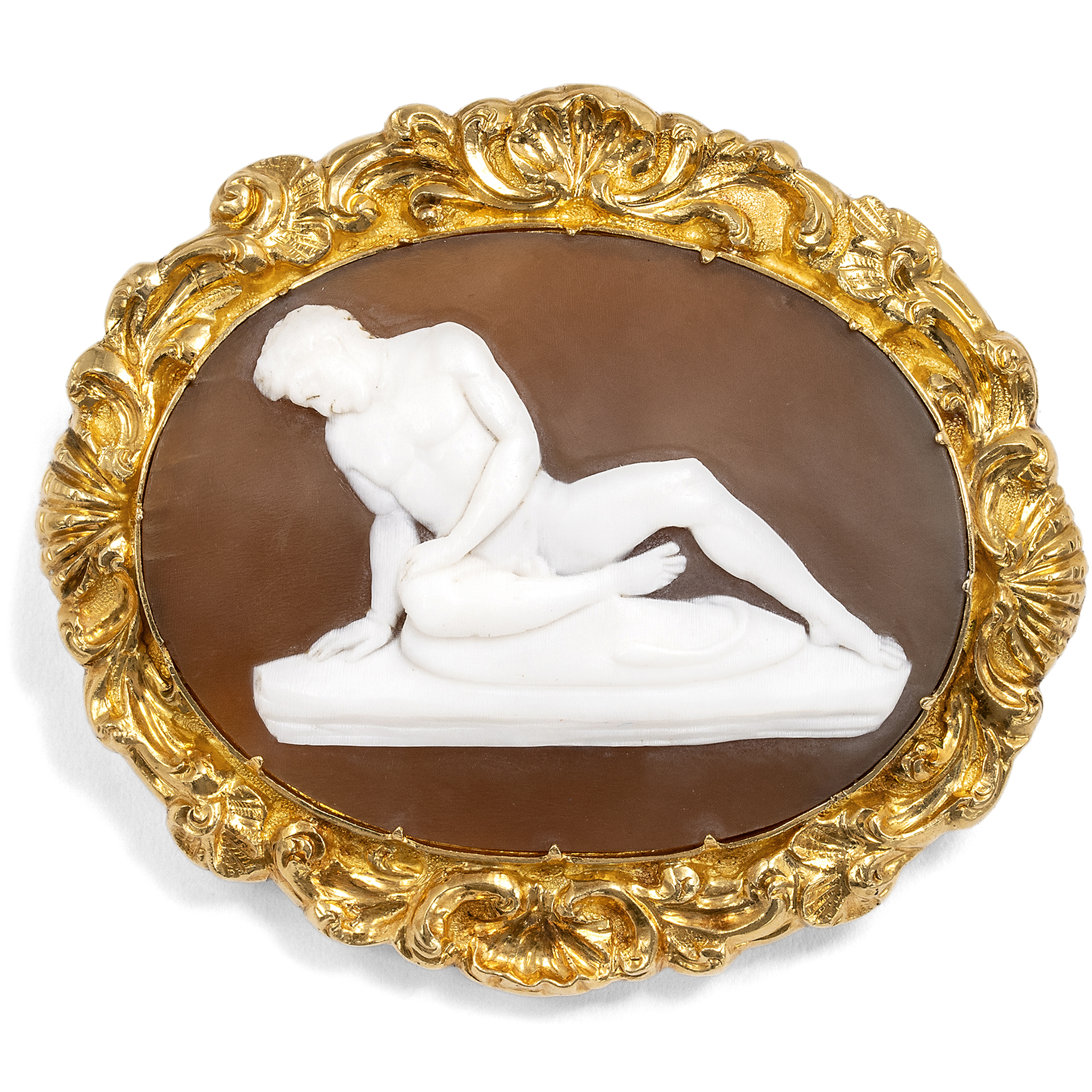
The Dying Gaul that we see on the shell cameo here is based on a marble sculpture that is now in the Capitoline Museums in Rome, see here. It is a Roman copy of a Greek bronze original that was commissioned by Attalus I, King of Pergamon, around 230/220 BC and stood in the sanctuary of Athena in Pergamon. Attalus used this monument to celebrate his victory over the Celts, who were known as Galatians in the Greek Asia Minor region. The cameo impressively echoes the famous sculpture and shows a dying warrior in a transverse oval with remarkable realism, still half-erect and looking wounded to the ground. The head in particular, with its characteristic curls and typical Celtic moustache, appears extraordinarily lively. Apart from the neck ring, the so-called torques, the figure is unclothed - in keeping with Julius Caesar's descriptions of naked Gallic warriors in De bello gallico. The ancient statue to which our cameo refers was not only intended to glorify the triumph of the Pergamenians, but also to emphasize the strength and dignity of the defeated opponent in order to make their own victory appear all the more glorious. The Dying Gaul went on to become one of the most famous works of ancient sculpture. The statue was probably rediscovered at the beginning of the 17th century during excavations in connection with the construction of the Villa Ludovisi; by 1623 at the latest, it was in the possession of the Ludovisi family in Rome. Particularly in the Age of Enlightenment, the work was regarded as the epitome of antique art and was admired for its emotional expressiveness and high artistic quality. Wealthy art lovers and monarchs had copies made in plaster, but less wealthy travelers could also acquire depictions and reproductions - for example as paperweights, copperplate engravings, like this one, or in the form of a shell cameo like this one. Such pieces were popular souvenirs of the educational travels of the European aristocracy and the wealthy bourgeoisie in the 18th and 19th centuries. Our cameo is set in a finely chased frame of high-carat gold and was once the magnificent clasp of a necklace or bracelet. In more recent times, it was made wearable as a brooch with a pin on the back. An exceptional example of classicist gem carving and a wonderful addition to any quality collection of antique cameos.
Read more
Size & Details
Antique Shell Cameo Depicting a Roman Statue Set in Gold, c. 1845
The Dying Gaul
€ 2,190.00 *
Content 1 piece
Incl. VAT, Shipping
Our Promise
Our Promise
Our Promise

We want you to be 100% satisfied! For that reason, we examine, describe and photograph all of our jewellery with the utmost care.

You can rely on our years of experience in the trade and our expertise as a professional art historians for reviews of the antique jewellery. As a member of various trade organisations and the British Society of Jewellery Historians, we remain committed to the highest possible degree of accuracy. In our descriptions, we always also indicate any signs of age and defects and never hide them in our photos – this saves you from any unpleasant surprises when your package arrives.

Should you for some reason not be satisfied, please don’t hesitate to contact us so that we can find a solution together. In any case, you can return any article within one month and we will refund the full purchase price.

Learn more