Play it to the Bead

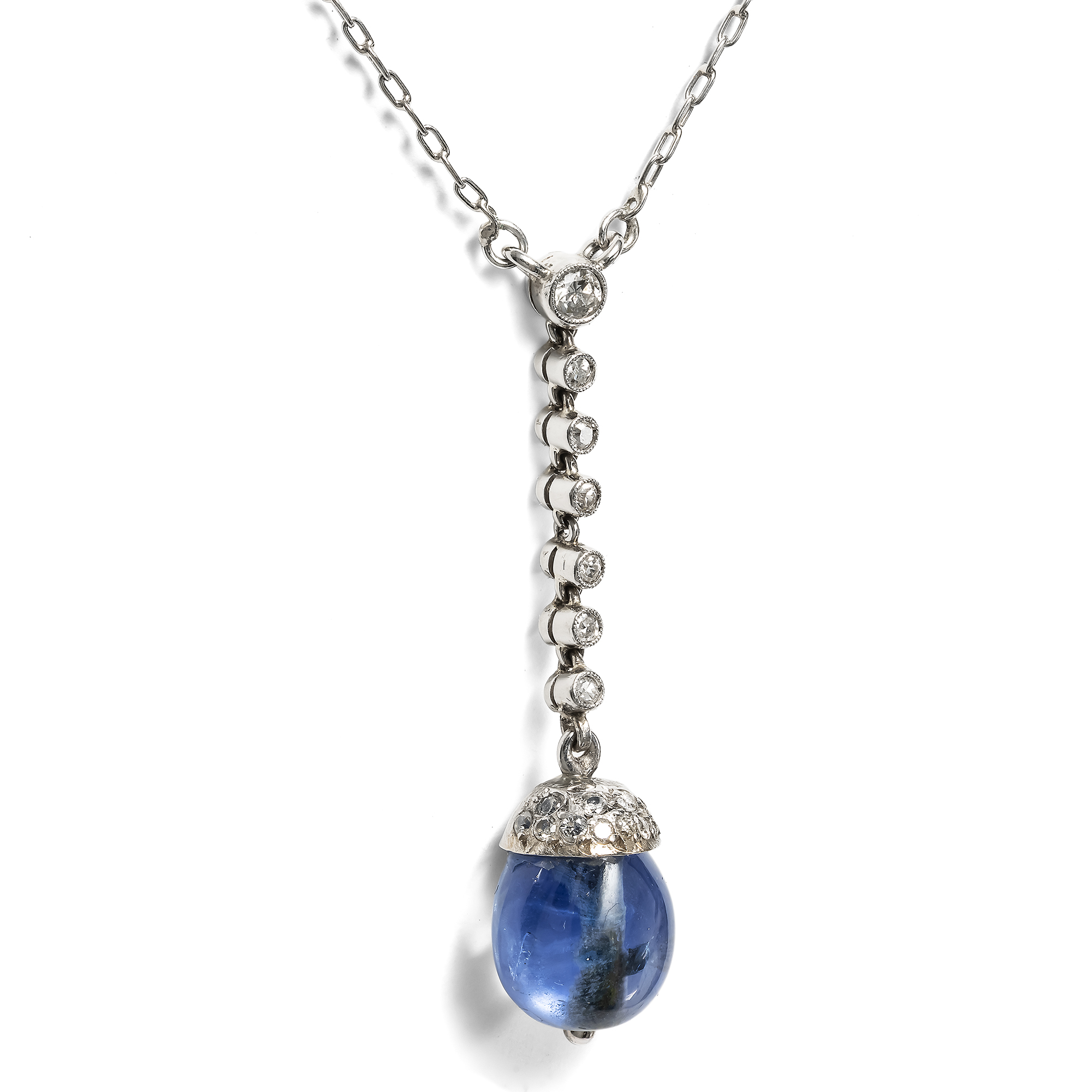
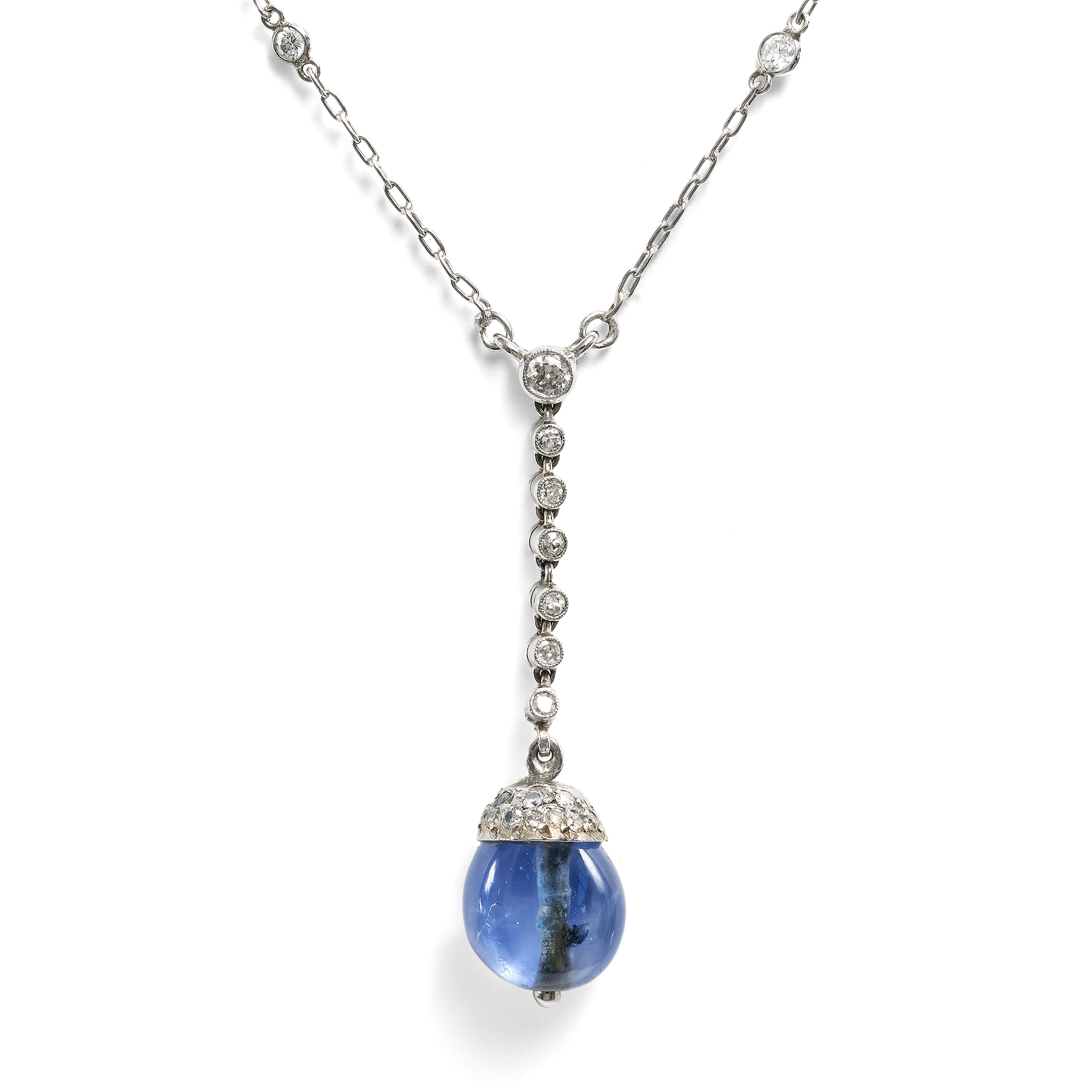
Elegant Necklace with Untreated Sapphire & Diamonds in Platinum, c. 1910


€ 6,980.00 *
Content 1 piece
Incl. VAT, Shipping
Elegant Necklace with Untreated Sapphire & Diamonds in Platinum, c. 1910
Description
This description was automatically translated from German. If you have any questions about this piece of jewellery, we will be happy to help!
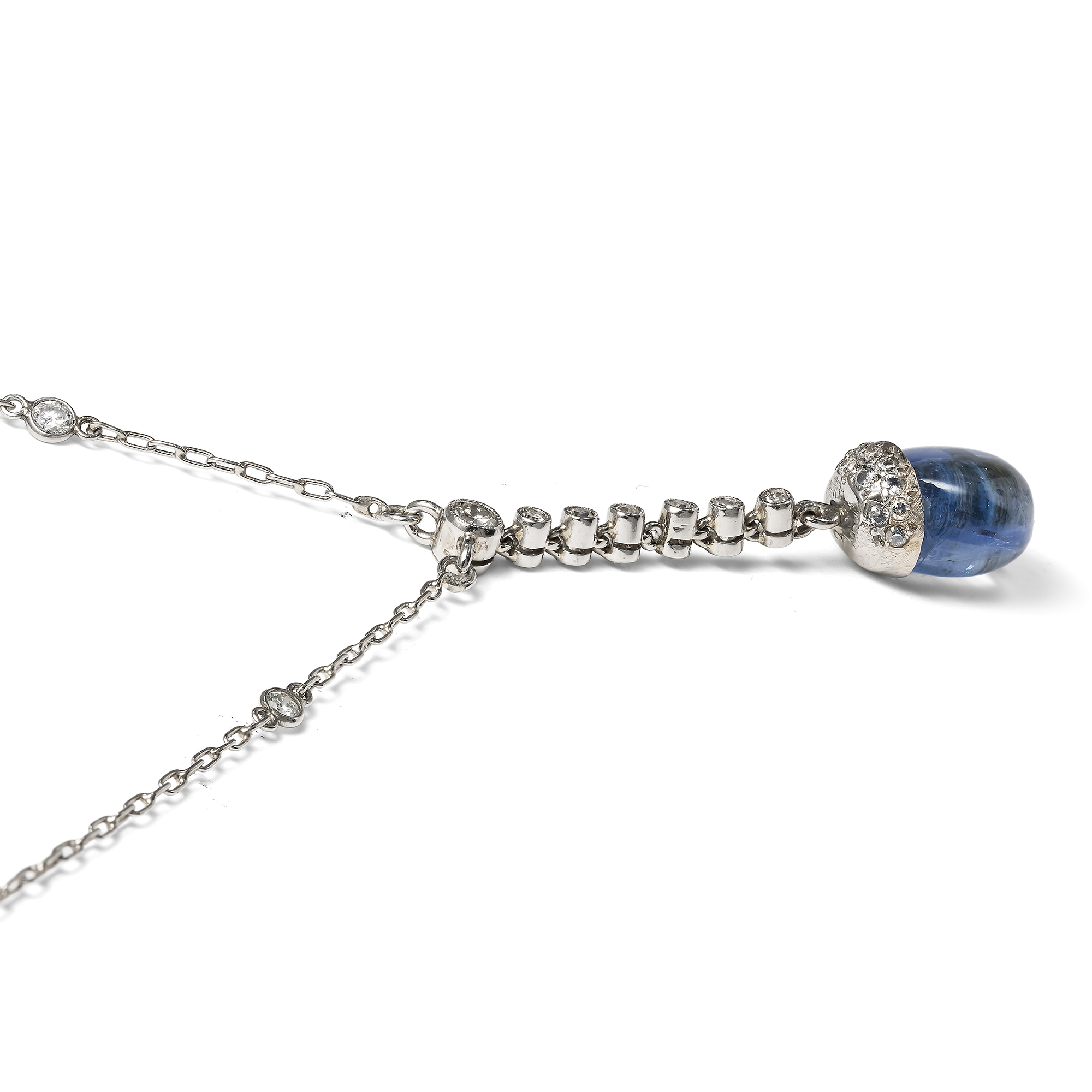
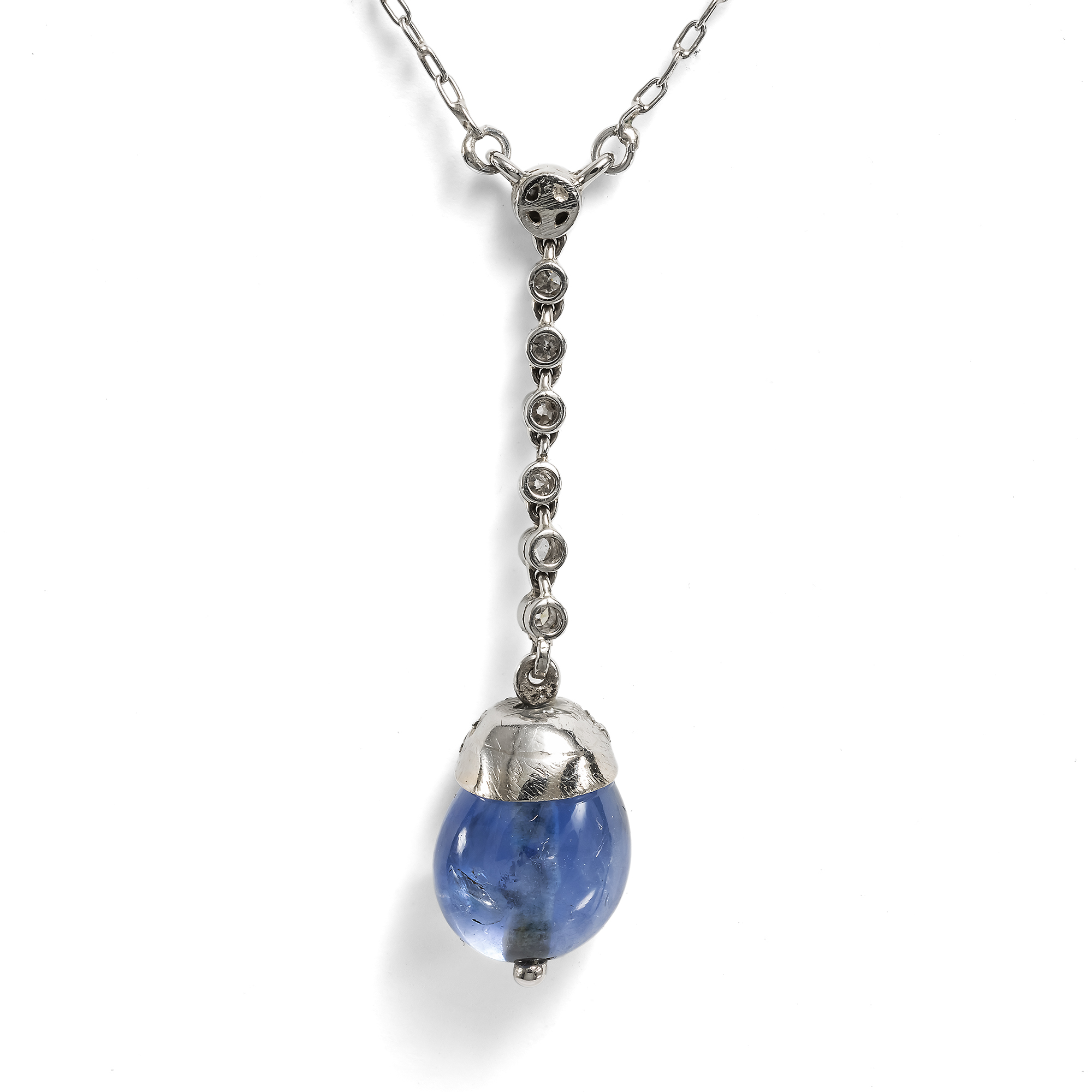
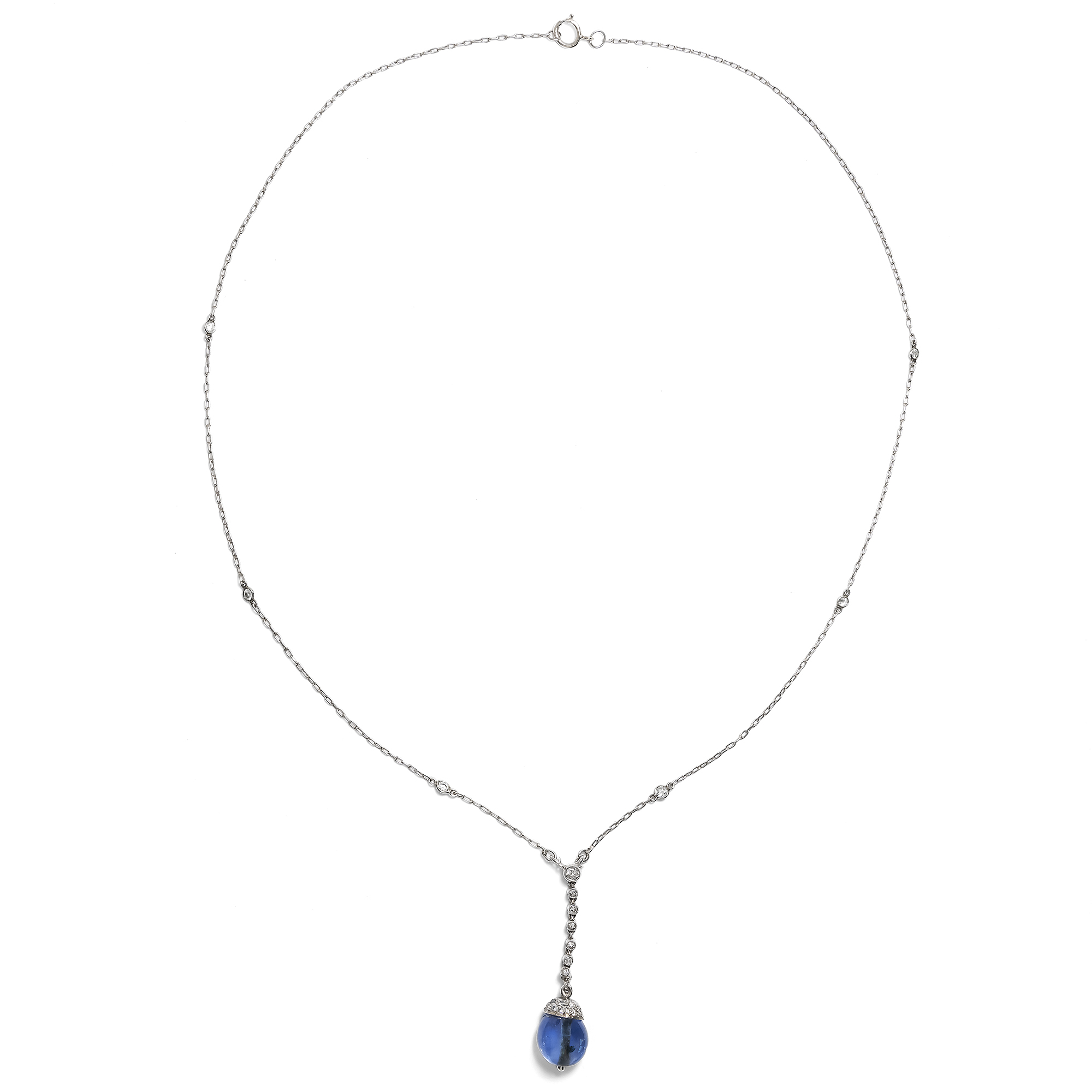
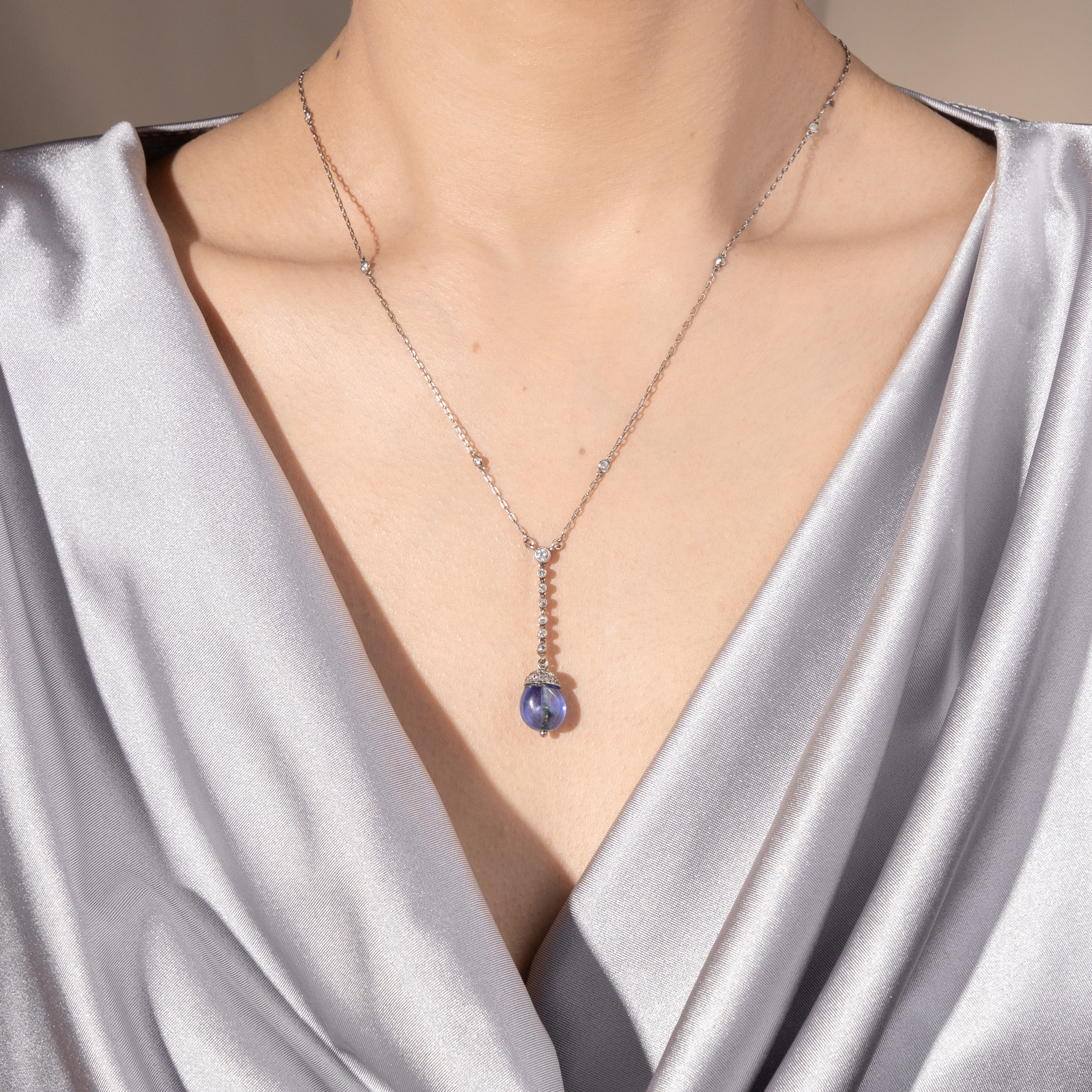
In the early 20th century, an interesting development took place that expanded the range of gemstones available in Europe to include a particular type that had not been available before: engraved and muggle-cut gemstones with vertical holes, known as beads. Indian princes had brought large quantities of historical gemstones to Paris, where they were processed into new creations. The houses of Cartier and Van Cleef & Arpels in particular worked for the Indian upper class. Indian gemstones became popular in Europe at the time and were particularly appreciated during the Art Deco era with its preference for the exotic. This necklace presents us with a simple pendulum with a large, natural sapphire attached to the end. The pierced and muggle-shaped stone, weighing around 7.50 ct, is held in place by a platinum cap set with ten small diamonds. A pendulum composed of further, individually set diamonds leads to a larger old-cut diamond, to which a delicate anchor chain is attached. Here again, small diamonds are set to make the otherwise simple chain sparkle. As pierced gemstones are uncommon in European gemstone processing, but were part of the jewel design in the Indian principalities, we assume that the sapphire used here was originally processed in India, then came to Europe at the beginning of the 20th century and became the starting point for this fine necklace. We discovered this piece of jewellery in Munich.
Learn more
One story of how a large quantity of Indian gemstones made their way from India to Paris is that of the Maharani of Baroda. It is one of the most dazzling episodes in 20th century jewelry history. When Maharani Sita Devi of Baroda left India in the 1940s, she did not do so alone. With her traveled parts of the legendary state treasure, including extraordinary gemstones that had been collected over generations by the rulers of Baroda. These were stones of rare size and quality, many of them cut or engraved during the time of the Mughal emperors. The transfer of these treasures did not take place publicly and not without tensions. At a time of political upheaval and dwindling princely power, the jewels made their way from the protected world of Indian palaces to Paris. Here, far removed from their original meaning as insignia of power, they entered a new context. In the ateliers of the great jewelers, above all Cartier, the historical gemstones were re-set and the first so-called tutti frutti pieces of jewellery were created. What was once part of a princely treasure now became pieces of jewellery for a modern, cosmopolitan elite.
Learn more
Read more
Size & Details
Elegant Necklace with Untreated Sapphire & Diamonds in Platinum, c. 1910
Play it to the Bead
€ 6,980.00 *
Content 1 piece
Incl. VAT, Shipping
Our Promise
Our Promise
Our Promise

We want you to be 100% satisfied! For that reason, we examine, describe and photograph all of our jewellery with the utmost care.

You can rely on our years of experience in the trade and our expertise as a professional art historians for reviews of the antique jewellery. As a member of various trade organisations and the British Society of Jewellery Historians, we remain committed to the highest possible degree of accuracy. In our descriptions, we always also indicate any signs of age and defects and never hide them in our photos – this saves you from any unpleasant surprises when your package arrives.

Should you for some reason not be satisfied, please don’t hesitate to contact us so that we can find a solution together. In any case, you can return any article within one month and we will refund the full purchase price.

Learn more