Precious Butterfly

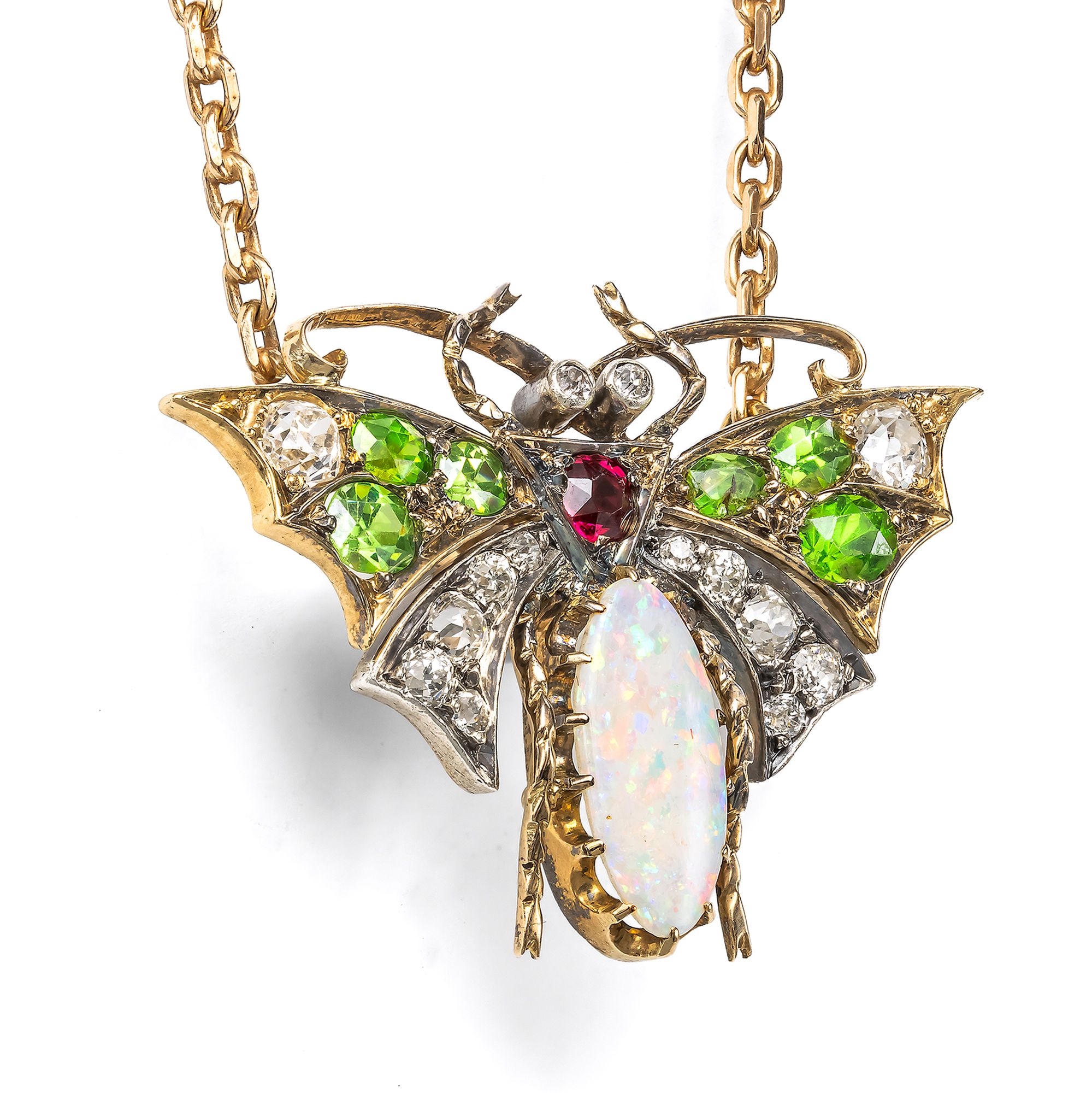
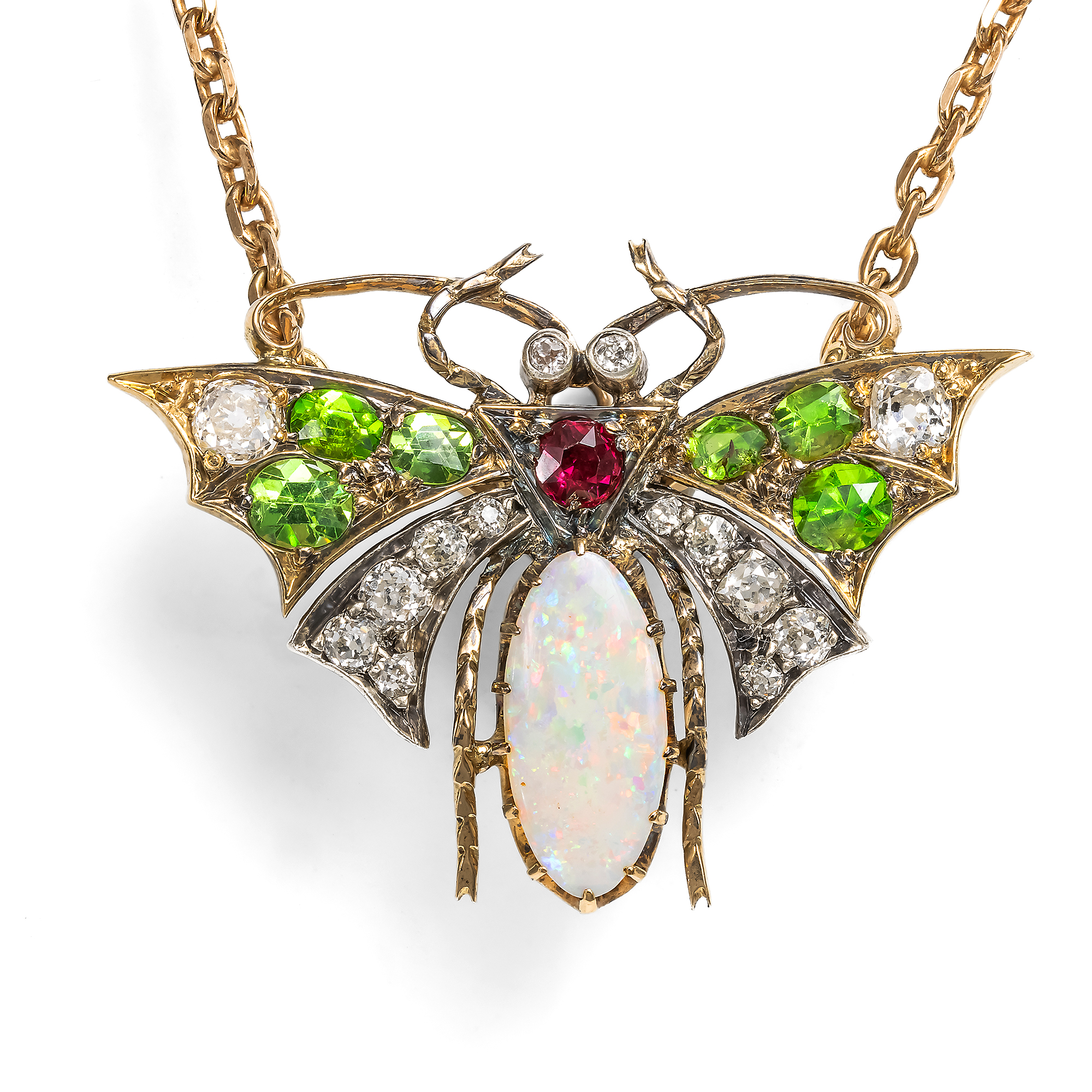
Fabulous Butterfly with Demantoid, Diamonds, and Opal, c. 1900


€ 5,980.00 *
Content 1 piece
Incl. VAT, Shipping
Fabulous Butterfly with Demantoid, Diamonds, and Opal, c. 1900
Description
This description was automatically translated from German. If you have any questions about this piece of jewellery, we will be happy to help!
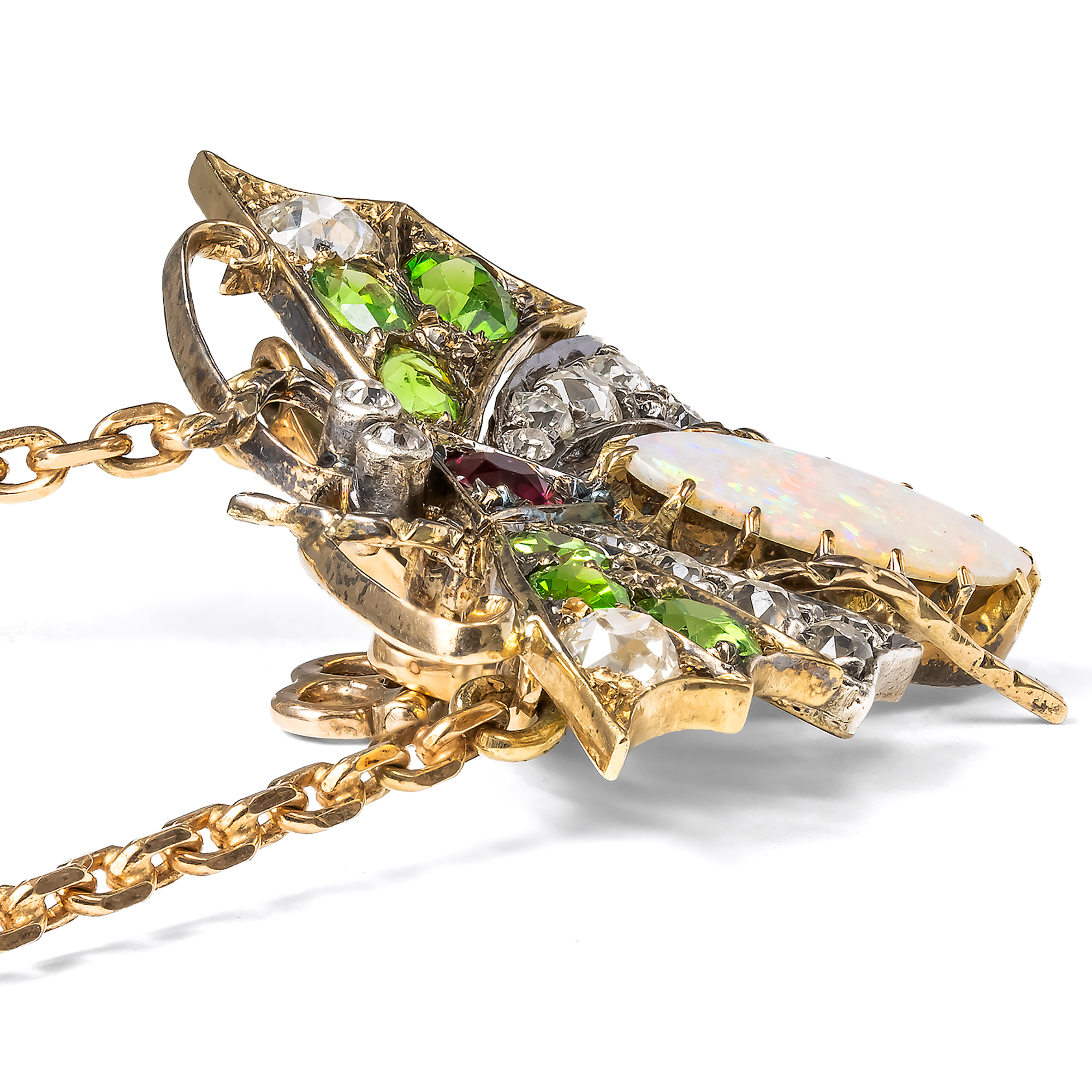
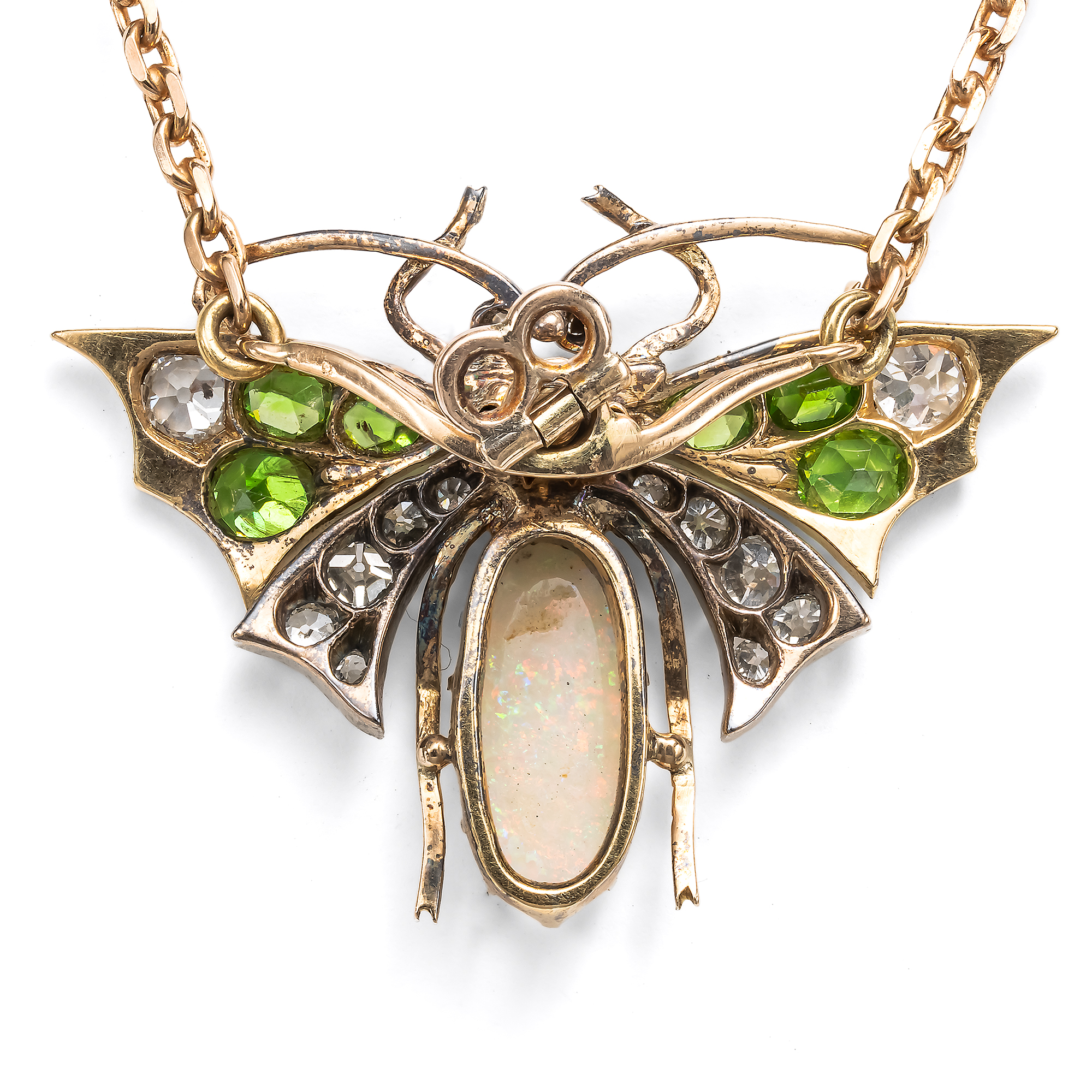
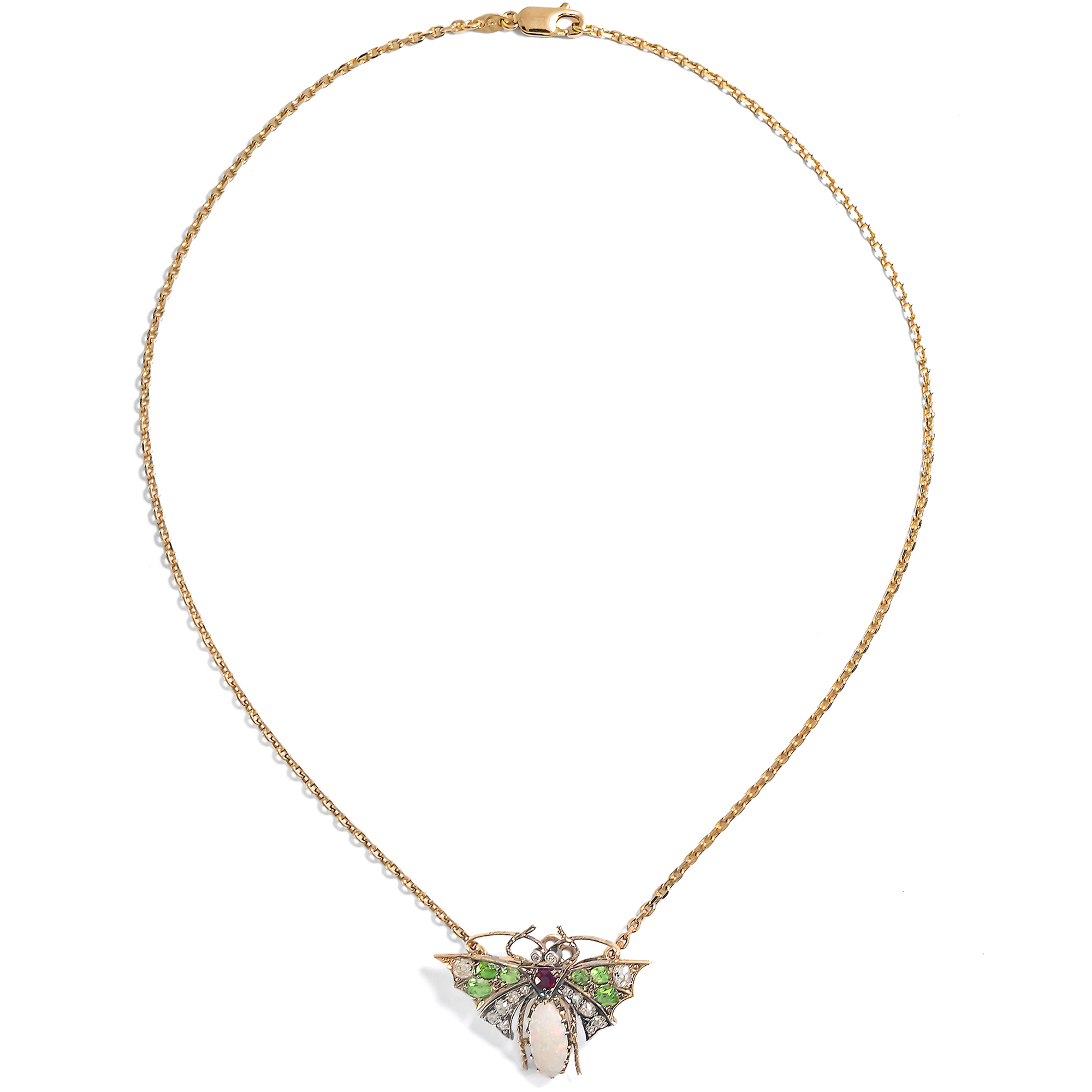
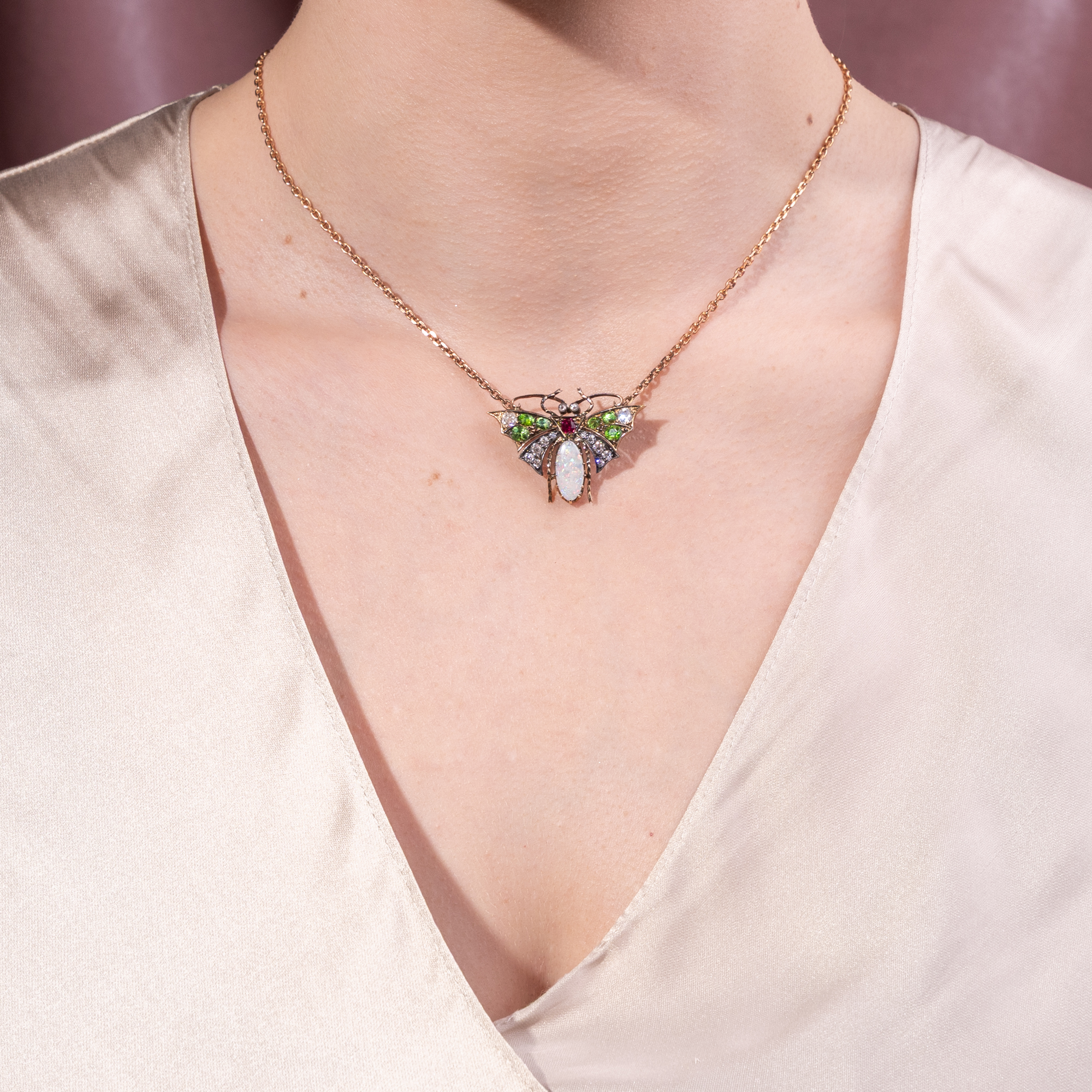
One of the major trends in late 19th-century jewellery was so-called “novelty jewellery” (from the English word “novelty,” meaning something new or unusual). This jewellery featured unusual motifs designed to amaze the viewer. For example, small mice and piglets adorned bangles, while golden bird nests containing tiny birds and eggs dangled from earlobes. Everyday objects were also elevated to jewellery motifs: earrings were crafted in the shape of small golden baskets or silver wells with buckets. Not everyone, however, considered such jewellery to be elegant. Among the more subdued examples of novelty jewellery—and thus those acceptable even in high society—were butterflies made of luxurious materials. In its July 1888 issue, the women’s magazine *Bazar* recommended jeweled butterflies for a prestigious dinner ensemble, paired with diamond earrings, a pearl necklace, and matching gemstone-set bracelets (see *Der Bazar*, July 2, 1888, p. 278). Typical of the ornamental butterflies of this period are the clean, angular designs with pointed wings and, often, a setting of precious gemstones and diamonds. This colorful butterfly, which we were able to acquire in Vienna, features a body formed by a large Australian opal that sparkles in all the colours of the rainbow against a light background. Its brilliantly crafted wings are set with openwork-set old-cut diamonds and fantastically luminous demantoids—very rare green garnets from the Urals. The creature’s head is formed by a ruby, and smaller old-cut diamonds serve as its eyes. The butterfly is crafted from reddish gold, and a sturdy gold chain—added sometime in the late 20th century—allows the piece of jewellery to be worn as a necklace. On the reverse side, a distinctive feature is revealed that is relatively common in pieces of jewellery from c. 1900: Using a small screw, the necklace setting can be removed. This allowed the piece of jewellery to be worn in different ways by attaching other settings—as a hat pin, for example, or as a brooch.
Learn more
Demantoids belong to the garnet group and are considered its most precious members. These precious stones were first discovered in the Urals in the mid-19th century and were initially known as “Ural emeralds.” Toward the end of the century in particular, they were eagerly embraced by goldsmiths and the public: Not only did Fabergé create small works of art using the bright green stone, but other European jewelers followed suit as well.
Learn more
Read more
Size & Details
Fabulous Butterfly with Demantoid, Diamonds, and Opal, c. 1900
Precious Butterfly
€ 5,980.00 *
Content 1 piece
Incl. VAT, Shipping
Our Promise
Our Promise
Our Promise

We want you to be 100% satisfied! For that reason, we examine, describe and photograph all of our jewellery with the utmost care.

You can rely on our years of experience in the trade and our expertise as a professional art historians for reviews of the antique jewellery. As a member of various trade organisations and the British Society of Jewellery Historians, we remain committed to the highest possible degree of accuracy. In our descriptions, we always also indicate any signs of age and defects and never hide them in our photos – this saves you from any unpleasant surprises when your package arrives.

Should you for some reason not be satisfied, please don’t hesitate to contact us so that we can find a solution together. In any case, you can return any article within one month and we will refund the full purchase price.

Learn more