From the Treasure Trove of History

Magnificent Bracelet with Amethysts and Enamel in Gold, c. 1930


€ 7,890.00 *
Content 1 piece
Incl. VAT, Shipping
Magnificent Bracelet with Amethysts and Enamel in Gold, c. 1930
Description
This description was automatically translated from German. If you have any questions about this piece of jewellery, we will be happy to help!
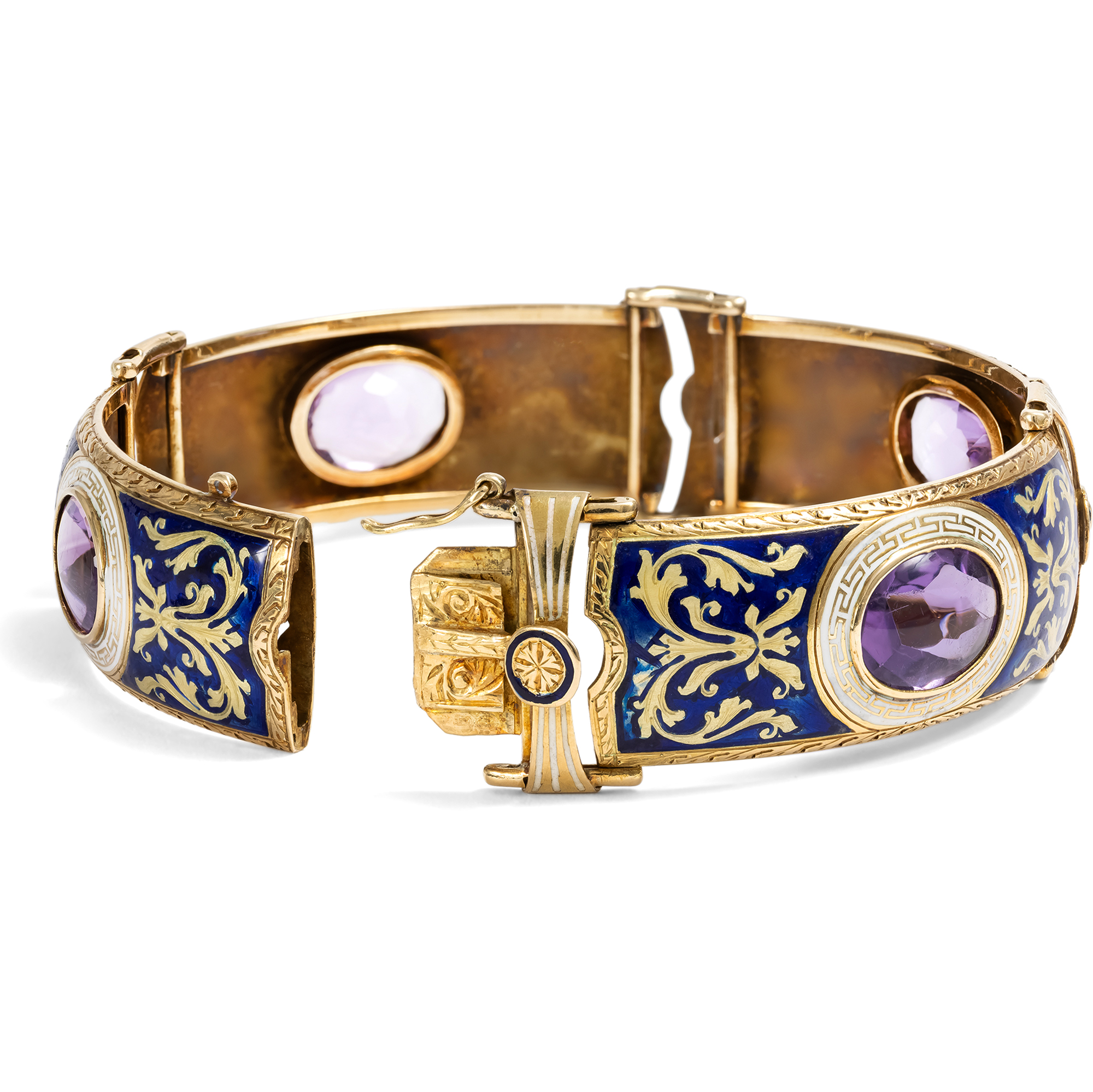
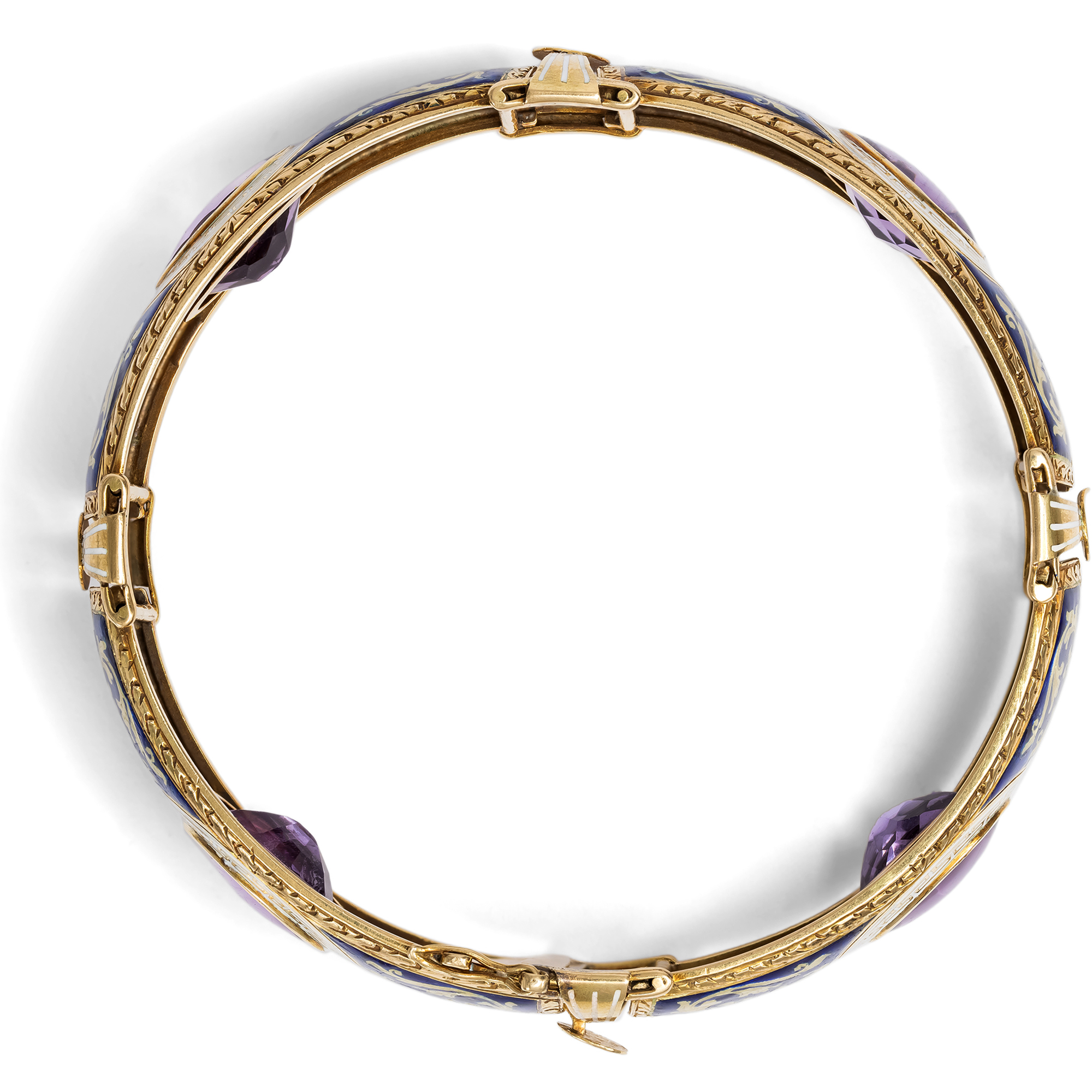
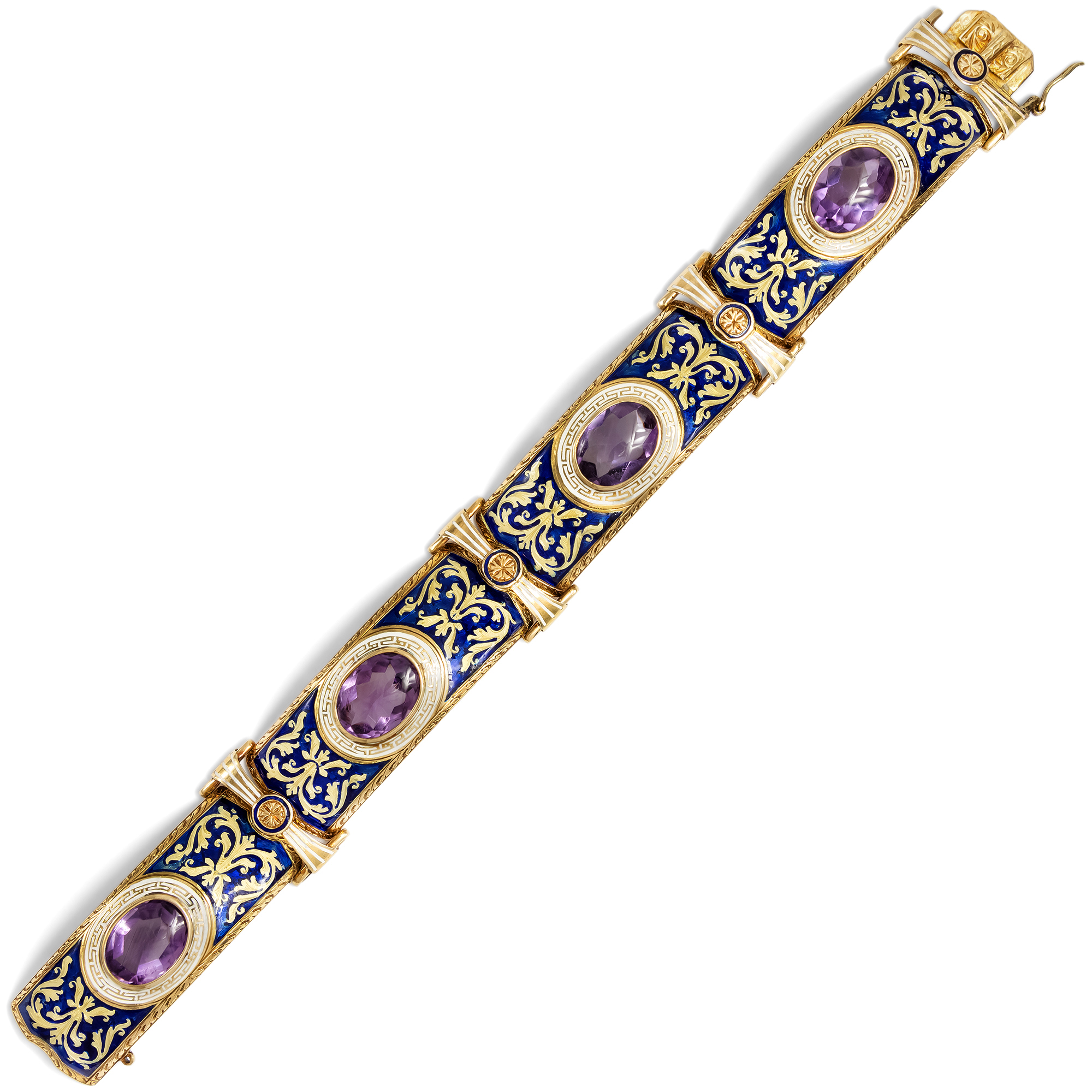
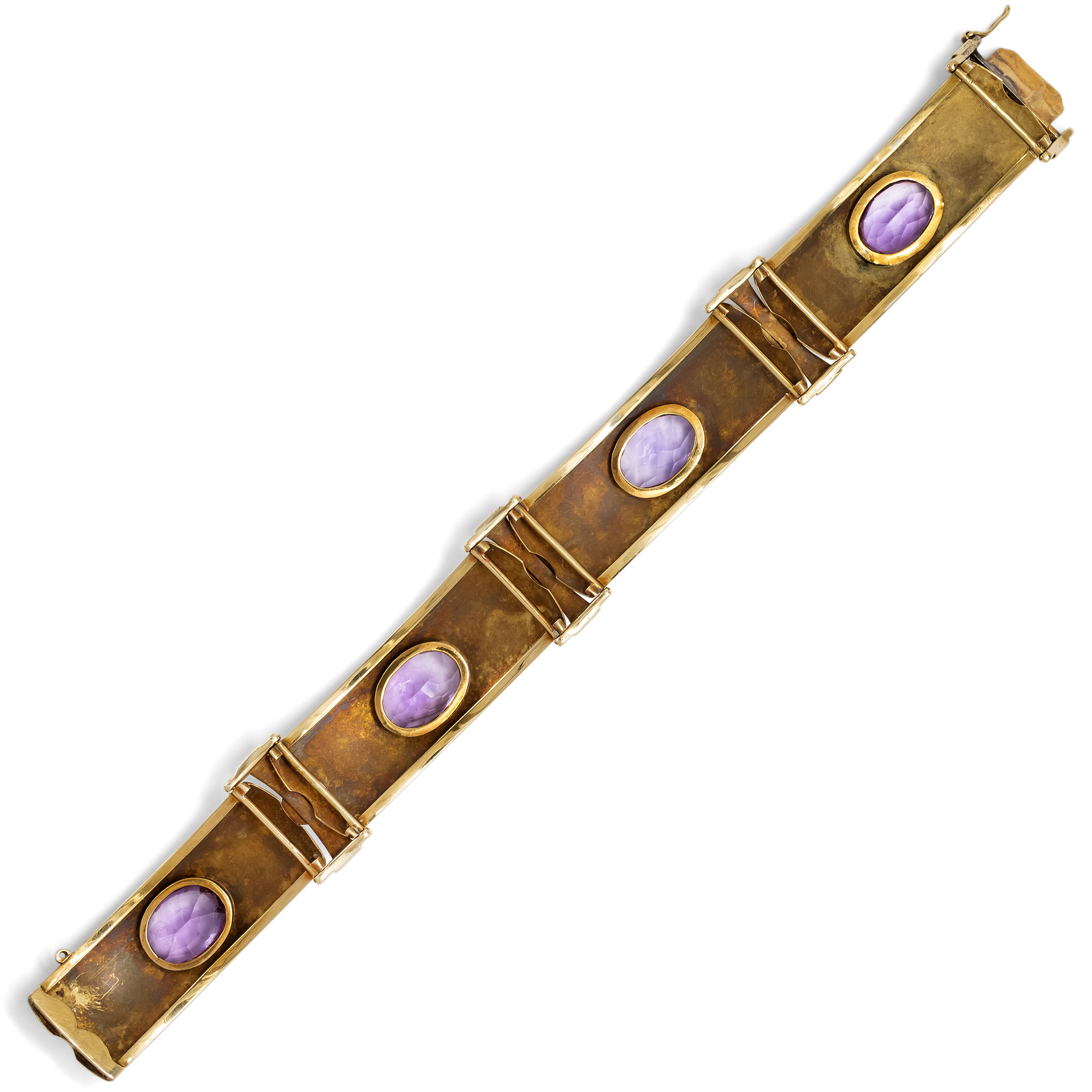
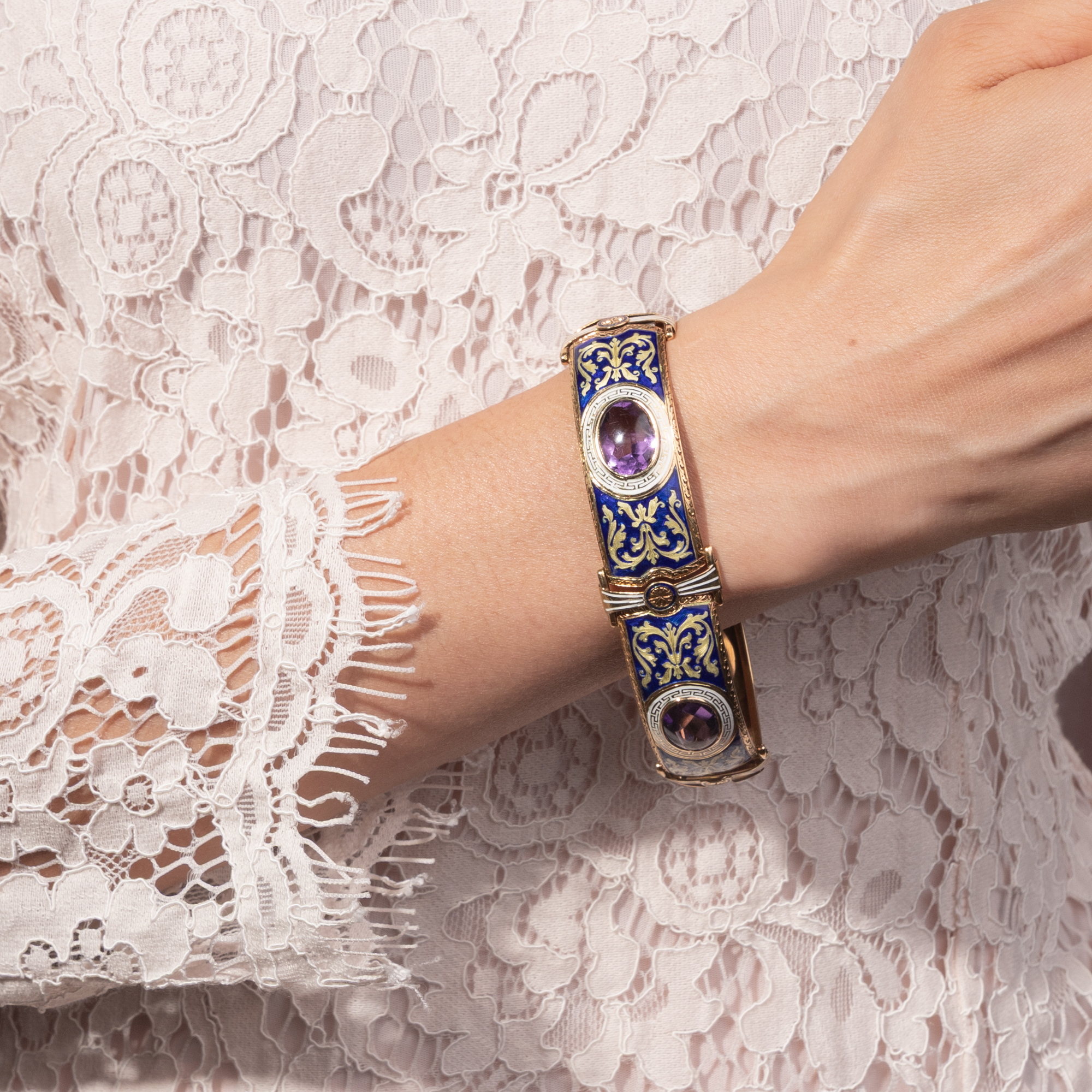
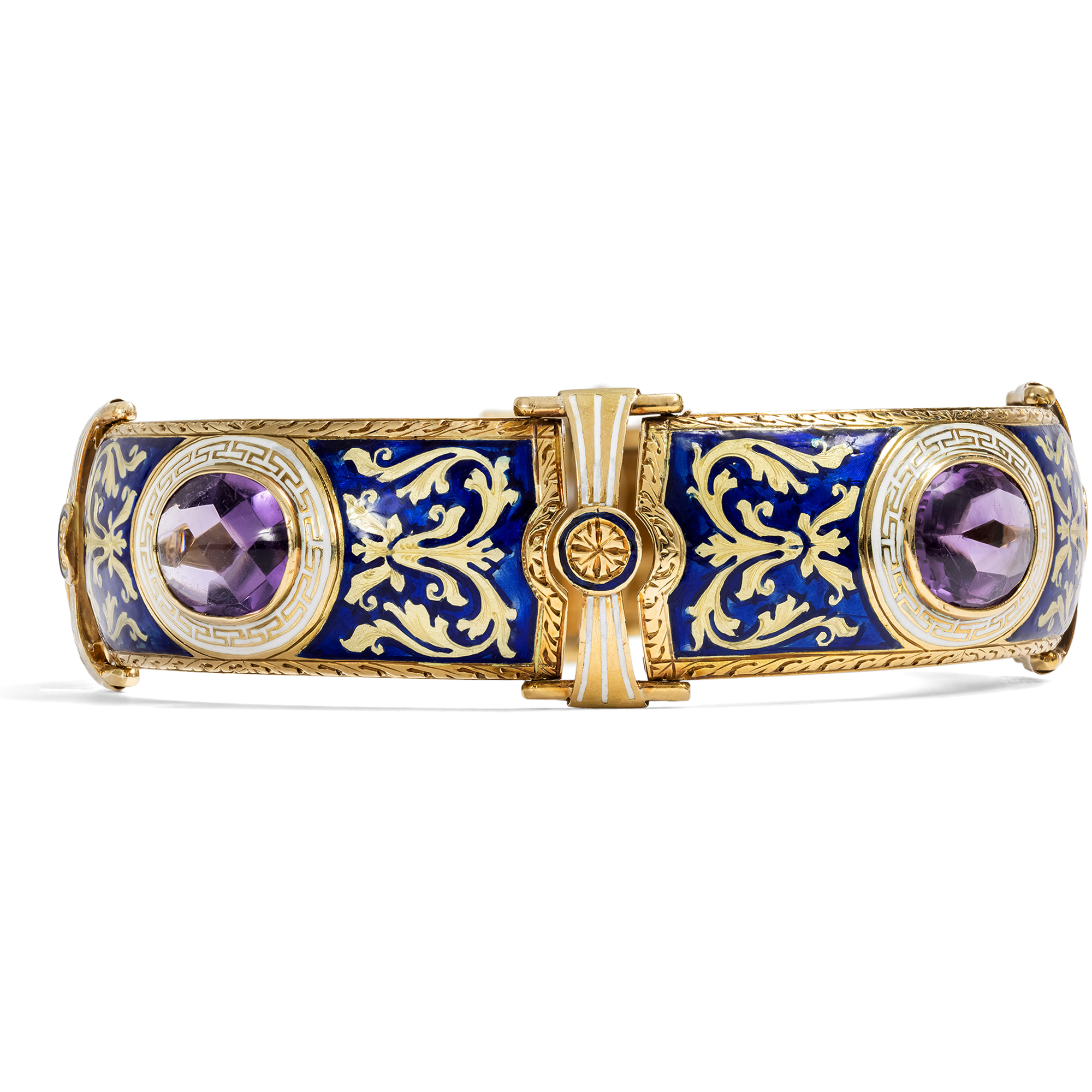
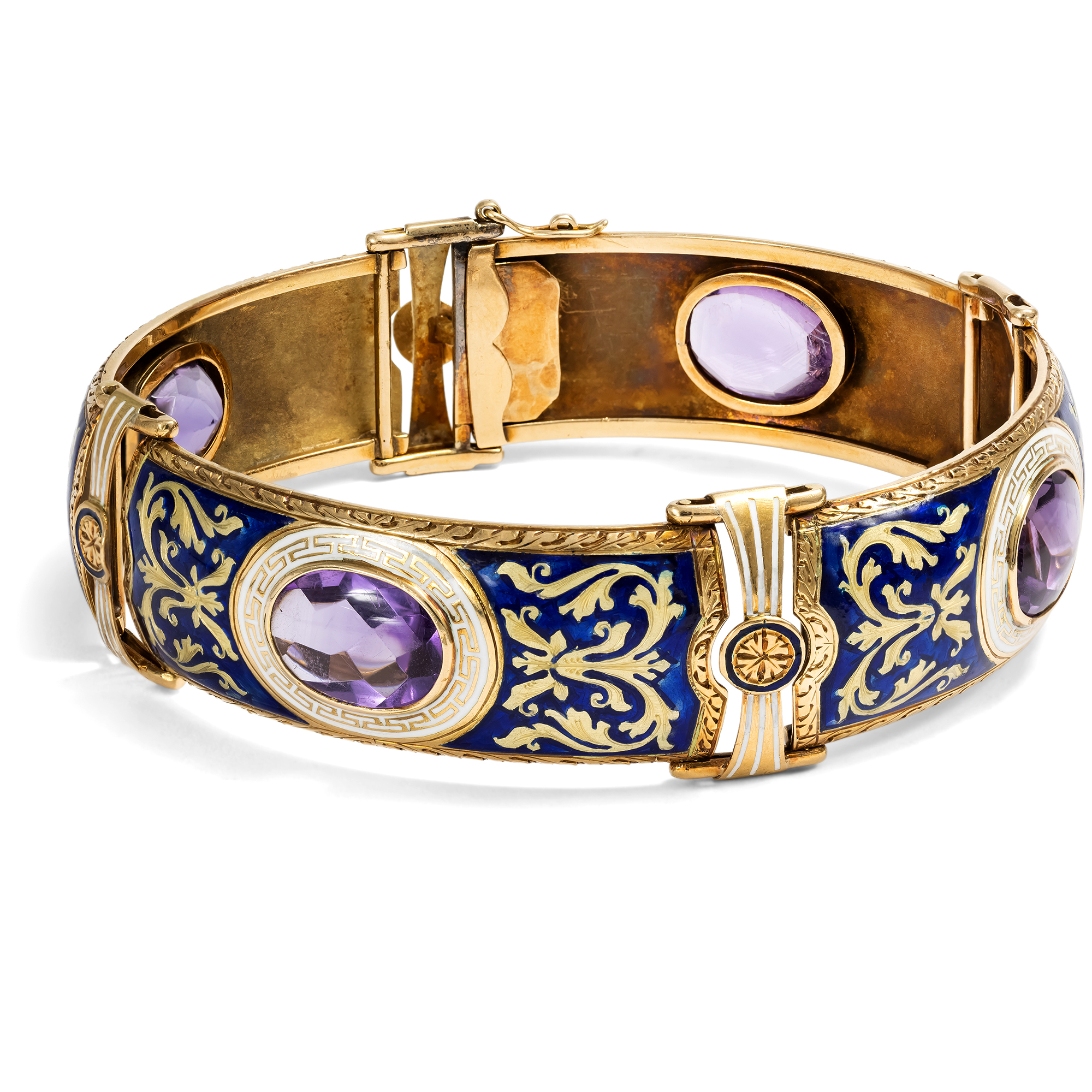
This bracelet is a delight for anyone who loves opulence, enjoys ornate designs, and often finds modern jewellery a bit too cool and simple. Crafted from high-karat gold, the band is colorful and full of joie de vivre. The design consists of four wide elements connected by narrow clasps. Each of the larger elements is curved and features a vibrant violet amethyst with a buff-top cut at its center. The top of the gemstone is polished smooth, like a cabochon, while the bottom is faceted, creating a rich play of light within the stone. The amethysts are set within wide frames featuring a Greek meander motif. The frames are made of gold and covered with white enamel. On the left and right, a large panel on each side is covered with blue enamel. Inlaid within it is a Renaissance motif made of slightly greenish gold—a symmetrically designed plant motif consisting of acanthus leaves. The small connecting clasps are also covered with white and blue enamel. The bracelet’s ornamentation combines ancient Greek and Renaissance forms. The cuts of the amethysts, on the other hand, appear very modern, and the bracelet’s design as a curved link bracelet is typical of the 20th century. So when was the bracelet made? We believe it was crafted in Southern Europe around 1930, perhaps in Italy or Spain, where the tradition of European arts remained alive longer than in the cold north. In its basic design, it is an Art Deco bracelet, yet adorned with a cheerful eclecticism that remains firmly rooted in the 19th century. In terms of craftsmanship as well, the bracelet remains firmly rooted in the 19th century, meticulously handcrafted and made with high-quality materials. Small hallmarks on the clasp indicate that the bracelet was imported into France more recently. We discovered it in Amsterdam.
Learn more
Like so many aspects of historical jewellery, enamel also has a very special history that is closely tied to ever-changing fashions. During the Middle Ages and the Renaissance, the overwhelming majority of even the most precious pieces of jewellery were elaborately enameled. The technique was complicated, and intense colours were highly prized, so enamel often framed and complemented the brilliance of precious gemstones. With the advent of the Rococo period, this taste initially shifted. Colored gemstones were becoming increasingly easy to obtain from the overseas colonies, and they were used to shine even more seductively in the candlelight of the salons. Enamel, on the other hand, receded into the background and was scarcely used anymore. It was not until 1775 that the London goldsmith Jusen once again created new pieces of jewellery in enamel, this time in a deep midnight blue, which he combined with diamonds set in silver. A few commissions from the royal family that quickly gained public attention were enough, and a new fashion was born: Rings and brooches in royal blue enamel were all the rage even in Paris within a very short time. There, they were called “Bagues de firmament,” or “heavenly rings.” See Ginny Redington Dawas/Olivia Collings: Georgian Jewelry 1714–1830, Woodbridge 2007, p. 120, as well as Diana Sarisbrick: Rings. Jewellery of Power, Love, and Loyalty, London 2007, pp. 93ff.
Learn more
Read more
Size & Details
Magnificent Bracelet with Amethysts and Enamel in Gold, c. 1930
From the Treasure Trove of History
€ 7,890.00 *
Content 1 piece
Incl. VAT, Shipping
Our Promise
Our Promise
Our Promise

We want you to be 100% satisfied! For that reason, we examine, describe and photograph all of our jewellery with the utmost care.

You can rely on our years of experience in the trade and our expertise as a professional art historians for reviews of the antique jewellery. As a member of various trade organisations and the British Society of Jewellery Historians, we remain committed to the highest possible degree of accuracy. In our descriptions, we always also indicate any signs of age and defects and never hide them in our photos – this saves you from any unpleasant surprises when your package arrives.

Should you for some reason not be satisfied, please don’t hesitate to contact us so that we can find a solution together. In any case, you can return any article within one month and we will refund the full purchase price.

Learn more