The Angel and the Dragon

Magnificent Holbein-style necklace with diamonds, rubies, and emeralds set in silver, circa 1880


€ 2,890.00 *
Content 1 piece
Incl. VAT, Shipping
Magnificent Holbein-style necklace with diamonds, rubies, and emeralds set in silver, circa 1880
Description
This description was automatically translated from German. If you have any questions about this piece of jewellery, we will be happy to help!
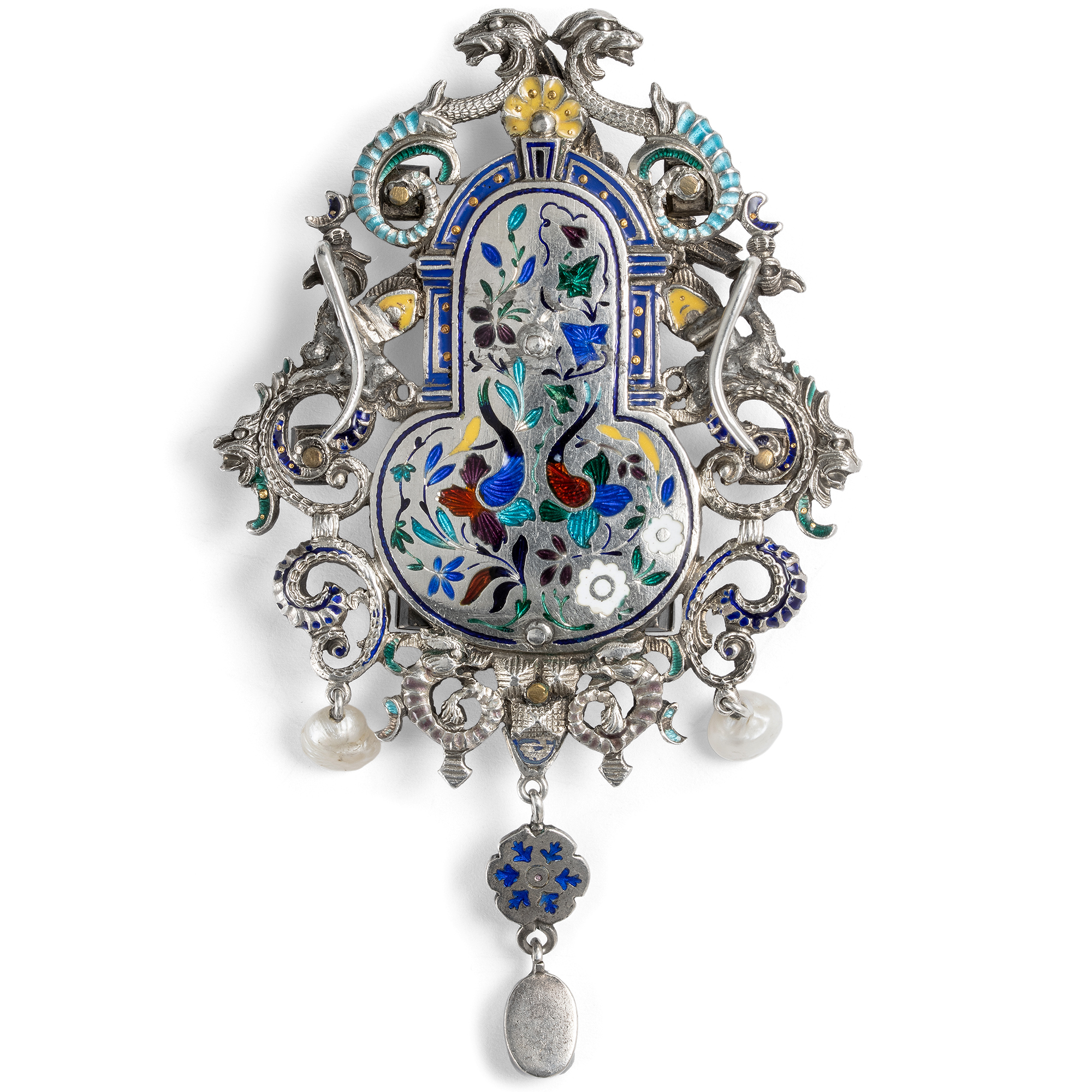
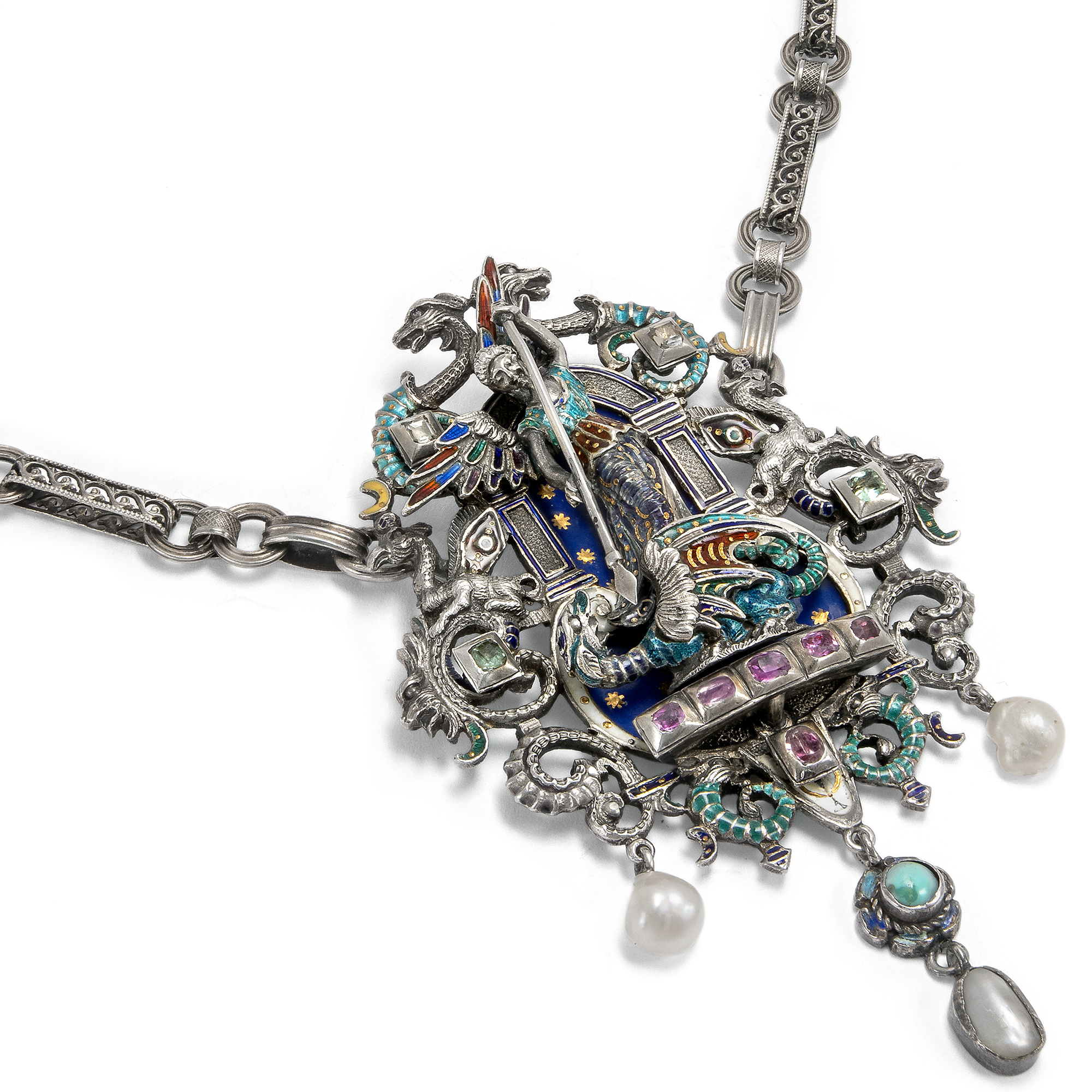
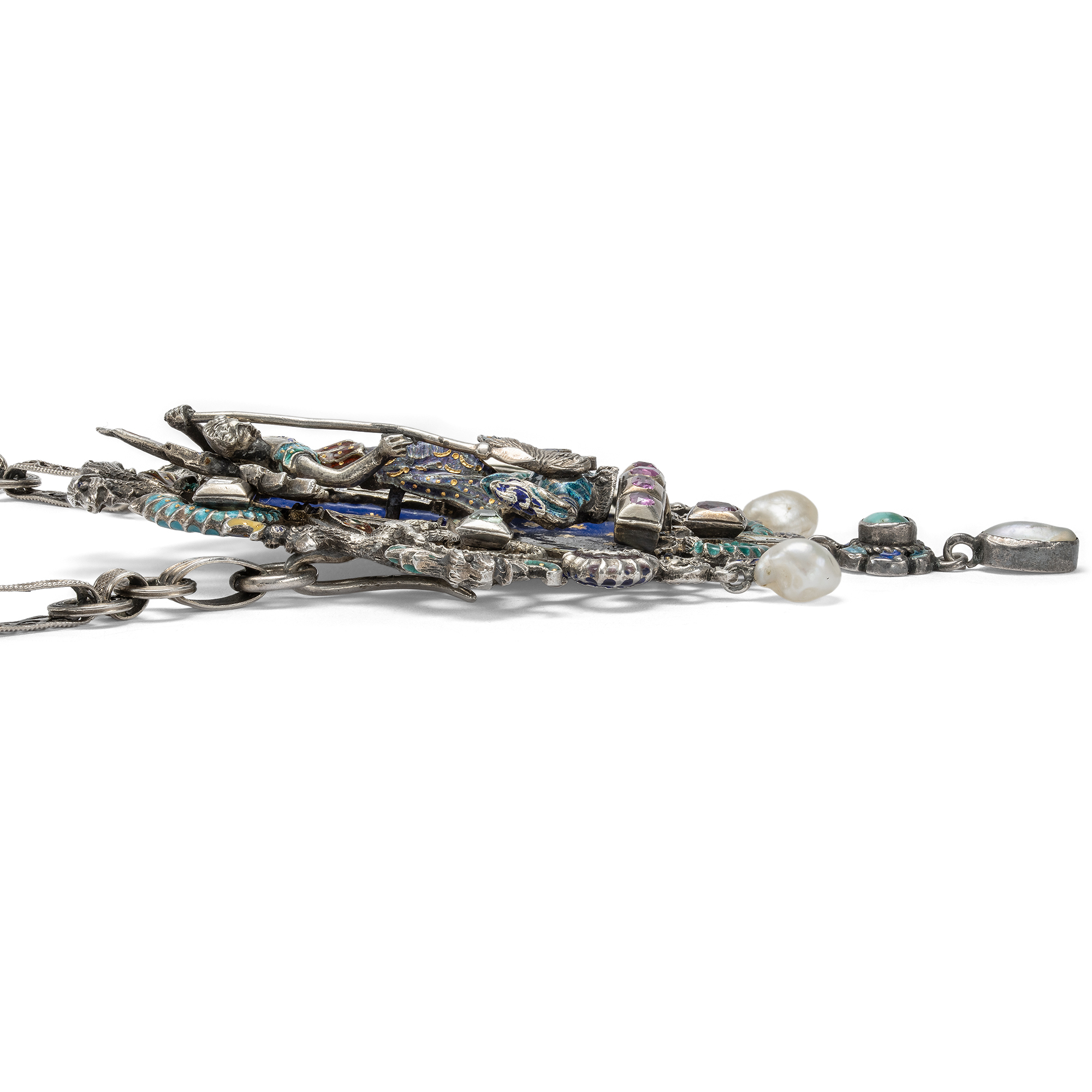
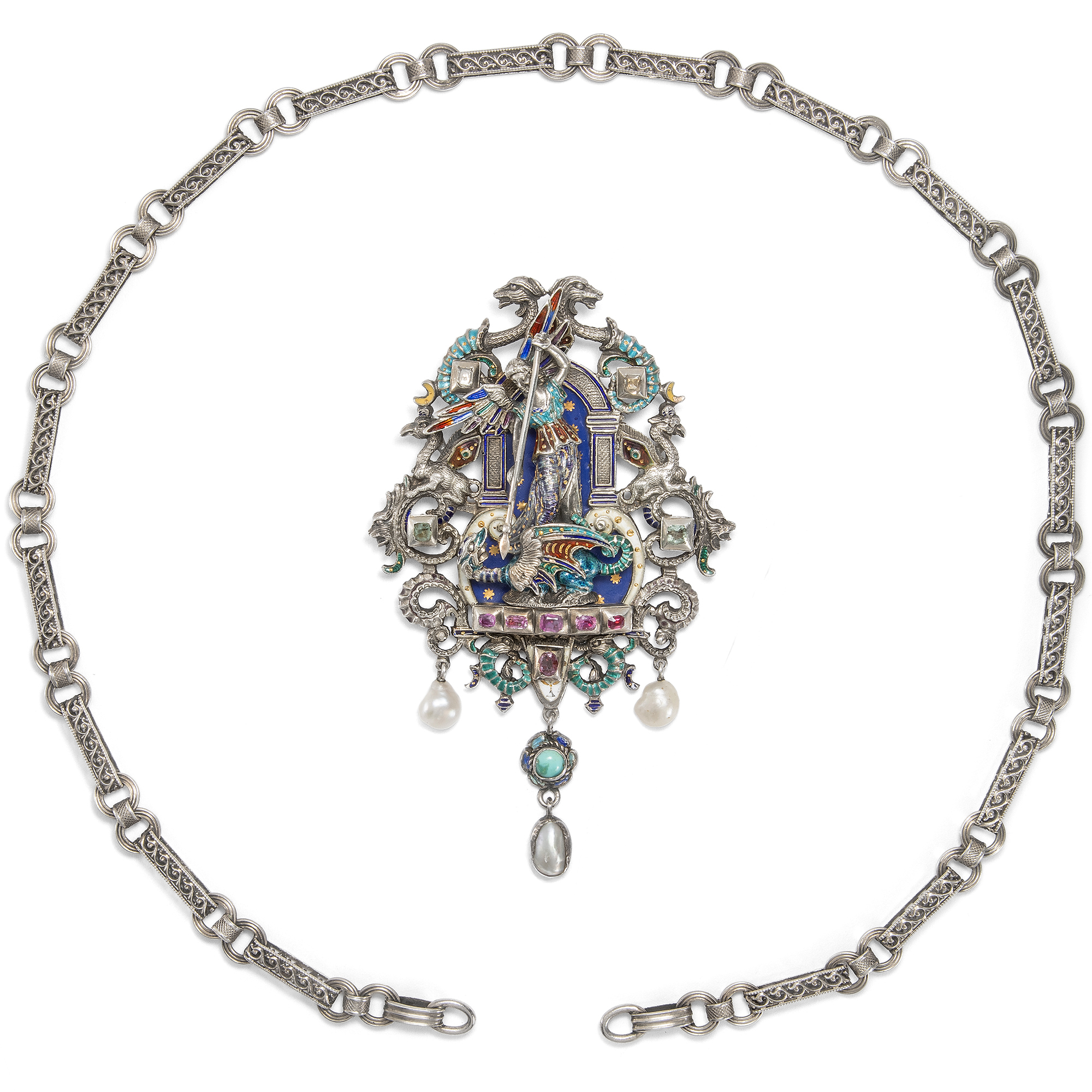
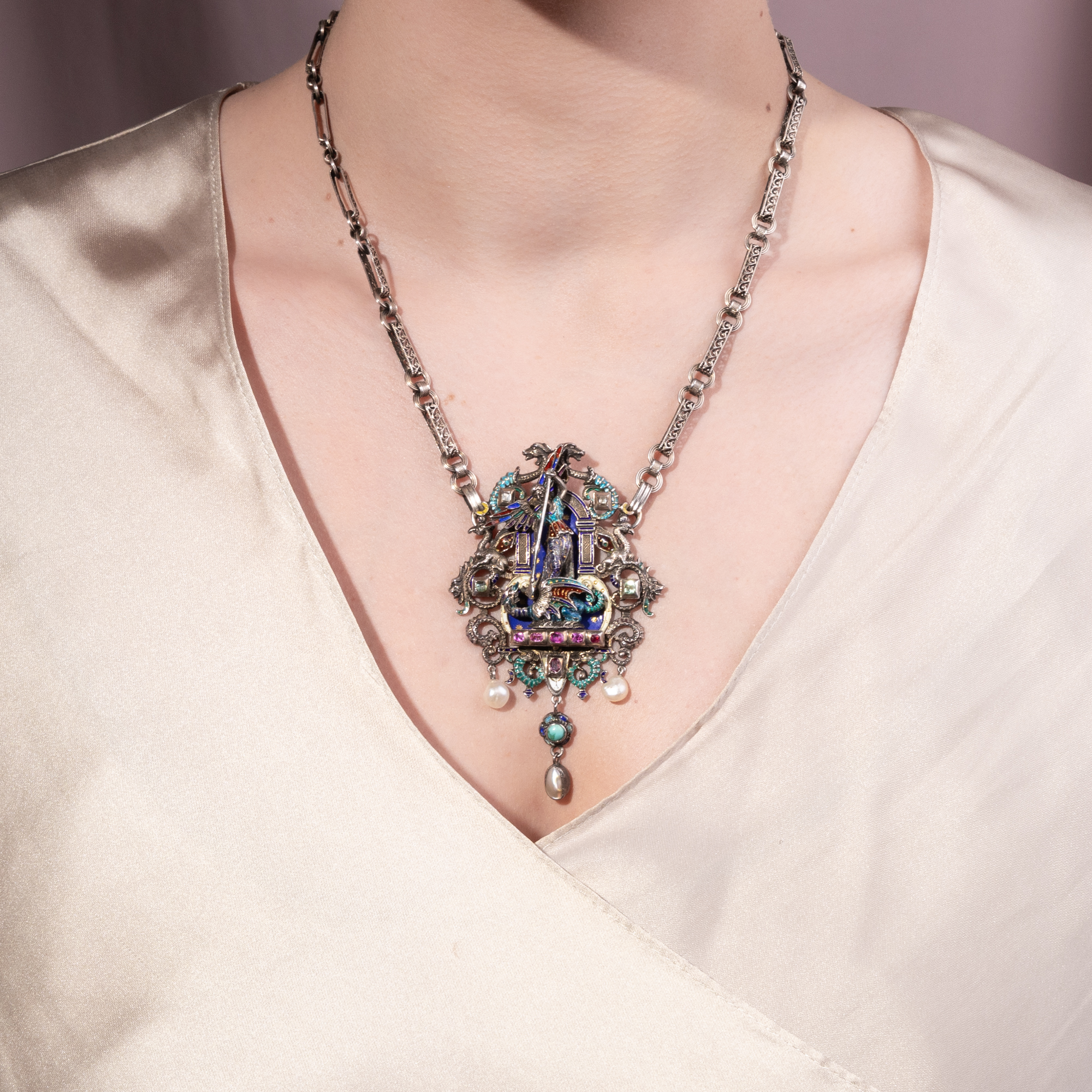
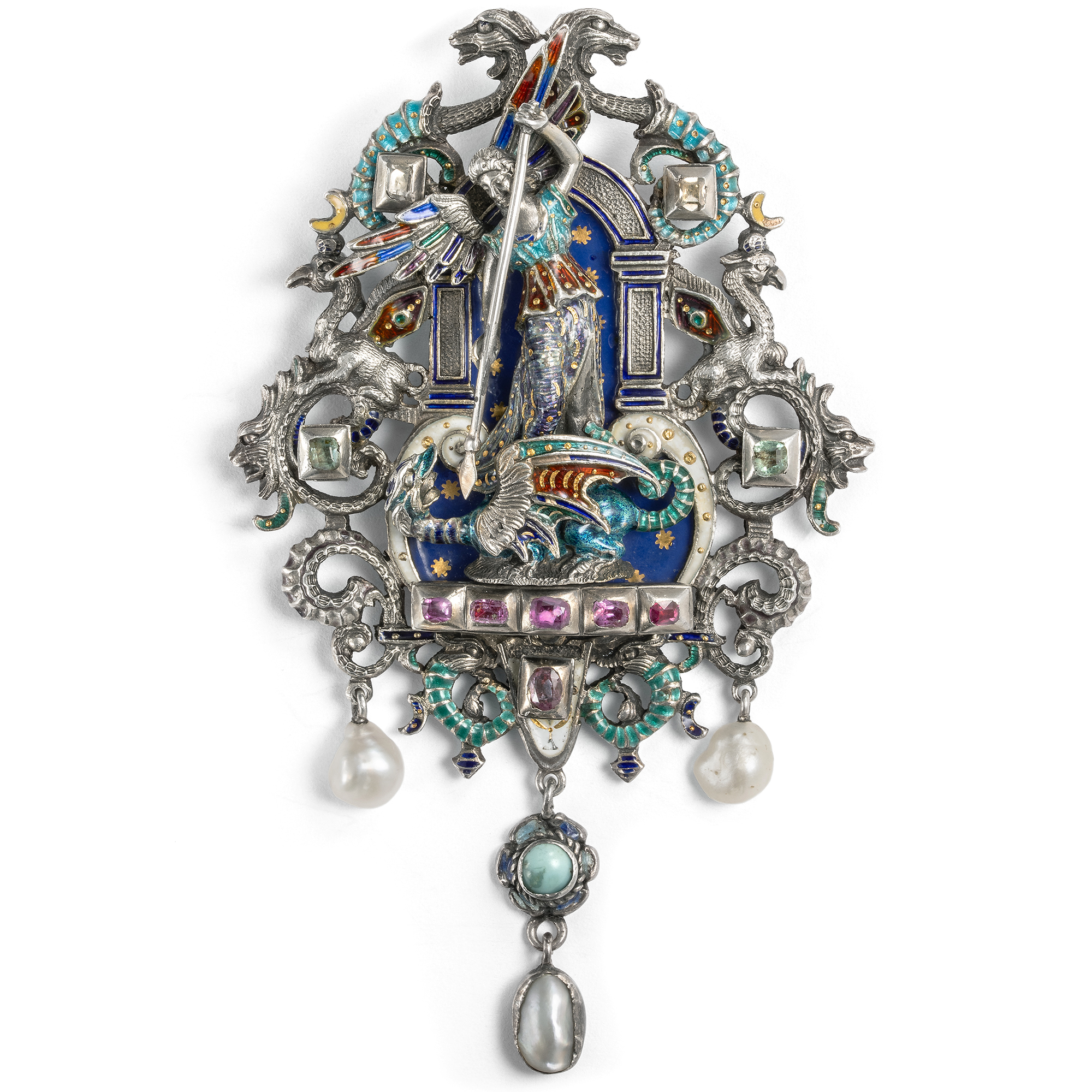
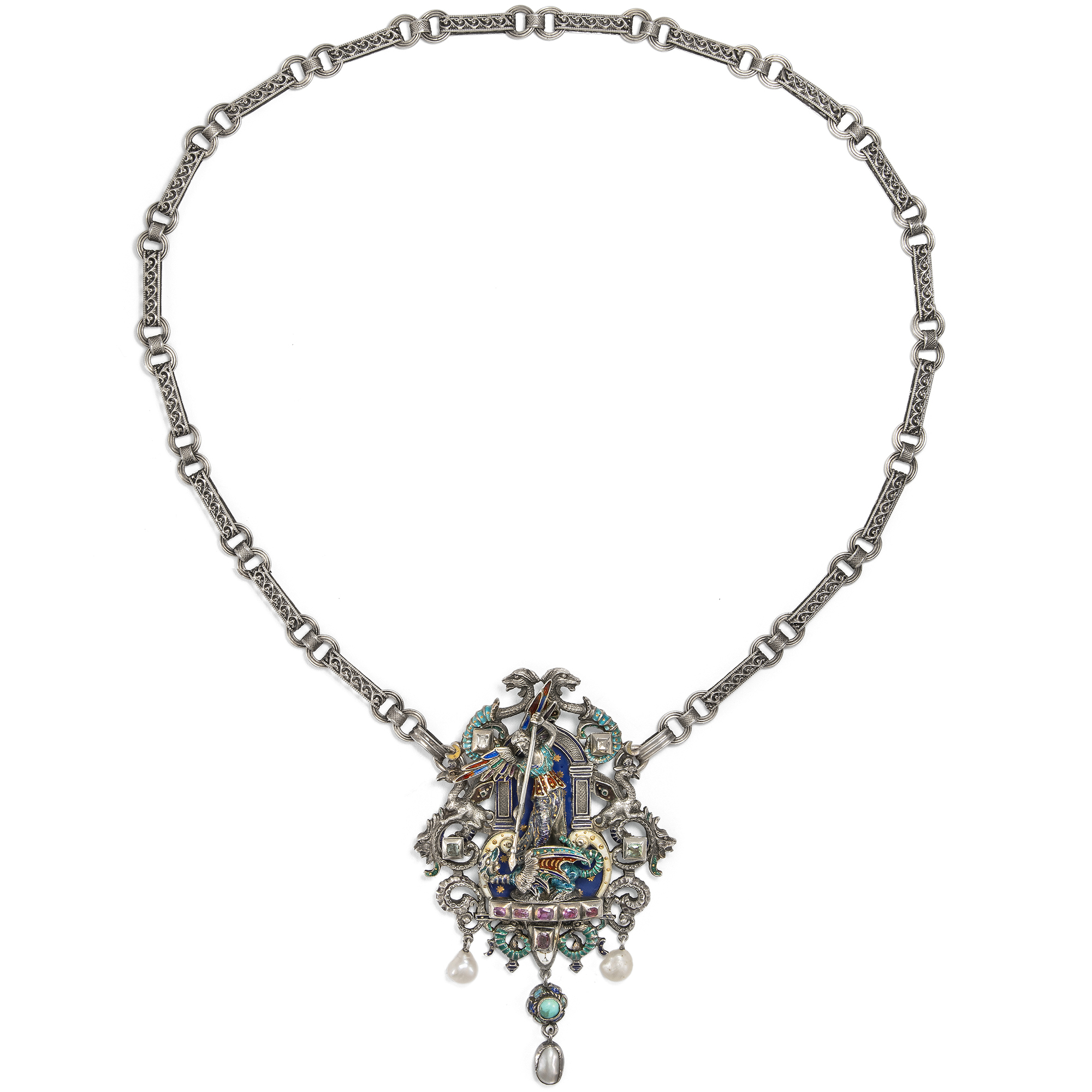
The journey into the past has retained its appeal right up to the present day. Time and again, artists and designers revisit the fashions and forms of bygone eras: Not only did postmodernism draw on antiquity, but Picasso also loved the classical period, and Vivienne Westwood’s punk style embraced the Baroque. In the 19th century, enthusiasm for the past was even greater. People of that era associated very specific characteristics with the various artistic styles of their ancestors: the Baroque and Rococo styles were used for the castles of the nobility to express splendor and grandeur. Churches were often built in the Gothic style, as the Middle Ages were regarded as a particularly devout era—and the bourgeoisie held the Renaissance in special esteem. This era of free cities, governed by free citizens, wealthy merchants, and art patrons such as the Fuggers in Augsburg or the Medici in Florence, held a special appeal for the rising class of merchants and manufacturers of the 19th century. They recognized themselves and their desire for participation and significance in the state in the figures of the past; they had their portraits painted in the style of the past and also purchased jewellery in the Renaissance style. This necklace pays homage to that era and is a rich, heavy piece crafted in silver with gold inlays, gemstones, and iridescent enamel. It depicts the Archangel Michael battling the dragon. The dynamic scene is set against a richly detailed background featuring small architectural elements and elaborate ornamentation in the Old German style. Numerous other dragons, arches, and masks populate the scene; diamonds, emeralds, and rubies, as well as pendulous pearls, further enhance the overall effect. A matching, equally antique chain transforms the pendant into a necklace. Works featuring colored enamel have been the pinnacle of goldsmithing since the late Middle Ages and the Renaissance. World-famous examples created using this technique include the “Golden Horse” from Altötting, made in 1404, and Benvenuto Cellini’s “Saliera,” now in the Kunsthistorisches Museum in Vienna. In the 19th century, Renaissance-style designs also became fashionable in the field of jewellery throughout Europe, initially in France and England, and by the end of the century in Germany and Austria-Hungary as well. This piece was created toward the end of the 19th century, likely around 1880, when such pieces were particularly fashionable, especially in Germany and Austria-Hungary. For further information on dating, see, for example, Brigitte Marquardt: Jewellery: Realism and Historicism, 1850–1895. Germany, Austria, Switzerland, Munich 1998, pp. 100ff. and pp. 156ff.
Learn more
Renaissance-style jewellery with rich enamel work is a particularly valuable area of collecting. Only a few of these high-quality pieces have survived the passage of time without damage or missing parts, so it is a special stroke of luck to find one of these examples of historicism. Numerous designs using this technique were created, particularly in the 19th century. Initially, starting in the 1850s, an enthusiasm for the era of François I and Henry II—which was viewed as an age of national greatness—emerged in France. François-Désiré and Émile Froment-Meurice created pieces of jewellery featuring scenes such as “Venus at Her Toilet,” which at once made erudite references to antiquity while also cheerfully celebrating the joys of earthly life. Other goldsmiths such as Boucheron, Falize, and Wièse followed suit—and as early as 1871, the *Art Journal* referred to Paris as the capital of enamel. In Great Britain, the development followed a similar course. There, too, the Renaissance was regarded as the national style, as it evoked the glorious era of Henry VIII and Elizabeth I. In London, John Brogden and Carlo Giuliano had been creating designs since the 1860s that were inspired by the pieces of jewellery depicted in Hans Holbein’s paintings, which is why this style was also referred to as “Holbeinesque.” Queen Victoria was seen as a new Queen Elizabeth, and jewellery that linked this past with the present was regarded as an expression of patriotic identity. In Germany, finally, jewellery in Renaissance forms became fashionable under the term “Old German style.” Here, since the 1870s, designers had drawn inspiration from the era of Albrecht Dürer. Jewelers such as Hugo Schaper in Berlin and August Kleeberg in Vienna crafted high-quality jewellery in the Renaissance style, adorned with colored enamel just as lavishly as the works of their colleagues in Paris and London. The differences between the respective national styles—which were more a matter of perception than reality—became increasingly blurred toward the end of the century. However, jewellery featuring artful enamel remained in fashion for a long time to come. Art Nouveau artists such as René Lalique also embraced this technique with great passion, albeit now within a completely new formal language.
Learn more
Read more
Size & Details
Magnificent Holbein-style necklace with diamonds, rubies, and emeralds set in silver, circa 1880
The Angel and the Dragon
€ 2,890.00 *
Content 1 piece
Incl. VAT, Shipping
Our Promise
Our Promise
Our Promise

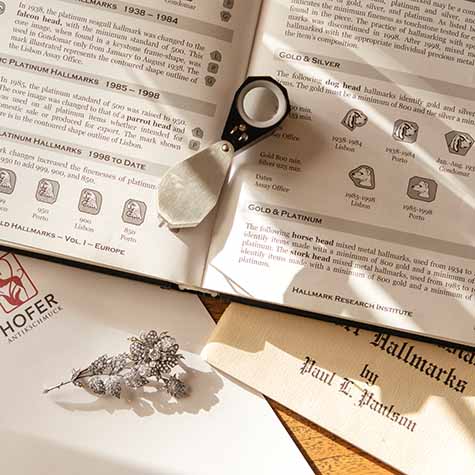
We want you to be 100% satisfied! For that reason, we examine, describe and photograph all of our jewellery with the utmost care.

You can rely on our years of experience in the trade and our expertise as a professional art historians for reviews of the antique jewellery. As a member of various trade organisations and the British Society of Jewellery Historians, we remain committed to the highest possible degree of accuracy. In our descriptions, we always also indicate any signs of age and defects and never hide them in our photos – this saves you from any unpleasant surprises when your package arrives.

Should you for some reason not be satisfied, please don’t hesitate to contact us so that we can find a solution together. In any case, you can return any article within one month and we will refund the full purchase price.
Learn more