Nectar and Ambrosia

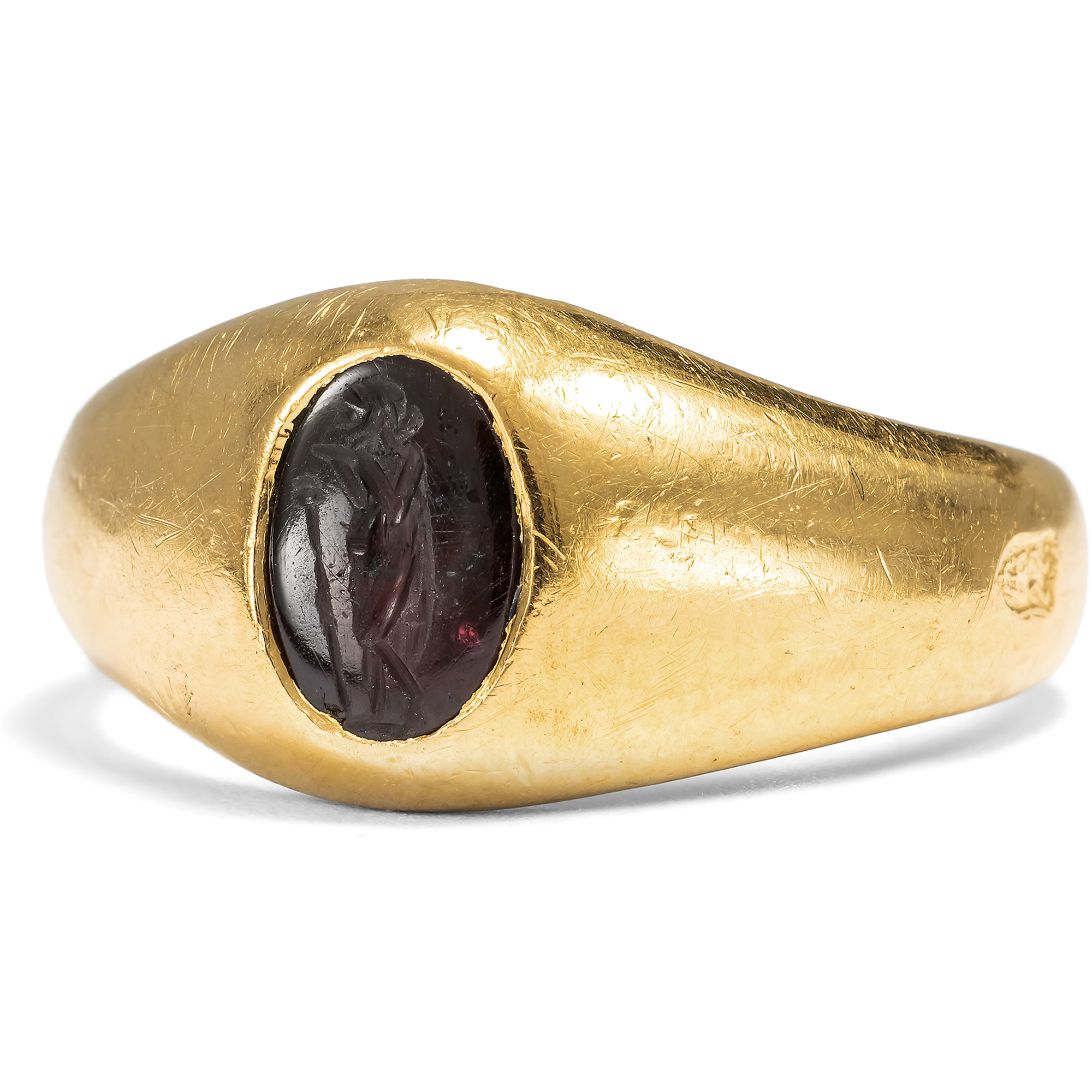
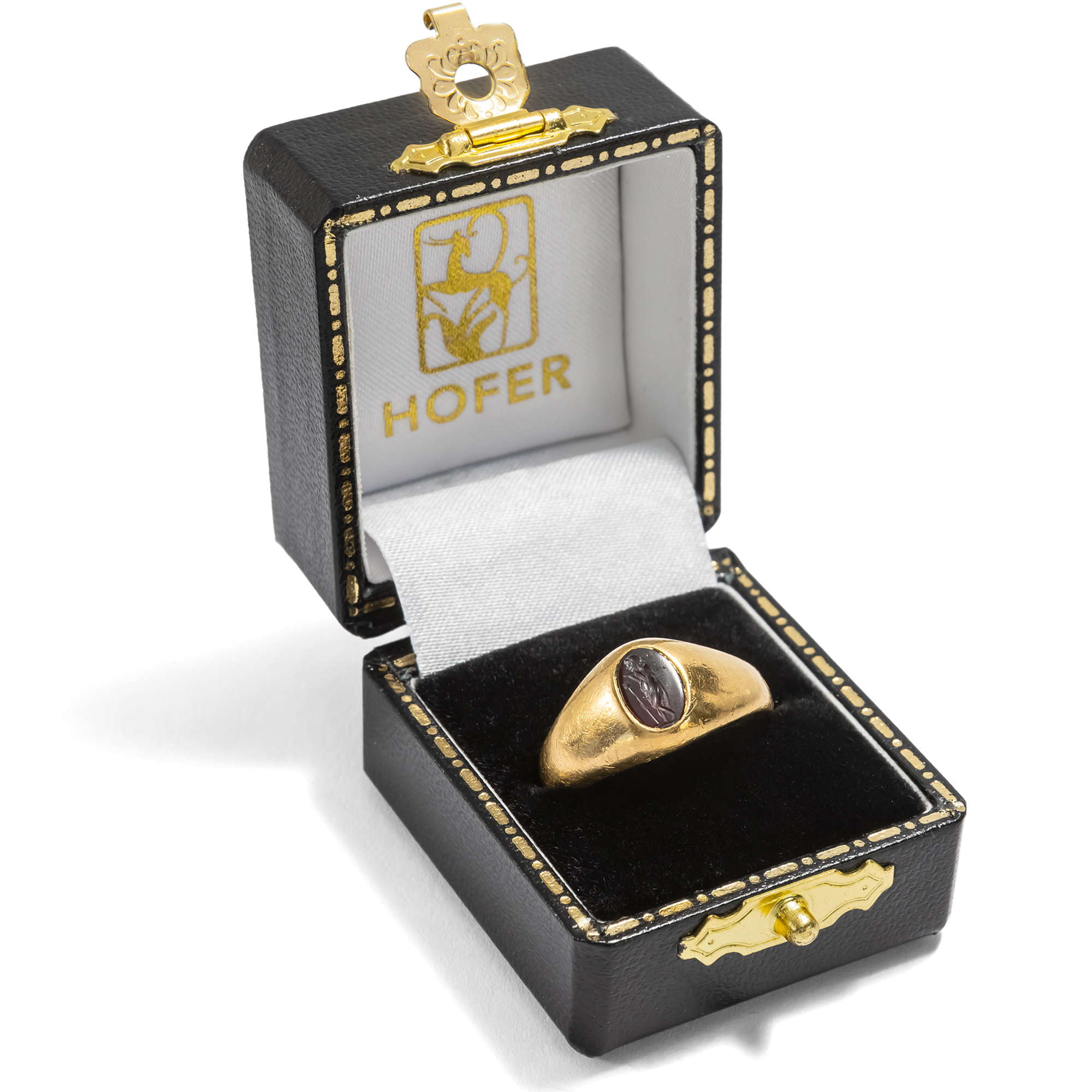
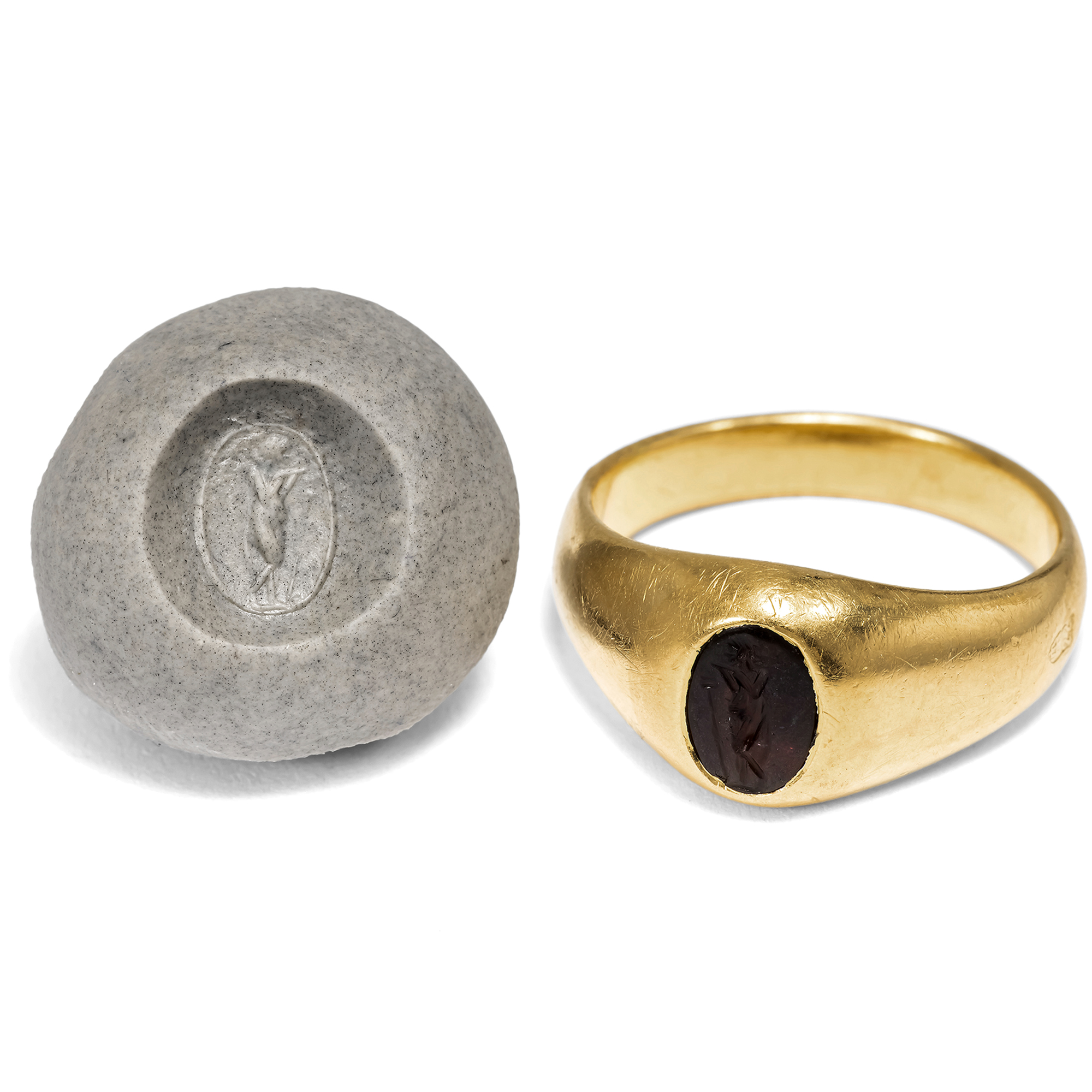
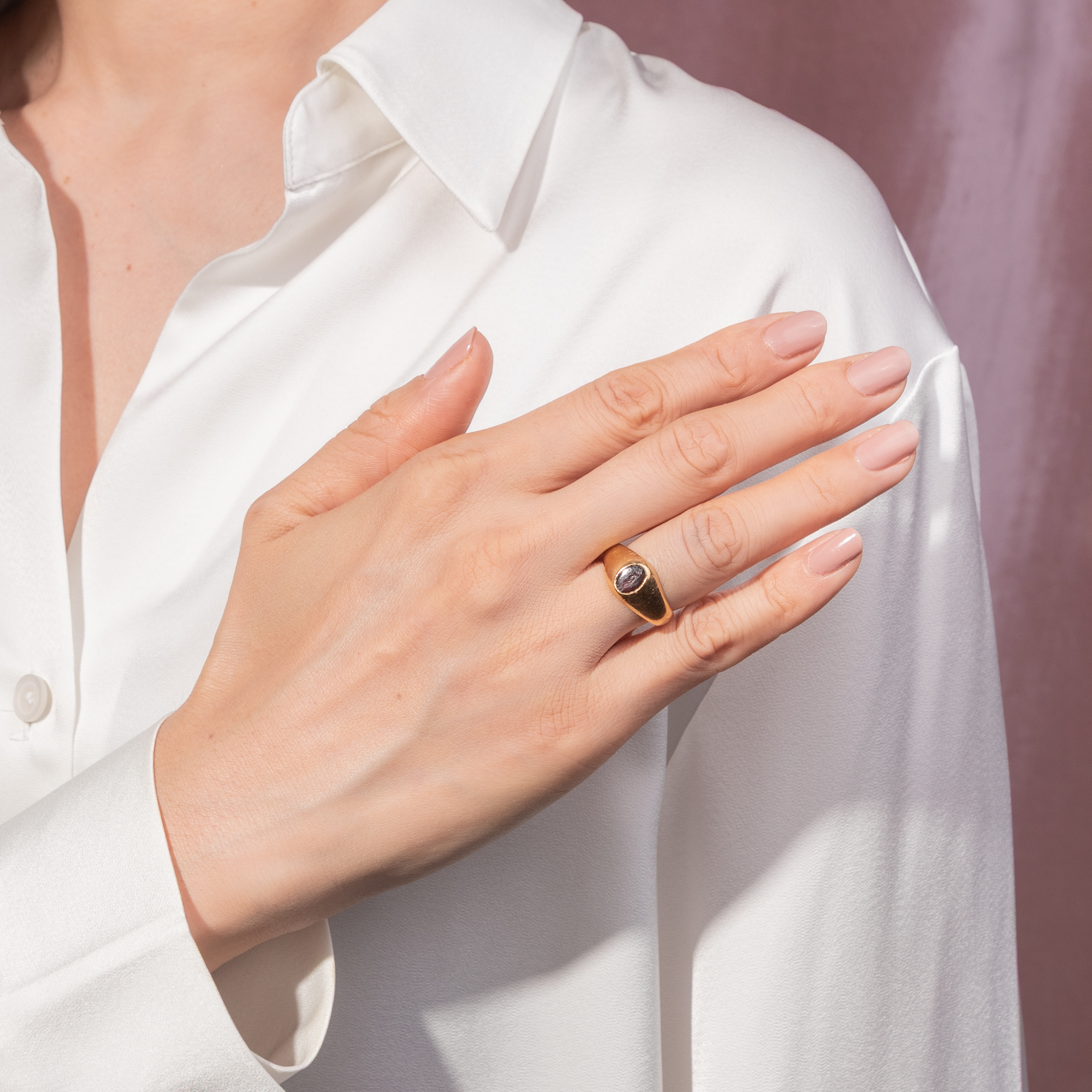
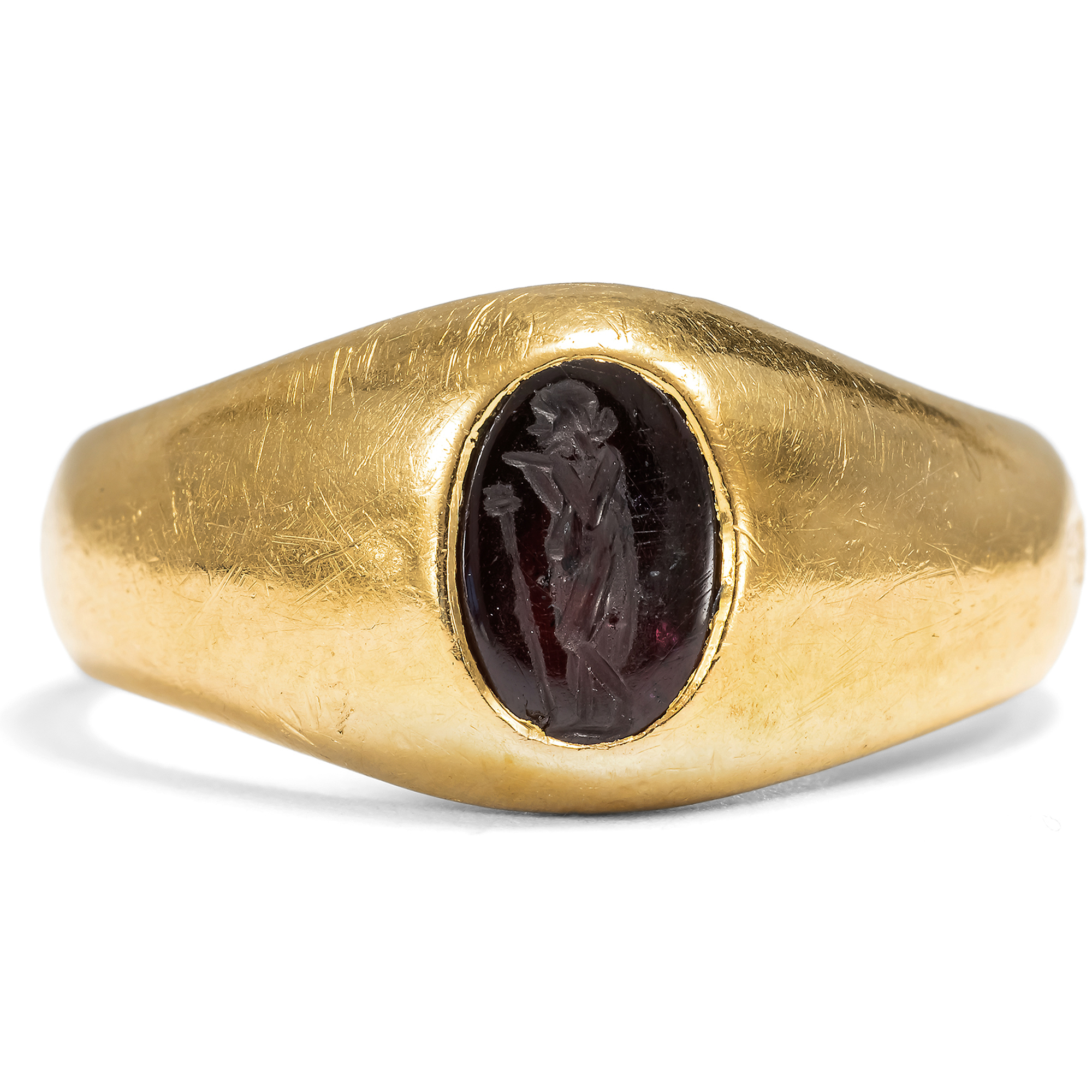
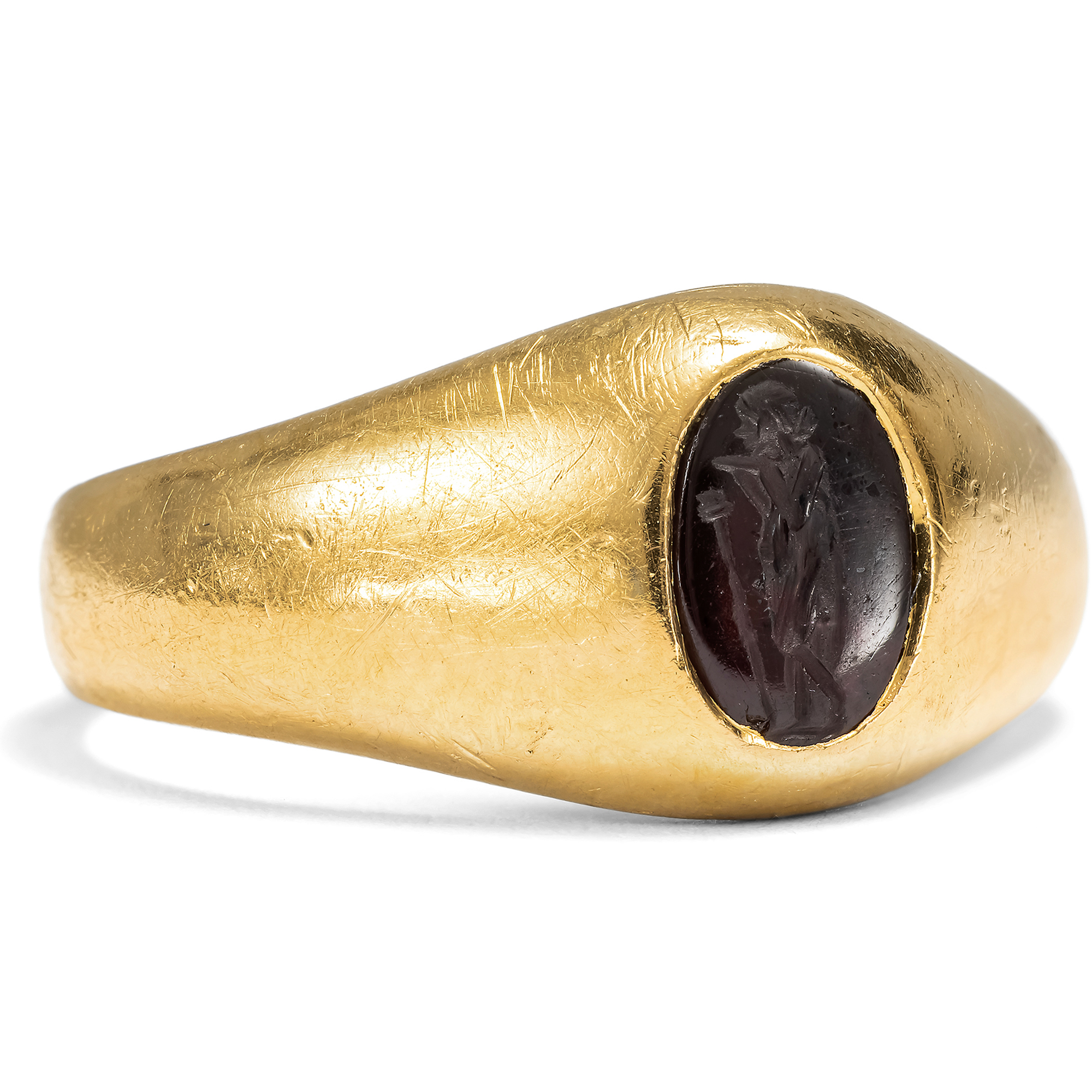
Roman cameo depicting Hebe in a Vintage Gold Ring, 2nd Century A.D. & circa 1985


€ 2,490.00 *
Content 1 piece
Incl. VAT, Shipping
Roman cameo depicting Hebe in a Vintage Gold Ring, 2nd Century A.D. & circa 1985
Description
This description was automatically translated from German. If you have any questions about this piece of jewellery, we will be happy to help!
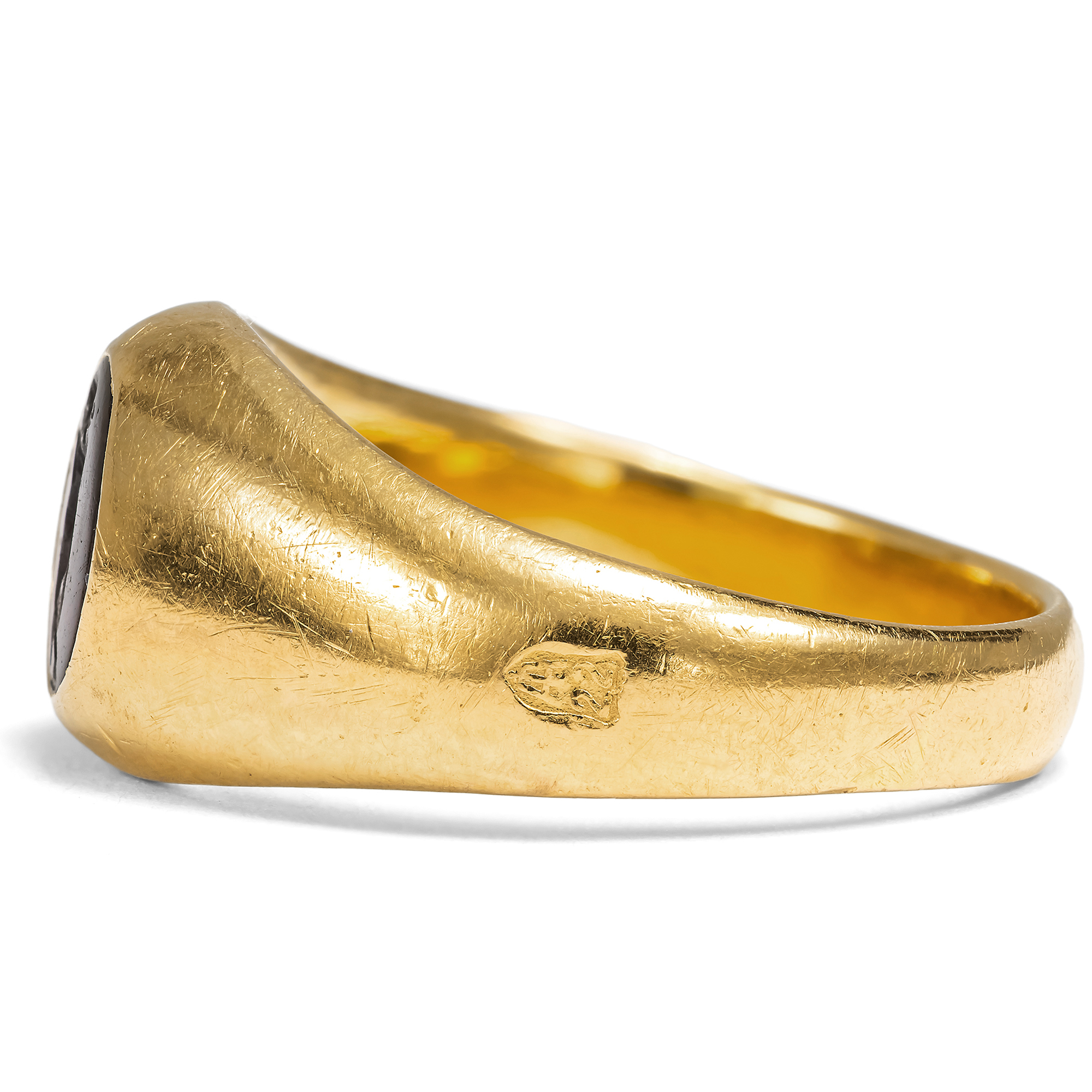
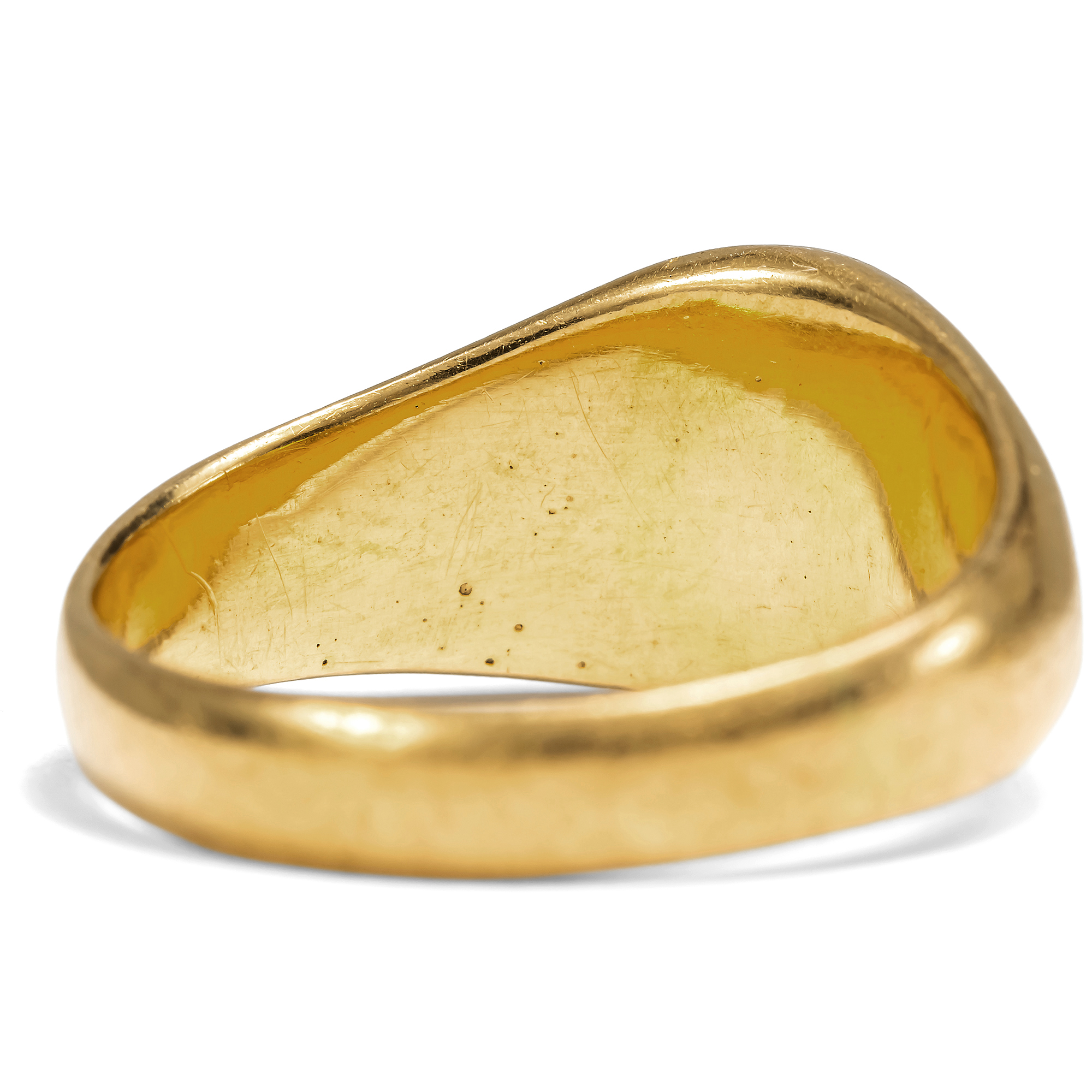
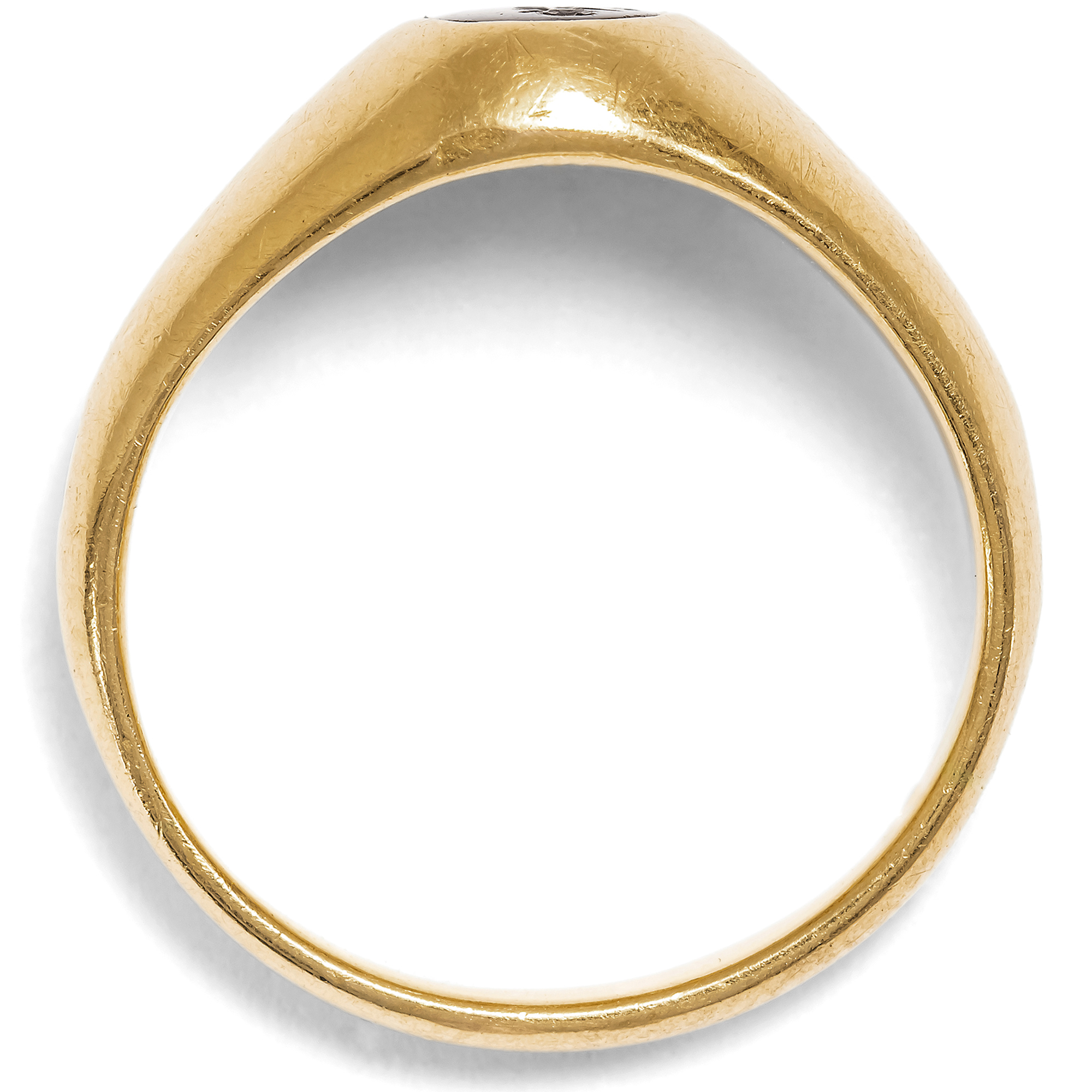
One of the most beautiful and fascinating areas of the jewellery world is the collecting of antique intaglios and cameos. These images, carved into hard stone and featuring either recessed or raised designs, offer such a wealth of motifs that a whole world of visual subjects opens up for every interest. There are cameos featuring portraits of famous figures and heroes, depictions of deities and mythical events, mementos of personal experiences, and narrative scenes from everyday life. Since cameos were widely used as jewellery in antiquity—and virtually every citizen wore such stones (and enjoyed giving them as gifts)—a relatively large number of original pieces have survived outside of museums. We are always particularly pleased to be able to offer such cameos. In Roman times, intaglios were carved from semi-precious stones for a wide variety of occasions. People had portraits of themselves carved into stone to give as gifts to friends and relatives. Intaglios were created as precious gifts from the emperors to honor soldiers, civil servants, or deserving citizens for their loyal service. Scenes from mythology and depictions of the gods served as protective amulets. This garnet cameo may also have been created in the hope of protection and good fortune. We see Hebe, the goddess of youth, depicted in the heavenly realm performing her most important duty. She is the cupbearer to the Olympian gods and is responsible for preparing their meals. Here she holds a bowl of ambrosia, the food of the gods, and appears to be tasting it. In Homer’s works, *The Iliad* and *The Odyssey*, nectar and ambrosia regularly appear as the food of the gods that grants immortality. According to mythological tradition, after her marriage to Heracles, Hebe graduated to this role, which was taken by the Trojan prince Ganymedes, who subsequently became the cupbearer of the gods. The cameo is set in a vintage 22-karat gold ring that was crafted for the cameo at the end of the 20th century. The ring came to us from the Hamburg art trade and is in very good condition.
Read more
Size & Details
Roman cameo depicting Hebe in a Vintage Gold Ring, 2nd Century A.D. & circa 1985
Nectar and Ambrosia
€ 2,490.00 *
Content 1 piece
Incl. VAT, Shipping
Our Promise
Our Promise
Our Promise

We want you to be 100% satisfied! For that reason, we examine, describe and photograph all of our jewellery with the utmost care.

You can rely on our years of experience in the trade and our expertise as a professional art historians for reviews of the antique jewellery. As a member of various trade organisations and the British Society of Jewellery Historians, we remain committed to the highest possible degree of accuracy. In our descriptions, we always also indicate any signs of age and defects and never hide them in our photos – this saves you from any unpleasant surprises when your package arrives.

Should you for some reason not be satisfied, please don’t hesitate to contact us so that we can find a solution together. In any case, you can return any article within one month and we will refund the full purchase price.

Learn more