Back To Black

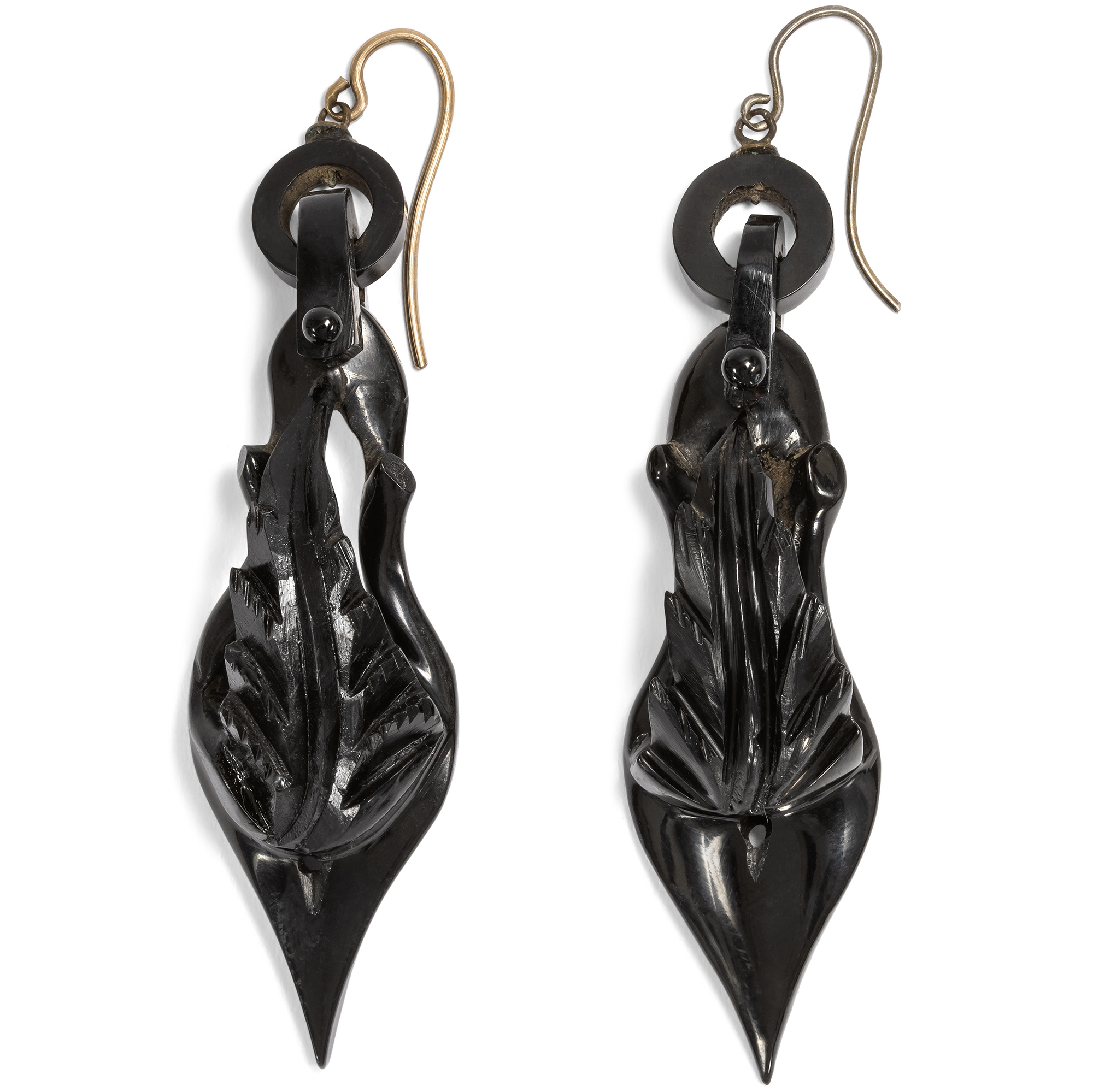
Victorian Earrings Made of Whitby Jett, England c. 1870


€ 369.00 *
Content 1 piece
Incl. VAT, Shipping
Victorian Earrings Made of Whitby Jett, England c. 1870
Description
This description was automatically translated from German. If you have any questions about this piece of jewellery, we will be happy to help!
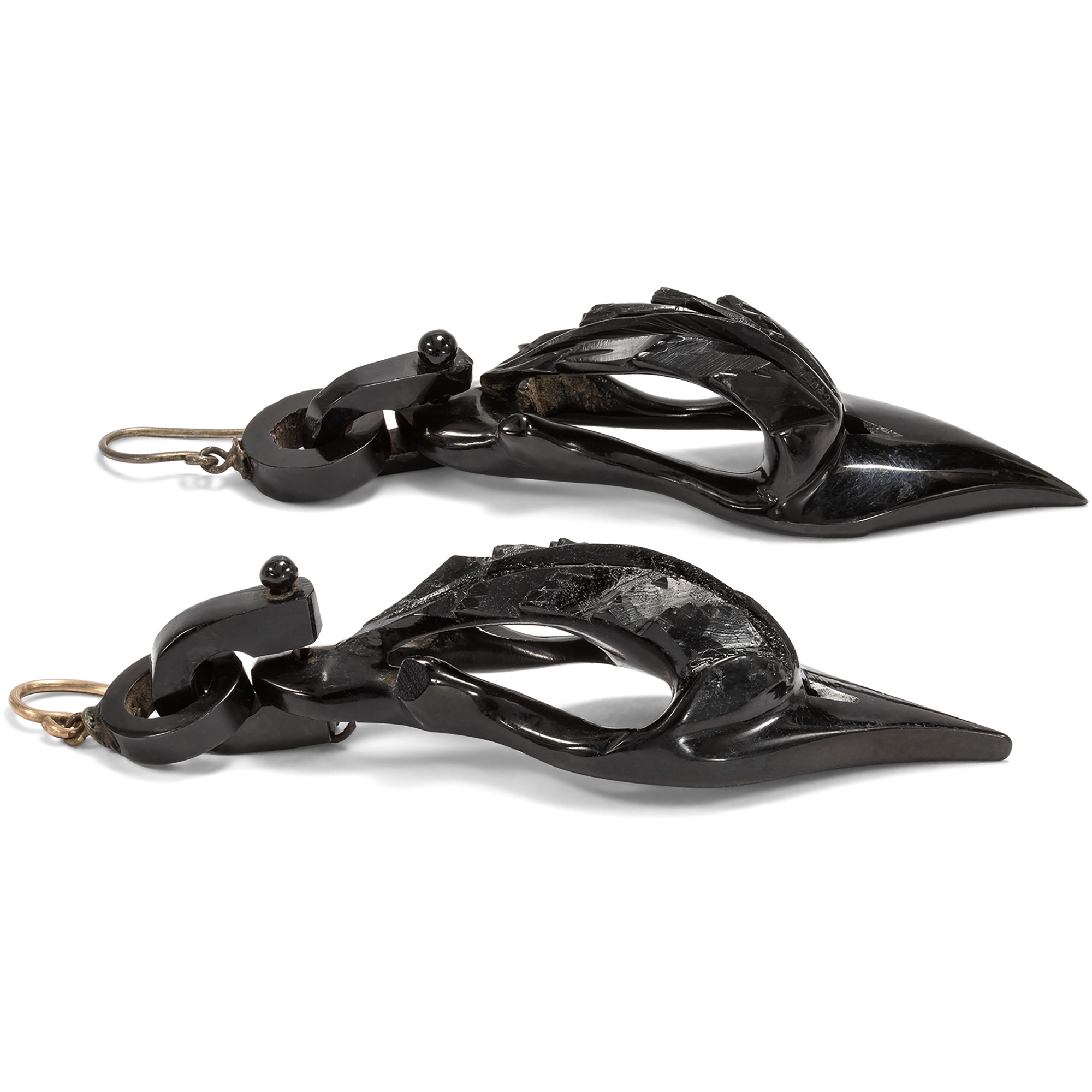
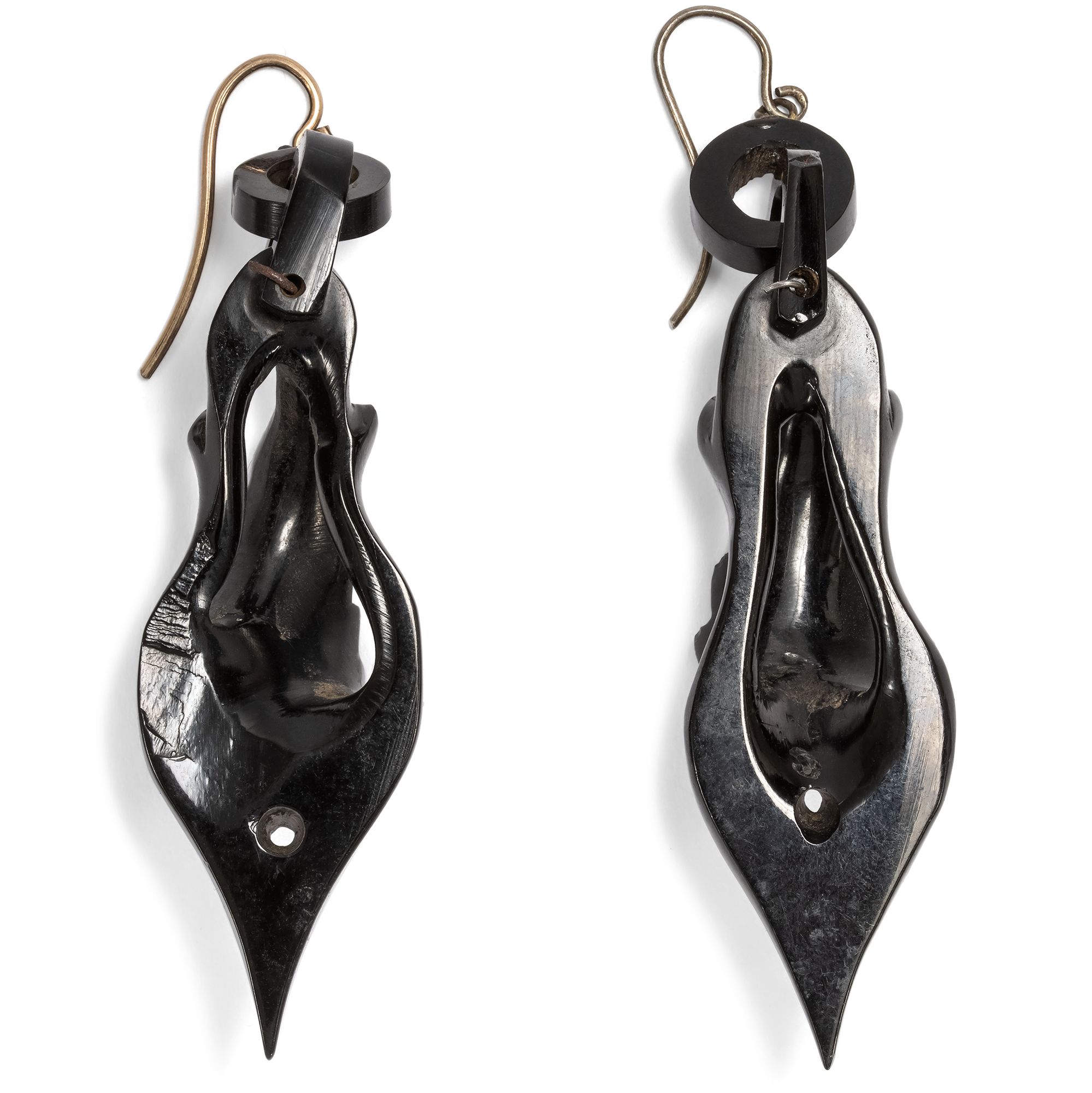
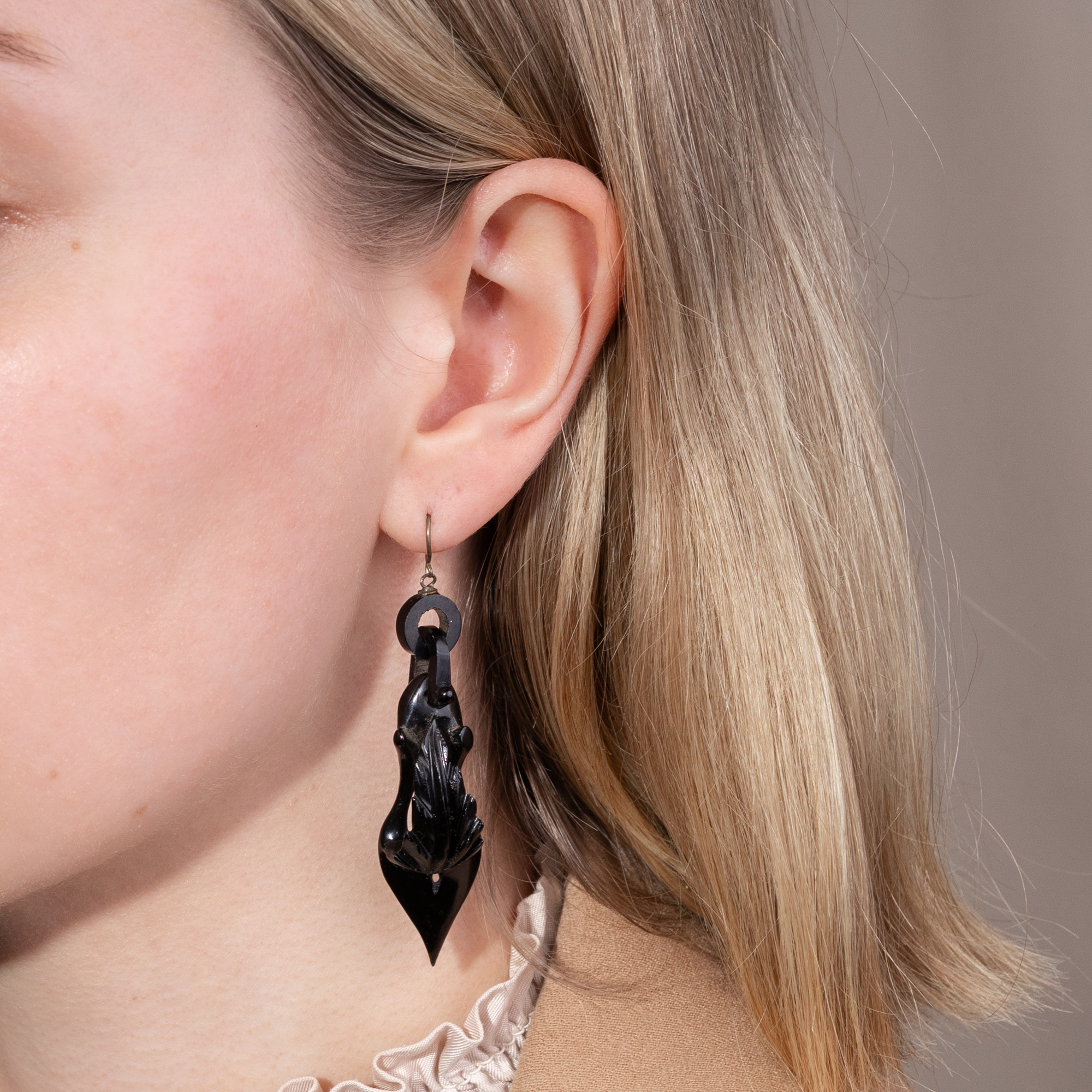
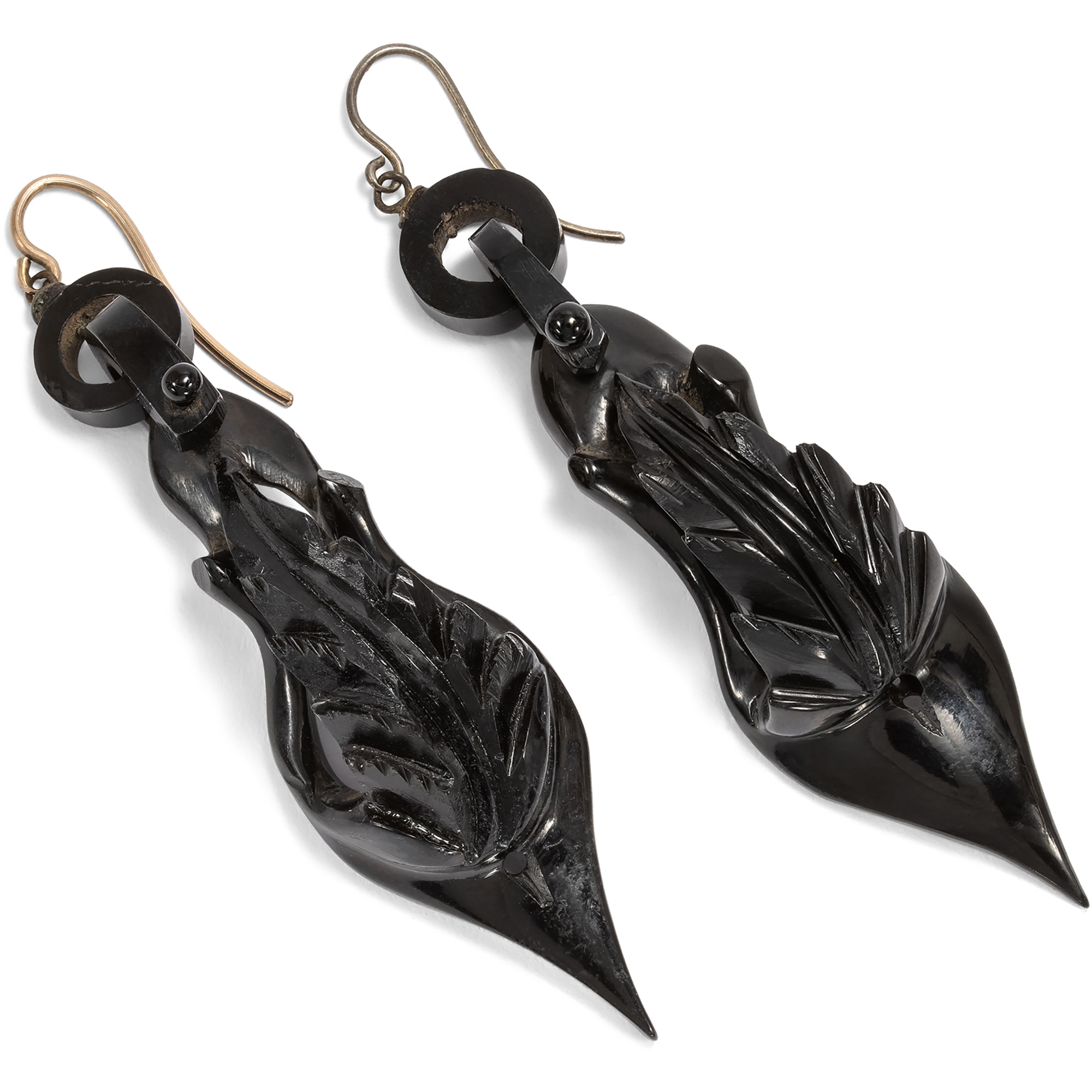
In December 1862, Albert, Queen Victoria's prince consort, died of thypus at the age of just 42. The death of her beloved husband hit the monarch hard. Victoria ordered a two-year period of national mourning and wore only mourning clothes for the rest of her life (an astonishing 39 years in total!). In general, mourning periods were precisely regulated in the 19th century and the associated regulations for appropriate clothing and mourning jewelry were strict: all colored jewellery was prohibited and only jewellery in the colours black, silver and white was permitted. It was during this time that the amazing upswing in English pieces of jewellery began. Jett is chemically a particularly dense carbon and can be polished to produce a lacquer-like sheen. The material is also relatively light and pleasantly warm when worn against the skin. The most important place where Jett was found was near Whitby in northern England, from where the material began its triumphal march around the world. This pair of earrings is one such piece of mourning jewelry made from jett. The large pendants are made up of three parts and feature openwork tropes in the middle of which carved fern fronds refract the light. Silver hooks complete the pendants. The light weight of the Jett makes the earrings surprisingly light despite their size. Today, freed from convention and regulations, the pair can also be used as a decorative accessory without sadness!
Learn more
Jett, gagat or "black amber" is a special form of fossilized coal that has been used as jewellery since prehistoric times due to its unique shine and ease of carving. The Romans were already making jewellery and amulets from this material; from the Middle Ages onwards, it was used in Europe to make mourning jewelry and rosaries. At the end of the 19th century, during the heyday of Jett fashion, Jett was mainly used for pieces of jewellery. Due to its light weight, the material made it possible to produce large pieces of jewellery, as was the fashion at the time. At this time, the main source of particularly high-quality jett was on the north coast of England near the fishing village of Whitby. From here, pieces of jewellery made of jett made their way all over Europe. The Great Exhibition of 1851 in London brought gagat carvings to worldwide attention, and after Queen Victoria banned the wearing of jewellery (with the exception of jett) at the English court following the death of the Prince Consort in 1861, jett was long regarded as mourning jewelry until it became an integral part of fashion that could be worn without being displayed for mourning.
Learn more
Read more
Size & Details
Victorian Earrings Made of Whitby Jett, England c. 1870
Back To Black
€ 369.00 *
Content 1 piece
Incl. VAT, Shipping
Our Promise
Our Promise
Our Promise

We want you to be 100% satisfied! For that reason, we examine, describe and photograph all of our jewellery with the utmost care.

You can rely on our years of experience in the trade and our expertise as a professional art historians for reviews of the antique jewellery. As a member of various trade organisations and the British Society of Jewellery Historians, we remain committed to the highest possible degree of accuracy. In our descriptions, we always also indicate any signs of age and defects and never hide them in our photos – this saves you from any unpleasant surprises when your package arrives.

Should you for some reason not be satisfied, please don’t hesitate to contact us so that we can find a solution together. In any case, you can return any article within one month and we will refund the full purchase price.

Learn more