Cupid and Hebe

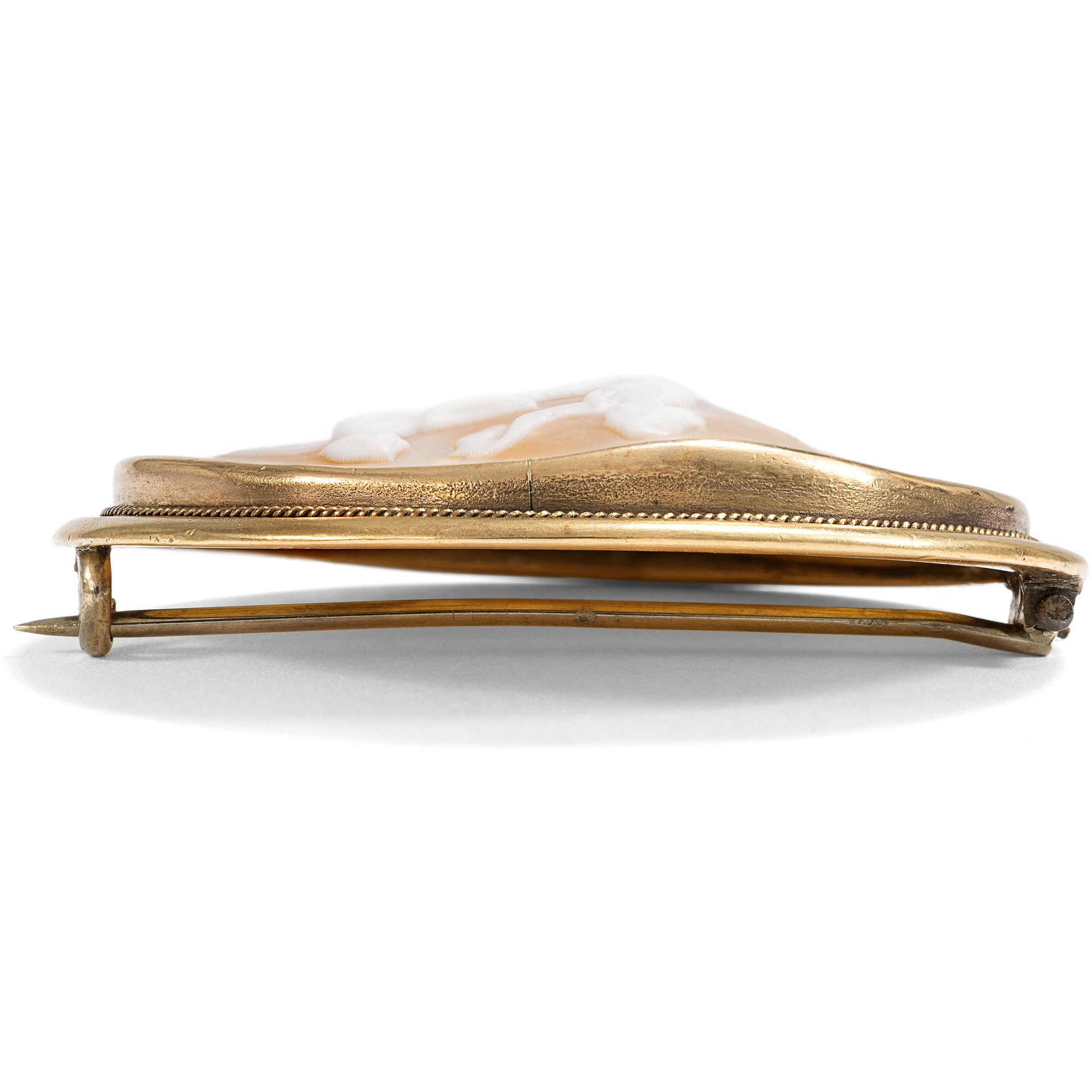
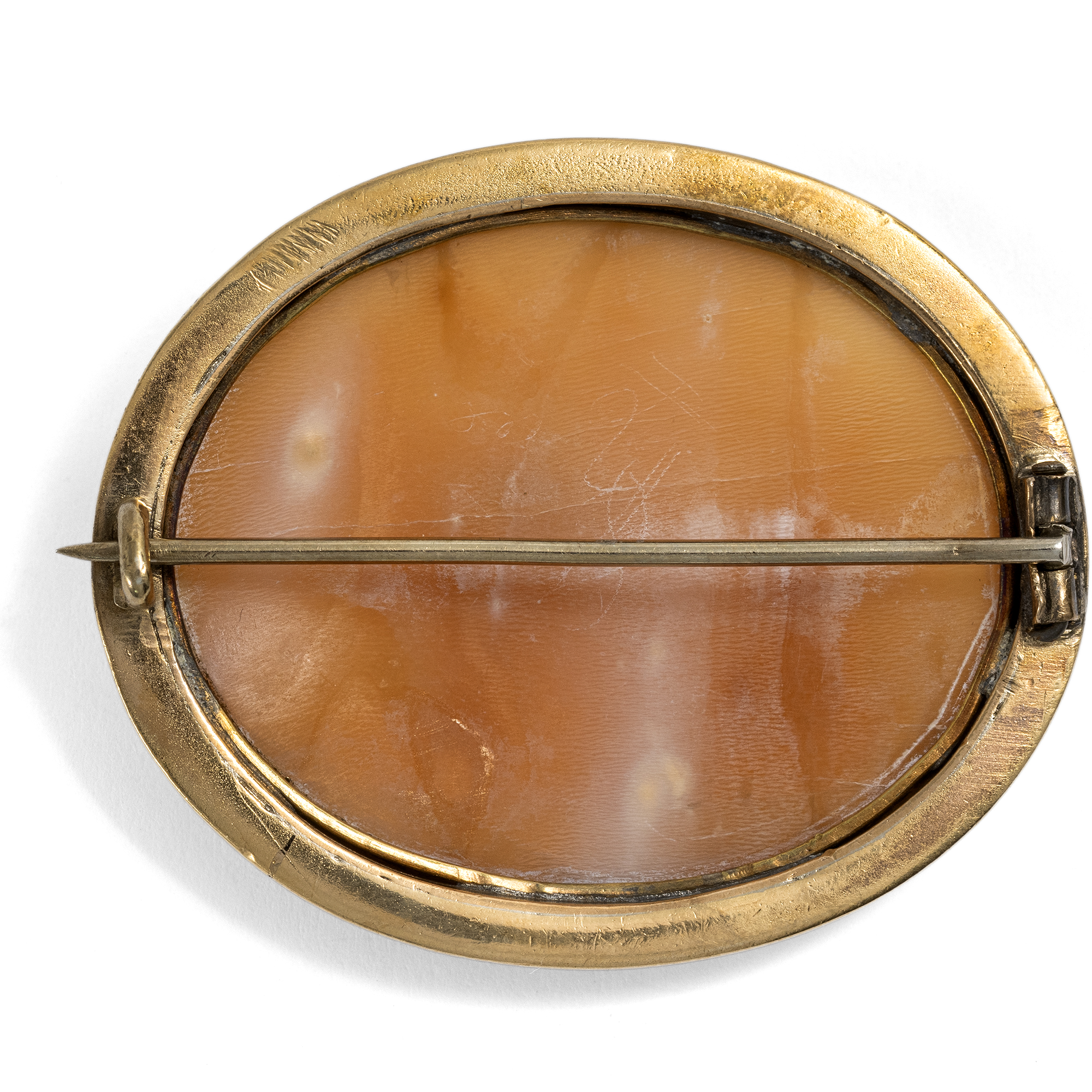
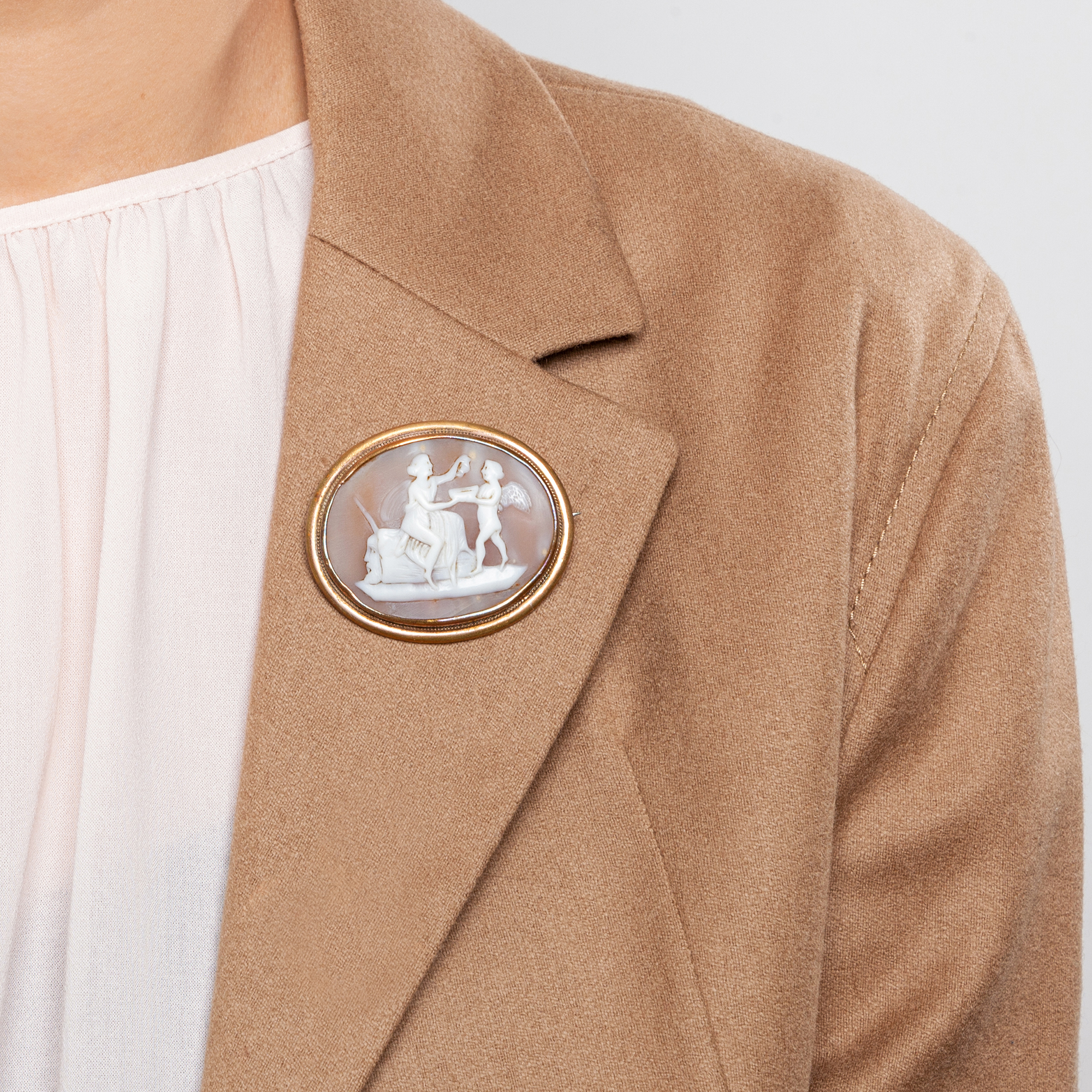
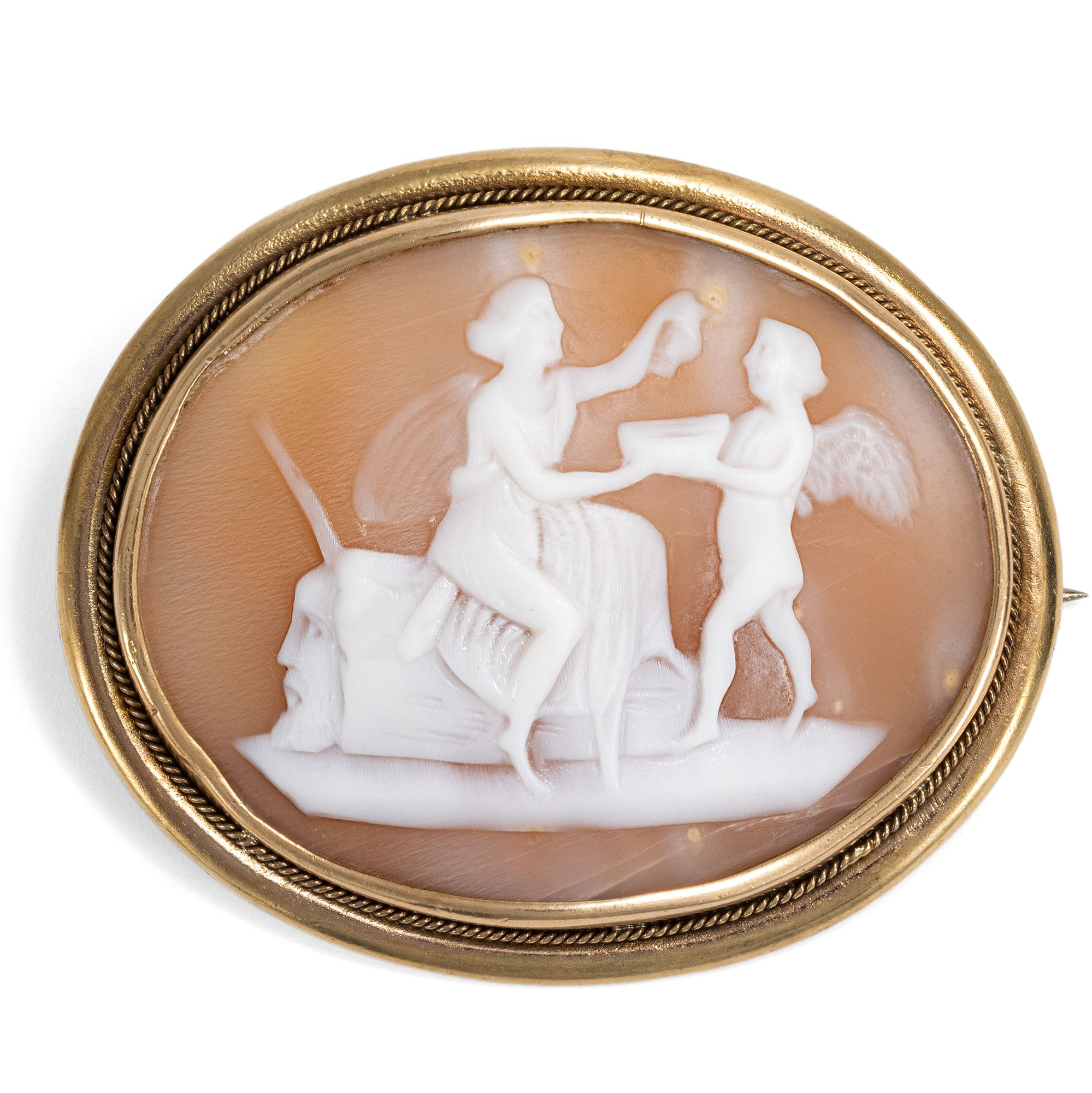
Antique Brooch with a Shell Cameo in Tombak, c. 1870


€ 289.00 *
Content 1 piece
Incl. VAT, Shipping
Antique Brooch with a Shell Cameo in Tombak, c. 1870
Description
This description was automatically translated from German. If you have any questions about this piece of jewellery, we will be happy to help!
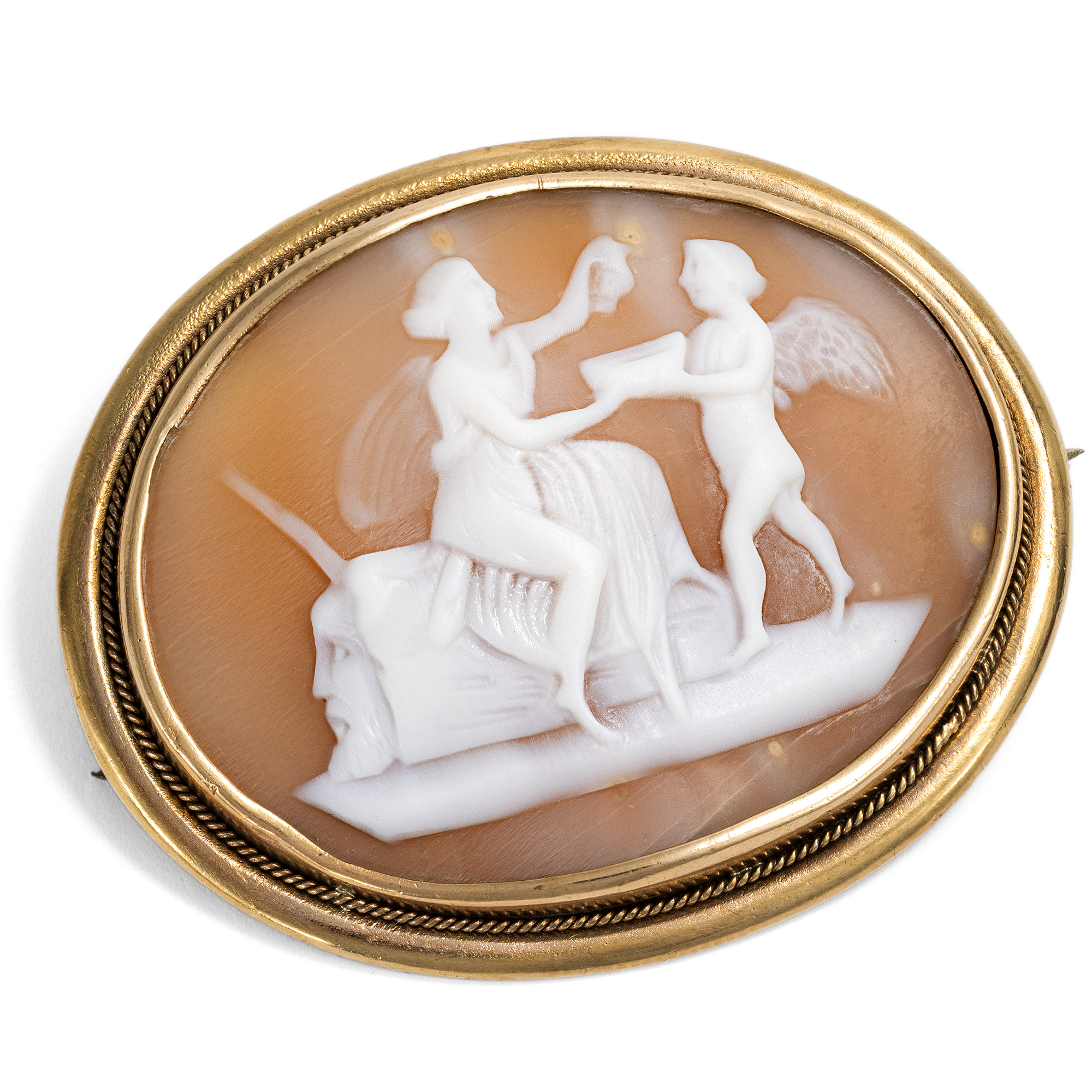
This oblong oval cameo depicts a finely carved mythological scene featuring Cupid and Hebe, whose portrayal is entirely in keeping with the classical interest in the imagery of antiquity. The figures and attributes emerge in light relief from the dark background of the shell, giving the composition the appearance of an ancient marble relief in miniature. At the center stands Hebe, the goddess of youth and cupbearer to the Olympian gods, depicted as a graceful young woman dressed in the style of antiquity. In her raised hand, she holds a vessel, which she appears to be offering to Cupid, who stands opposite her. Cupid is clearly depicted as a naked, winged boy. The encounter between these two deities brings together two of the great timeless themes of ancient mythology: youth and love. The drink offered by Hebe can be interpreted as the nectar of the gods and, thus, as a symbol of eternal youth. Noteworthy is the mask placed at the left edge of the picture. It adds another, possibly allegorical, layer of meaning to the depiction. Masks appear in ancient art particularly in Dionysian and theatrical contexts and were adopted in Classicism as immediately recognizable symbols of ancient culture. Its association with Hebe and Cupid lends the scene a playful, almost bucolic-theatrical character, without necessarily implying a specific mythological episode. This is precisely what makes the depiction so appealing: the focus is not on illustrating a specific event, but rather on the poetic interplay of ancient symbols. Youth, love, and the joy of life are woven together into a cheerful allegory. In terms of material, technique, and composition, the cameo illustrates the 19th-century fascination with classical antiquity within the context of European Classicism and the Grand Tour. Ancient sculptures, reliefs, and carved stones provided cameo cutters with a rich reservoir of motifs that could be freely referenced and combined into new compositions. The understated tombac setting deliberately allows the sculpturally carved depiction to take center stage. Thus, the cameo stands as a characteristic testament to the classical enthusiasm for antiquity: a small, wearable relief in which the ideals of beauty, youth, and love are intertwined with a longing for the world of antiquity.
Learn more
For centuries, owning ancient gems and cameos was a goal of nearly all major decorative arts collections and cabinets of curiosities—from the Green Vault in Dresden to the Treasury of Rudolf II, to significant private collections such as that of Baron von Stosch in later times. The 18th and 19th centuries produced numerous large collections of impressions of ancient sealstones and cameos that were capable of reproducing the visual language of ancient glyptics almost in its entirety. These collections were also an expression of humanistic education. Figures from the pantheon of Olympian gods or mythological scenes often took center stage in these depictions. Travelers to Italy have always been particularly important for the dissemination of stone and shell engravings north of the Alps; they brought back impressions, carved stones, and engraved shells from their educational journeys—to delight in the stories these shells had to tell. The art of cameo cutting has survived to this day in Italy, particularly in the Bay of Naples, where it has been passed down from generation to generation. Today, the Scuola dei Cammei in Torre del Greco is the world’s only large-scale training center for cameo cutters in Italy—though, unfortunately, the mythological themes have largely been lost.
Learn more
Read more
Size & Details
Antique Brooch with a Shell Cameo in Tombak, c. 1870
Cupid and Hebe
€ 289.00 *
Content 1 piece
Incl. VAT, Shipping
Our Promise
Our Promise
Our Promise

We want you to be 100% satisfied! For that reason, we examine, describe and photograph all of our jewellery with the utmost care.

You can rely on our years of experience in the trade and our expertise as a professional art historians for reviews of the antique jewellery. As a member of various trade organisations and the British Society of Jewellery Historians, we remain committed to the highest possible degree of accuracy. In our descriptions, we always also indicate any signs of age and defects and never hide them in our photos – this saves you from any unpleasant surprises when your package arrives.

Should you for some reason not be satisfied, please don’t hesitate to contact us so that we can find a solution together. In any case, you can return any article within one month and we will refund the full purchase price.

Learn more