Keeping Up With the Etruscans

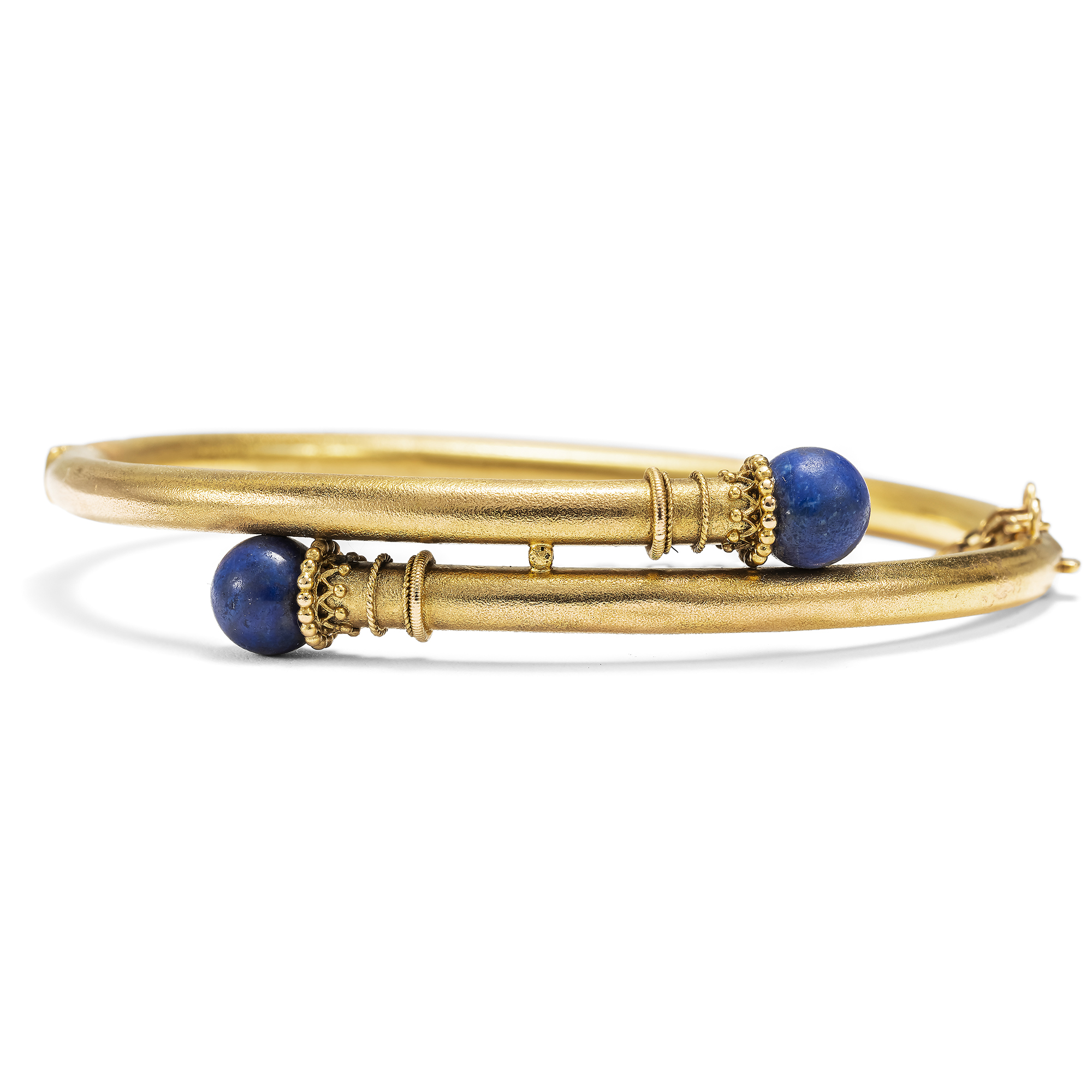
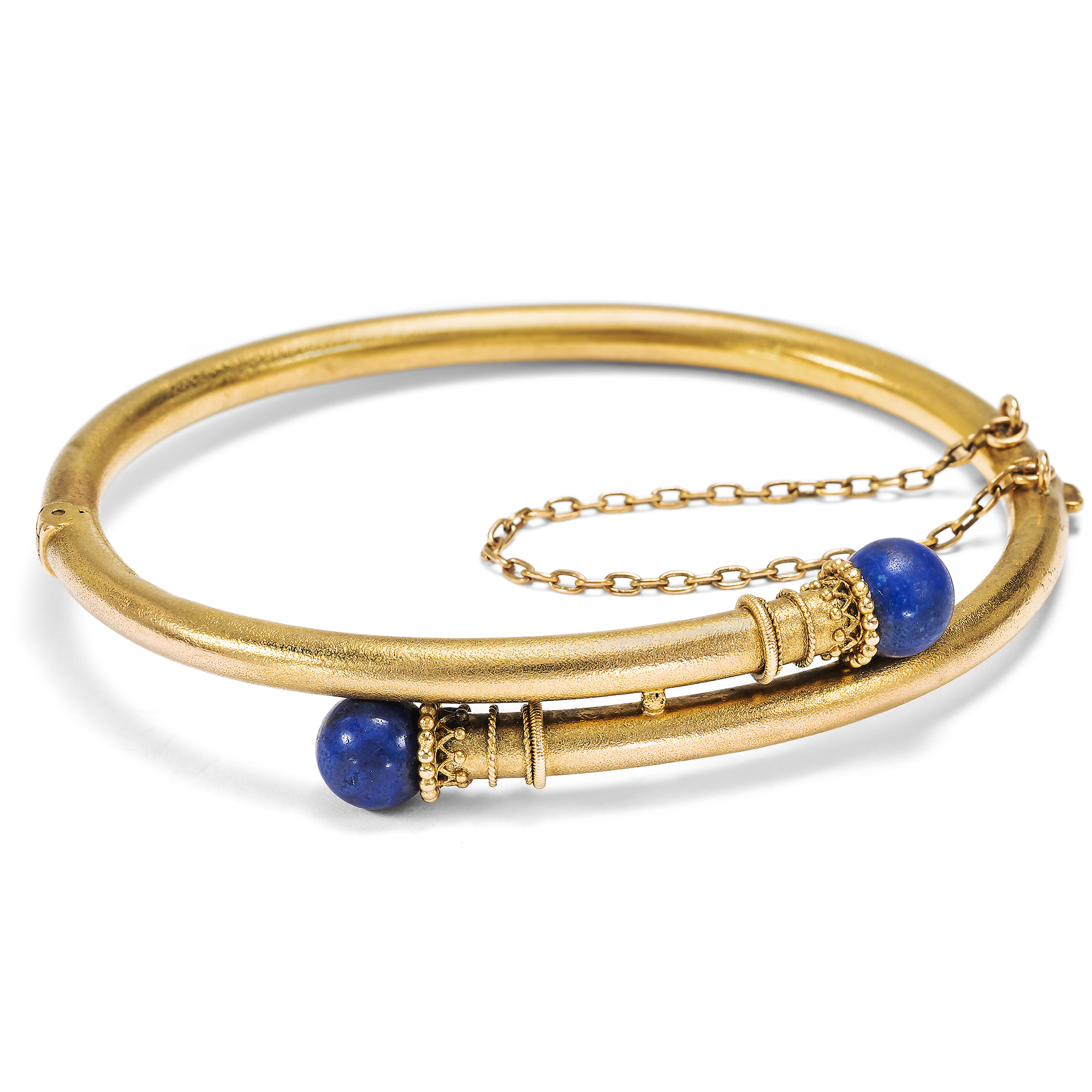
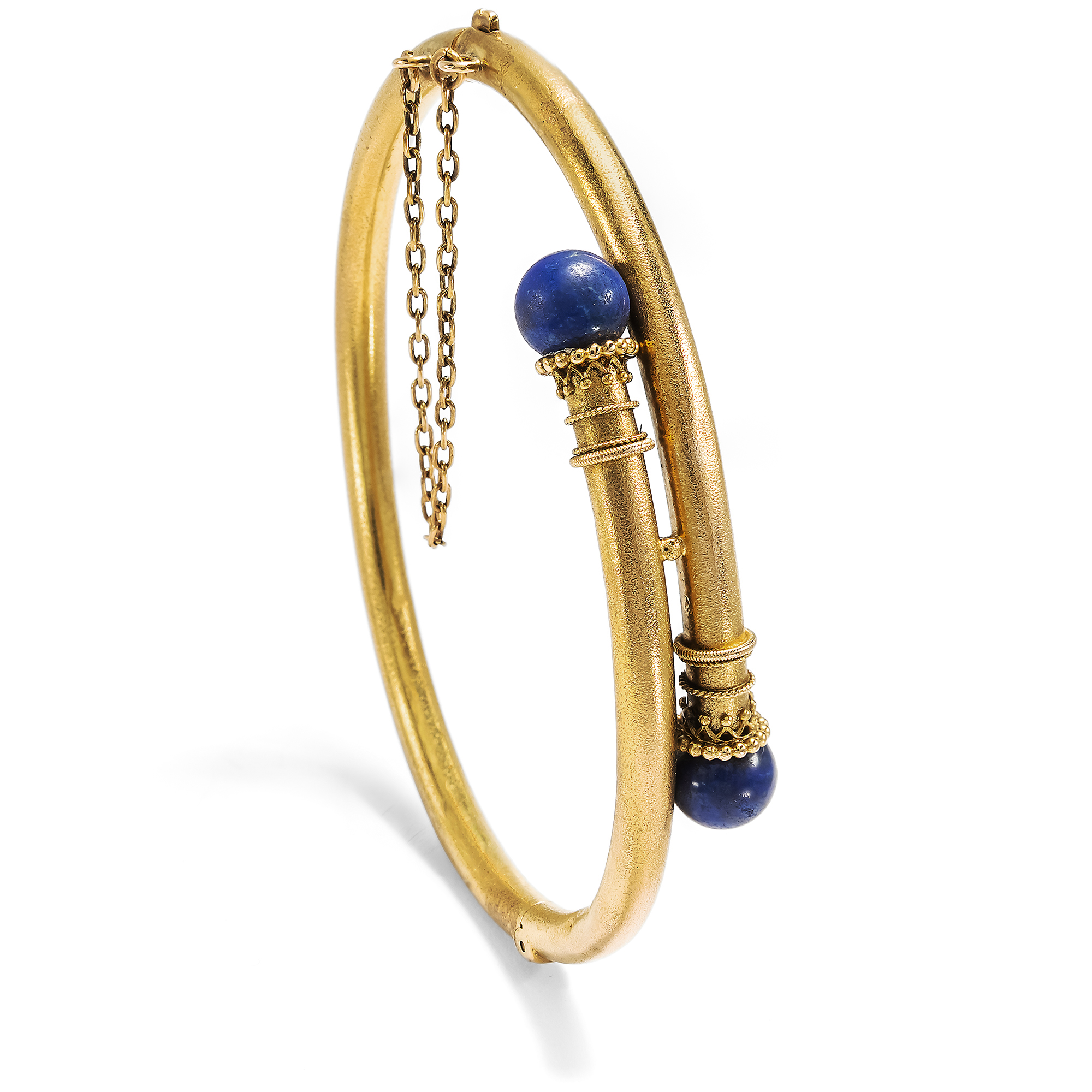
Antique Gold and Lapis Lazuli Bangle in an Archaeological Style, circa 1870


€ 1,590.00 *
Content 1 piece
Incl. VAT, Shipping
Antique Gold and Lapis Lazuli Bangle in an Archaeological Style, circa 1870
Description
This description was automatically translated from German. If you have any questions about this piece of jewellery, we will be happy to help!
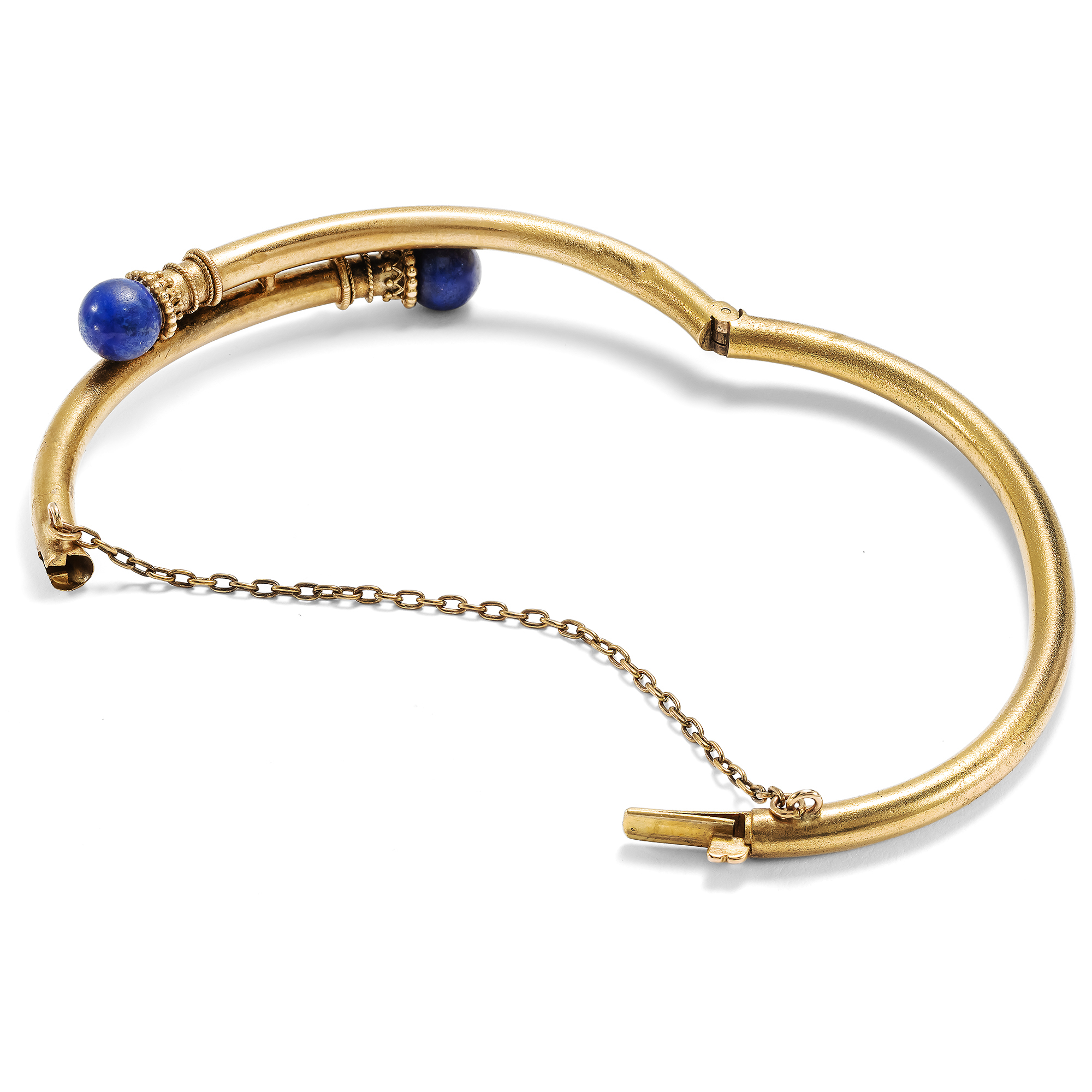
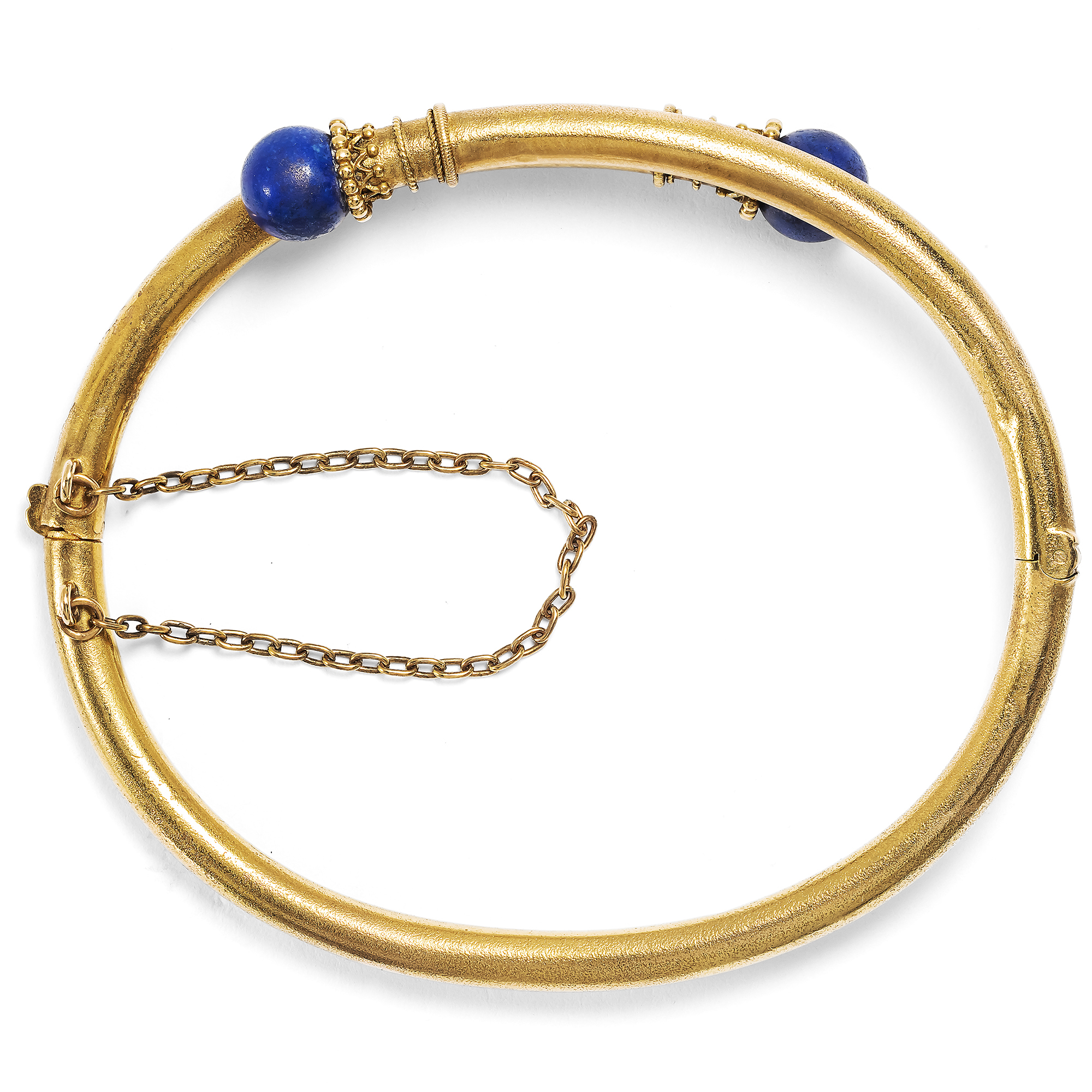
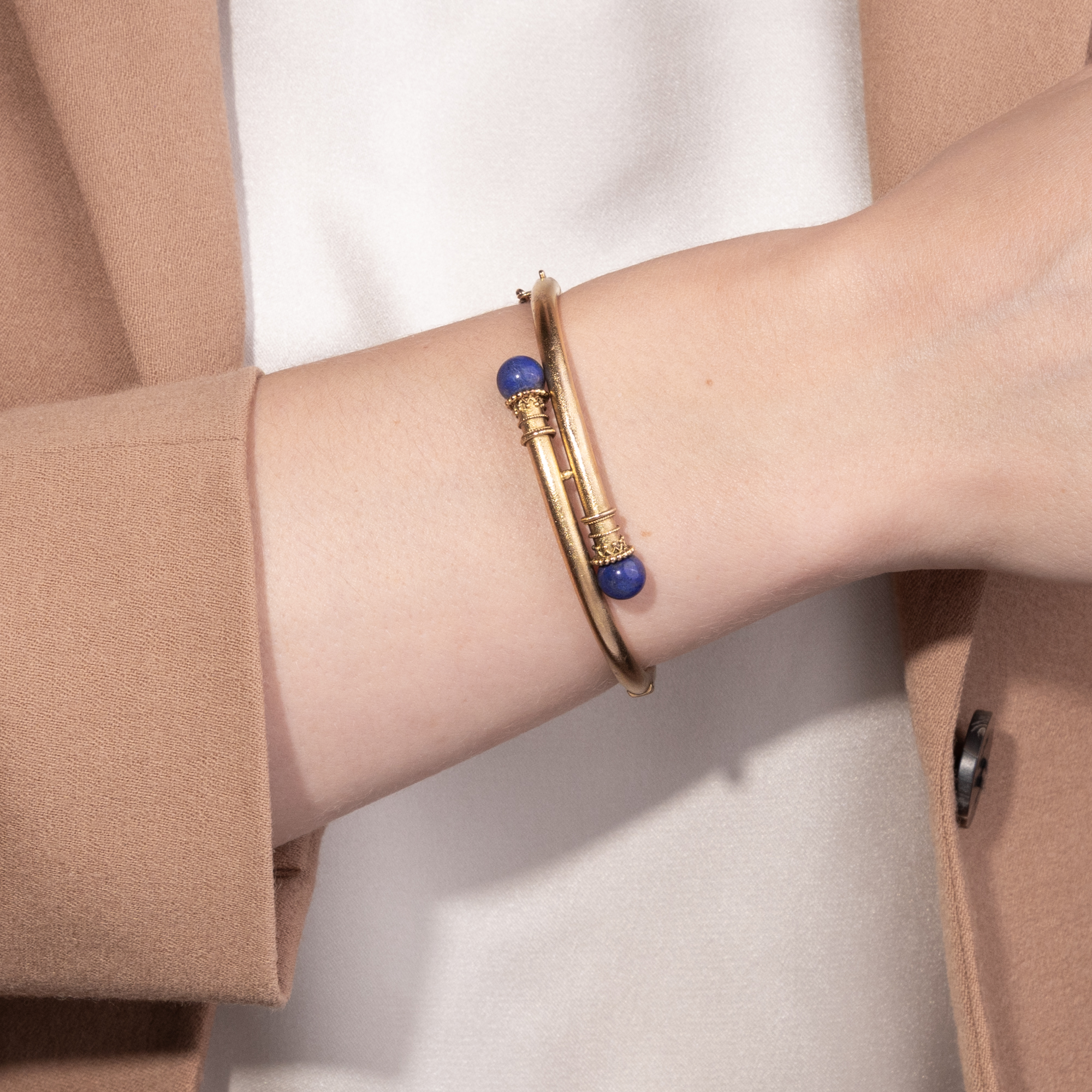
In earlier centuries, fashions and aesthetic preferences changed very slowly for a long time. In the 19th century, however, this change accelerated dramatically. The history of jewelry saw as many fashions as there were generations in the hundred years between 1800 and 1900. The driving force behind this—and this may come as a surprise from today’s perspective—was history: jewellery was created in the Gothic style, as well as in the styles of the Renaissance, the Baroque, and the Rococo. Only antiquity was long absent as a model. This changed after spectacular archaeological discoveries in the necropolises of Tarquinia and Vulci in the late 1820s led to the rediscovery of the jewelry of antiquity. With a slight delay, these artifacts from the mysterious Etruscan people of Tuscany began to inspire jewelry designers as well, starting in the mid-century. Pio Castellani of Rome and his sons were particularly prominent in this regard. In Germany and Austria, similar pieces began to appear in the mid-1860s. The bangle presented here is a fine example of this so-called “Archaeological Style.” It is crafted from matte gold and designed as a simple rod wrapped around the arm. At each end, the design features a lapis lazuli bead. The only other decorative elements are twisted gold bands wrapped around the bangle in front of the beads. These bands vary in size and provide the necessary visual closure at the ends of the piece of jewellery. The intense colours—deep blue and pale gold—as well as the combination of intricate ornamentation and large, smooth surfaces are quite typical of jewellery modeled after antiquity. Above all, however, it is the design that wraps around the arm with two open ends that has proven successful in the history of jewellery: It is modeled directly after ancient designs—see, for example, this bracelet at the Art Institute of Chicago—and continues to be reinterpreted in various forms to this day: Ultimately, even Cartier’s Juste un Clou bracelets are a later legacy of this design concept. For a detailed discussion of the Castellani jewellery, see Susan Weber Soros and Stefani Walker (eds.): Castellani and Italian Archaeological Jewellery, New Haven/London 2004.
Learn more
Lapis lazuli has been prized since ancient times for its distinctive colour. The stone, which has been mined in the mountains of Afghanistan since antiquity, was not only used as a gemstone but was just as often ground into a precious pigment for painting. Artists such as Giotto and Michelangelo used lapis lazuli in some of their most significant works, whose blue continues to inspire awe to this day with its extraordinary luminosity. In his famous book *i* (The Reality of Pictures. Painting and Experience in Renaissance Italy, Michael Baxandall described how artists and patrons in Renaissance Florence specified in detailed contracts exactly how much lapis pigment was to be used, for example, for the Madonna’s cloak in a fresco. Since the pigment was extraordinarily precious, its purchase accounted for a significant portion of a painting’s total cost; at times, it even cost more than the artist’s fee. The pigment reached Europe primarily via Venice, where it was known as azzurro ultramarino—“the blue from beyond the sea.” The name ultramarine blue is still derived from this Italian term today.
Learn more
Read more
Size & Details
Antique Gold and Lapis Lazuli Bangle in an Archaeological Style, circa 1870
Keeping Up With the Etruscans
€ 1,590.00 *
Content 1 piece
Incl. VAT, Shipping
Our Promise
Our Promise
Our Promise

We want you to be 100% satisfied! For that reason, we examine, describe and photograph all of our jewellery with the utmost care.

You can rely on our years of experience in the trade and our expertise as a professional art historians for reviews of the antique jewellery. As a member of various trade organisations and the British Society of Jewellery Historians, we remain committed to the highest possible degree of accuracy. In our descriptions, we always also indicate any signs of age and defects and never hide them in our photos – this saves you from any unpleasant surprises when your package arrives.

Should you for some reason not be satisfied, please don’t hesitate to contact us so that we can find a solution together. In any case, you can return any article within one month and we will refund the full purchase price.

Learn more