Treasures of the Sea

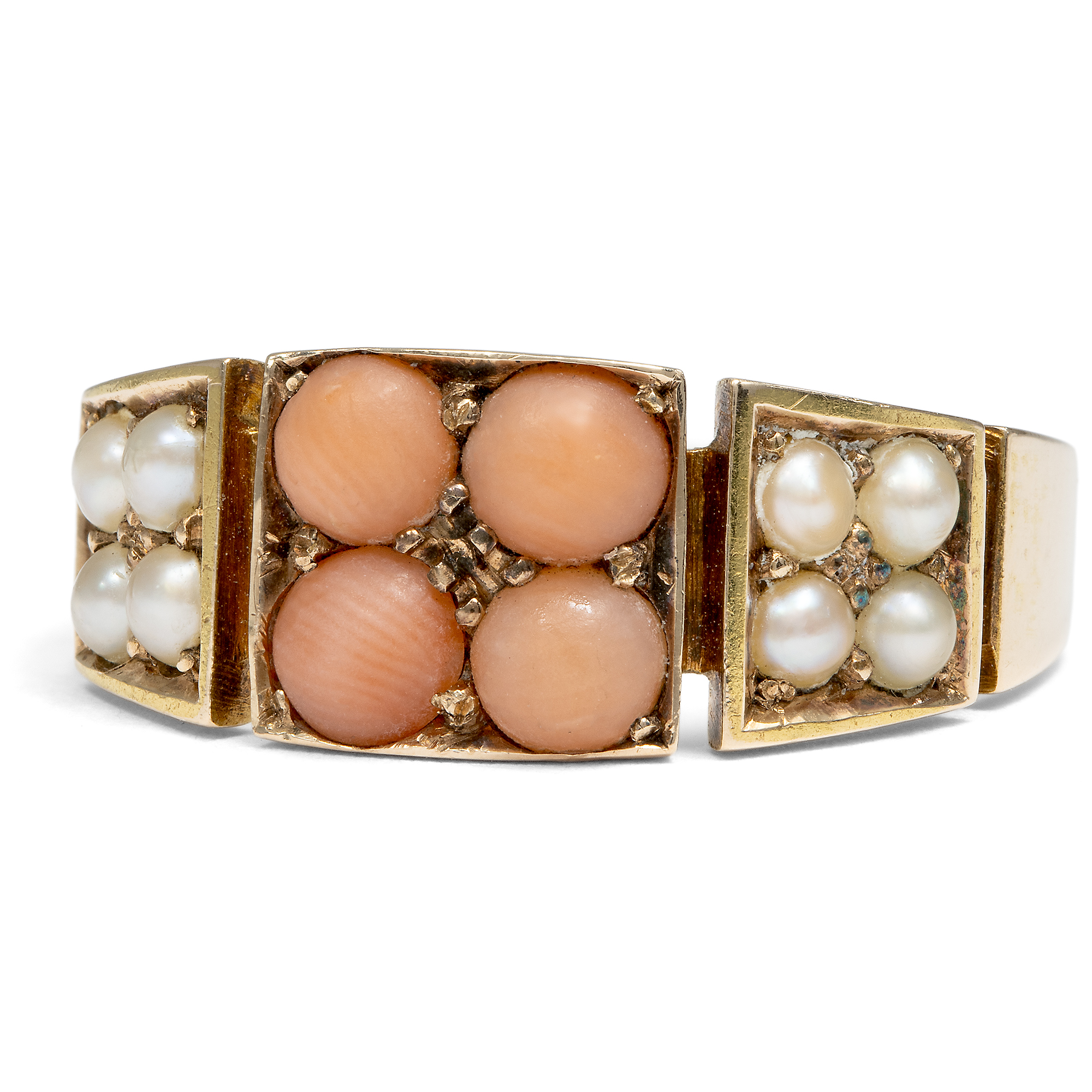
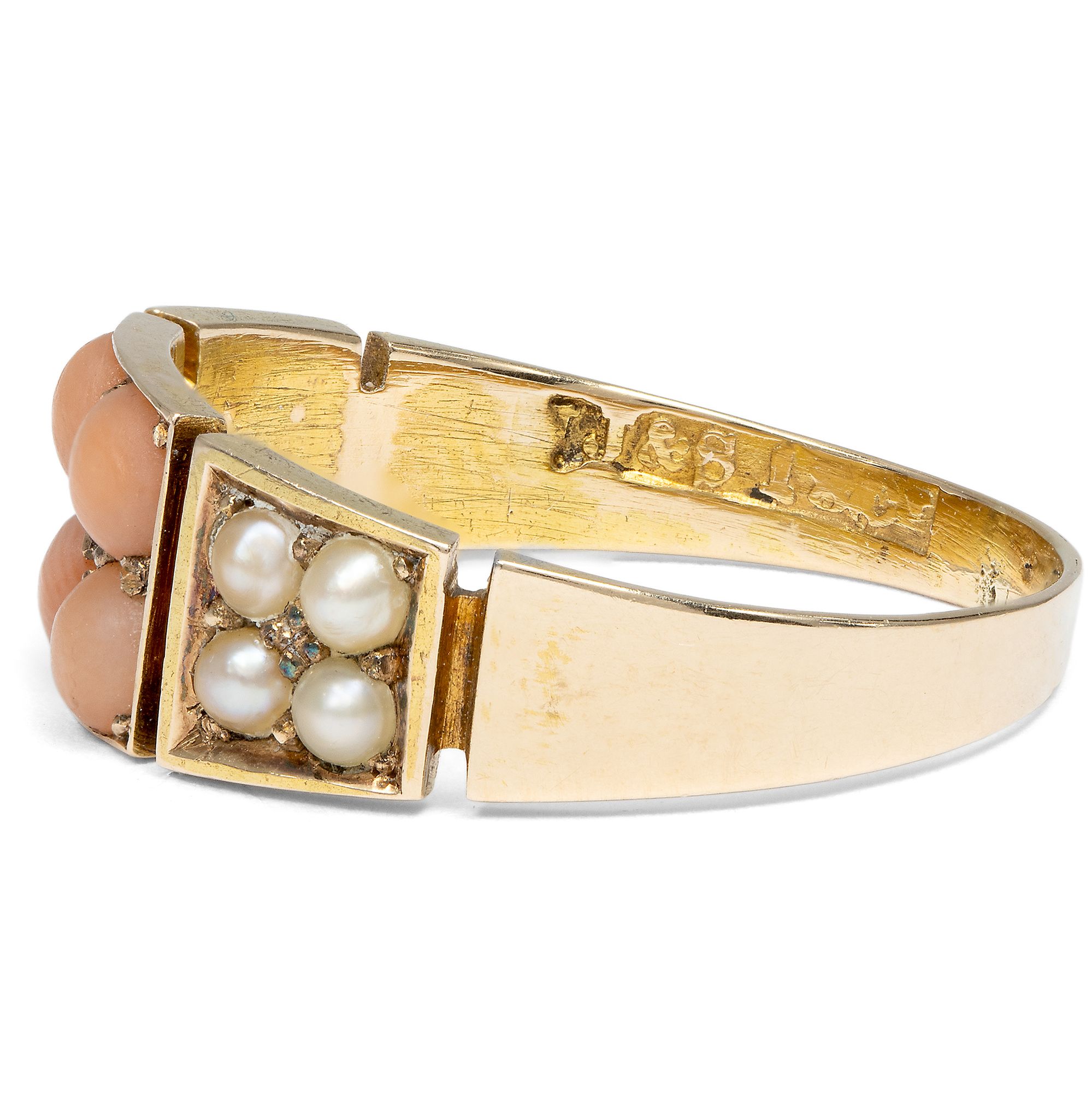
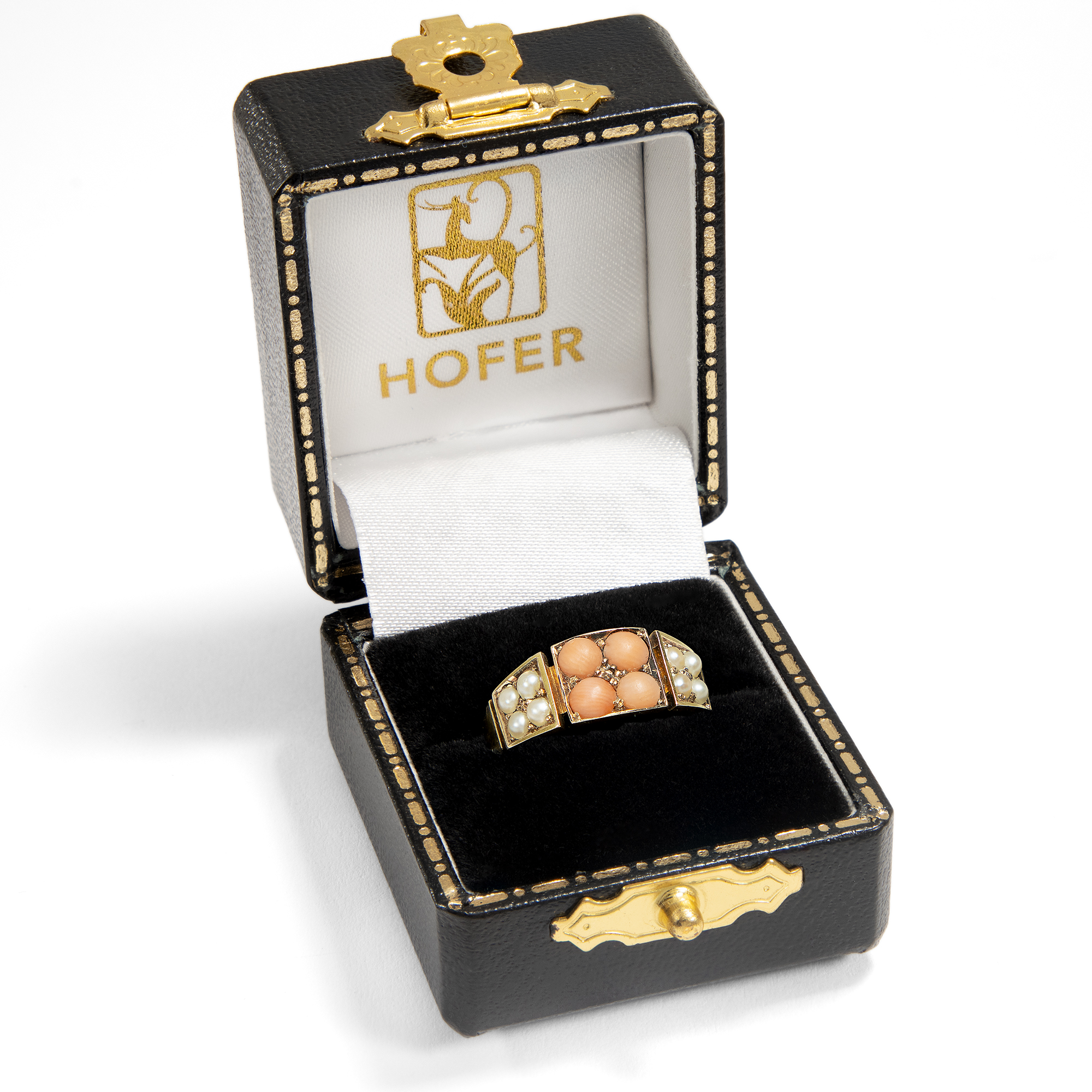
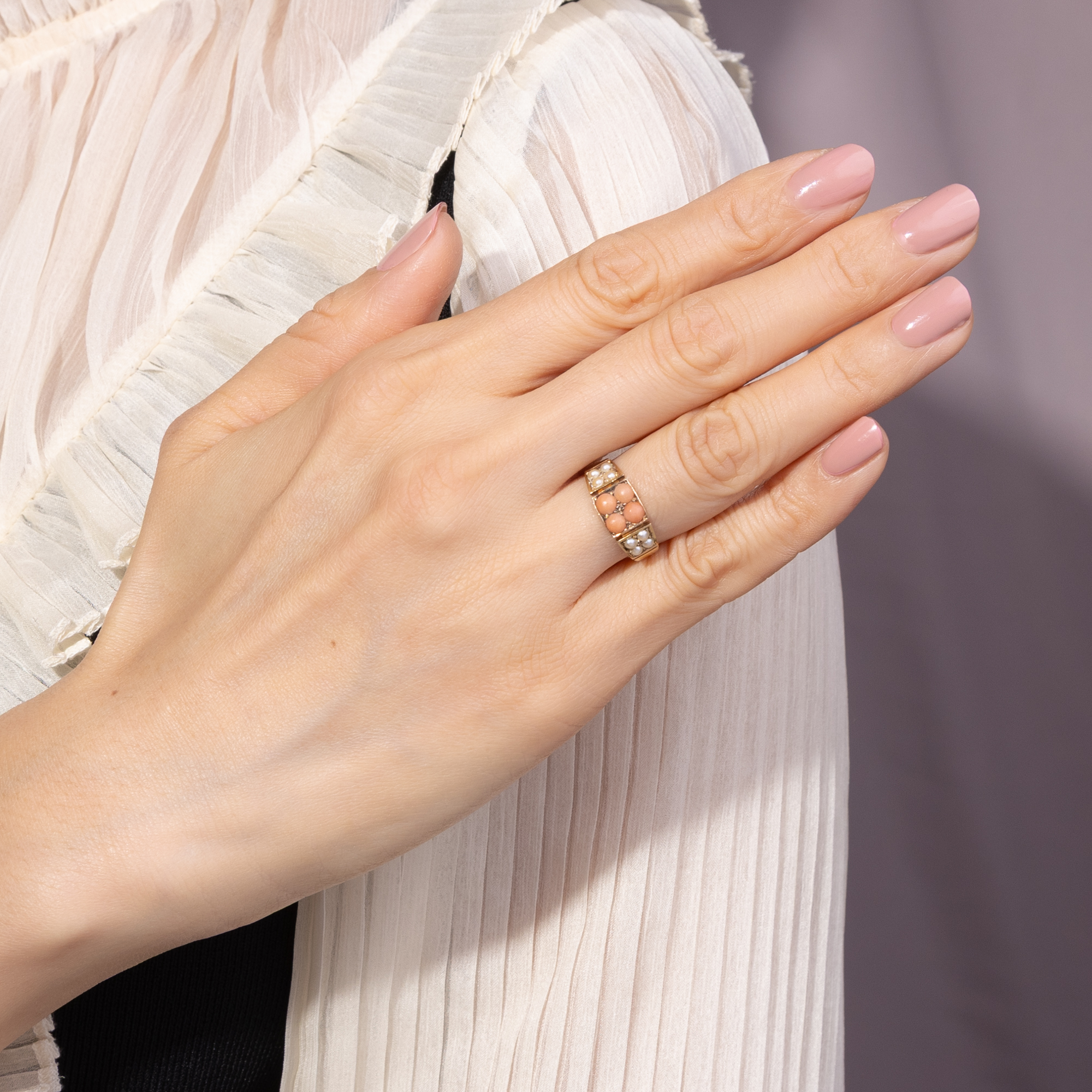
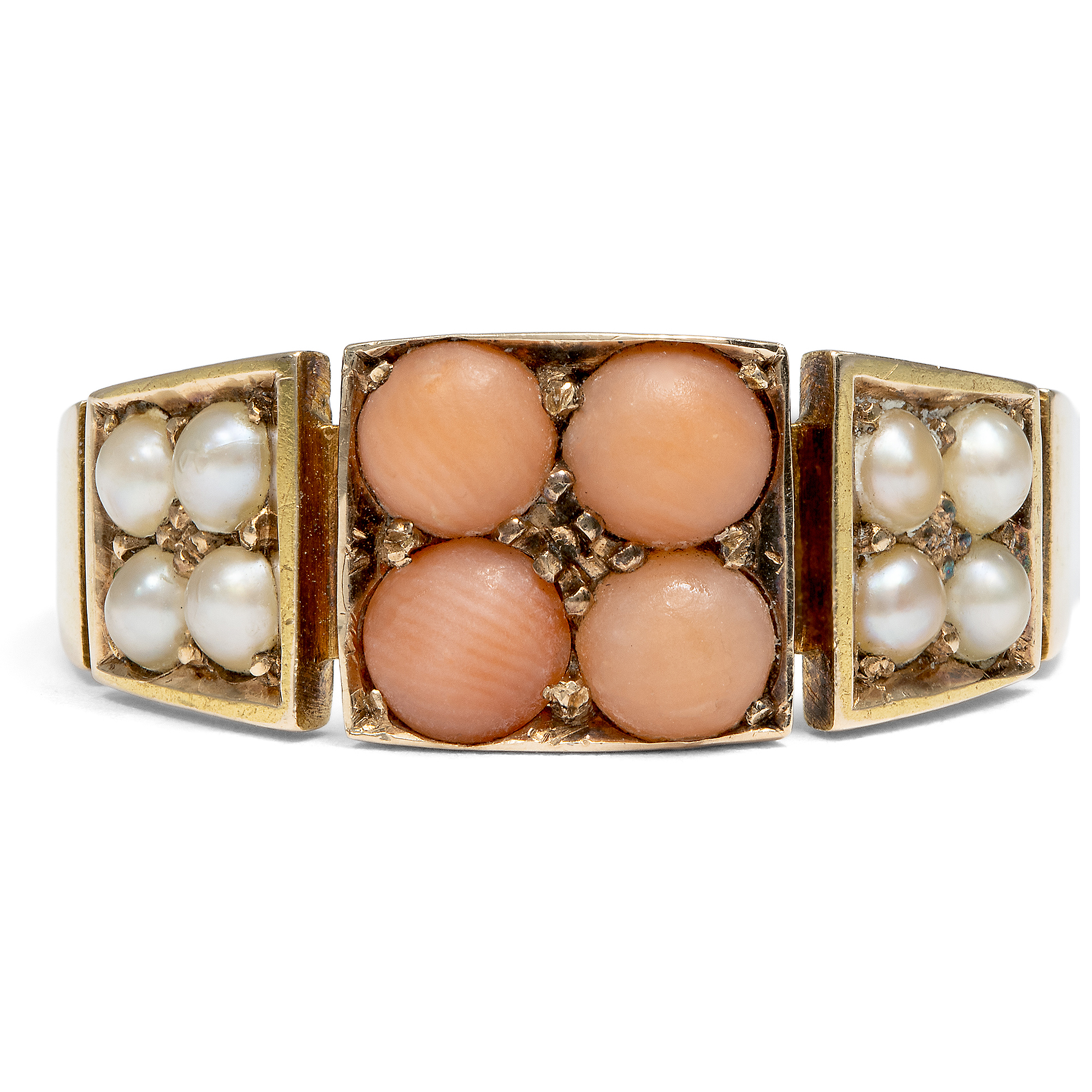
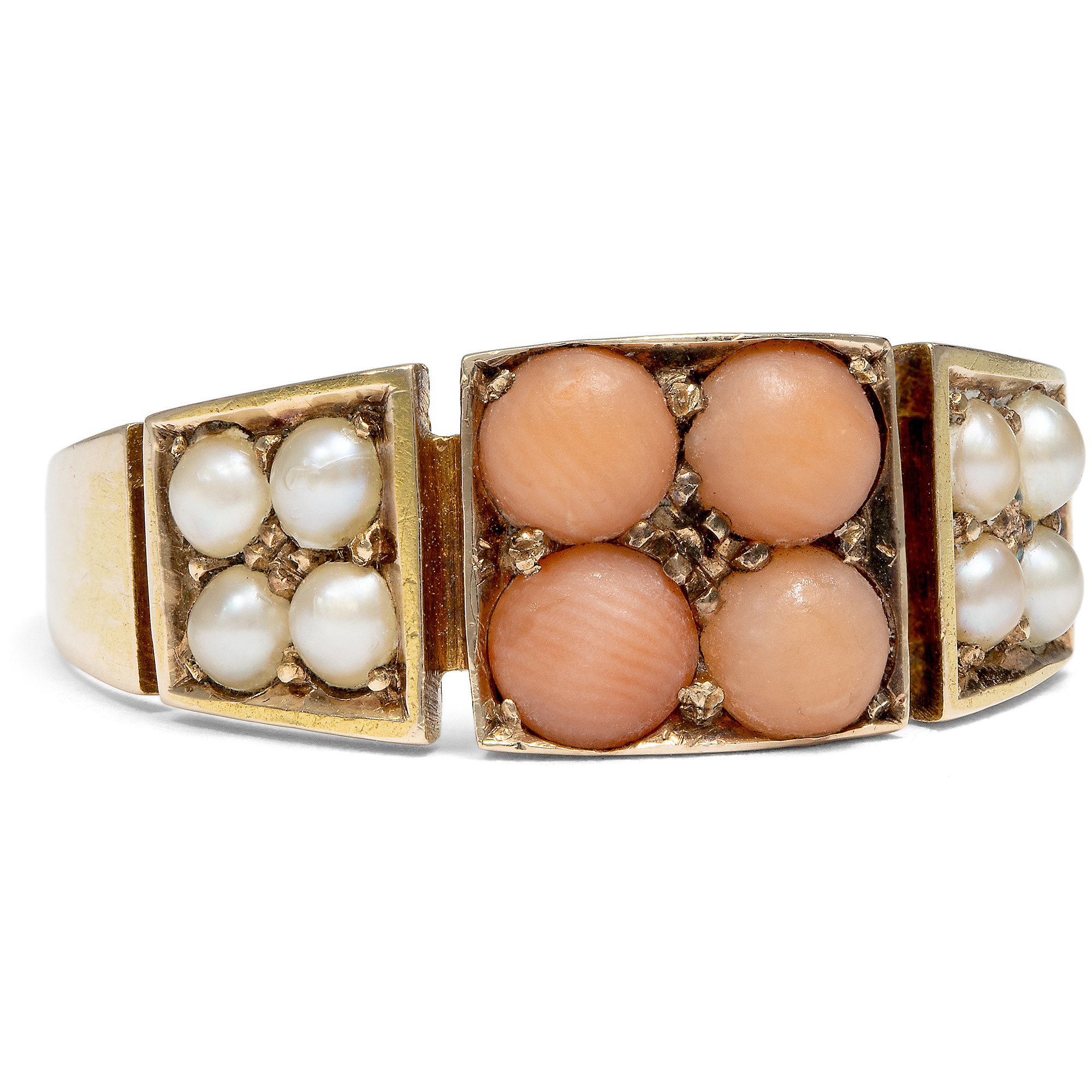
Antique Gold Ring with Pearls & Coral, Great Britain, c. 1900


€ 1,190.00 *
Content 1 piece
Incl. VAT, Shipping
Antique Gold Ring with Pearls & Coral, Great Britain, c. 1900
Description
This description was automatically translated from German. If you have any questions about this piece of jewellery, we will be happy to help!
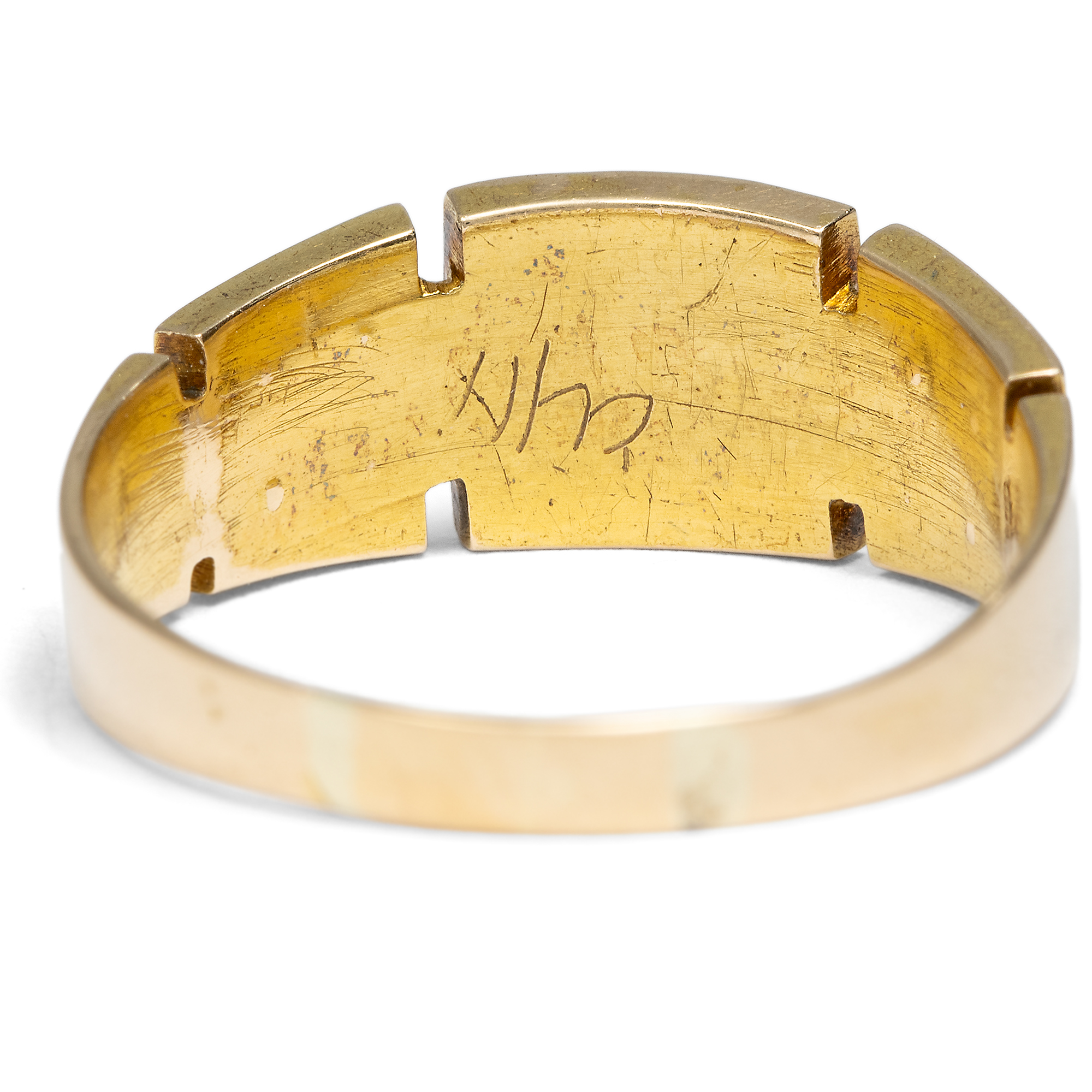
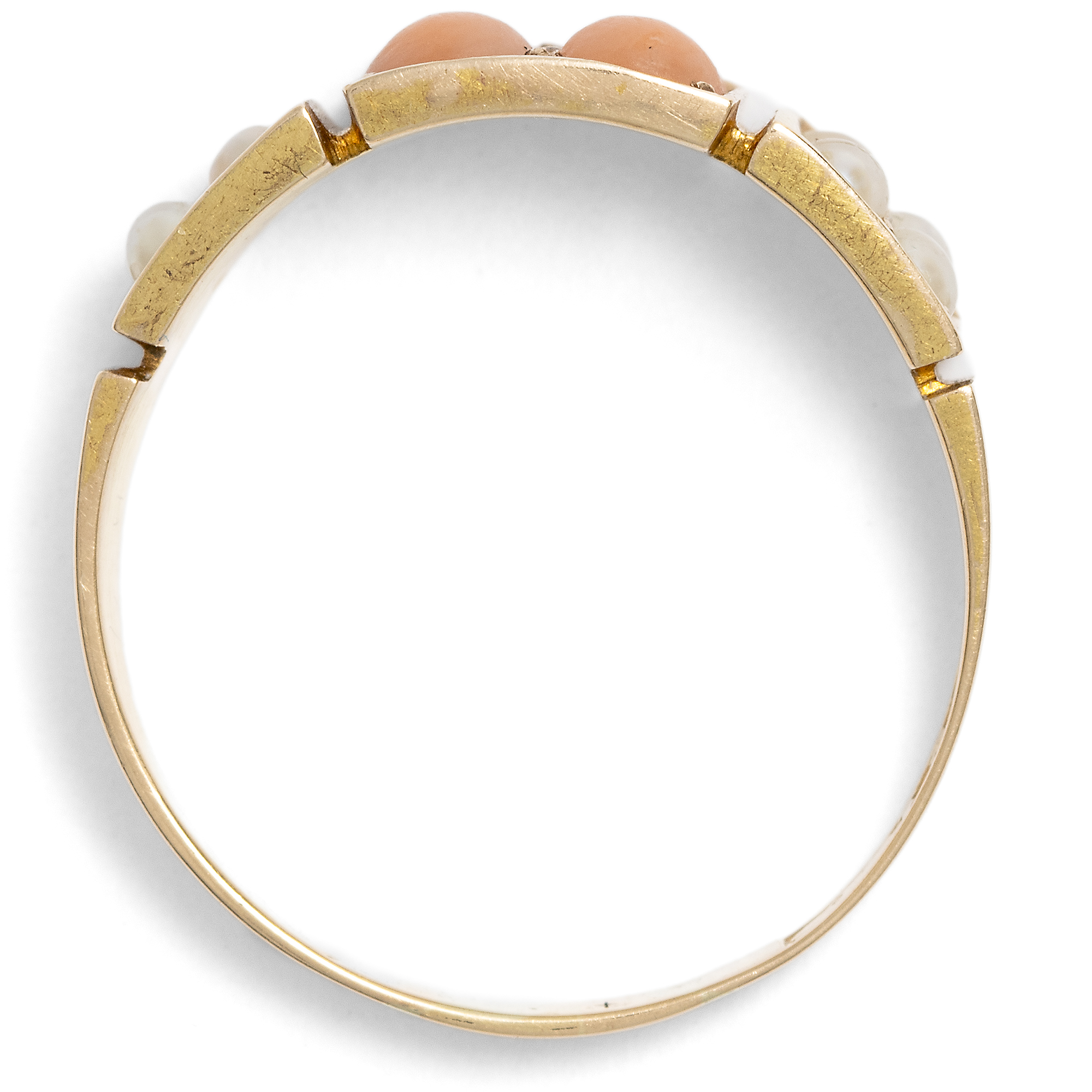
Pearls and coral are among the treasures of the sea that have inspired people to create special pieces of jewellery for centuries. In the late Victorian era, these two materials were particularly popular when combined in Great Britain. In this piece of jewellery, two trapezoidal elements meet, each densely set with small natural pearls. Their off-white hue and silvery sheen form a delicate frame for four pieces of coral in a soft salmon shade. These are Sciacca corals, which were frequently used in jewellery of that era. Their discovery in 1875 may explain why corals appeared in so many designs in the years that followed. These treasures of the sea are set in high karat yellow gold. The interplay of warm gold, softly shimmering pearls, and salmon-coloured coral lends the piece a subtle radiance. It was crafted in Great Britain. We discovered it in London.
Learn more
In July 1831, an undersea volcano erupted off the coast of Sciacca, a town on the southern coast of Sicily. Fishermen observed the explosions and were astonished to discover that the volcano had formed a new island. As soon as the eruptions ended, a fierce dispute broke out over which country the new island should belong to. The Kingdom of the Two Sicilies considered it a natural part of its territory and named it Ferninandea after its king, Ferdinand II. But Great Britain also laid claim to the new land, strategically located along important shipping routes, and named it Graham Island. The French fleet likewise laid claim to the island, which it called Julia, and Spain also asserted its claims. Nature ultimately settled the dispute: by 1832, the waves had eroded the island to such an extent that it sank into the sea and survived only as a shoal. But what does this story have to do with corals? Repeated undersea volcanic eruptions and numerous earthquakes had caused large quantities of coral to die off, forming one of the richest deposits in the entire Mediterranean. These subfossil corals had taken on a salmon-colored hue from being submerged in water, making them unmistakable. This treasure of the sea was discovered in 1875. Bettu Ammareddu, captain of a trawler, was fishing near the shoal that had once been the island. While doing so, his necklace—a gift from his beloved—fell into the water. When he dived for the necklace, he realized that the seabed was completely covered with coral. Mining of the coral began soon after, but just as quickly—as early as 1915—the deposits were completely depleted.
Learn more
Read more
Size & Details
Antique Gold Ring with Pearls & Coral, Great Britain, c. 1900
Treasures of the Sea
€ 1,190.00 *
Content 1 piece
Incl. VAT, Shipping
Our Promise
Our Promise
Our Promise

We want you to be 100% satisfied! For that reason, we examine, describe and photograph all of our jewellery with the utmost care.

You can rely on our years of experience in the trade and our expertise as a professional art historians for reviews of the antique jewellery. As a member of various trade organisations and the British Society of Jewellery Historians, we remain committed to the highest possible degree of accuracy. In our descriptions, we always also indicate any signs of age and defects and never hide them in our photos – this saves you from any unpleasant surprises when your package arrives.

Should you for some reason not be satisfied, please don’t hesitate to contact us so that we can find a solution together. In any case, you can return any article within one month and we will refund the full purchase price.

Learn more