Protection in the Struggle for Freedom

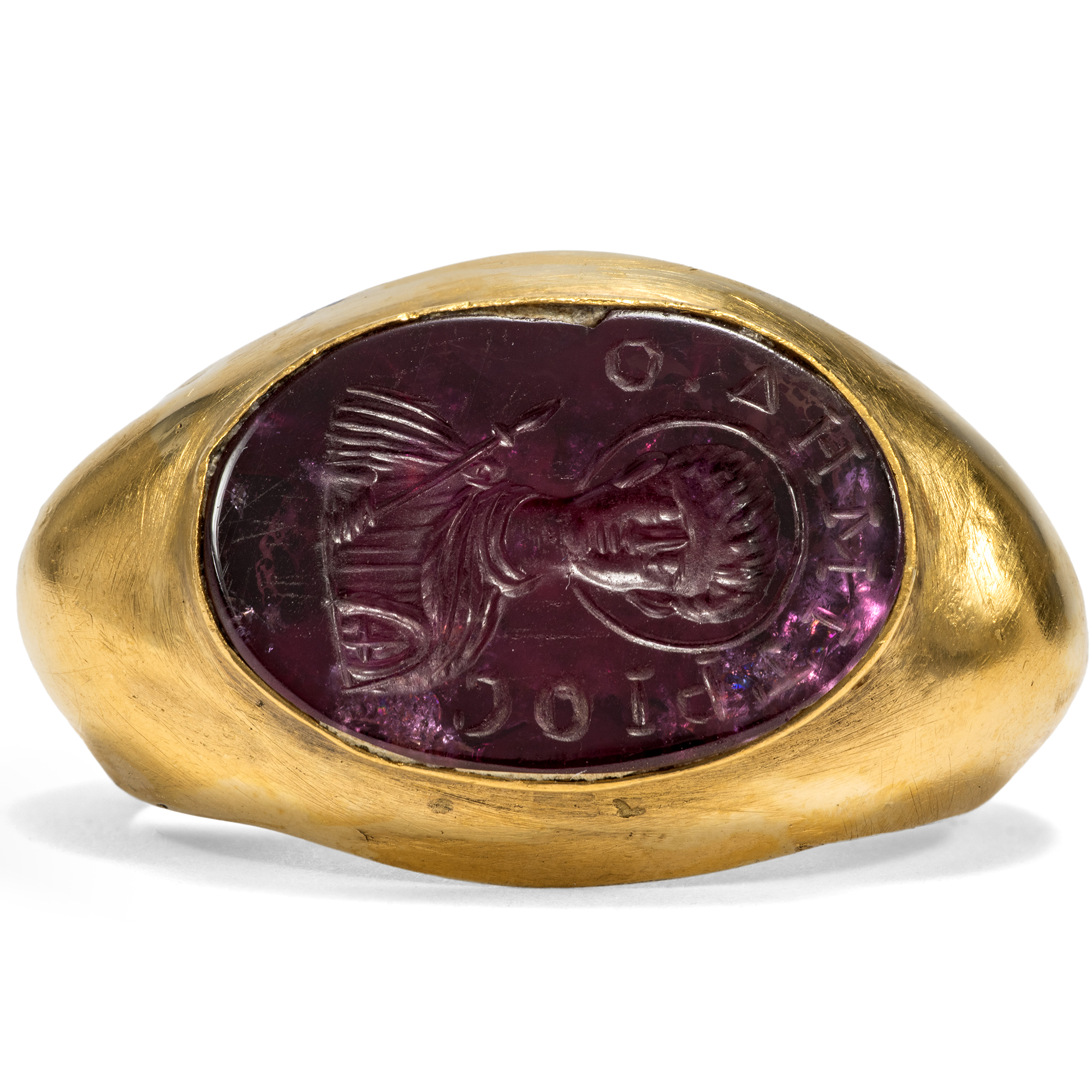
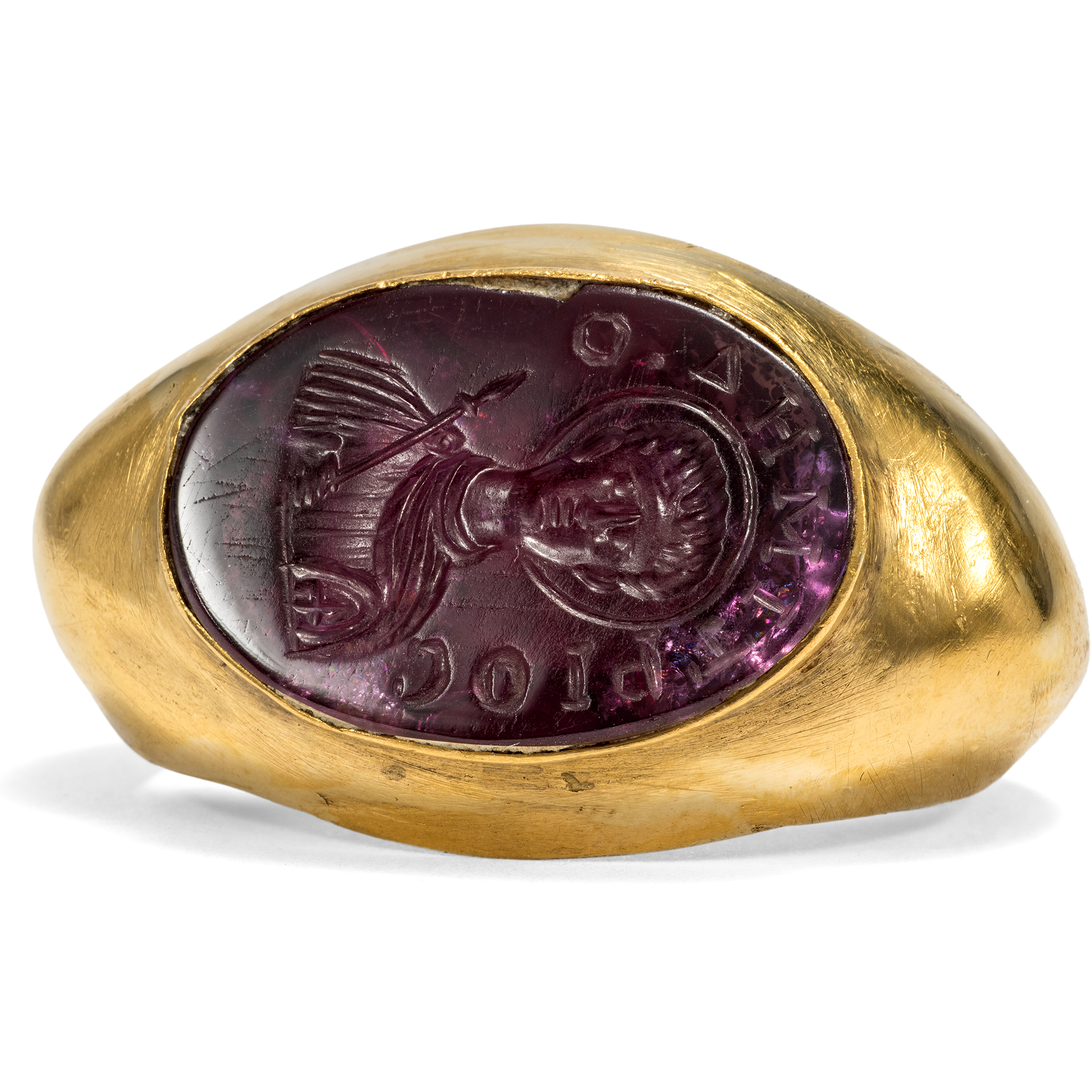
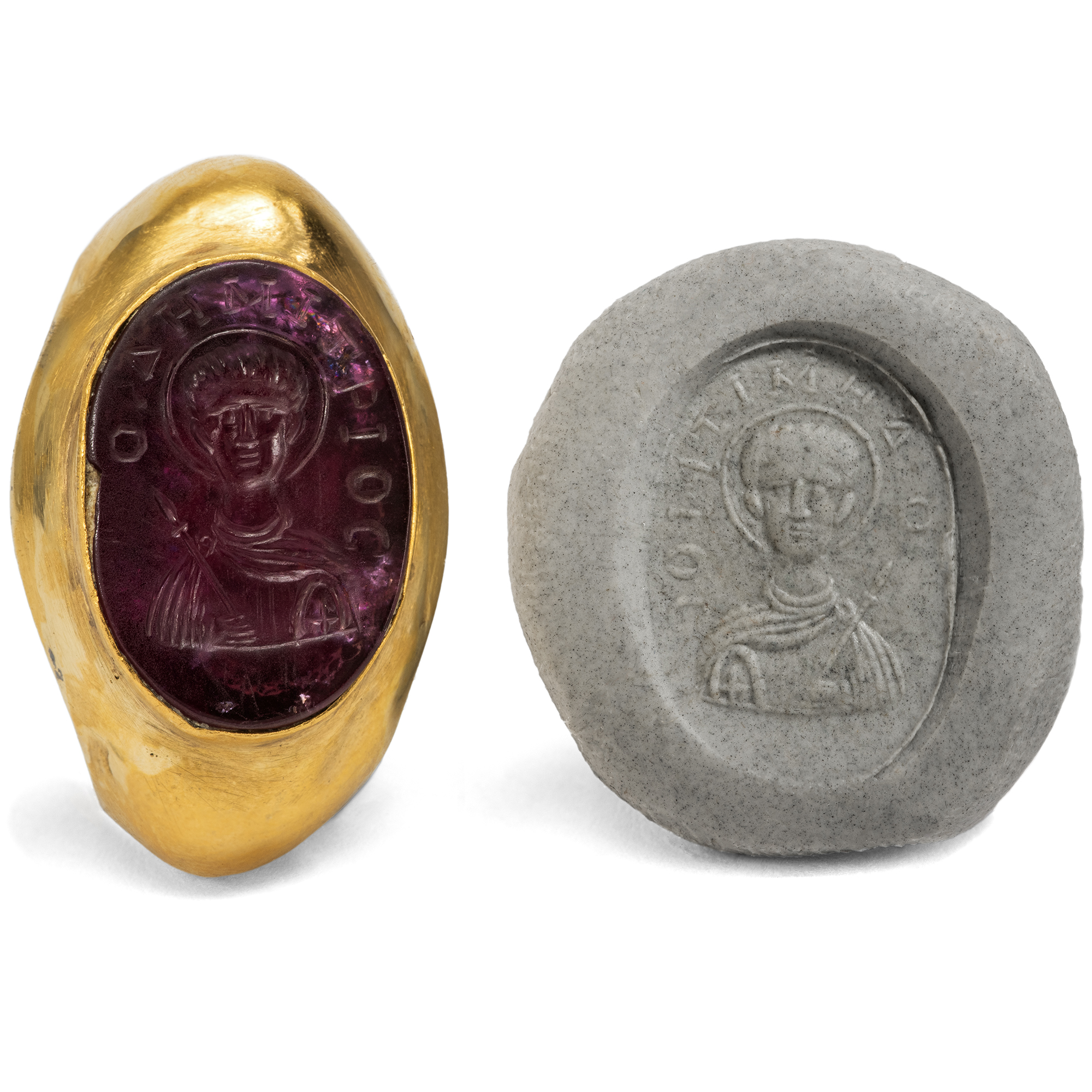
Antique Ring with an Amethyst Intaglio of St. Demetrius in the Byzantine Style, First Half of the 19th Century


€ 4,290.00 *
Content 1 piece
Incl. VAT, Shipping
Antique Ring with an Amethyst Intaglio of St. Demetrius in the Byzantine Style, First Half of the 19th Century
Description
This description was automatically translated from German. If you have any questions about this piece of jewellery, we will be happy to help!
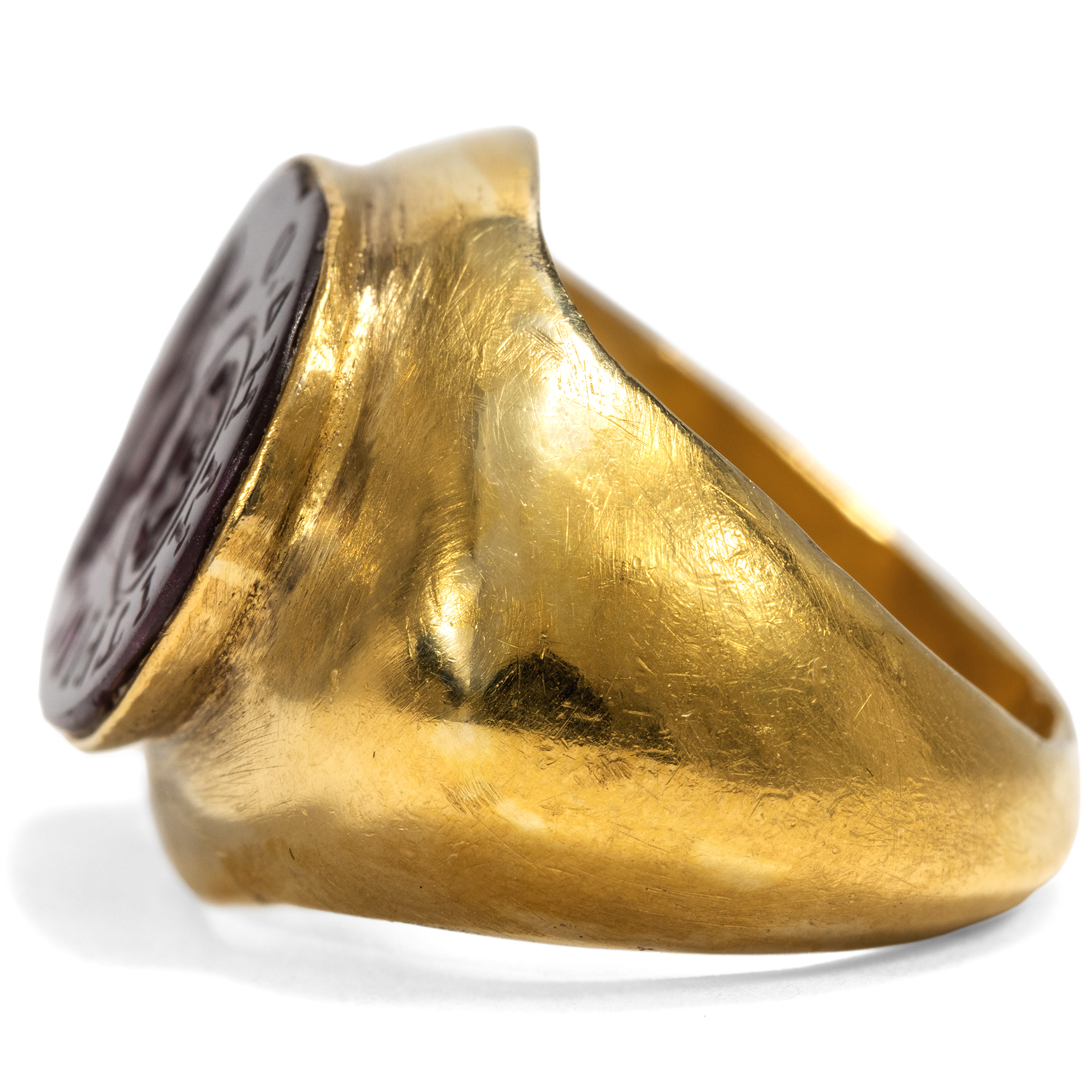
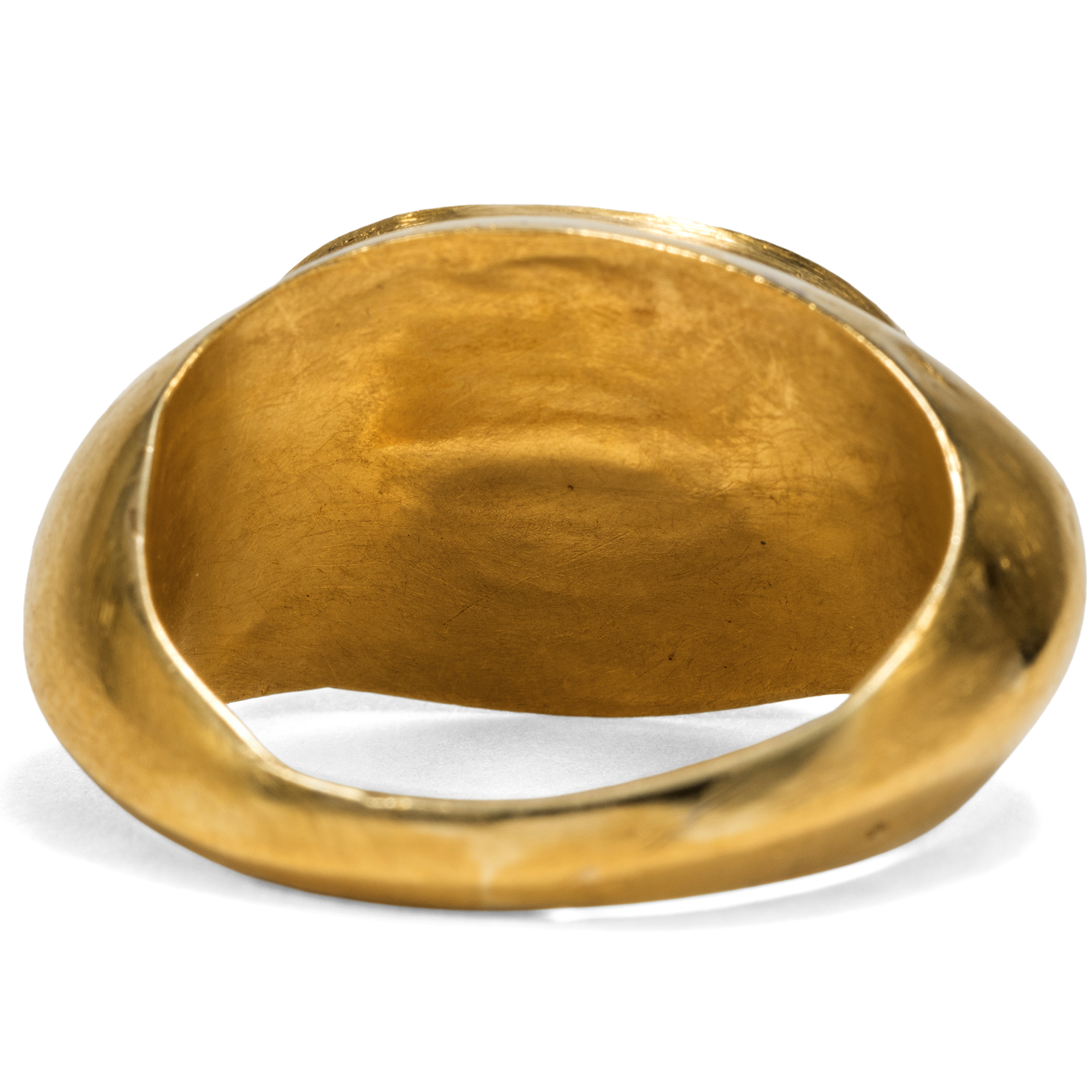
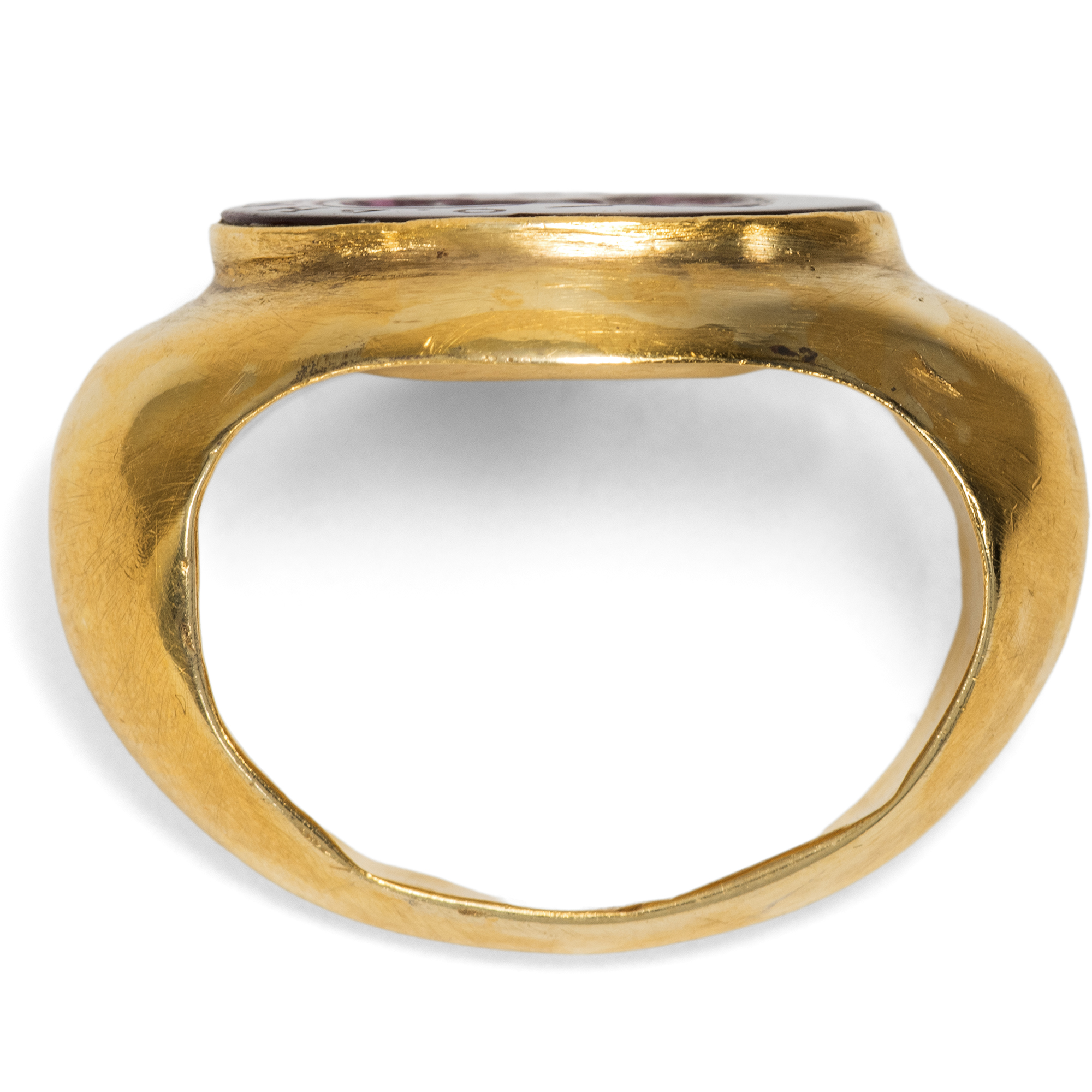
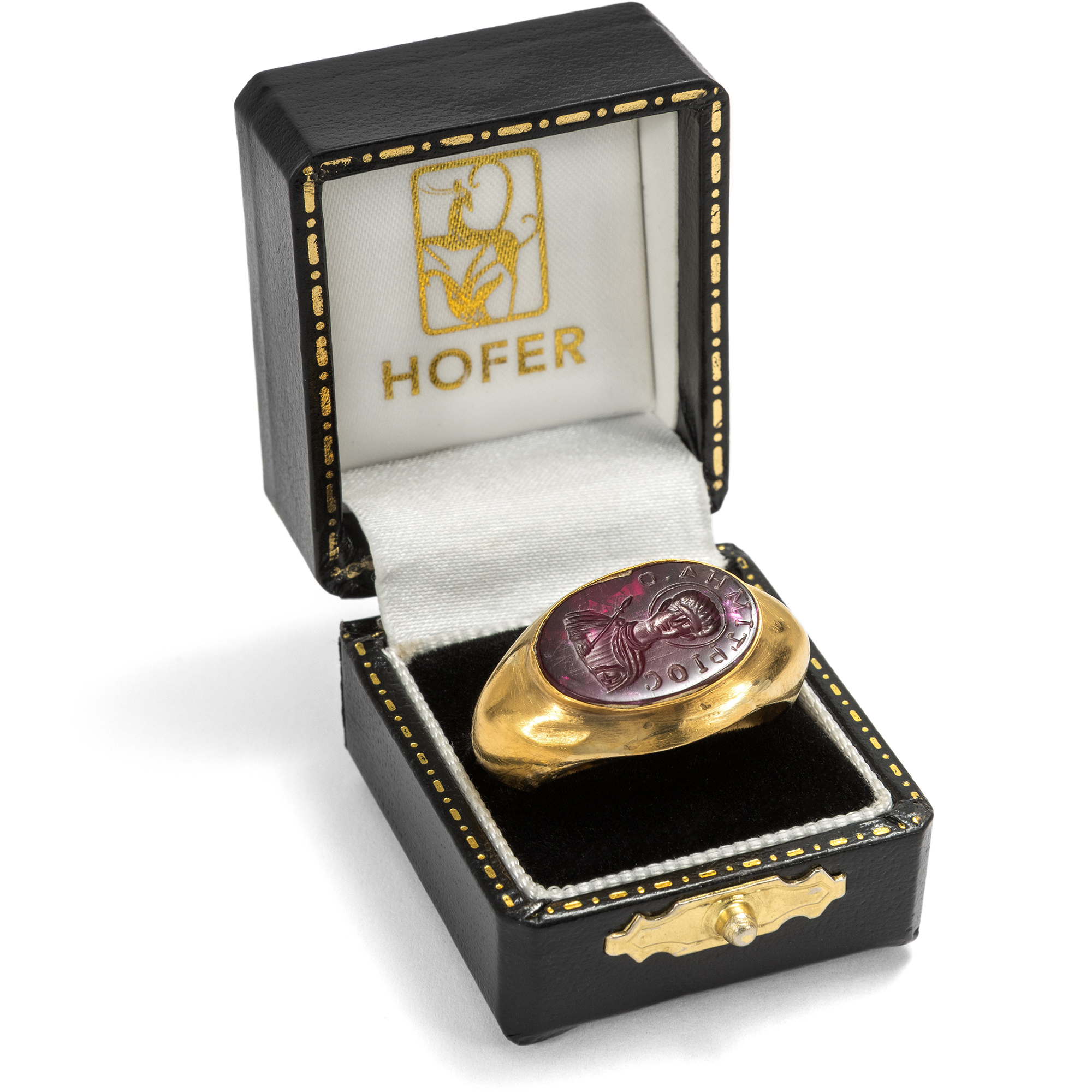
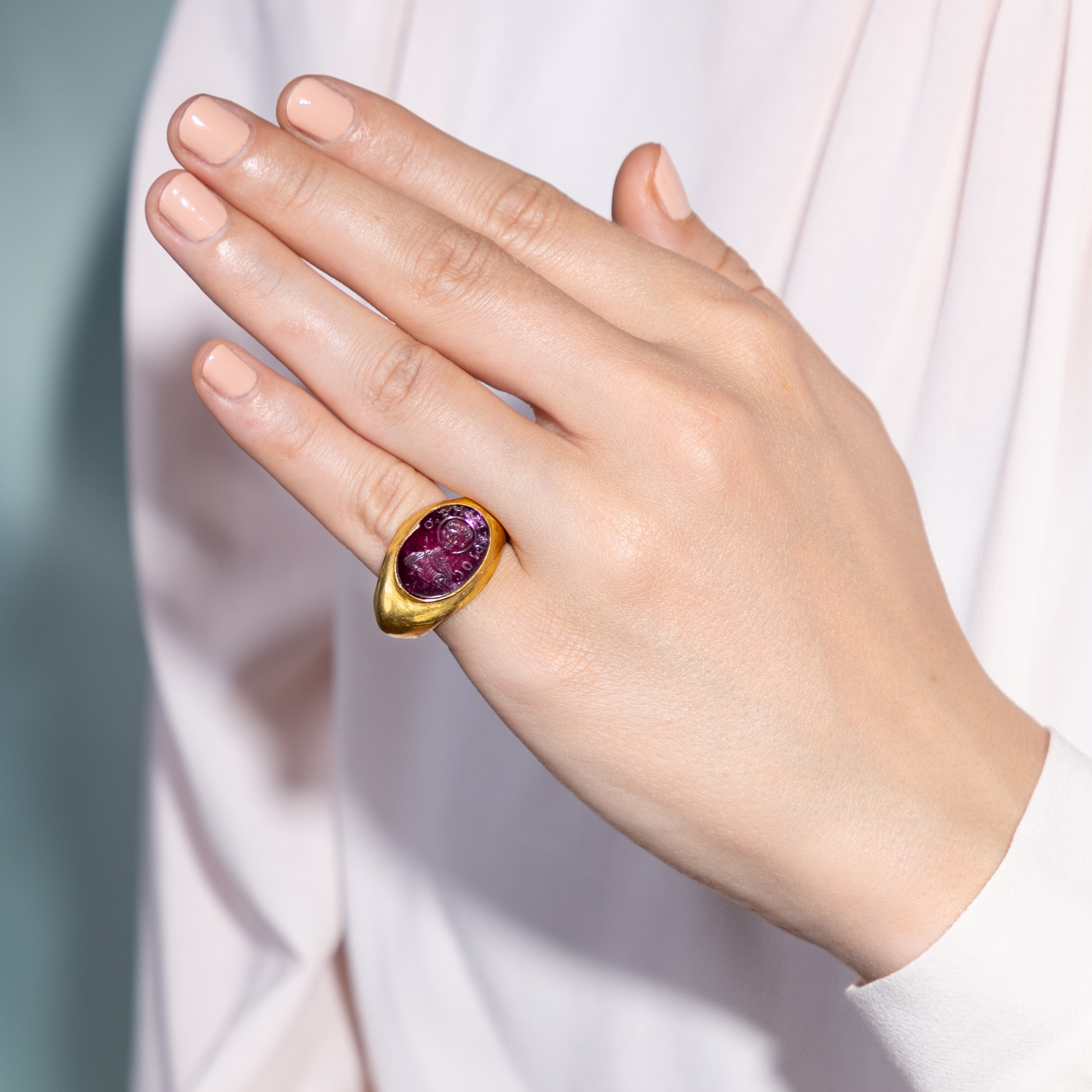
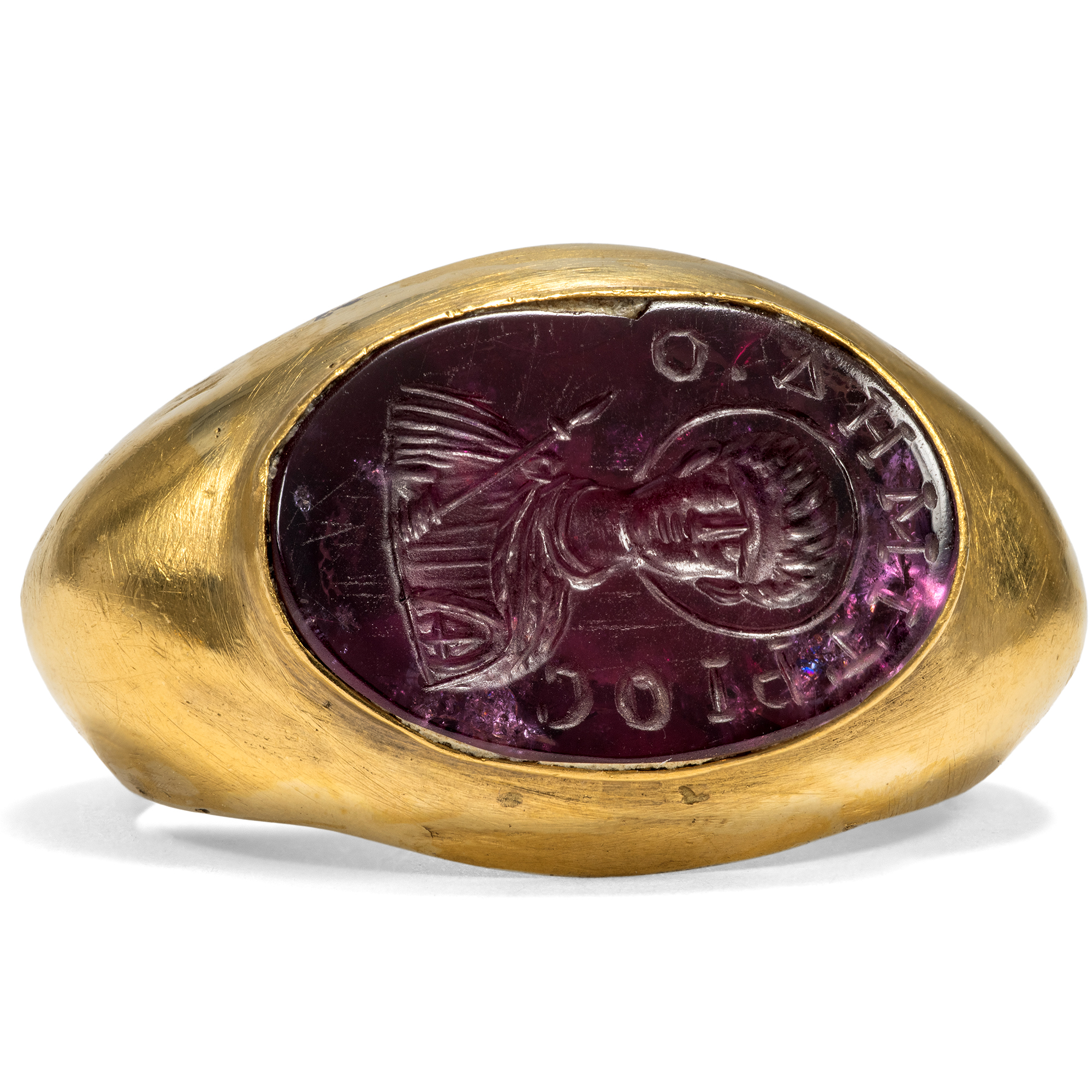
Determined and stern, yet not unfriendly, a soldier dressed in Roman garb gazes out from this ring. He carries a shield and a spear and wears an ancient toga. A halo adorns his head, and an inscription can be seen around it: “Ο. ΔΗΜΙΤΡΙΟΣ”—it is a depiction of St. Demetrius. The portrait is engraved into a natural amethyst. The tall oval stone depicts the saint en face, in his armor. The depiction is three-dimensional and clear, yet not schematic or cold. The inscription at the top flows freely around the head, without worrying too much about perfect symmetry. The stone is set in high-karat gold. A simple bezel encircles the amethyst and merges into the wide, boat-shaped body of the ring. The ring itself is very oval in shape but is comfortable to wear. At first glance, the ring resembles a piece of jewellery from classical antiquity. As early as the Hellenistic period—and later in Rome as well—gold rings with broad shoulders were crafted as signet rings featuring set gemstone intaglios; see the examples in the British Museum here and here. Here, however, a Christian saint is depicted who was venerated from around the 5th century onward, particularly in the Greek part of the empire. Could the ring therefore have been made in late antiquity, in Byzantium? A closer look at the seal stone and the craftsmanship of the setting reveals that this ring must have been made later, in the post-antique period. The “O.” at the beginning of the inscription stands for “The.” In Byzantine inscriptions of saints, at least one additional alpha is always inserted here as an abbreviation for “ΑΓΙΟΣ,” meaning “Saint”; however, such deviations are observed more frequently in later cameos modeled after ancient examples. The style of depiction, as well as the arrangement and letterforms of the inscription, also correspond more closely in form to antique-style cameos of the late 18th and early 19th centuries than to Byzantine models. Although the wide, boat-shaped setting is found in classical antiquity, it is no longer seen in the Byzantine period. And last but not least, the use of 18-karat gold also suggests that this is a 19th-century piece of jewellery, not one from antiquity. But when and where was the ring made? We believe that the choice of the Byzantine knight-saint was made at the beginning of the 19th century—and was no coincidence. At that time, Greece was part of the Ottoman Empire, yet the ideas of the Enlightenment and the French Revolution were gaining increasing influence there as well: The country’s bourgeois middle class demanded an independent nation-state, freedom, and, not least, freedom of religion. In 1821, the Greek War of Independence finally began, quickly spreading across large parts of the country. The Greek struggle for freedom was followed with keen interest throughout Europe. Artists, poets, and intellectuals celebrated Greece as the cradle of European culture and supported the rebels. Among the most famous foreign volunteers was the English poet Lord Byron, who would die in Greece in 1824. In The Isles of Greece, he had sung of the decline of golden Greece in late antiquity just a few years earlier: “Eternal summer gilds them yet, But all, except their sun, is set.” The ring presented here, featuring an ancient warrior who died for his Christian God and was venerated in Byzantium, could have been a powerful—and meaningful—companion during that time. It evokes the beauty and cultural flourishing of (Greek) antiquity, even if the combination of the ring’s shape and the depiction is more of a free interpretation. Thus, it promises protection in the struggle for freedom against oppression. We were able to acquire this ring from a collection near Lake Constance. It is in very good condition. Since the ring is hollow, unfortunately, its size cannot be adjusted.
Read more
Size & Details
Antique Ring with an Amethyst Intaglio of St. Demetrius in the Byzantine Style, First Half of the 19th Century
Protection in the Struggle for Freedom
€ 4,290.00 *
Content 1 piece
Incl. VAT, Shipping
Our Promise
Our Promise
Our Promise

We want you to be 100% satisfied! For that reason, we examine, describe and photograph all of our jewellery with the utmost care.

You can rely on our years of experience in the trade and our expertise as a professional art historians for reviews of the antique jewellery. As a member of various trade organisations and the British Society of Jewellery Historians, we remain committed to the highest possible degree of accuracy. In our descriptions, we always also indicate any signs of age and defects and never hide them in our photos – this saves you from any unpleasant surprises when your package arrives.

Should you for some reason not be satisfied, please don’t hesitate to contact us so that we can find a solution together. In any case, you can return any article within one month and we will refund the full purchase price.

Learn more