Cannetille

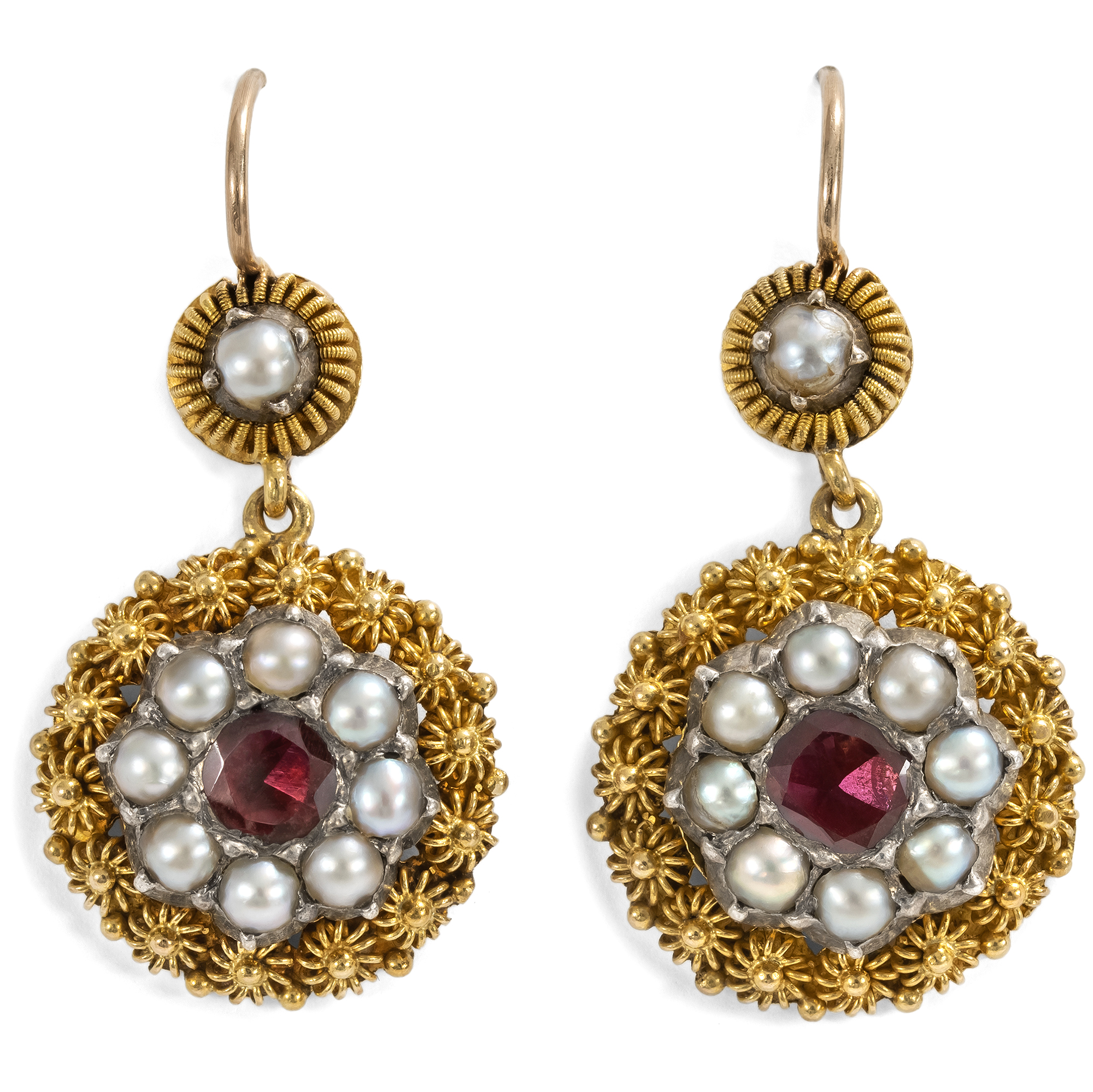
Georgian Earrings with Garnets & Natural Pearls in Gold & Silver, England c. 1820


€ 2,390.00 *
Content 1 piece
Incl. VAT, Shipping
Georgian Earrings with Garnets & Natural Pearls in Gold & Silver, England c. 1820
Description
This description was automatically translated from German. If you have any questions about this piece of jewellery, we will be happy to help!
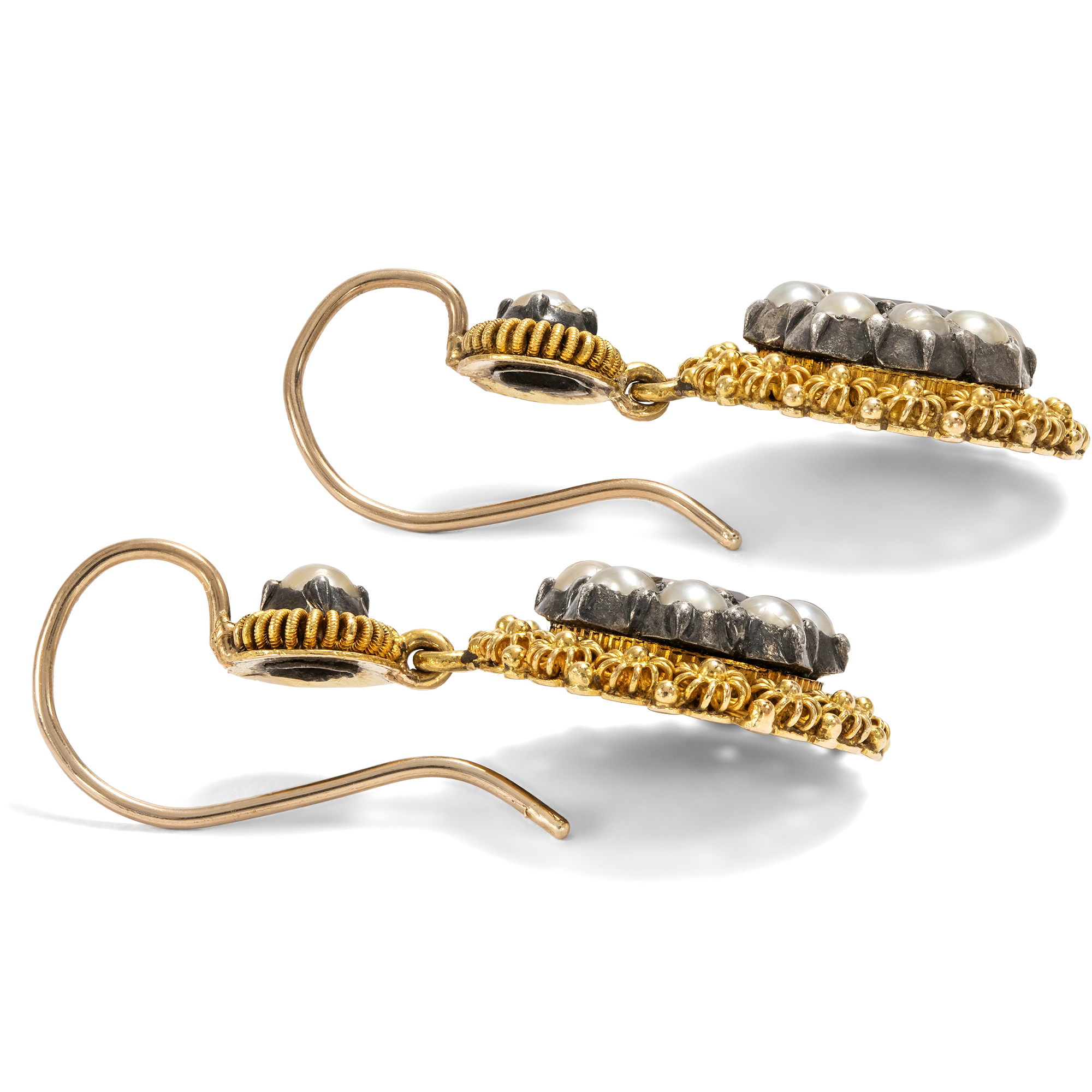
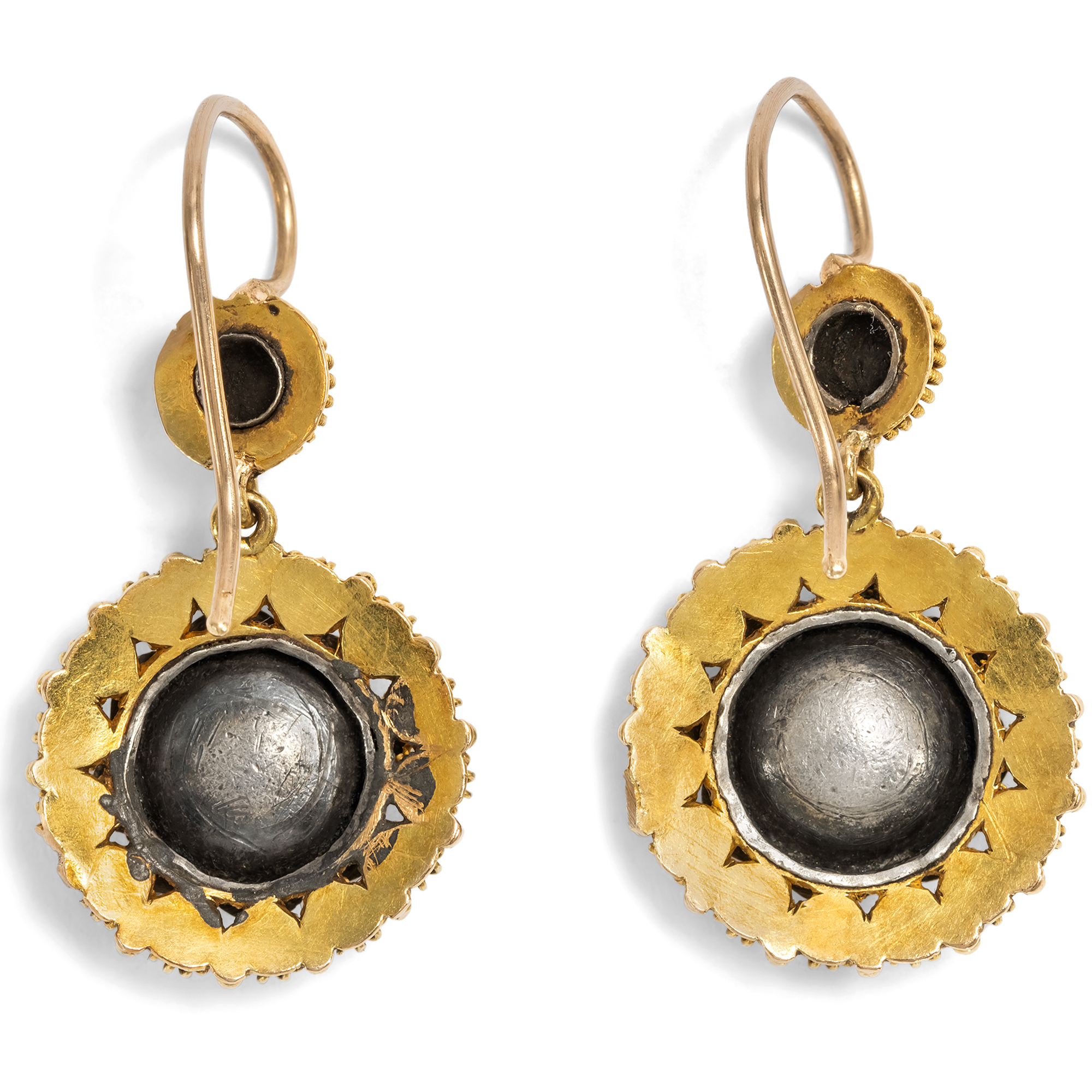
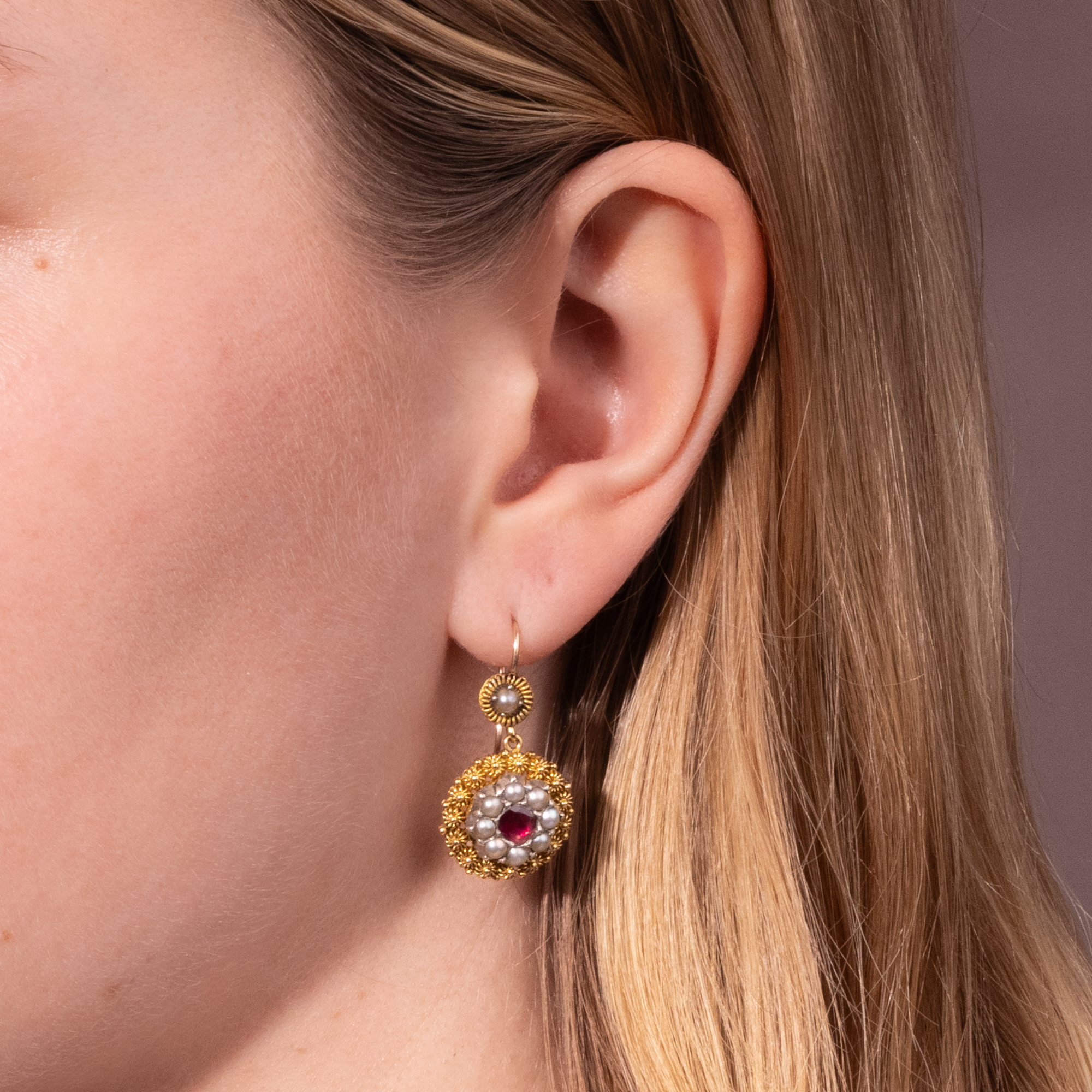
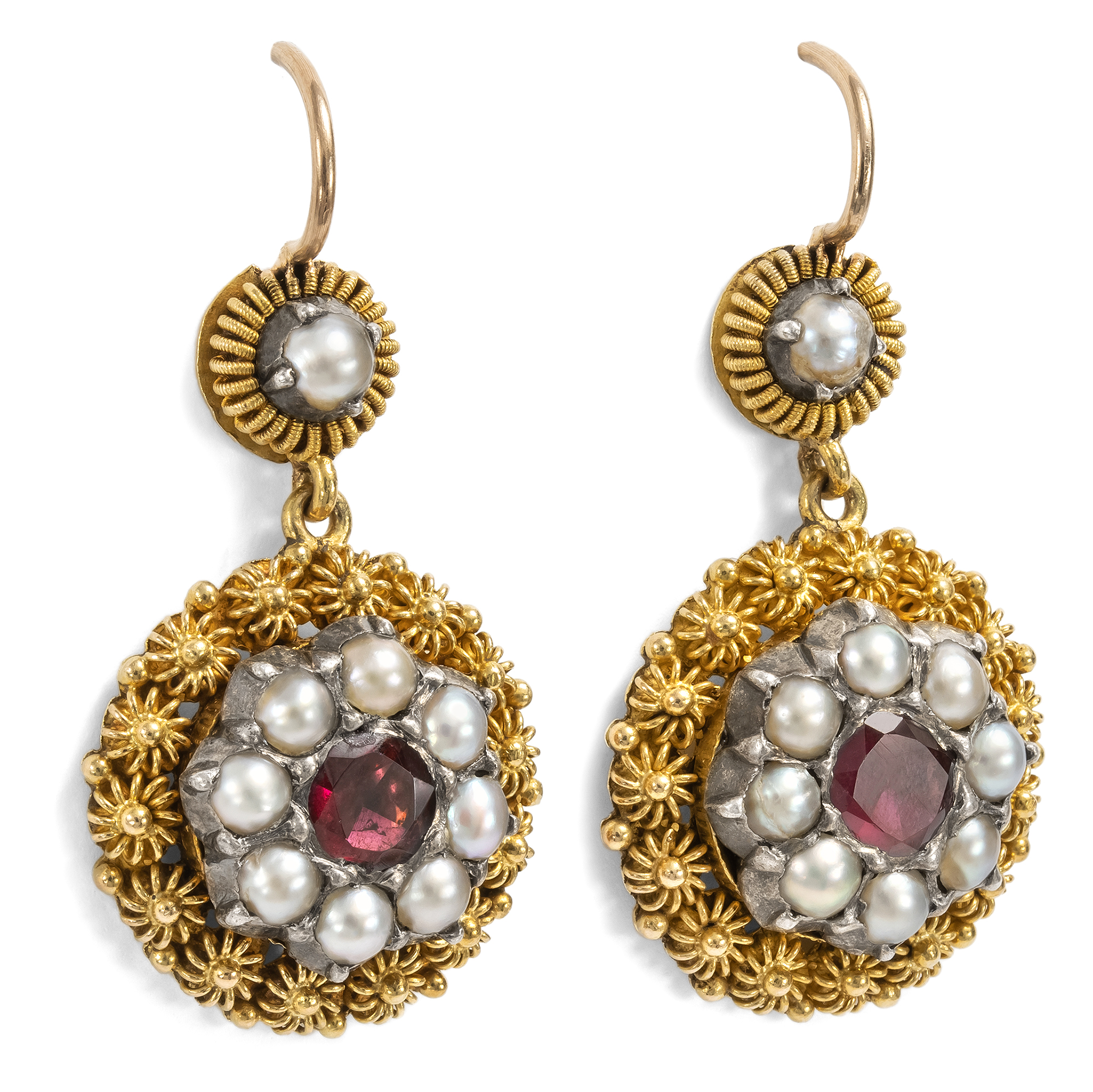
At the beginning of the 19th century, design preferences changed significantly. Previously, gemstones had mostly been set in restrained settings made of gold or silver, whose main purpose was to show off the stones. The fine, naturalistic elements of earlier decades had also largely disappeared. Instead, the metal itself was now more prominent. A new method was to use the finest gold wire in the so-called cannetile technique to create sculptural, expansive ornaments. The works appear light and at the same time opulent, almost woven or like fine lace. The result is pieces of jewellery that appear just as lively due to their structure as they do due to the stones used. These earrings are a particularly beautiful example of this style. Constructed in two parts, larger round elements hang flexibly from simple gold hoops, each bearing a single pearl on the front. In the center of the pendants, garnets set against polished silver foils glow, surrounded by a wreath of silver-set pearls. The fine gold wire ornaments frame this composition and unfold into a flower-like structure that lends the piece of jewellery a certain lightness. We discovered the pair in the south of England and date it to the 1820s.
Learn more
Pieces of jewellery with cannetille were particularly popular in the decade from 1820 to 1830. Cannetille is related to filigree and usually consists of finely hammered sheet metal and gold wires. The shapes used consist mainly of tendrils, spirals and beehive-like elements that look like delicate lace and are often decorated with fine granules. The use of colorful gemstones such as aquamarine, topaz or chrysoberyl is also typical, as well as Bohemian garnets, turquoise and opal in Central Europe. Most of the stones were set in closed settings and provided with a foil background that unified their color tone. The rise of cannetille coincided with the gold shortage at the beginning of the 19th century, when large pieces of jewellery were fashionable but gold was expensive. Cannetille jewellery looks impressive, but uses very little of the precious metal. The technique was infinitely time-consuming and would hardly be affordable today. But as labor was relatively inexpensive, these admirable pieces of jewellery could be created all the same. Cf. with numerous examples Ginny Reddington Dawes / Olivia Collings: Georgian Jewellery 1714-1830, Woodbridge 2007, pp. 113-116, and David Bennet and Daniela Mascetti: Understanding Jewellery, Woodbridge 2010, p. 82, p. 85, etc.
Learn more
Read more
Size & Details
Georgian Earrings with Garnets & Natural Pearls in Gold & Silver, England c. 1820
Cannetille
€ 2,390.00 *
Content 1 piece
Incl. VAT, Shipping
Our Promise
Our Promise
Our Promise

We want you to be 100% satisfied! For that reason, we examine, describe and photograph all of our jewellery with the utmost care.

You can rely on our years of experience in the trade and our expertise as a professional art historians for reviews of the antique jewellery. As a member of various trade organisations and the British Society of Jewellery Historians, we remain committed to the highest possible degree of accuracy. In our descriptions, we always also indicate any signs of age and defects and never hide them in our photos – this saves you from any unpleasant surprises when your package arrives.

Should you for some reason not be satisfied, please don’t hesitate to contact us so that we can find a solution together. In any case, you can return any article within one month and we will refund the full purchase price.

Learn more