Italian journey

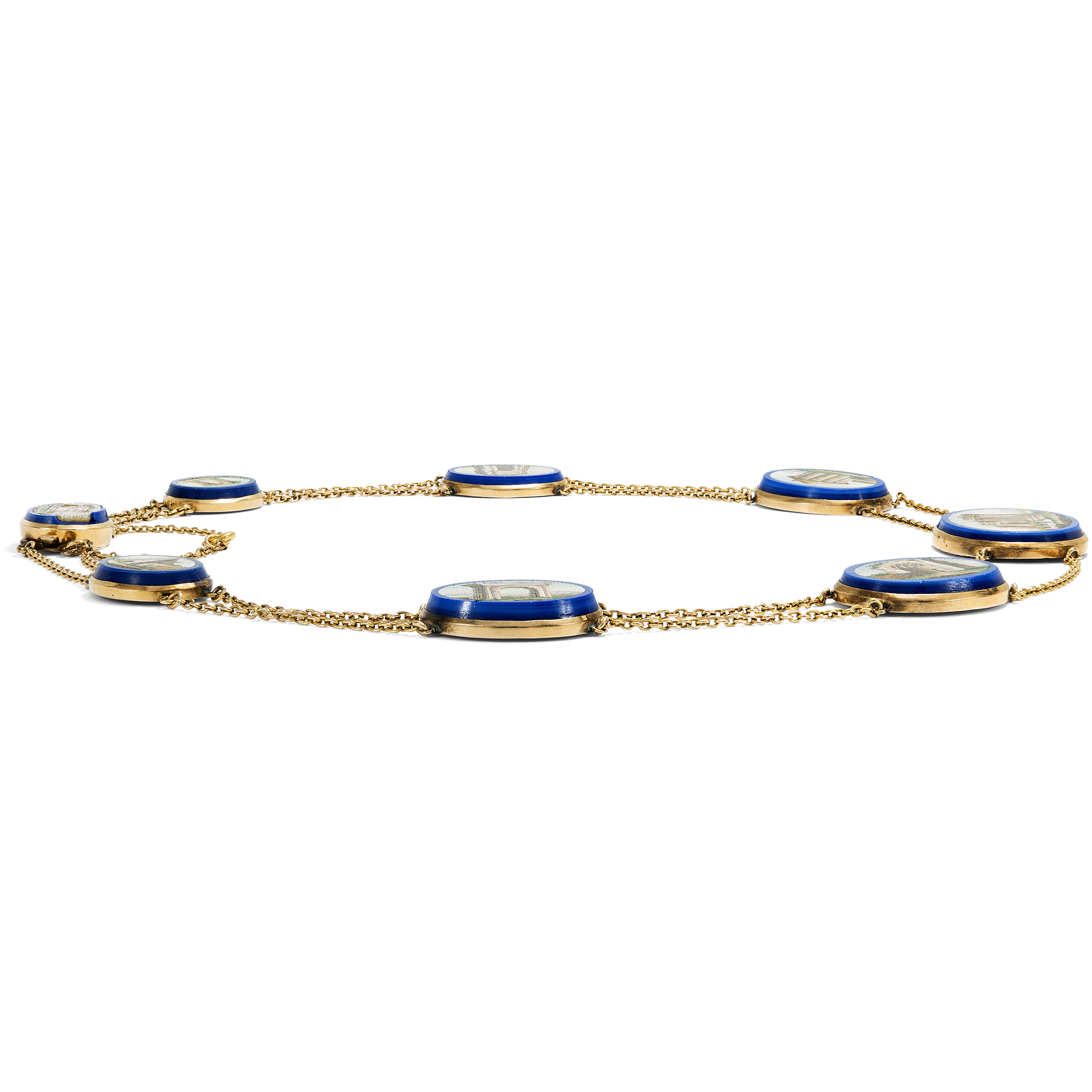
Exceptional necklace with eight micromosaics in gold, Rome circa 1835


€ 4,980.00 *
Content 1 piece
Incl. VAT, Shipping
Exceptional necklace with eight micromosaics in gold, Rome circa 1835
Description
This description was automatically translated from German. If you have any questions about this piece of jewellery, we will be happy to help!
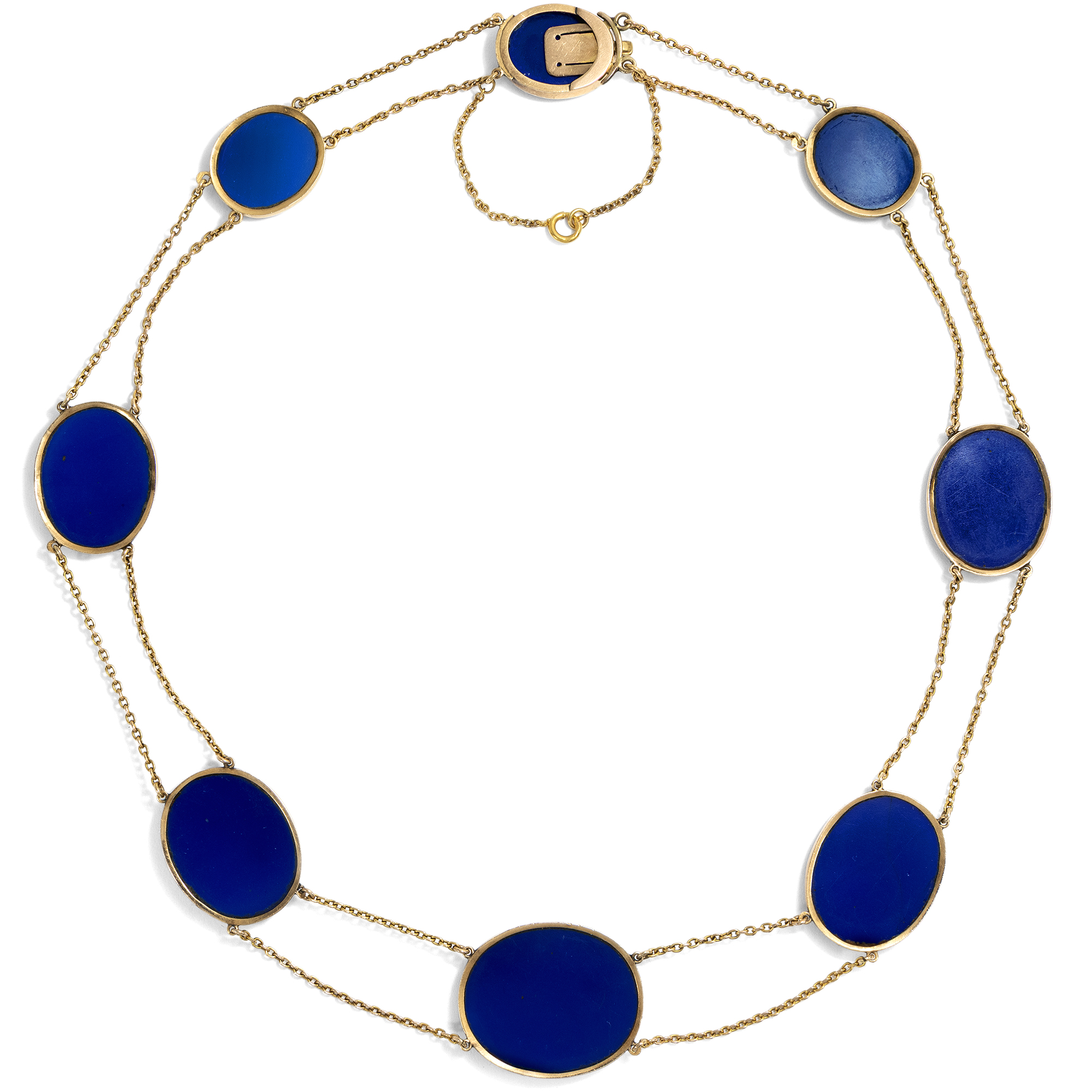
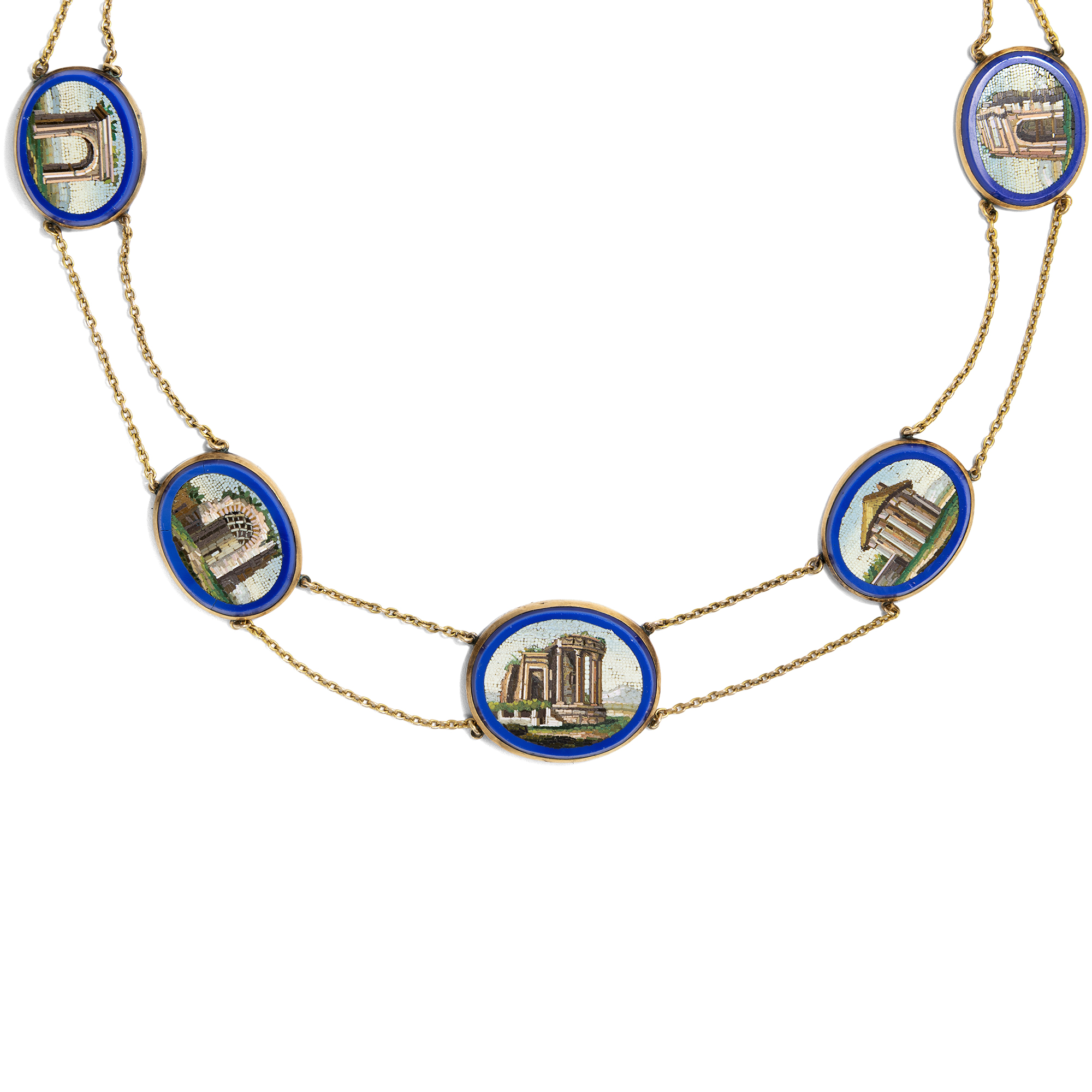
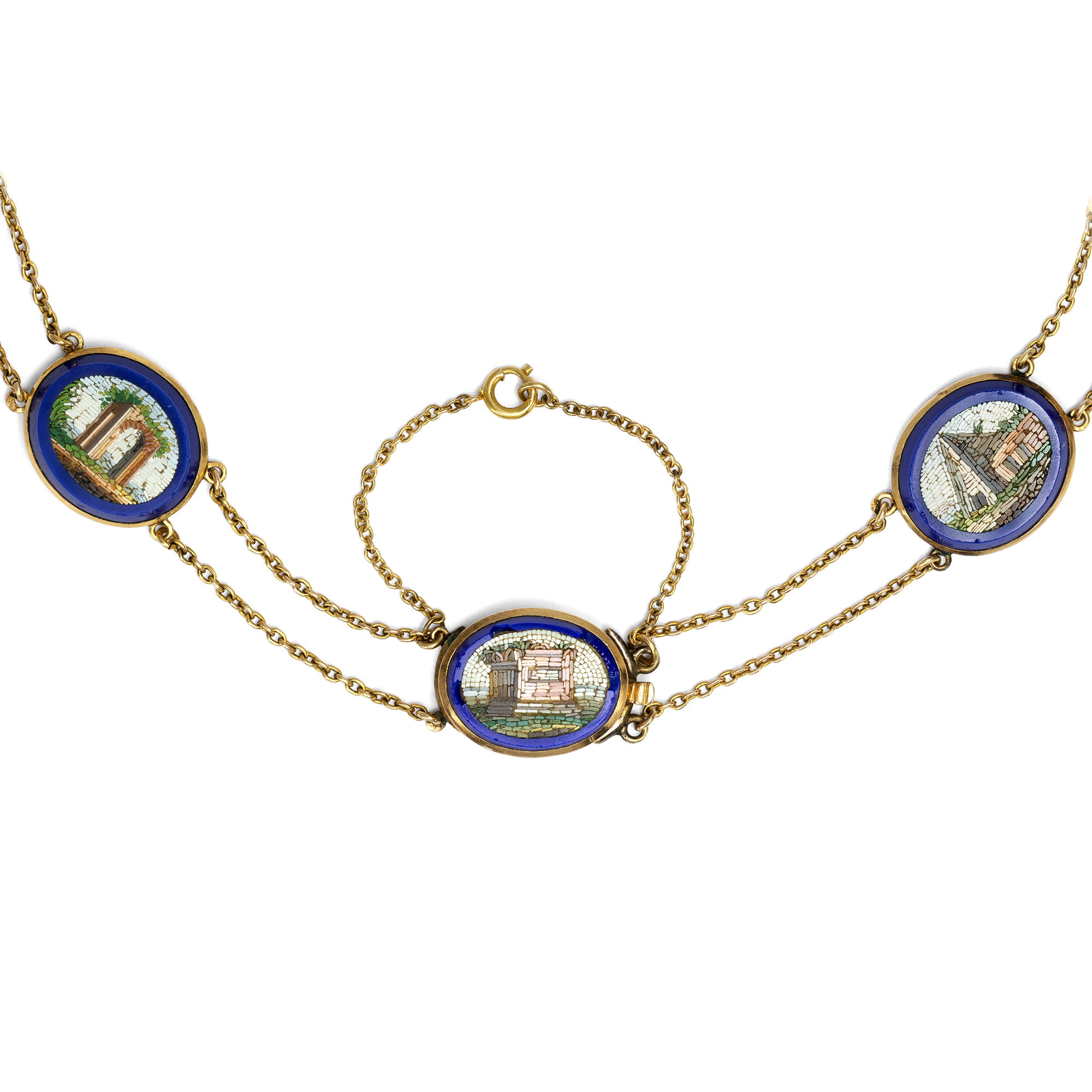
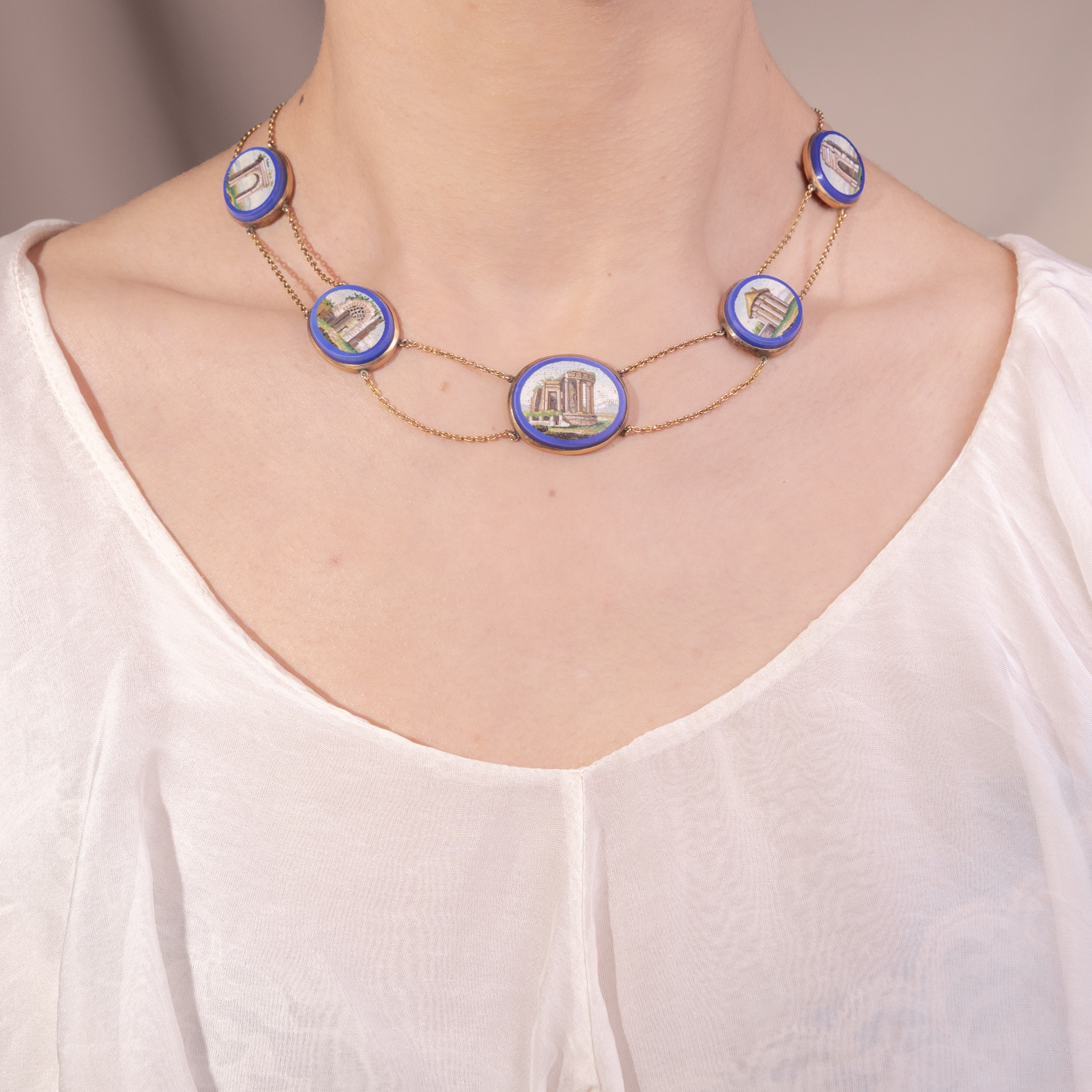
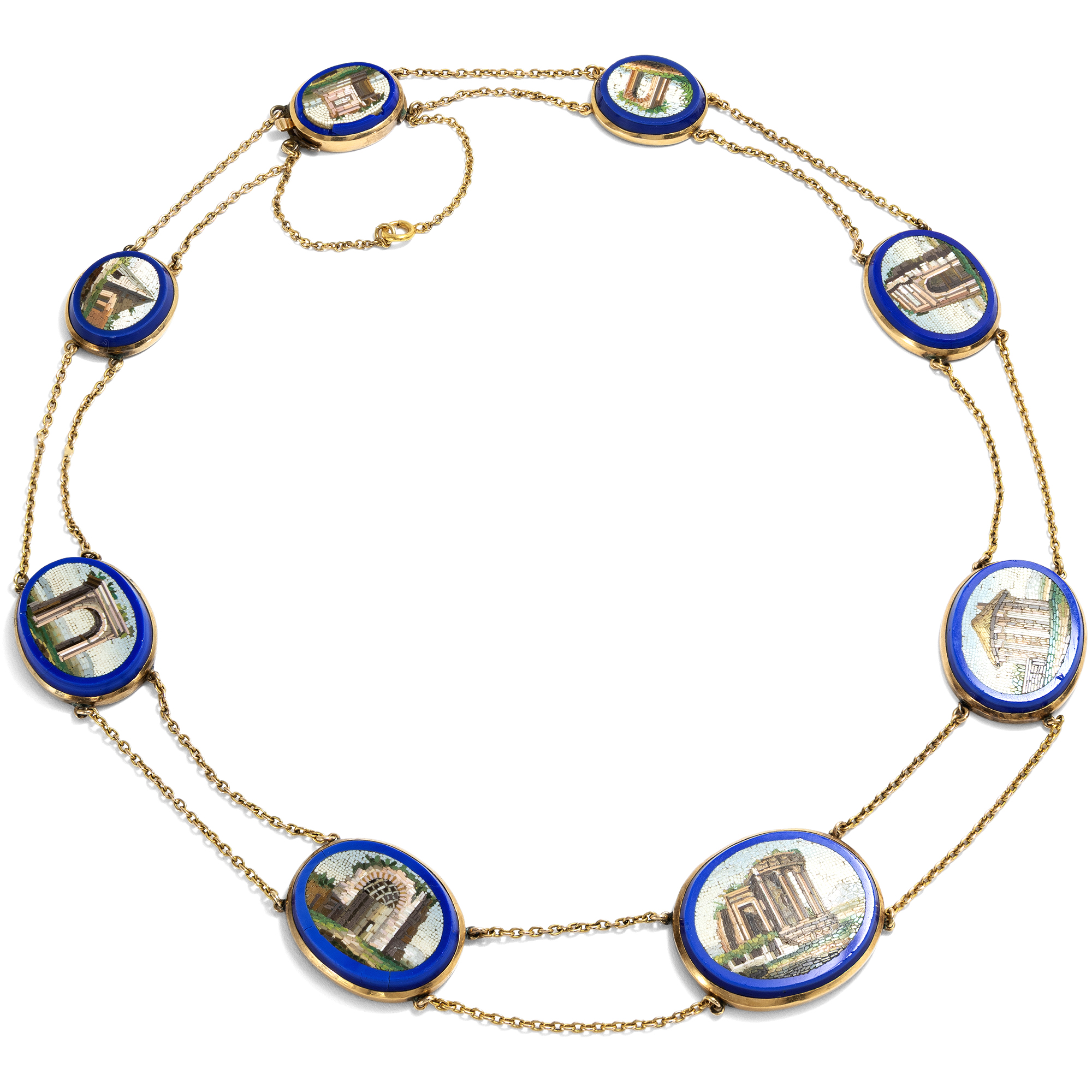
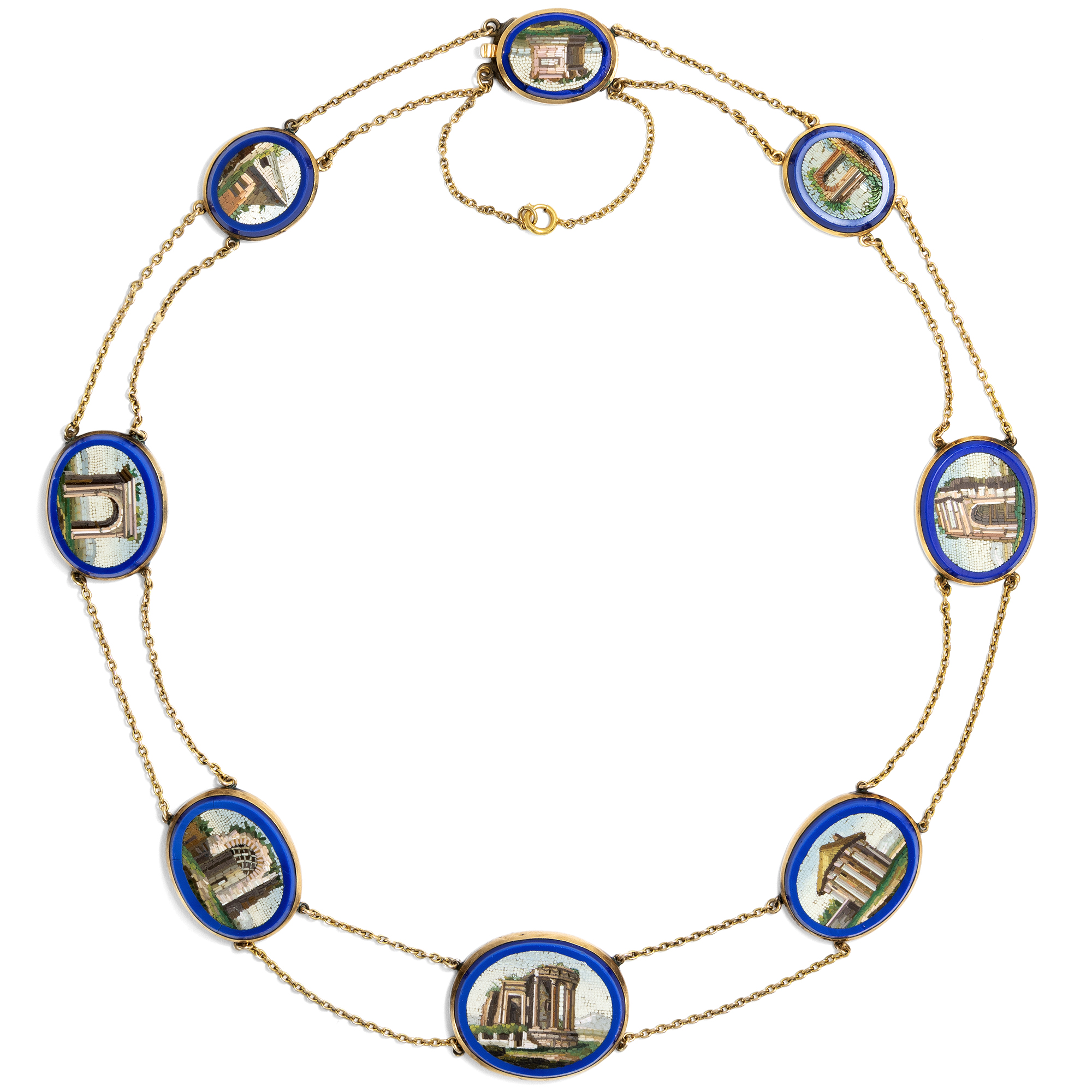
The rich abundance of Roman ruins still surprises and inspires every traveler to the Eternal City today. From the Colosseum to the triumphal arches at the Roman Forum and the palaces of the emperors, there is so much to discover and marvel at that it is hard to remember all the impressions. Just as we do today, so did the travelers of earlier centuries. Even in Goethe's time, there was a longing for souvenirs that captured what they had seen. Prints could therefore be purchased in many corners of the city. But jewellery was also created, mainly with micromosaics, as souvenirs. This necklace presents eight oval micromosaics with views of Rome and its surroundings. The depictions set in blue glass show ancient monuments, detached from their urban surroundings. They seem to stand alone in the open landscape, which enhances their sublime, melancholy effect. From left to right, we see the Pyramid of Cestius, the Arch of Gallienus, an apse of the Temple of Venus and Roma, the Temple of Vesta in Tivoli, the round temple of Hercules Victor on the Forum Boarium, the Arch of Titus in its unrestored form and two unknown ruins, which are presumably aqueduct arches and a tomb on the Via Appia. According to the hallmarks, the micromosaics, which are staggered in size, and their settings were created in the then Papal States in Rome. The simple settings of high-carat gold and the elegant shape of the double intermediate chains allow us to date the necklace to the 1830s. It is beautifully preserved and a wonderful testimony to the enduring and everlasting enthusiasm for the Eternal City.
Learn more
The origin of the art of micromosaic lies in Rome. Here, in the Vatican to be precise, a workshop for mosaics made of glass stones had existed since the 16th century. Initially, it was used to permanently protect the altarpieces in St. Peter's Basilica against candle soot, moisture and dirt brought into the church by the many pilgrims. Later, after this task had been completed, copies of paintings and landscape depictions in painting size were created. The idea of using this ultimately antique technique for pieces of jewellery and for the decoration of decorative arts came about at the end of the 18th century. As part of the Grand Tour, countless travelers from northern Europe arrived in the city and created a great demand for souvenirs. Not least to serve this market, a completely new art form was created: micromosaics are small and portable and were therefore particularly suitable to be taken back home to the north. As they also usually depict the beauties of Rome or motifs from antiquity, their success as travel souvenirs is hardly surprising. The "invention" of the micromosaic is primarily associated with Giacomo Raffaelli and Cesare Aguatti, who perfected this technique around 1775. They established a tradition from which, until the end of the 19th century, mosaics were created with such a wealth of detail and artistry that had never been achieved before or since. Even today, similar mosaics are still produced in Rome, albeit of a much lower quality. The Victoria & Albert Museum in London has published a beautiful video showing the creation of a micromosaic at this link. On the technique and history of micromosaics, we also recommend Maria Grazia Branchetti: Mosaici muniti romani, Rome 2004, with many works by Giacomo Raffaelli, and Roberto Grieco/Arianna Gambino: Roman Mosaic. L'arte del micromosaico fra '700 e '800, Milan 2001.
Learn more
Read more
Size & Details
Exceptional necklace with eight micromosaics in gold, Rome circa 1835
Italian journey
€ 4,980.00 *
Content 1 piece
Incl. VAT, Shipping
Our Promise
Our Promise
Our Promise

We want you to be 100% satisfied! For that reason, we examine, describe and photograph all of our jewellery with the utmost care.

You can rely on our years of experience in the trade and our expertise as a professional art historians for reviews of the antique jewellery. As a member of various trade organisations and the British Society of Jewellery Historians, we remain committed to the highest possible degree of accuracy. In our descriptions, we always also indicate any signs of age and defects and never hide them in our photos – this saves you from any unpleasant surprises when your package arrives.

Should you for some reason not be satisfied, please don’t hesitate to contact us so that we can find a solution together. In any case, you can return any article within one month and we will refund the full purchase price.

Learn more