Stand Out of My Sun!

Impressive Agate Cameo in a Holbeinesque Gold Setting, c. 1870


€ 8,690.00 *
Content 1 piece
Incl. VAT, Shipping
Impressive Agate Cameo in a Holbeinesque Gold Setting, c. 1870
Description
This description was automatically translated from German. If you have any questions about this piece of jewellery, we will be happy to help!
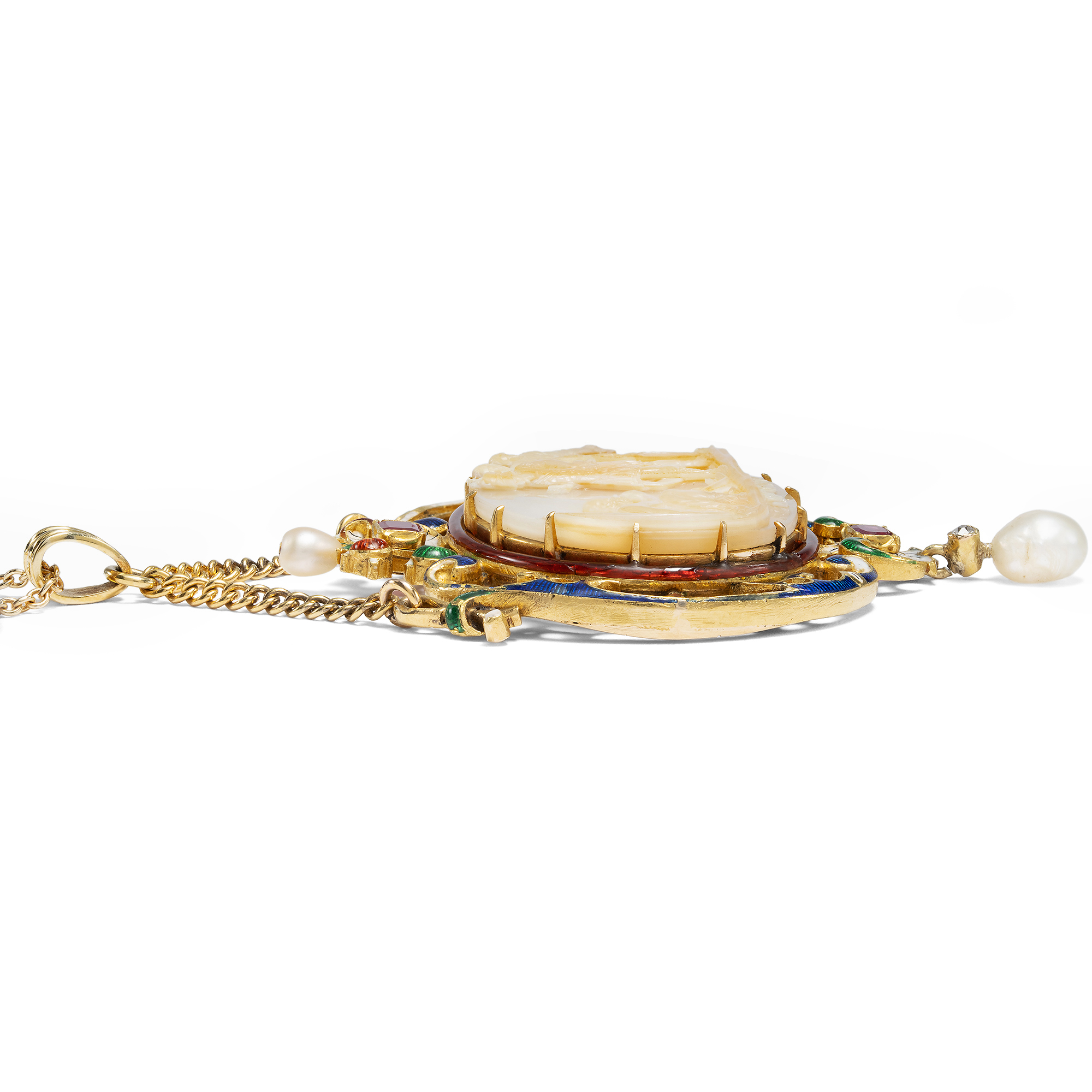
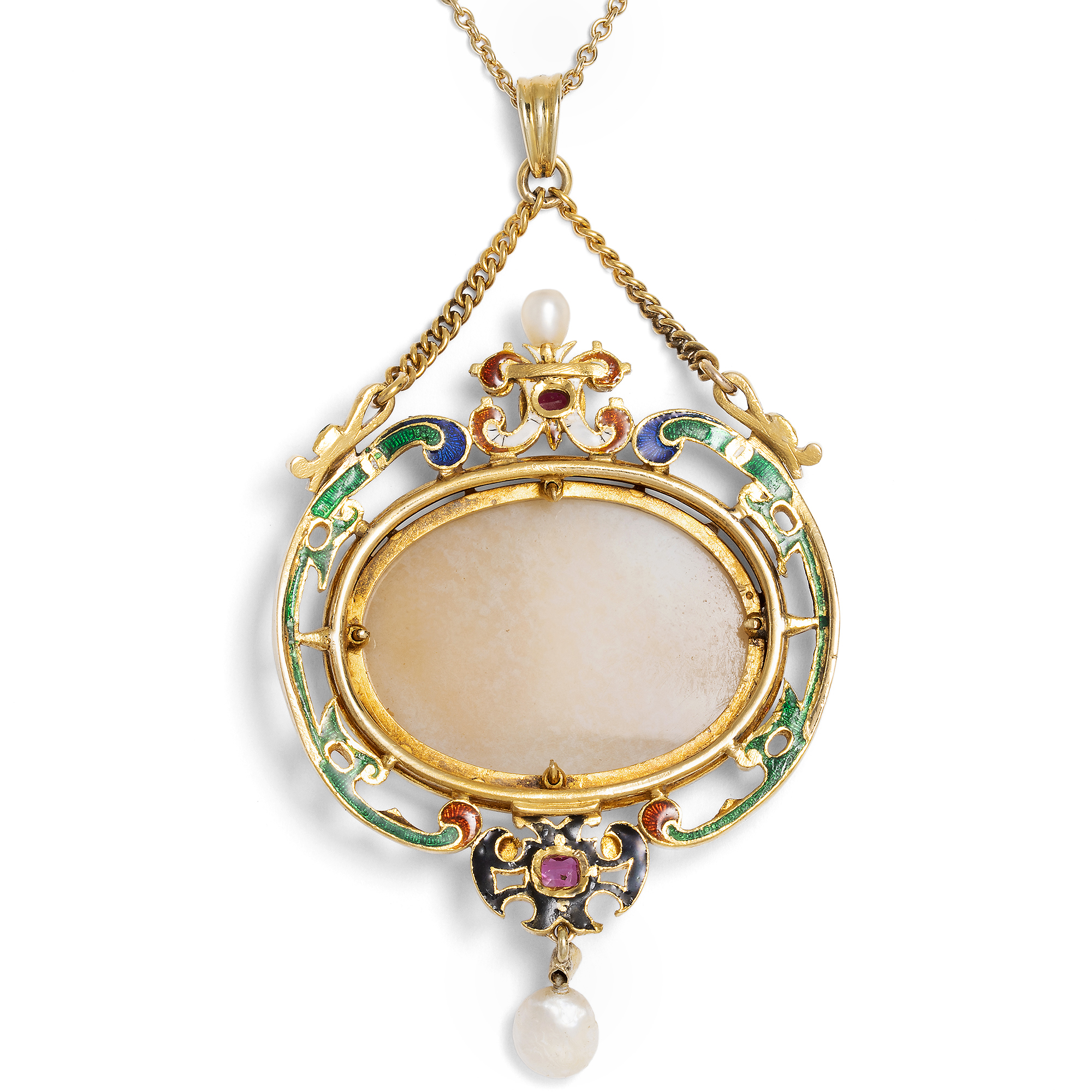
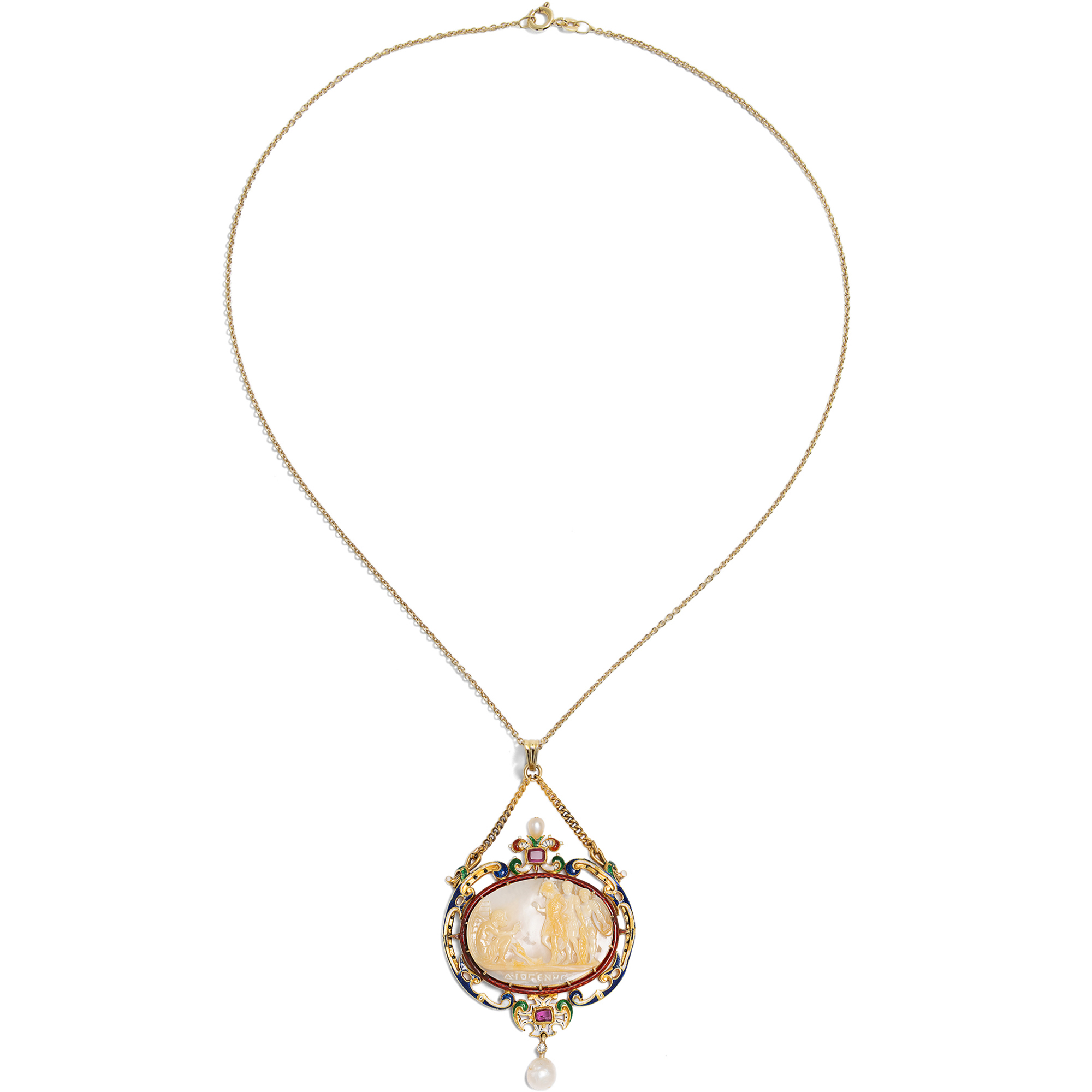
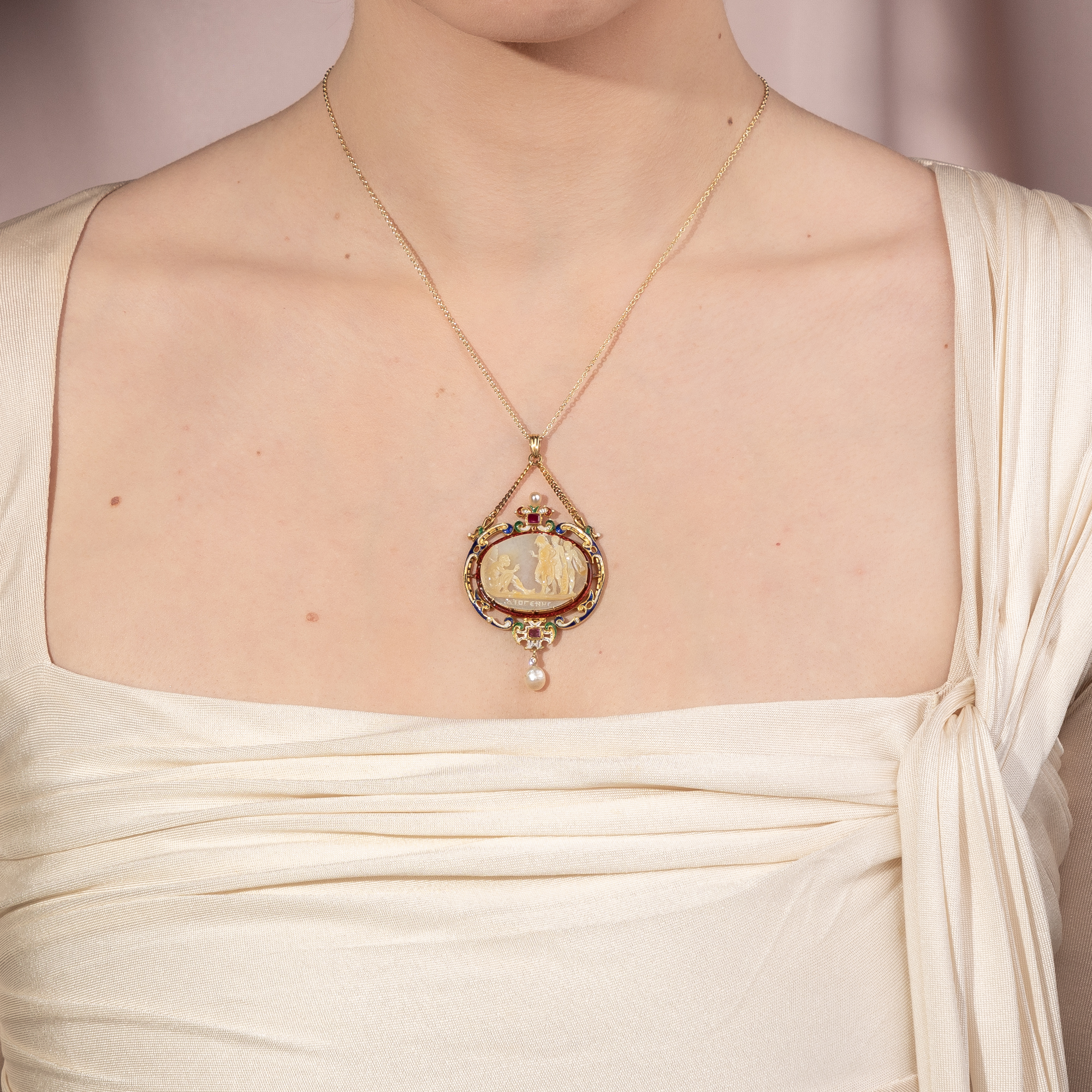
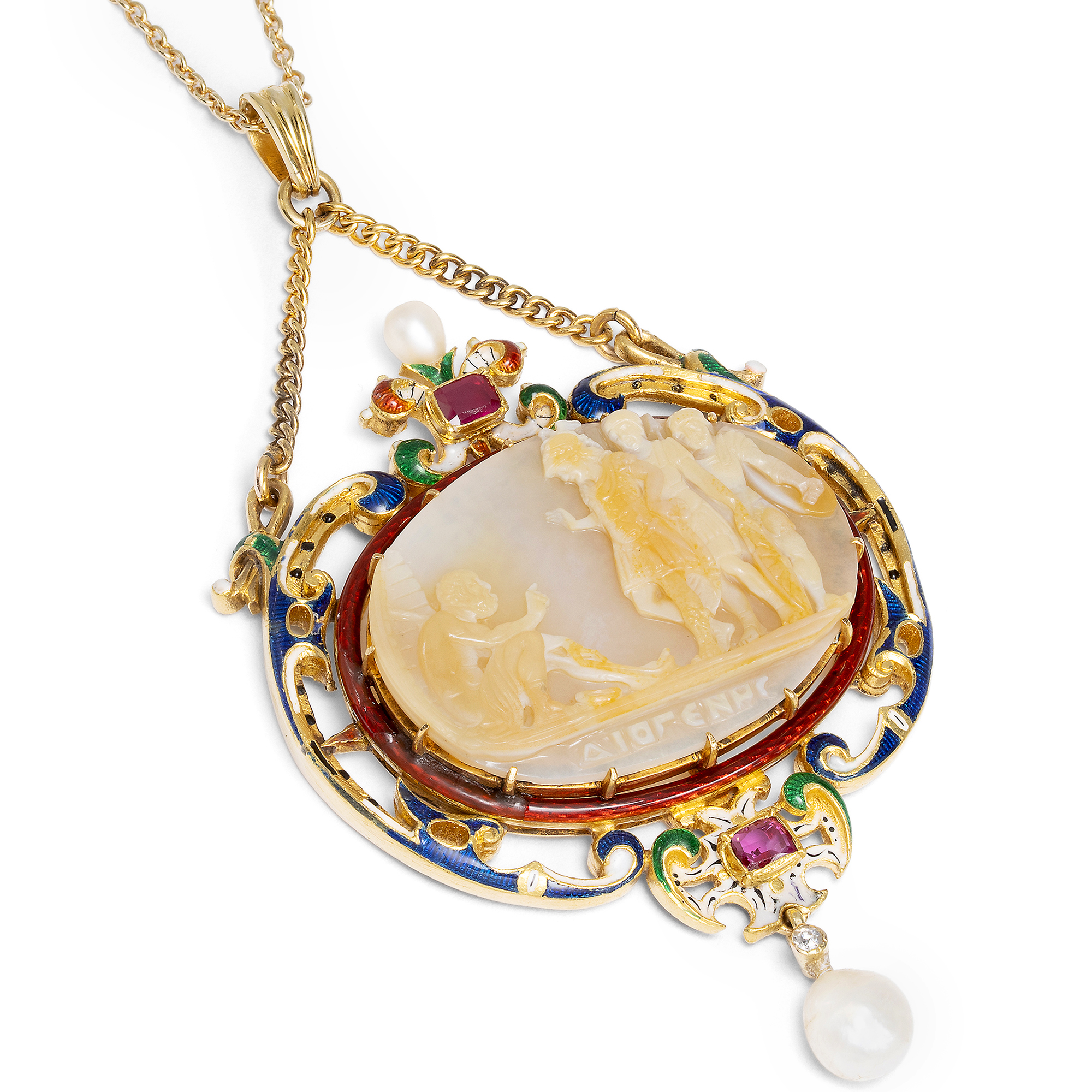
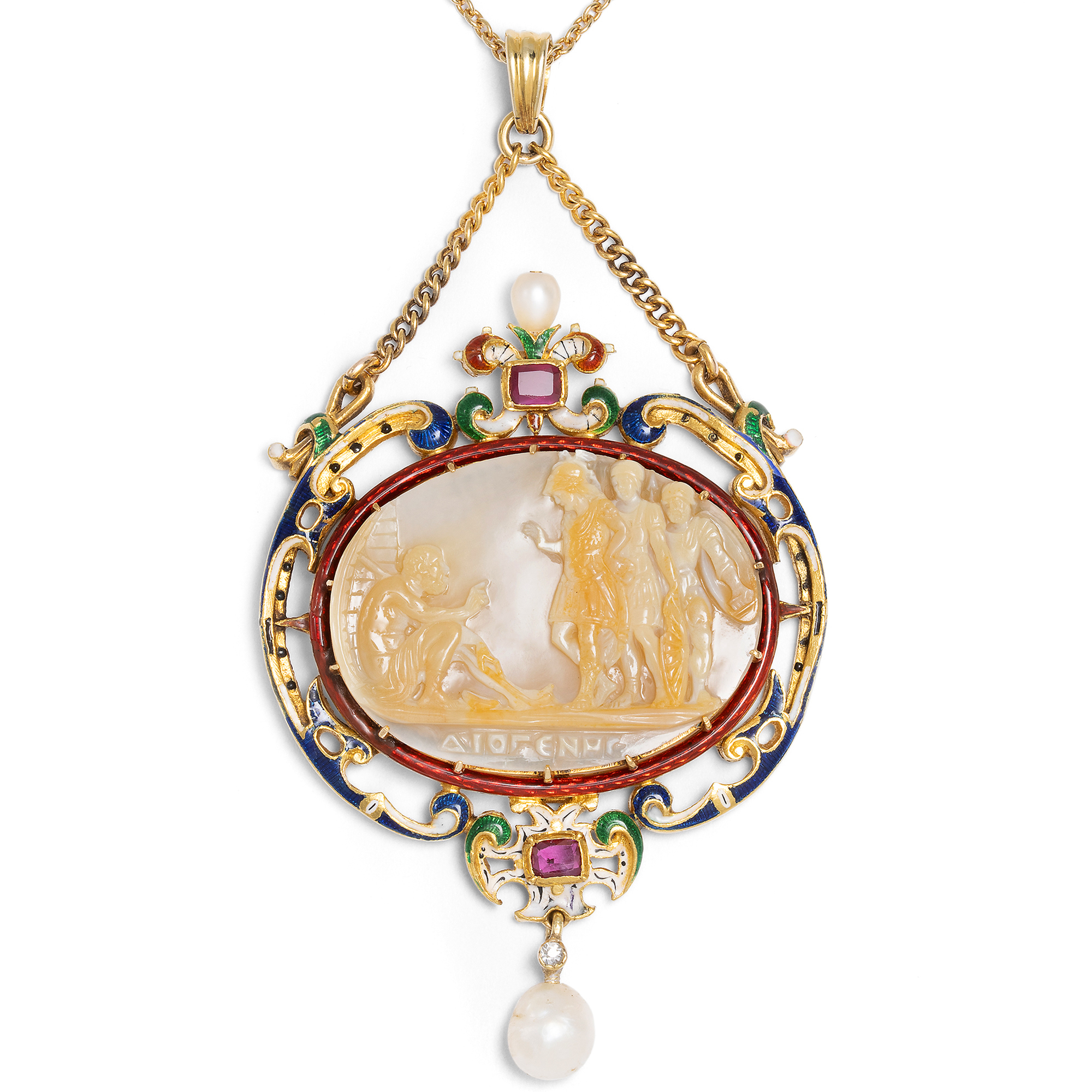
This finely crafted agate cameo depicts a scene from ancient tradition: the meeting of Diogenes with Alexander the Great, accompanied by his entourage. Diogenes, one of the most famous philosophers of classical antiquity, lived a life of deliberate simplicity and radical independence from social conventions. Not in a palace, but outdoors, facing the sun, frugal and free of possessions, he lived in an old wine barrel. When Alexander visited him, he offered to fulfill his every wish. But Diogenes, unimpressed by power and wealth, simply replied: "Stand a little out of my sun!" The Cynic's philosophy is condensed in this simple yet profound sentence: true happiness lies neither in possessions nor in power, but in inner freedom and frugality. The scene thus impressively juxtaposes two approaches to life and poses the timeless question of what true greatness consists of. This encounter is depicted with great narrative density in the relief of this cameo. On the left, Diogenes, sitting on the bare ground, clad only in a shawl and sandals. On the right, Alexander with his entourage in elegant armor. As can sometimes be found on antique cameos, the cameo cutter has inscribed the subject of the cameo in Greek letters below the scene: "Διογένης" - "Diogenes". The cameo is framed by an elaborate gold frame, which consists of fittings and scrollwork and is richly decorated with multi-colored enamel. In its ornamentation, it takes up the formal language of the Renaissance of the years around 1600, the so-called "Holbein style". The goldsmith has combined a precious setting consisting of two untreated rubies from Burma, a small old-cut diamond and two natural saltwater pearls. The exquisitely decorated and equally exquisitely crafted pendant combines the aesthetics of the Renaissance with a great philosophical idea. A true chamber of art piece! This collector's item came to us from Munich.
Learn more
Renaissance jewellery with rich enameling is a particularly valuable area of collecting. Only a few of these valuable pieces have come down to us over the course of time without damage or flaws - so it is all the more fortunate to find one of these rare examples. Especially in the 19th century, designs in this technique were often realized. In France, enthusiasm for the era of François I and Henri II developed from the 1850s onwards, which was seen as an age of patriotic greatness. François-Désiré and Émile Froment-Meurice created pieces of jewellery on themes such as the "Toilet of Venus", which at the same time referred to antiquity in an erudite manner and yet did not ignore the interests of this worldly life in a cheerful way. Other goldsmiths such as Boucheron, Falize and Wièse followed suit - and by 1871, Paris was already considered the capital of enamel by the Art Journal. In Great Britain, the development took a similar course. Here, too, the Renaissance was regarded as the national style, as it referred to the glorious era of Henry VIII and Elizabeth I. John Brogden and Carlo Giuliano produced designs in London in the 1860s that were based on the pieces of jewellery in Hans Holbein's paintings - which is why the style was also called "Holbeinesque". Queen Victoria was seen as the new Queen Elizabeth, and jewellery that linked this past with the present became an expression of patriotic pride. Finally, in Germany, jewellery in Renaissance forms became fashionable under the term "Old German style". Here, the Dürer period was invoked from the 1870s onwards. Jewellers such as Hugo Schaper in Berlin and August Kleeberg in Vienna produced high-quality jewellery in the Renaissance style - as did their colleagues in Paris and London, richly decorated with colored enamel. The differences between the respective national styles, which were in any case claimed rather than actual, became increasingly blurred towards the end of the century. However, jewellery with artistic enamel remained in fashion for a long time - Art Nouveau artists, such as René Lalique, also liked to use this technique, albeit now in a completely unique, modern design language.
Learn more
Read more
Size & Details
Impressive Agate Cameo in a Holbeinesque Gold Setting, c. 1870
Stand Out of My Sun!
€ 8,690.00 *
Content 1 piece
Incl. VAT, Shipping
Our Promise
Our Promise
Our Promise

We want you to be 100% satisfied! For that reason, we examine, describe and photograph all of our jewellery with the utmost care.

You can rely on our years of experience in the trade and our expertise as a professional art historians for reviews of the antique jewellery. As a member of various trade organisations and the British Society of Jewellery Historians, we remain committed to the highest possible degree of accuracy. In our descriptions, we always also indicate any signs of age and defects and never hide them in our photos – this saves you from any unpleasant surprises when your package arrives.

Should you for some reason not be satisfied, please don’t hesitate to contact us so that we can find a solution together. In any case, you can return any article within one month and we will refund the full purchase price.

Learn more