Vedute di Roma

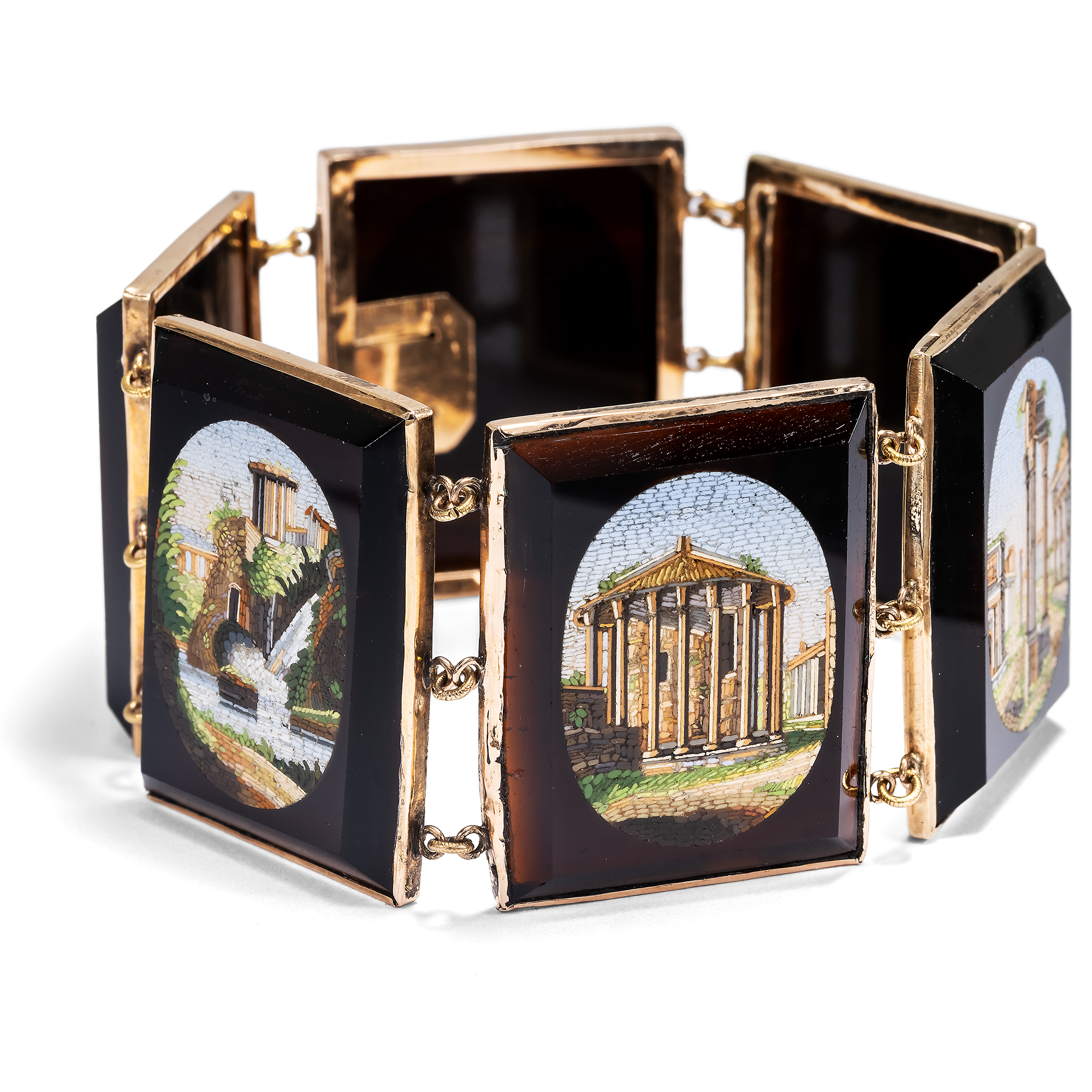
Magnificent Antique Bracelet with Micromosaics in Gold, Rome, c. 1850


€ 5,980.00 *
Content 1 piece
Incl. VAT, Shipping
Magnificent Antique Bracelet with Micromosaics in Gold, Rome, c. 1850
Description
This description was automatically translated from German. If you have any questions about this piece of jewellery, we will be happy to help!
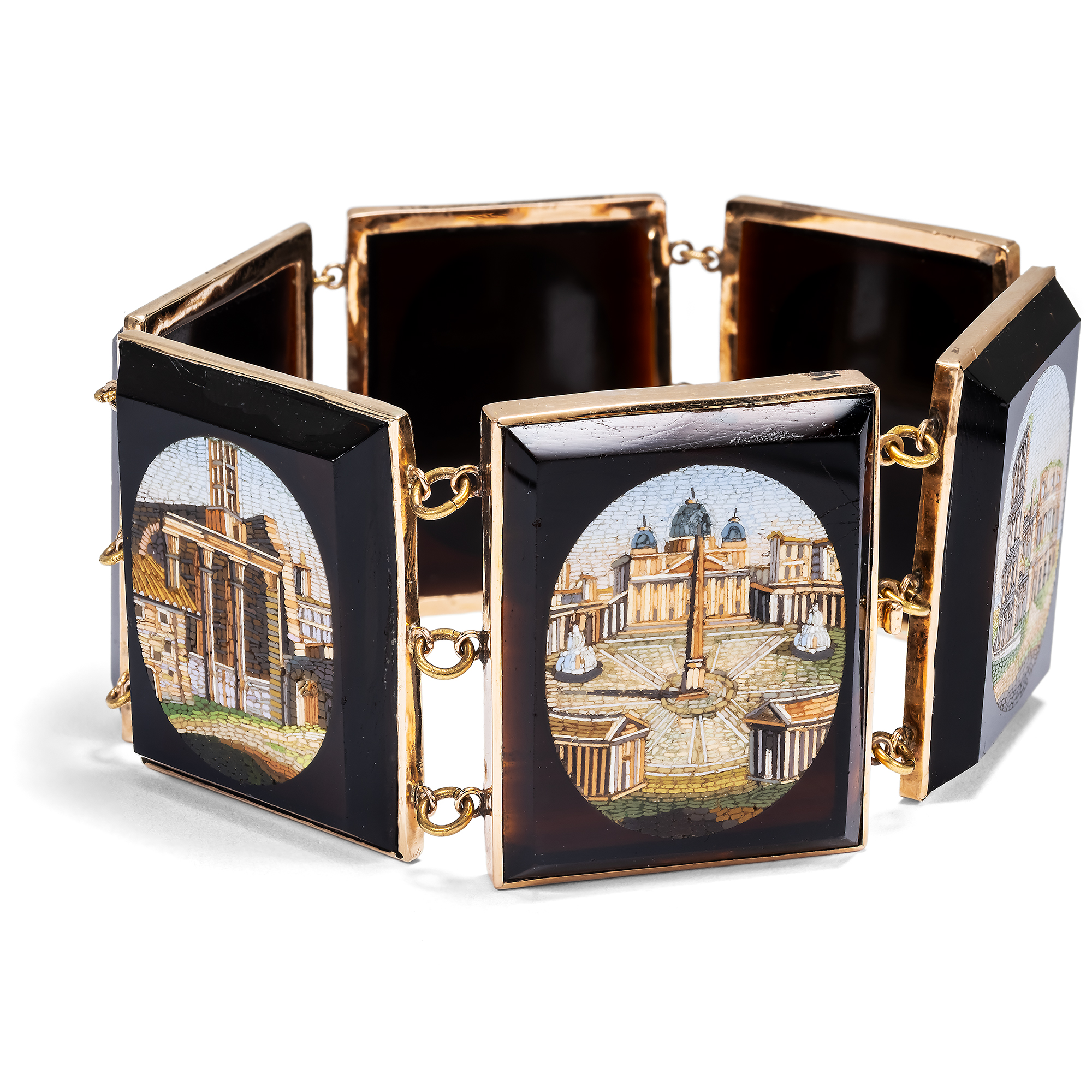
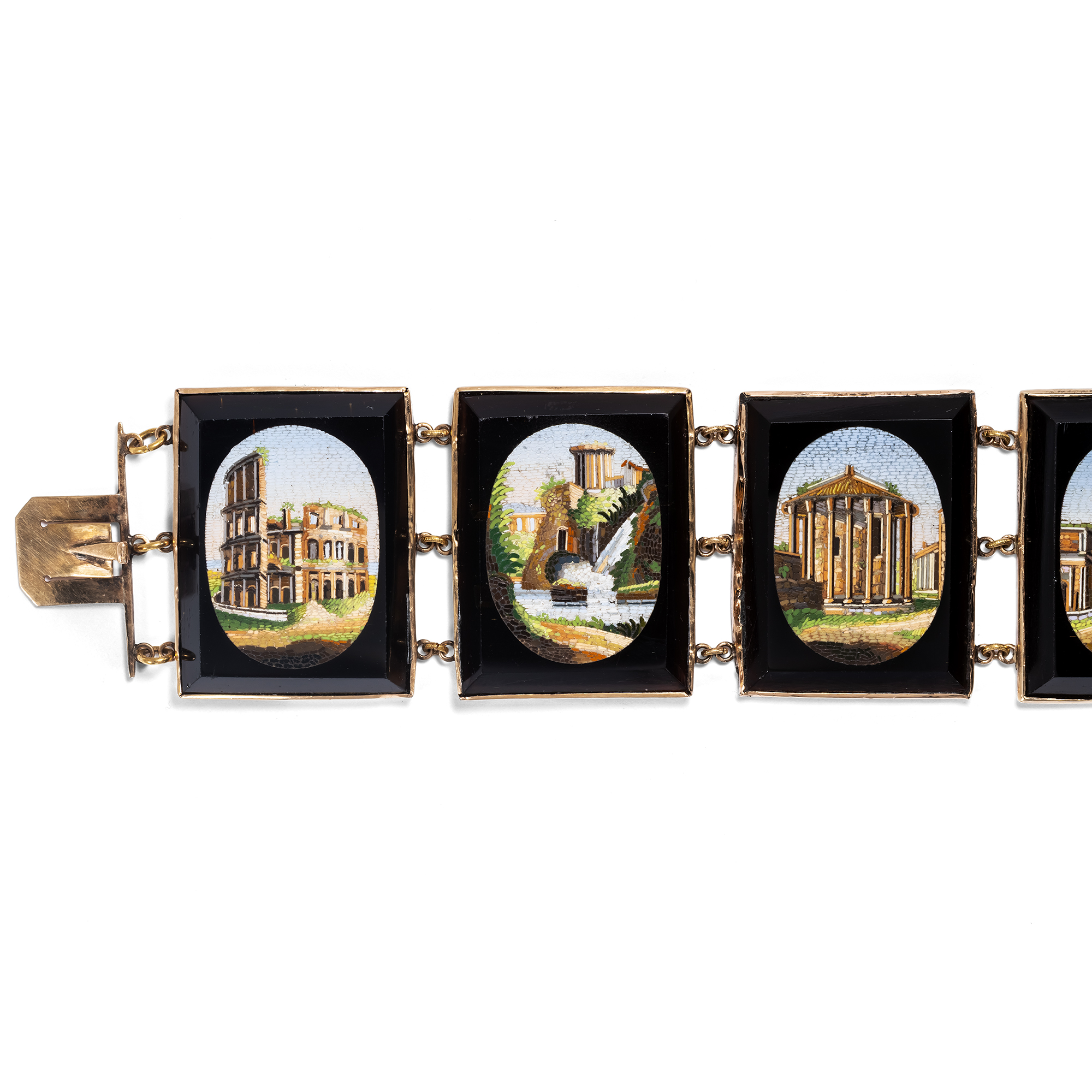
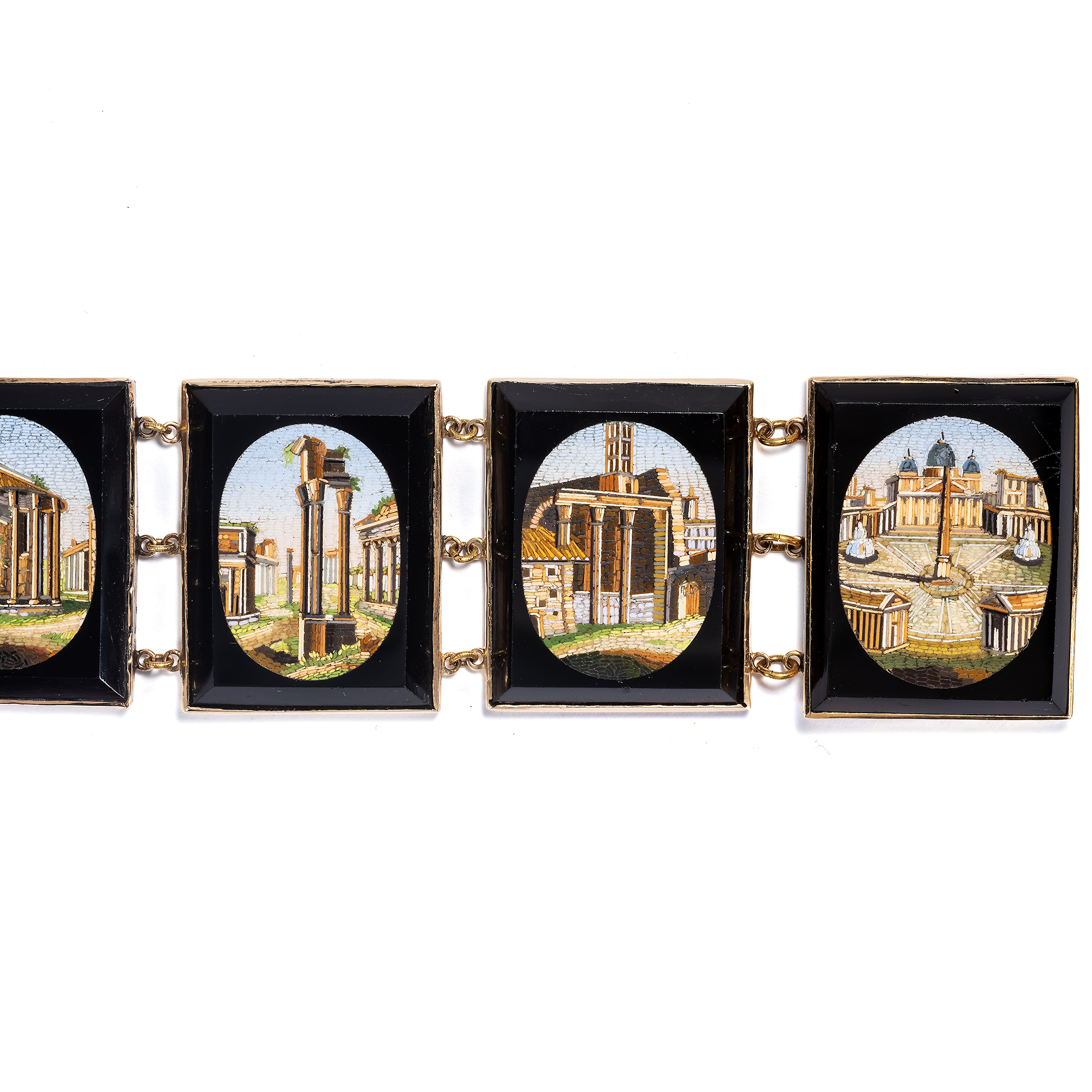
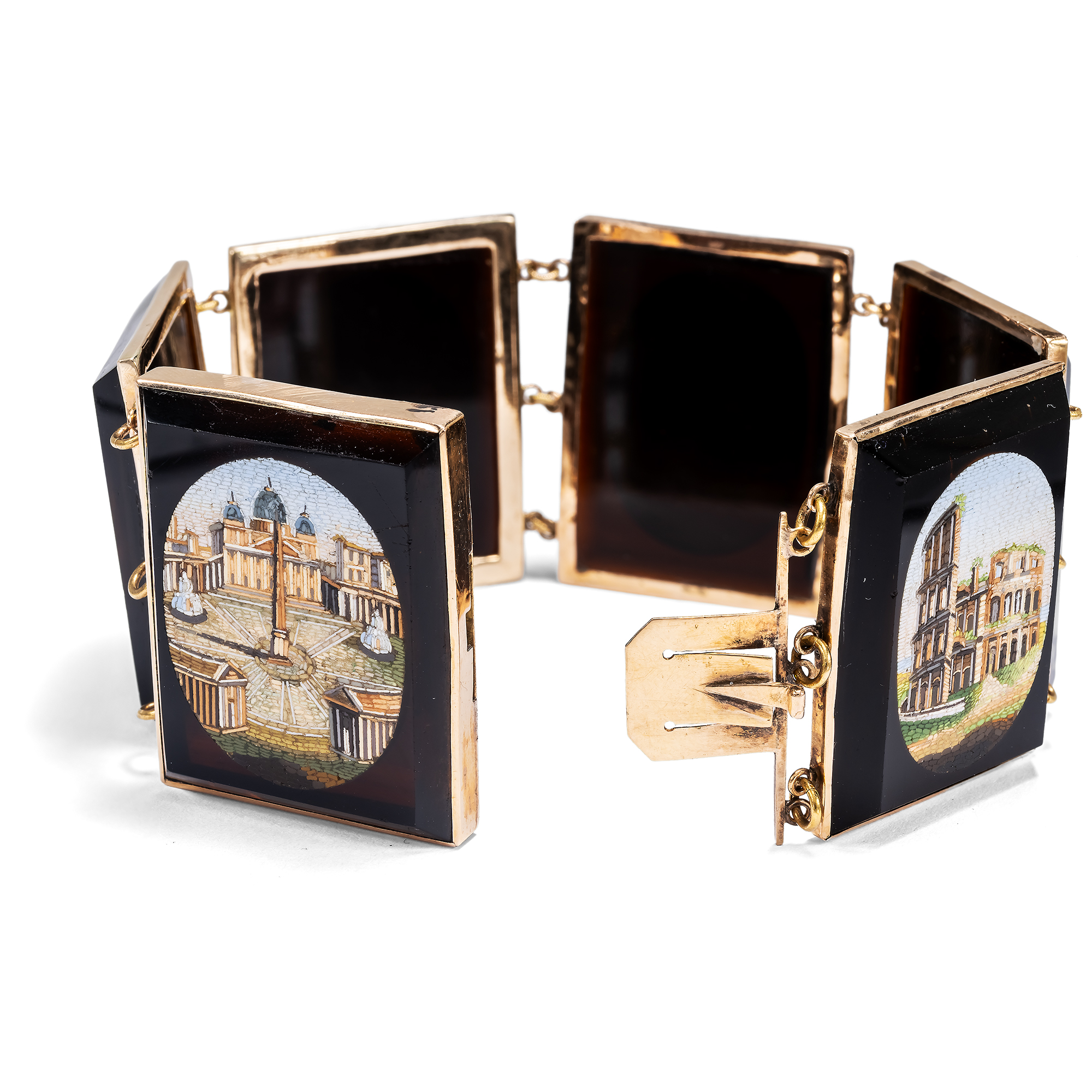
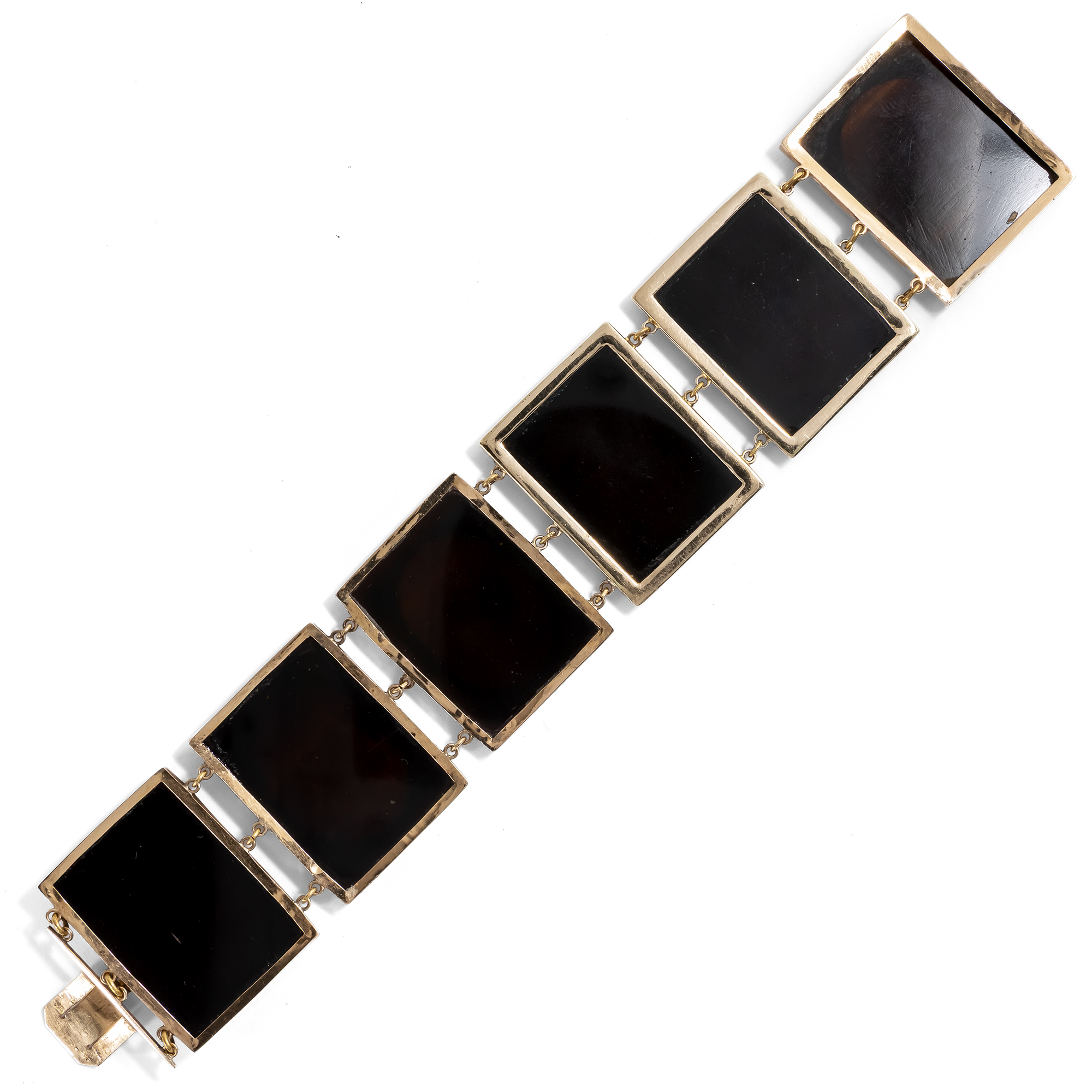
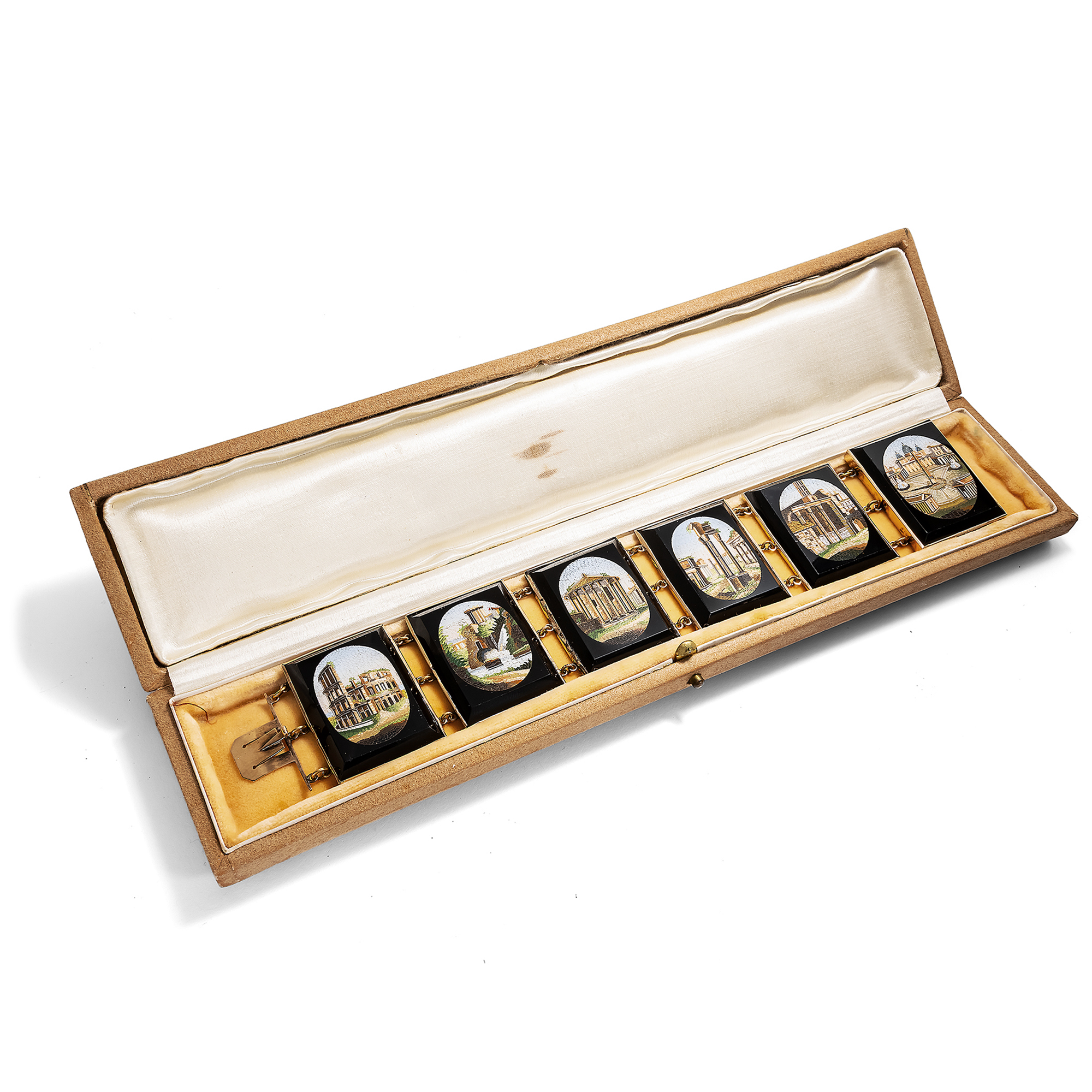
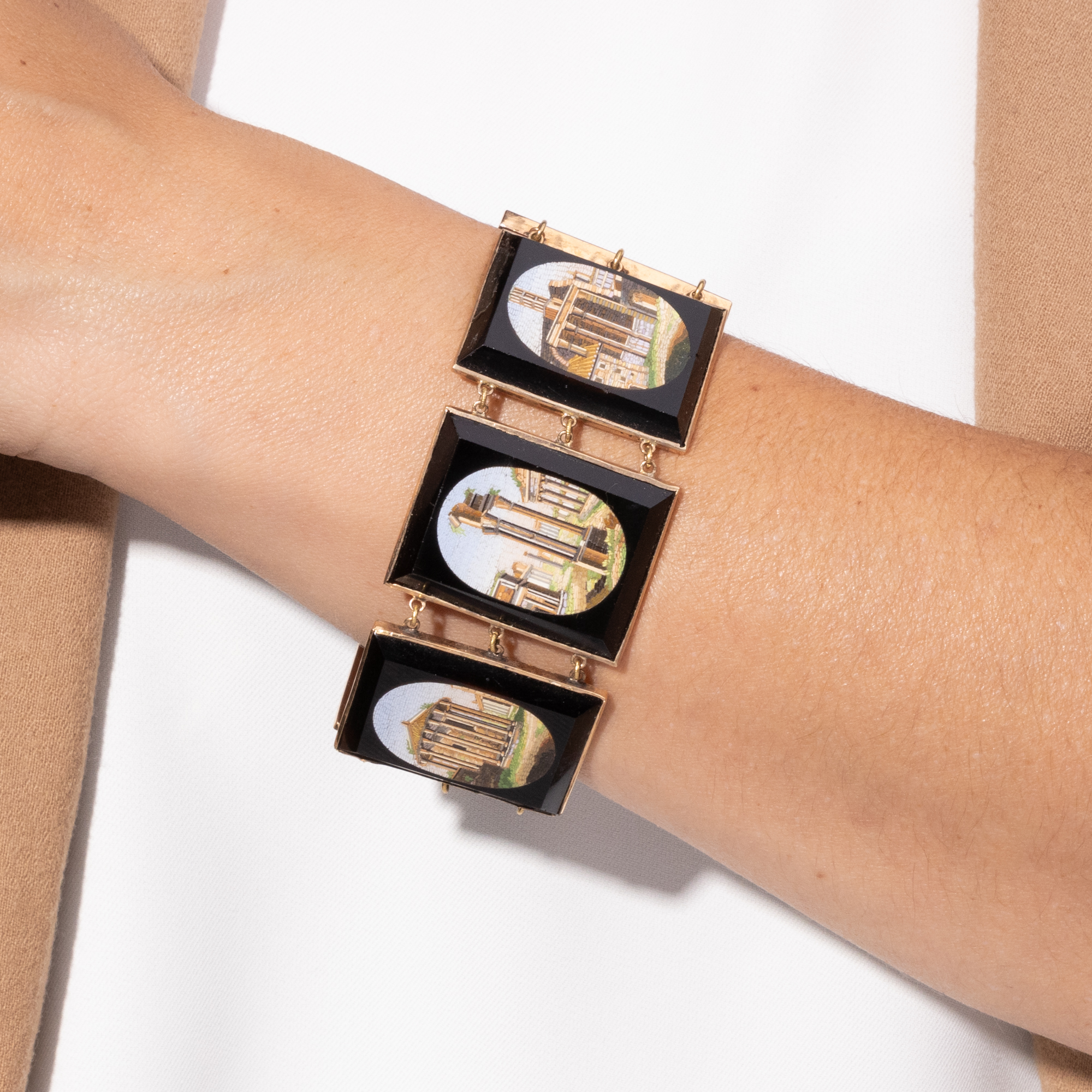
Not unlike us today, travelers in the 19th century also liked to bring home souvenirs from their stay abroad. From a trip to Rome, these were often precious mosaics with views of the most important sights. Since the end of the 18th century, a workshop had been established here, more precisely in the Vatican, in which the most wonderful mosaics were created from tiny glass stones. The most popular motifs were depictions of the ruins of ancient Rome and a few selected modern buildings. This bracelet is a particularly high-quality example of this. We see six rectangular fields in fine frames made of high-carat gold, which bear incredibly fine, detailed micromosaics in oval picture sections. The journey to the Eternal City begins with a view of the Colosseum. This is followed by the waterfalls of Tivoli, with the round temple of Sybille, the round temple at the Forum Boarium, the three columns of the Temple of Vespasian on the Forum Romanum, then a view of the Forum of Augustus and finally - as the highlight of contemporary Rome - St. Peter's Square with St. Peter's Basilica. It is interesting to note that the bracelet captures views that no longer exist today. The columns of the Temple of Mars Ultor on the Augustus Forum were further uncovered with the construction of the Via dei Fori Imperiali under Mussolini, and the extensions visible on the left of the mosaic and the bell tower above it were demolished. However, the earlier state can be found, for example, in Giovanni Battista Piranesi's Le Antichità Romane, vol. 1, Rome, 1784, pl. XXX. The volume can be viewed online here. And the view of St. Peter's Square also shows an interesting detail. Or rather: doesn't show it! Because we can still see the square without the gas lighting installed in 1854, which was grouped around the obelisk in large candelabras. On mosaics produced after this date, the candelabras are usually depicted full of pride in the modernity of the city, see here, for example. The fact that they are missing here is therefore an indication of the period in which the bracelet was created. We date the bracelet to around 1850. Roberto Grieco/Arianna Gambino: Roman Mosaic. L'arte del micromosaico fra '700 e '800, Milan 2001, show on p. 67 a very comparable bracelet, also from Rome and made in the same period. We discovered the bracelet in London.
Learn more
The origin of the art of micromosaic lies in Rome. Here, in the Vatican to be precise, a workshop for mosaics made of glass stones had existed since the 16th century. Initially, it was used to permanently protect the altarpieces in St. Peter's Basilica against candle soot, moisture and dirt brought into the church by the many pilgrims. Later, after this task had been completed, copies of paintings and landscape depictions in painting size were created. The idea of using this ultimately antique technique for pieces of jewellery and for the decoration of decorative arts came about at the end of the 18th century. As part of the Grand Tour, countless travelers from northern Europe arrived in the city and created a great demand for souvenirs. Not least to serve this market, a completely new art form was created: micromosaics are small and portable and were therefore particularly suitable to be taken back home to the north. As they also usually depict the beauties of Rome or motifs from antiquity, their success as travel souvenirs is hardly surprising. The "invention" of the micromosaic is primarily associated with Giacomo Raffaelli and Cesare Aguatti, who perfected this technique around 1775. They established a tradition from which, until the end of the 19th century, mosaics were created with such a wealth of detail and artistry that had never been achieved before or since. Even today, similar mosaics are still produced in Rome, albeit of a much lower quality. The Victoria & Albert Museum in London has published a beautiful video showing the creation of a micromosaic at this link. On the technique and history of micromosaics, we also recommend Maria Grazia Branchetti: Mosaici muniti romani, Rome 2004, with many works by Giacomo Raffaelli, and Roberto Grieco/Arianna Gambino: Roman Mosaic. L'arte del micromosaico fra '700 e '800, Milan 2001.
Learn more
Read more
Size & Details
Magnificent Antique Bracelet with Micromosaics in Gold, Rome, c. 1850
Vedute di Roma
€ 5,980.00 *
Content 1 piece
Incl. VAT, Shipping
Our Promise
Our Promise
Our Promise

We want you to be 100% satisfied! For that reason, we examine, describe and photograph all of our jewellery with the utmost care.

You can rely on our years of experience in the trade and our expertise as a professional art historians for reviews of the antique jewellery. As a member of various trade organisations and the British Society of Jewellery Historians, we remain committed to the highest possible degree of accuracy. In our descriptions, we always also indicate any signs of age and defects and never hide them in our photos – this saves you from any unpleasant surprises when your package arrives.

Should you for some reason not be satisfied, please don’t hesitate to contact us so that we can find a solution together. In any case, you can return any article within one month and we will refund the full purchase price.

Learn more