Dream Worlds of Antiquity

Neoclassical Cameo Made from Oyster Shell in a Silver Setting, Circa 1800 & Later


€ 1,490.00 *
Content 1 piece
Unit price €1,490.00 / piece
Incl. VAT, Shipping
Neoclassical Cameo Made from Oyster Shell in a Silver Setting, Circa 1800 & Later
Description
This description was automatically translated from German. If you have any questions about this piece of jewellery, we will be happy to help!
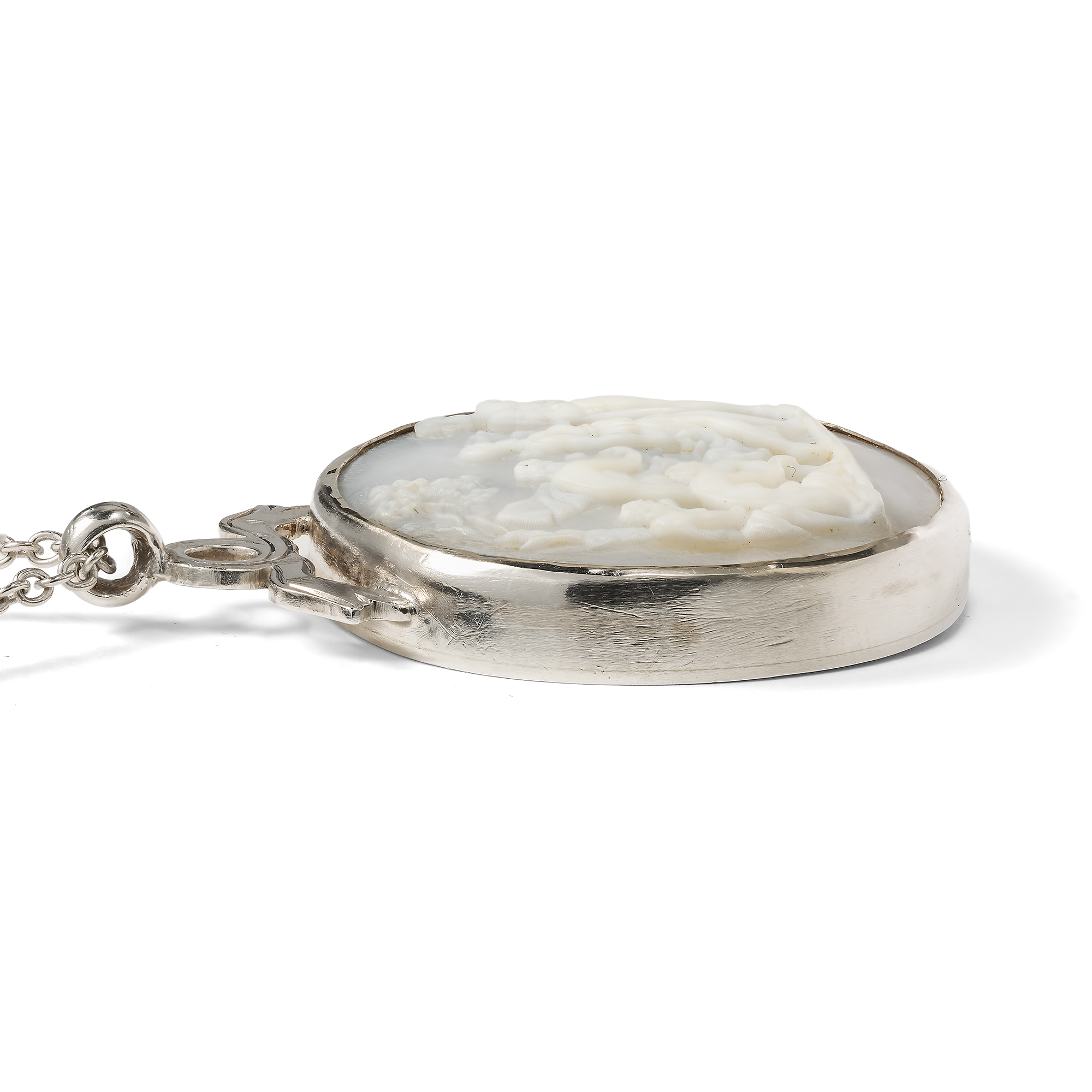
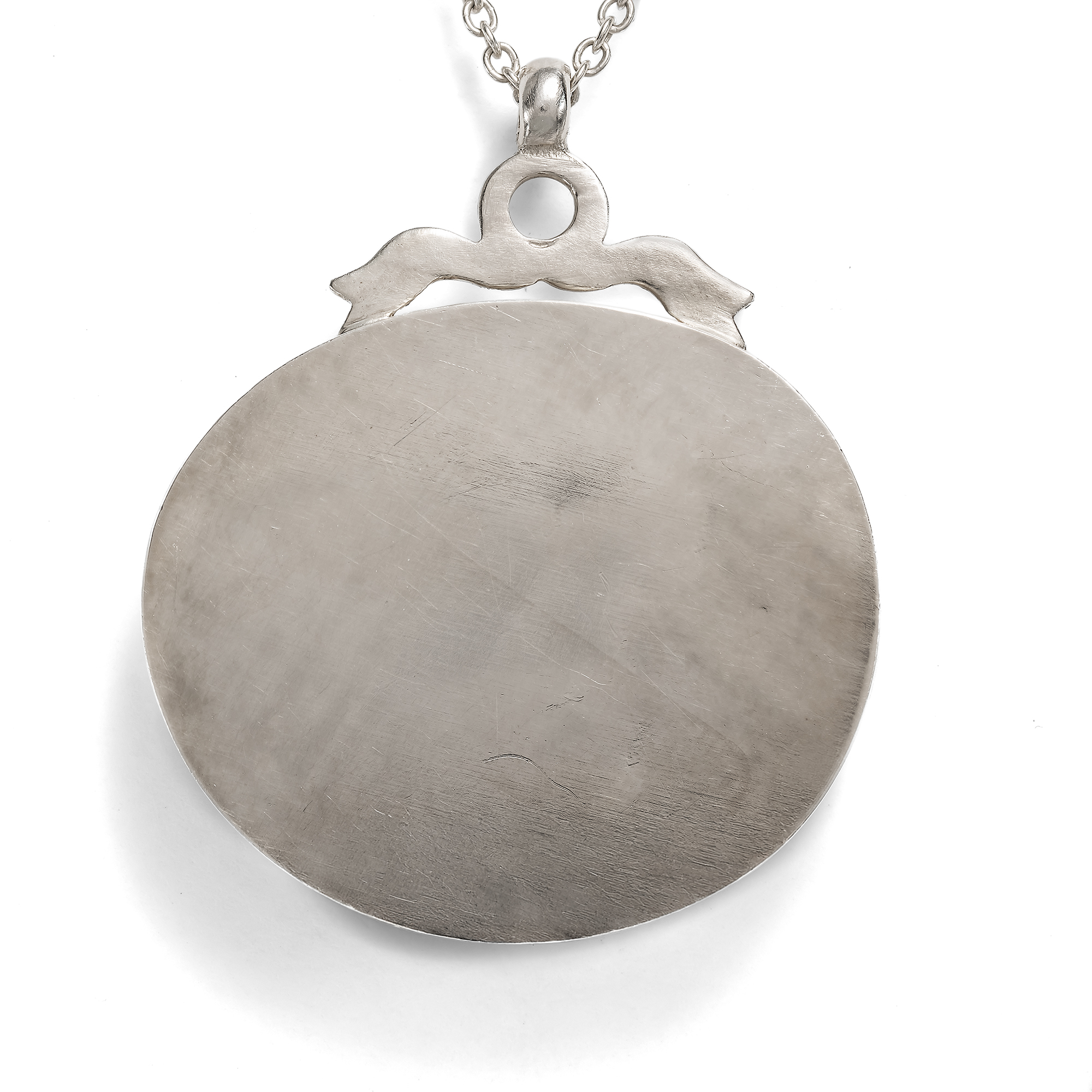
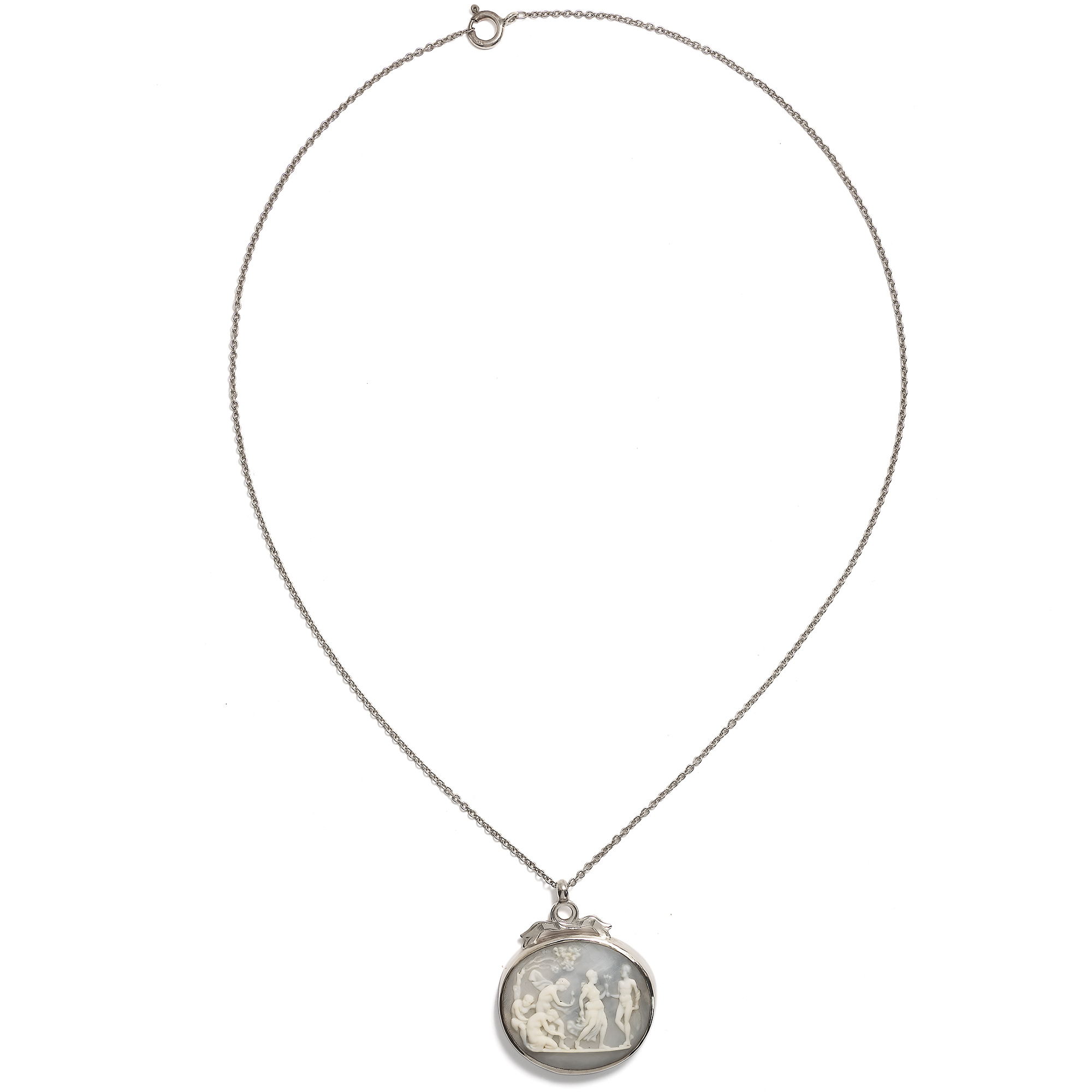
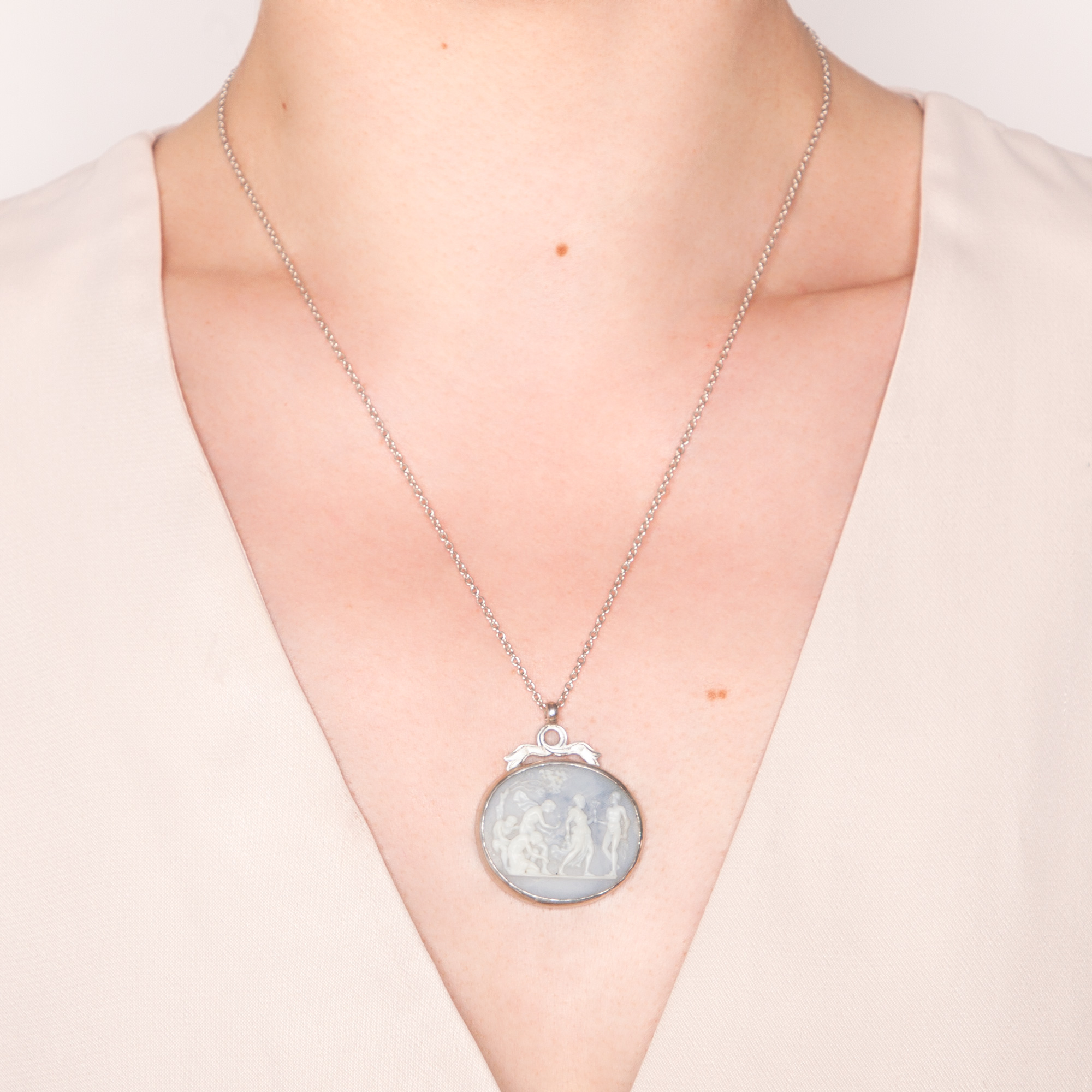
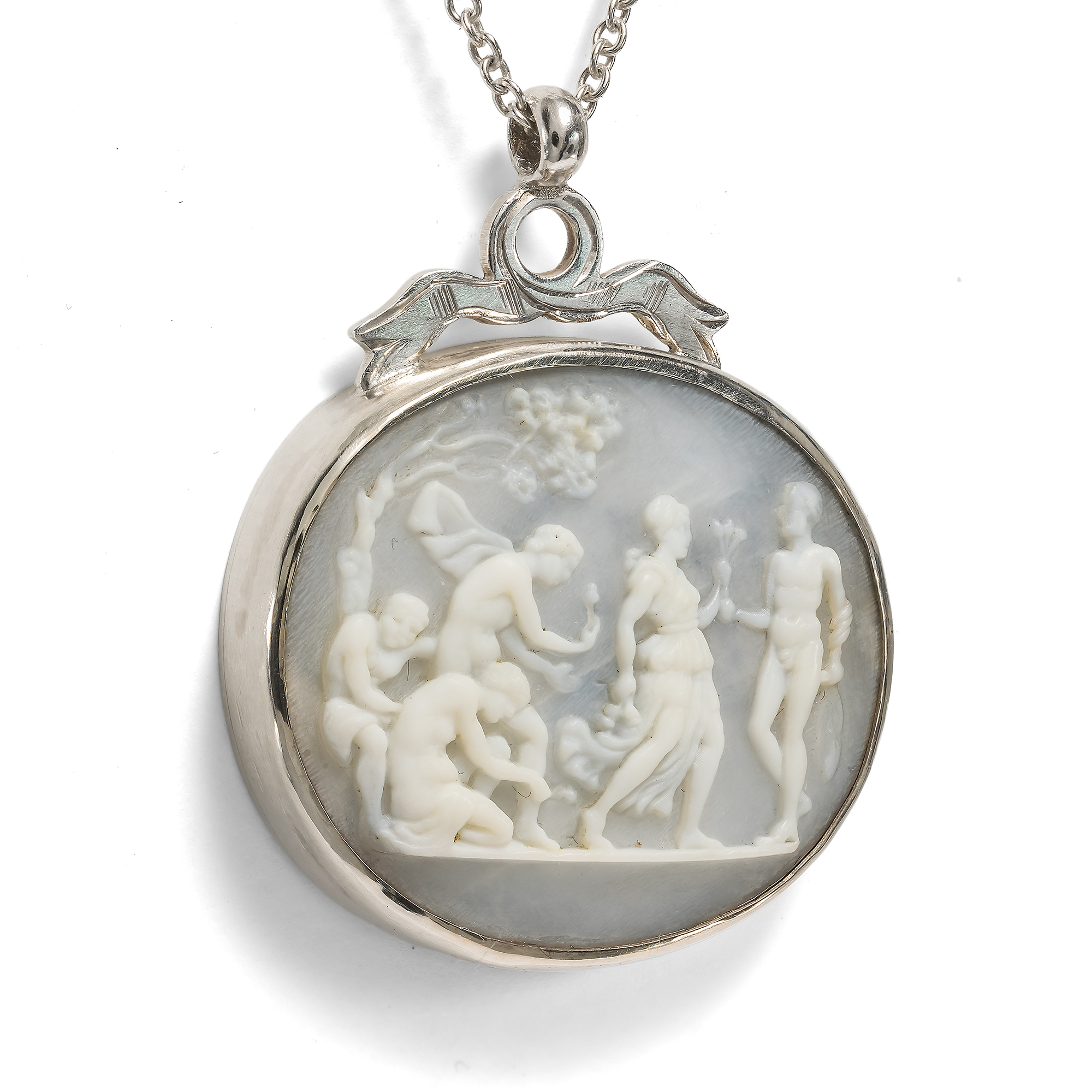
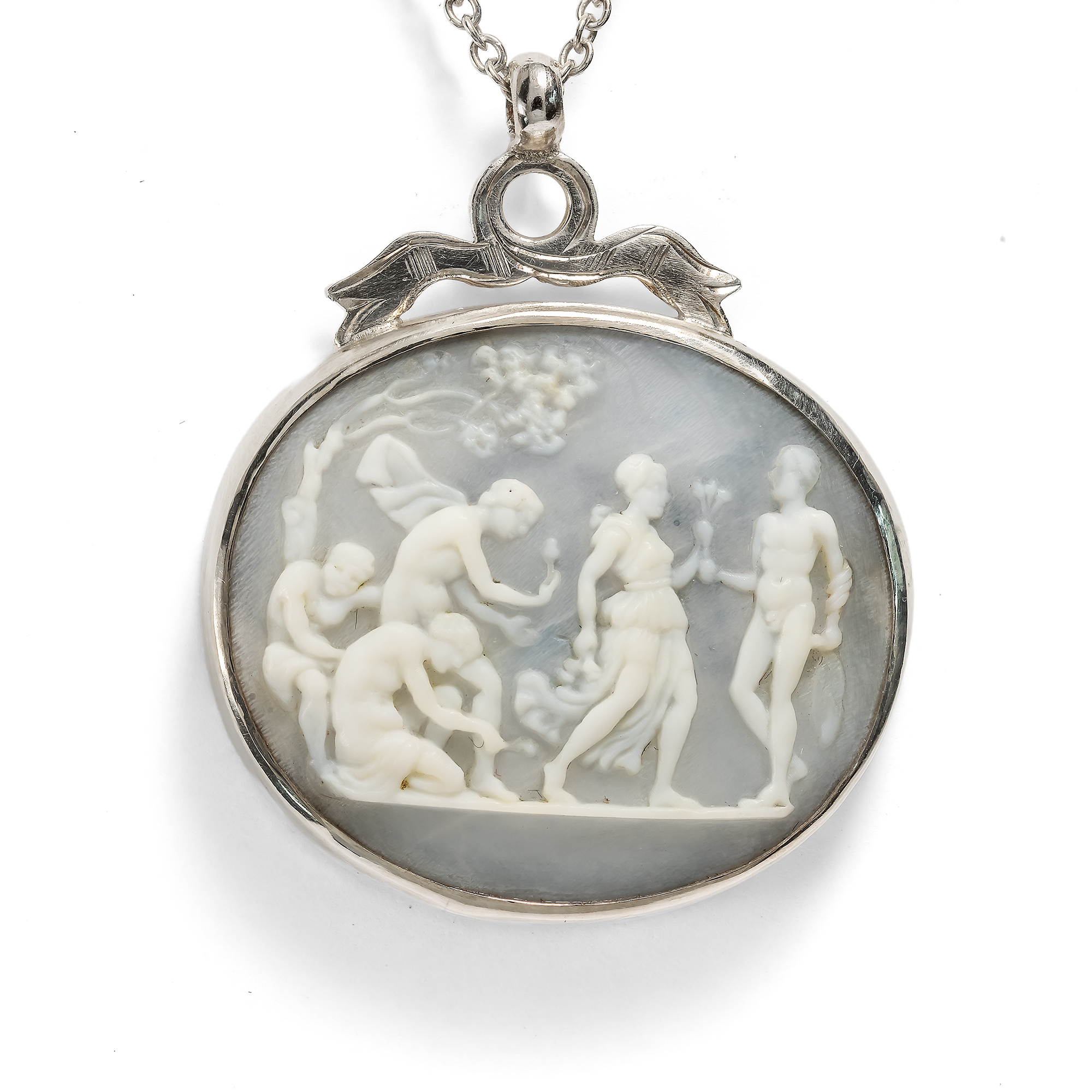
Since classical antiquity, the poppy has been regarded as a symbol of sleep. Its seed capsules were associated with the deities Hypnos and Morpheus and were seen as a sign of that gentle power that guides people night after night from reality into the world of dreams. Ovid describes Morpheus as the most gifted of the sons of Hypnos, the god of sleep. He was able to take on any human form and appeared to sleepers in their dreams. It is therefore hardly surprising that, over the centuries, artists repeatedly made the god of dreams the subject of their works. Particularly in the years around 1800, when Europe turned to antiquity with renewed enthusiasm, such poetic visual themes enjoyed special popularity. This cameo was created during this period and was masterfully carved from an oyster shell. The delicate white relief sections stand out strikingly against the soft blue-gray background, lending the scene a slightly ethereal atmosphere. Several figures are moving toward a male figure standing on the right and offering him poppy capsules. We interpret this depiction as a tribute to Morpheus. Unlike many mythological scenes, the relief does not narrate a dramatic event; rather, it celebrates sleep itself as a peaceful gift and as the prerequisite for every dream world. The extraordinary quality of the relief is remarkable. Despite their small size, the figures possess an astonishing sense of space and elegance. Flowing robes, finely modeled bodies, and the carefully graded relief levels reveal a stone carver of great virtuosity. Such shell cameos required not only artistic talent but also a keen sense of the natural layering of the oyster shell, whose differently colored layers were deliberately utilized to create a sense of spatial depth. The years around 1800 also mark the height of the classical cameo trend. The excavations of Pompeii and Herculaneum had sparked an immense enthusiasm for antiquity. Artists drew upon the world of the gods, ancient myths, and their visual language to create works that were sometimes copies, but at other times free reinterpretations in the spirit of antiquity. Cameos like this one were therefore regarded not only as jewellery, but also as an expression of education, taste, and admiration for past cultures. The silver setting was added to the ancient cameo in the style of the period in which it was created. This exceptionally finely crafted piece came to us from London.
Learn more
For centuries, owning gemstones and cameos was a priority for nearly all major collections of decorative arts and cabinets of curiosities, ranging from the Green Vault in Dresden to the treasury of Rudolf II to major private collections such as that of Baron von Stosch in later times. The 18th and 19th centuries produced numerous large collections of impressions of ancient sealstones and cameos, which were able to represent the ancient visual language of glyptics almost in its entirety, as they were also an expression of a humanistic education. However, the art of cameo carving has survived to this day in Italy, particularly in the Bay of Naples, where it has been passed down from generation to generation. Today, the Scuola dei Cammei in Torre del Greco is the world’s only large-scale training center for cameo cutters in Italy. Travelers to Italy have always played a particularly important role in spreading the art of stone and shell carving north of the Alps; they brought home impressions, carved stones, and engraved shells from their educational journeys to enjoy them.
Learn more
Read more
Size & Details
Neoclassical Cameo Made from Oyster Shell in a Silver Setting, Circa 1800 & Later
Dream Worlds of Antiquity
€ 1,490.00 *
Content 1 piece
Unit price €1,490.00 / piece
Incl. VAT, Shipping
Our Promise
Our Promise
Our Promise

We want you to be 100% satisfied! For that reason, we examine, describe and photograph all of our jewellery with the utmost care.

You can rely on our years of experience in the trade and our expertise as a professional art historians for reviews of the antique jewellery. As a member of various trade organisations and the British Society of Jewellery Historians, we remain committed to the highest possible degree of accuracy. In our descriptions, we always also indicate any signs of age and defects and never hide them in our photos – this saves you from any unpleasant surprises when your package arrives.

Should you for some reason not be satisfied, please don’t hesitate to contact us so that we can find a solution together. In any case, you can return any article within one month and we will refund the full purchase price.
Learn more