Blooming Again

Stately Ring with Untreated Ruby and Diamonds in Gold, Circa 1890 and Circa 1935


€ 3,690.00 *
Content 1 piece
Incl. VAT, Shipping
Stately Ring with Untreated Ruby and Diamonds in Gold, Circa 1890 and Circa 1935
Description
This description was automatically translated from German. If you have any questions about this piece of jewellery, we will be happy to help!
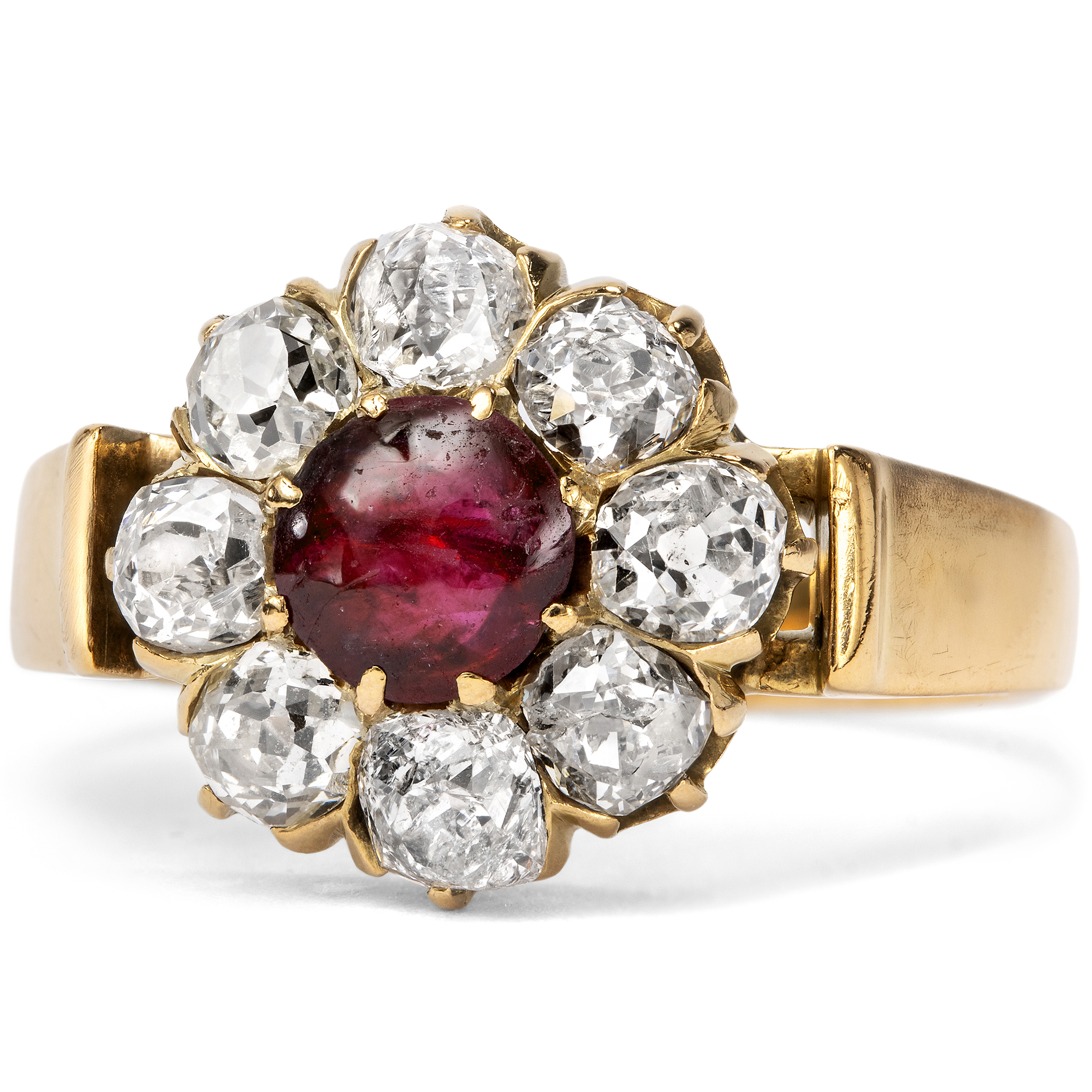
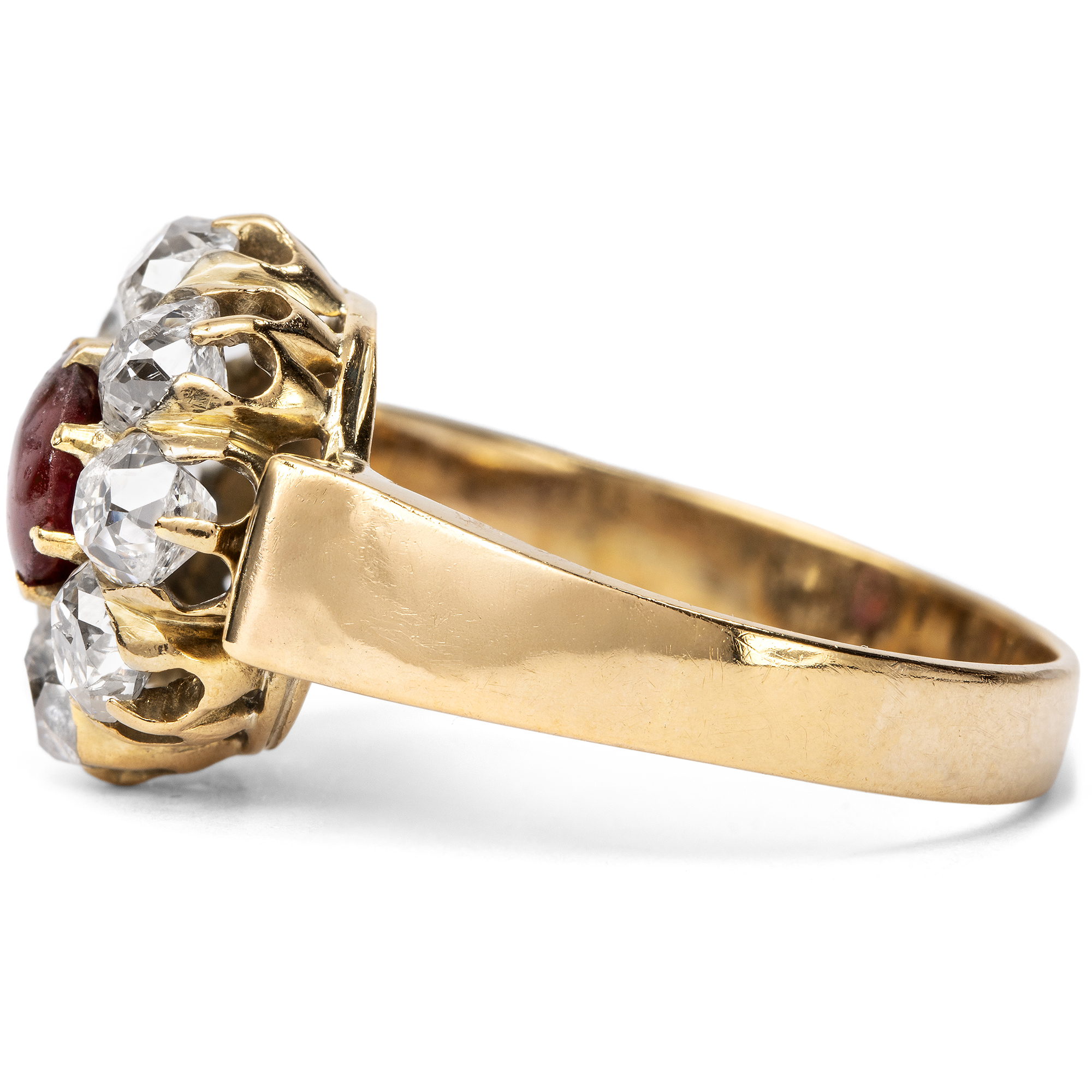
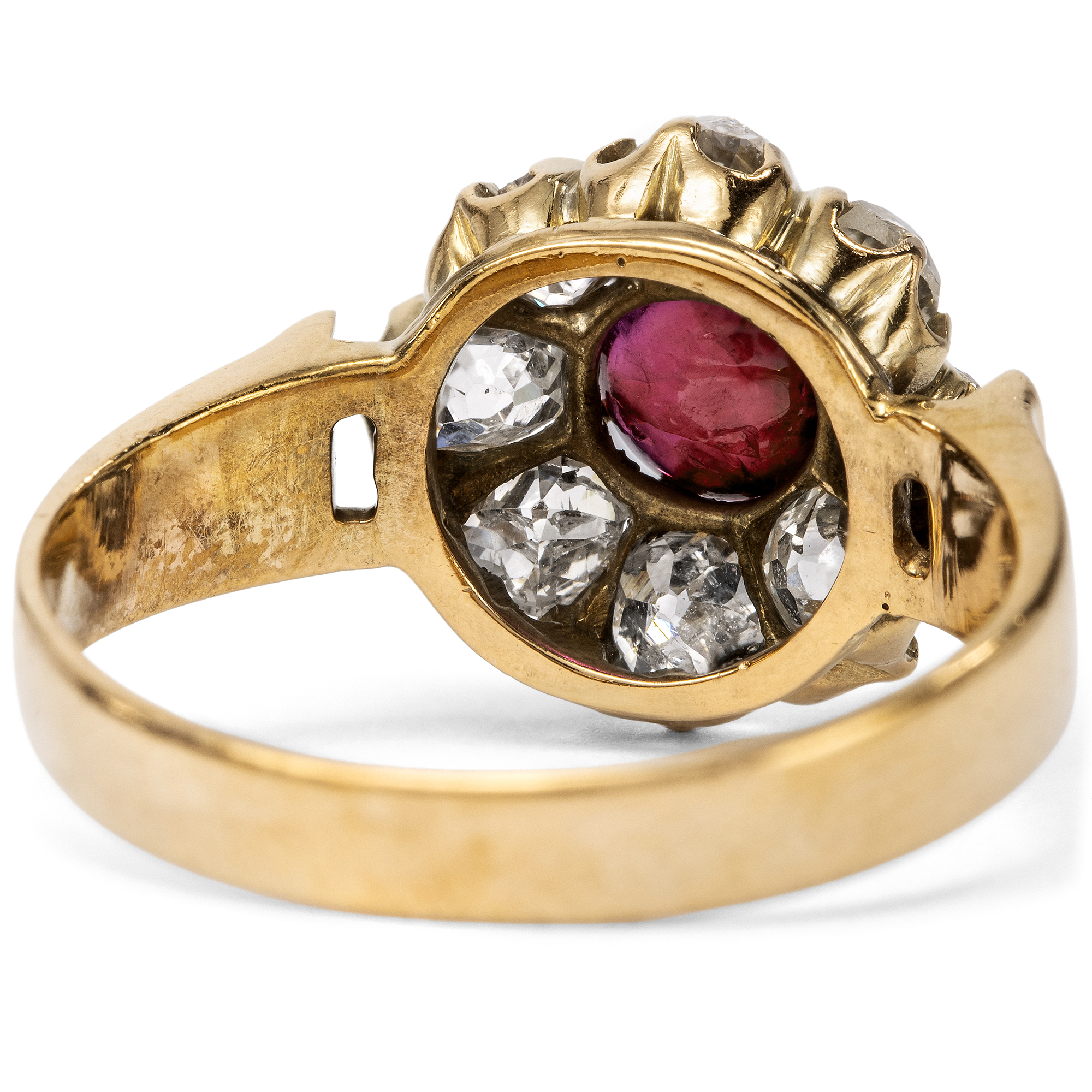
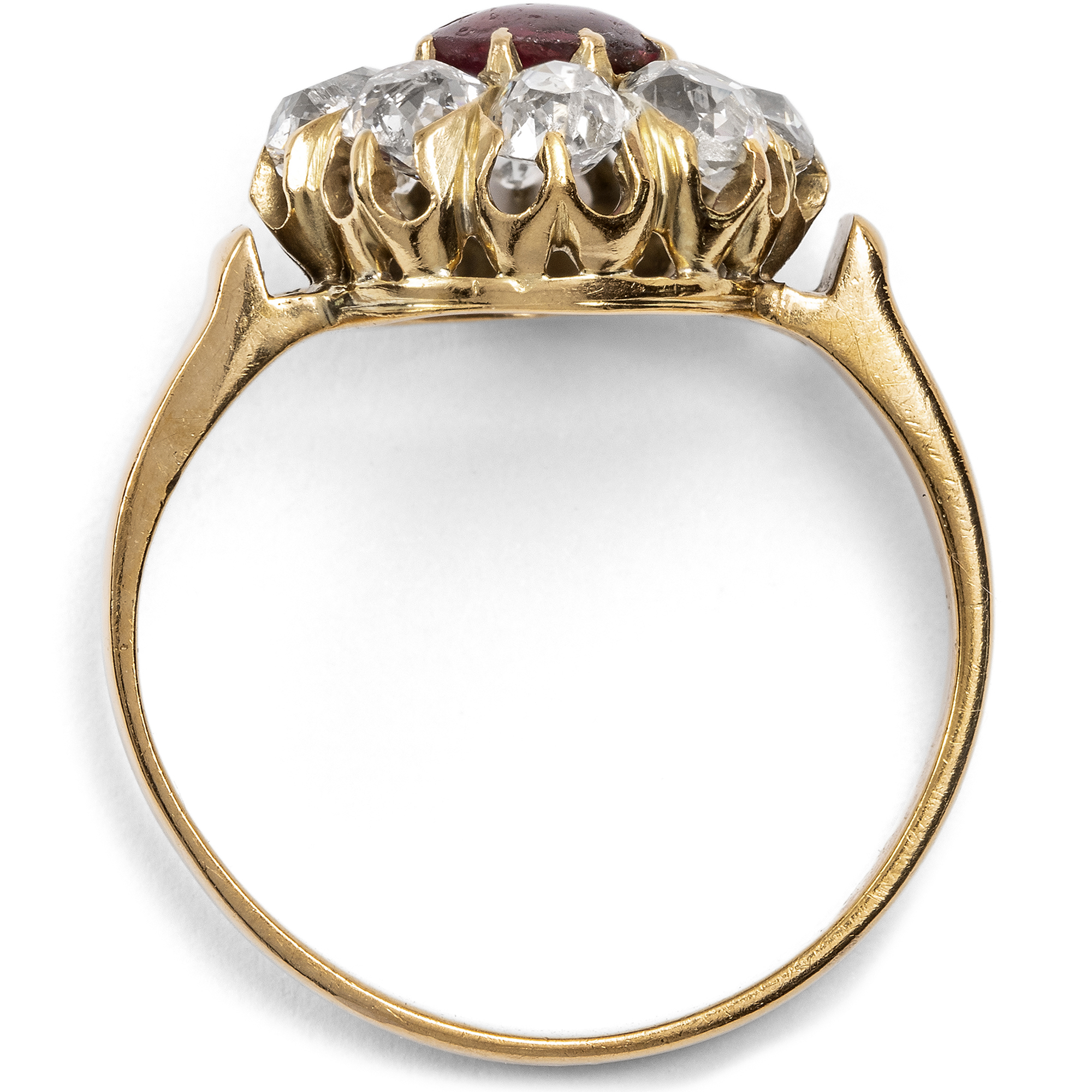
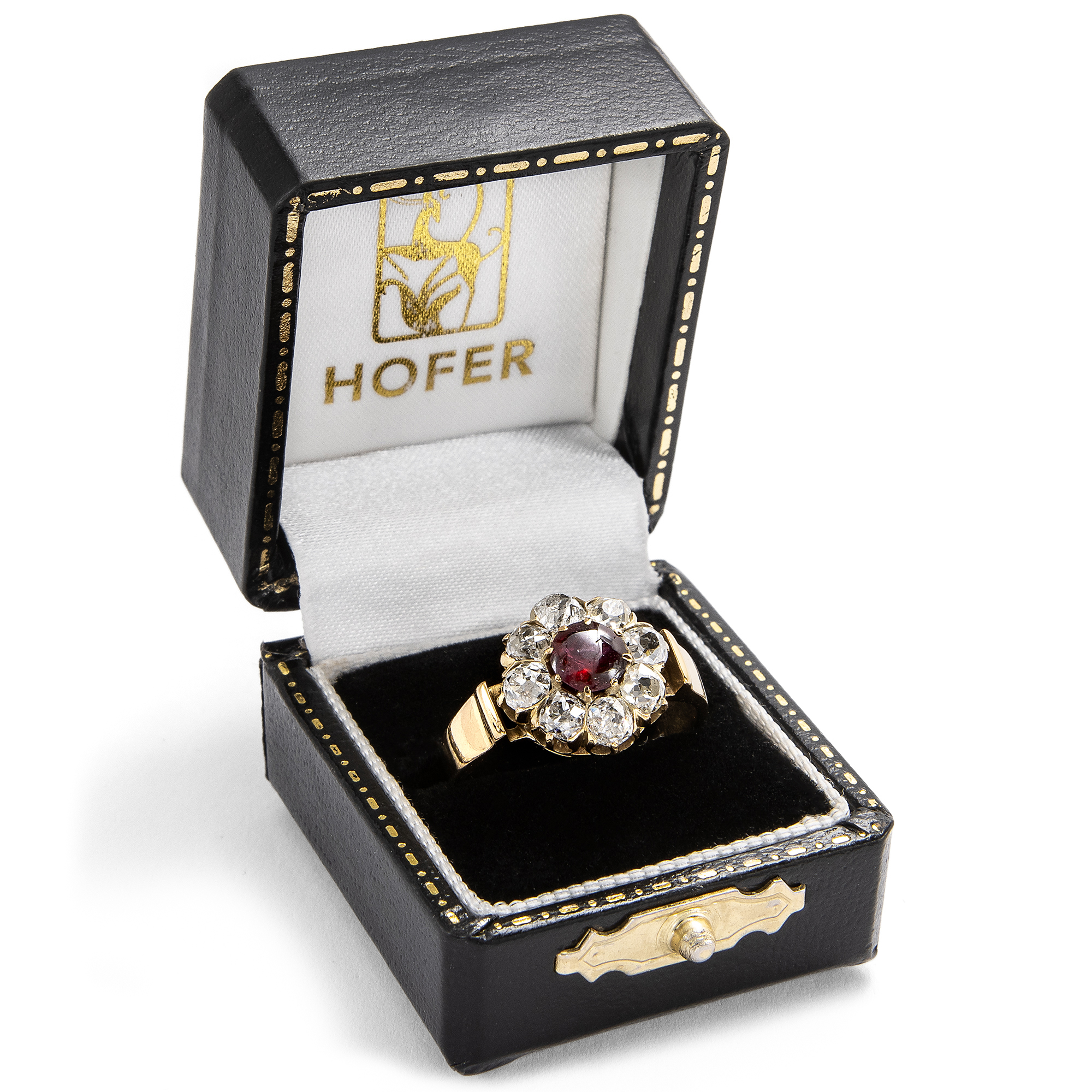
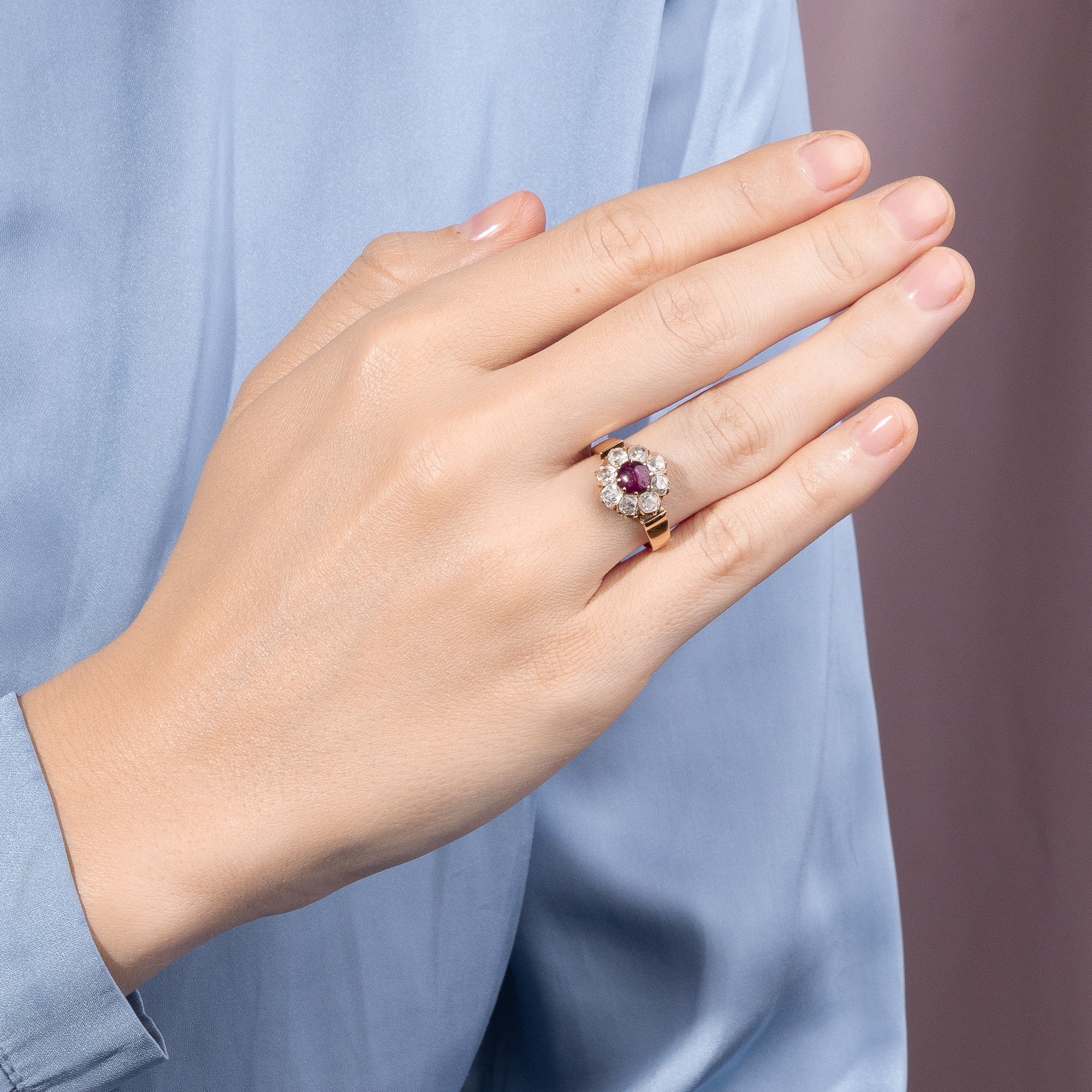
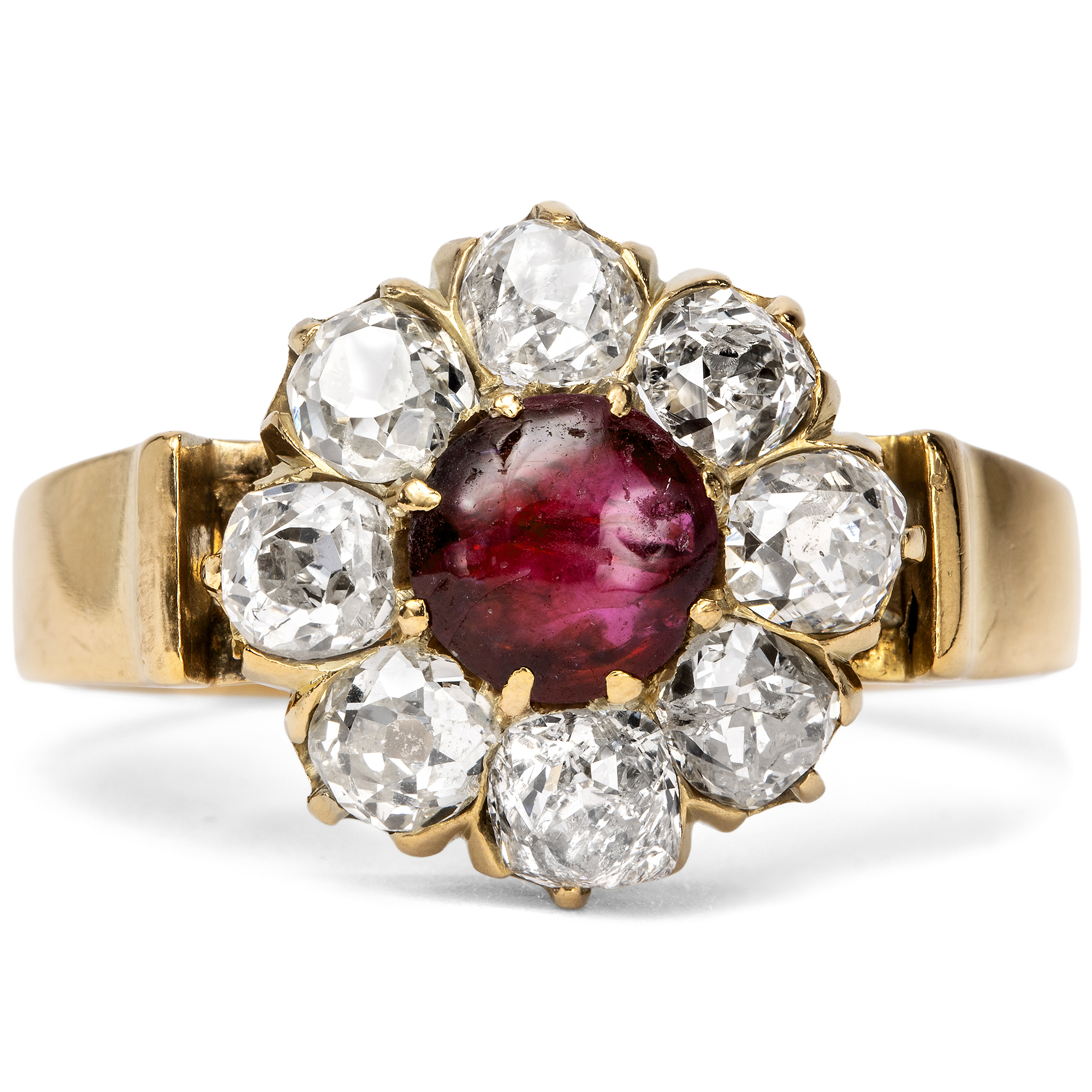
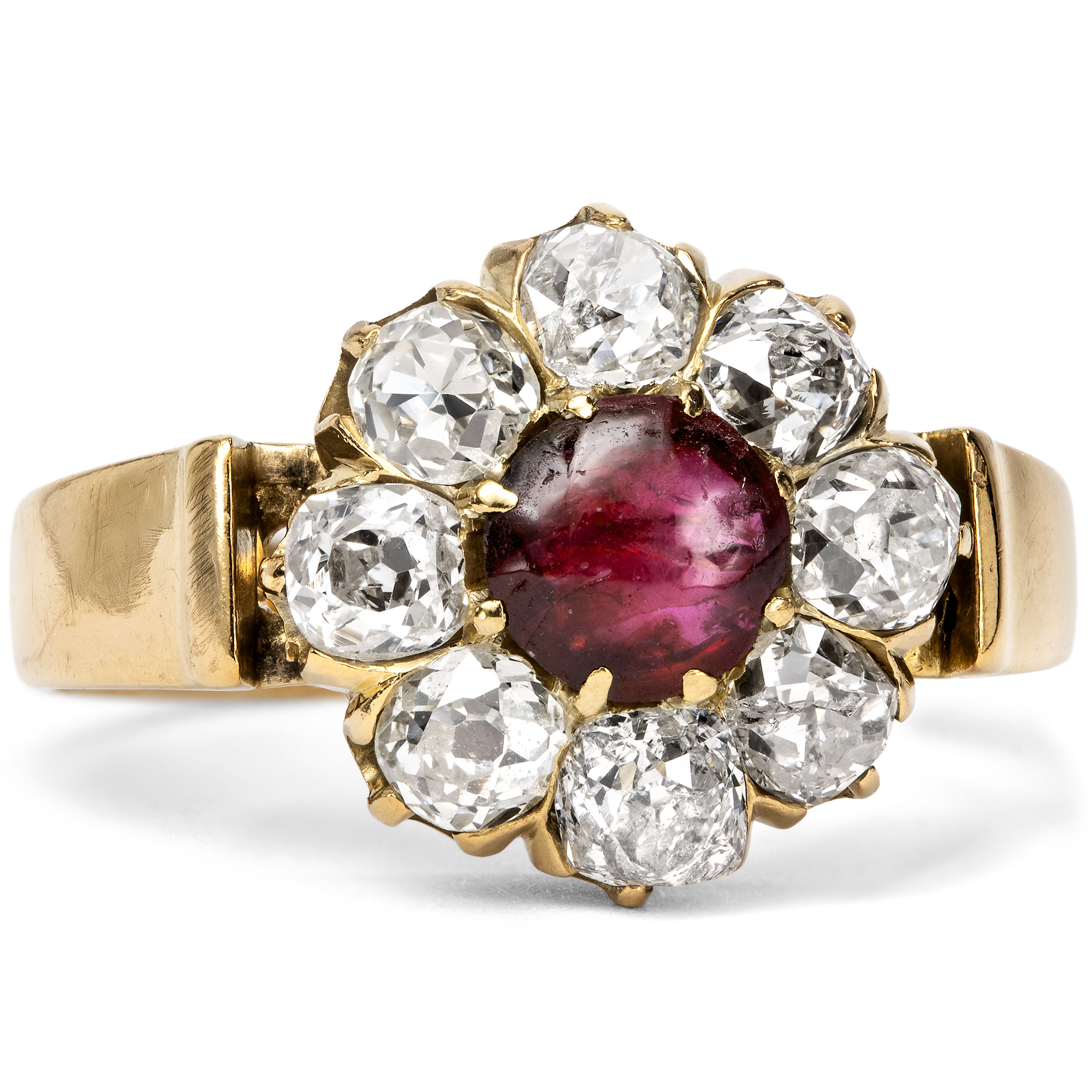
This ring takes us on a journey through time. Its centerpiece is a flower made of diamonds and a ruby. All the stones are set in gold. A wide gold band forms the ring’s base. The diamonds, weighing approximately 1.35 carats, are so-called “Old Mine Cut” diamonds. This cut was the most common form of diamond in the 19th century. Its proportions do not yet meet the standards of today’s brilliant-cut diamonds, but they possess a charm all their own. The stones used here are white or only slightly warm in colour and display a good, captivating brilliance. Their cut suggests that they were cut around the middle of the 19th century or shortly thereafter. The ring sets the diamonds in gold, using a combination of high prongs and crossbars that hold the stones securely in place. This type of setting is typical of the late 19th century, particularly the 1880s and 1890s. The central flower motif was therefore likely created during this period—perhaps as an earring and certainly using diamonds that were already older at the time. Today, the diamonds surround a deep, vibrant red ruby. It is an untreated ruby from Burma, now known as Myanmar. Its round cabochon cut, however, is unusual for 19th-century jewellery, suggesting that it was not originally part of the flower. But when was it added? Probably in the 1930s. The bold ring band, with its high shoulders and preference for clean geometric shapes, was likely created around that time as well. It lends the antique flower a modern touch and probably transformed it into a ring for the first time. Coloured gemstones in cabochon cuts had been particularly popular since the 1920s, so there is good reason to believe that the ruby was also set at that time. It’s surprising how many changes are hidden within this ring, which appears so uniform and striking. But that’s often the case with antique jewellery: it’s altered, passed down, cherished, and reinterpreted—and it’s precisely through these changes that it tells the story of its past.
Learn more
The shape of the brilliant-cut diamond has evolved over many centuries. For a long time, it was technically impossible to alter the rough crystal beyond a rudimentary level, since diamonds are so exceptionally hard. In the 17th and 18th centuries, however, craftsmen succeeded in carving more and more facets out of the crystal, and over the course of the 19th century, the cuts came closer and closer to the shape we know today as the brilliant cut. It was not until 1919 that Marcel Tolkowsky calculated the ideal shape of the brilliant cut based on optical and physical principles; the exact shape that is the standard in Germany today—the so-called “fine cut” used in practice—was not even established until 1938. The shape of the modern brilliant cut really became established after the war. The brilliant cut is thus actually a relatively recent invention—and this also means that for a diamond cut in the 19th century or at the beginning of the 20th century—a so-called “diamond”—the stone’s proportions do not conform to today’s brilliant cut standard. Diamonds were always cut individually at the time: the goal was to find the optimal balance between maximum brilliance on the one hand and minimal loss of material during cutting on the other.
Learn more
Read more
Size & Details
Stately Ring with Untreated Ruby and Diamonds in Gold, Circa 1890 and Circa 1935
Blooming Again
€ 3,690.00 *
Content 1 piece
Incl. VAT, Shipping
Our Promise
Our Promise
Our Promise

We want you to be 100% satisfied! For that reason, we examine, describe and photograph all of our jewellery with the utmost care.

You can rely on our years of experience in the trade and our expertise as a professional art historians for reviews of the antique jewellery. As a member of various trade organisations and the British Society of Jewellery Historians, we remain committed to the highest possible degree of accuracy. In our descriptions, we always also indicate any signs of age and defects and never hide them in our photos – this saves you from any unpleasant surprises when your package arrives.

Should you for some reason not be satisfied, please don’t hesitate to contact us so that we can find a solution together. In any case, you can return any article within one month and we will refund the full purchase price.
Learn more