Beauty and Horror

Three-Dimensional Cameo of Medusa as a Gold Ring, c. 1820 & later


€ 1,890.00 *
Content 1 piece
Incl. VAT, Shipping
Three-Dimensional Cameo of Medusa as a Gold Ring, c. 1820 & later
Description
This description was automatically translated from German. If you have any questions about this piece of jewellery, we will be happy to help!
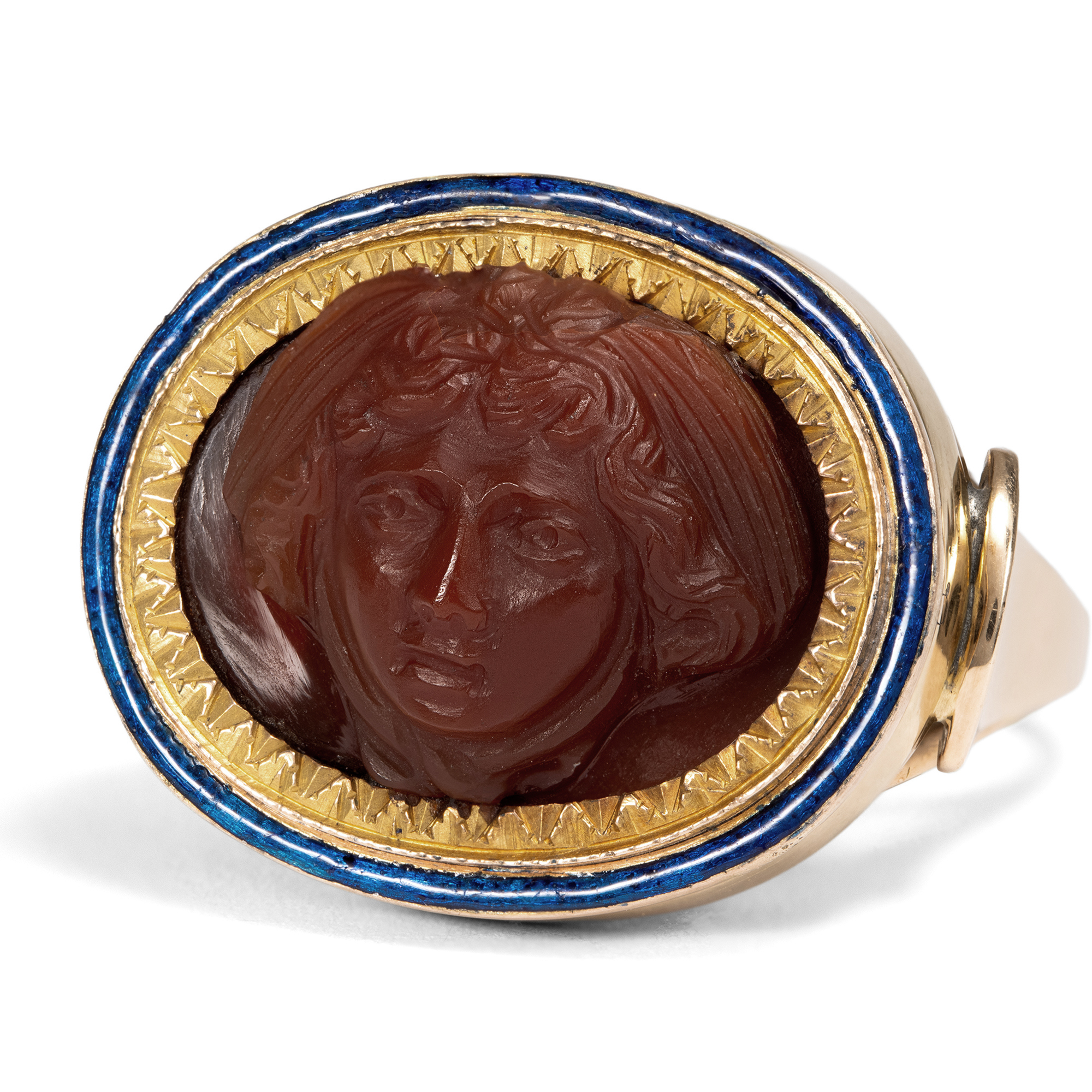
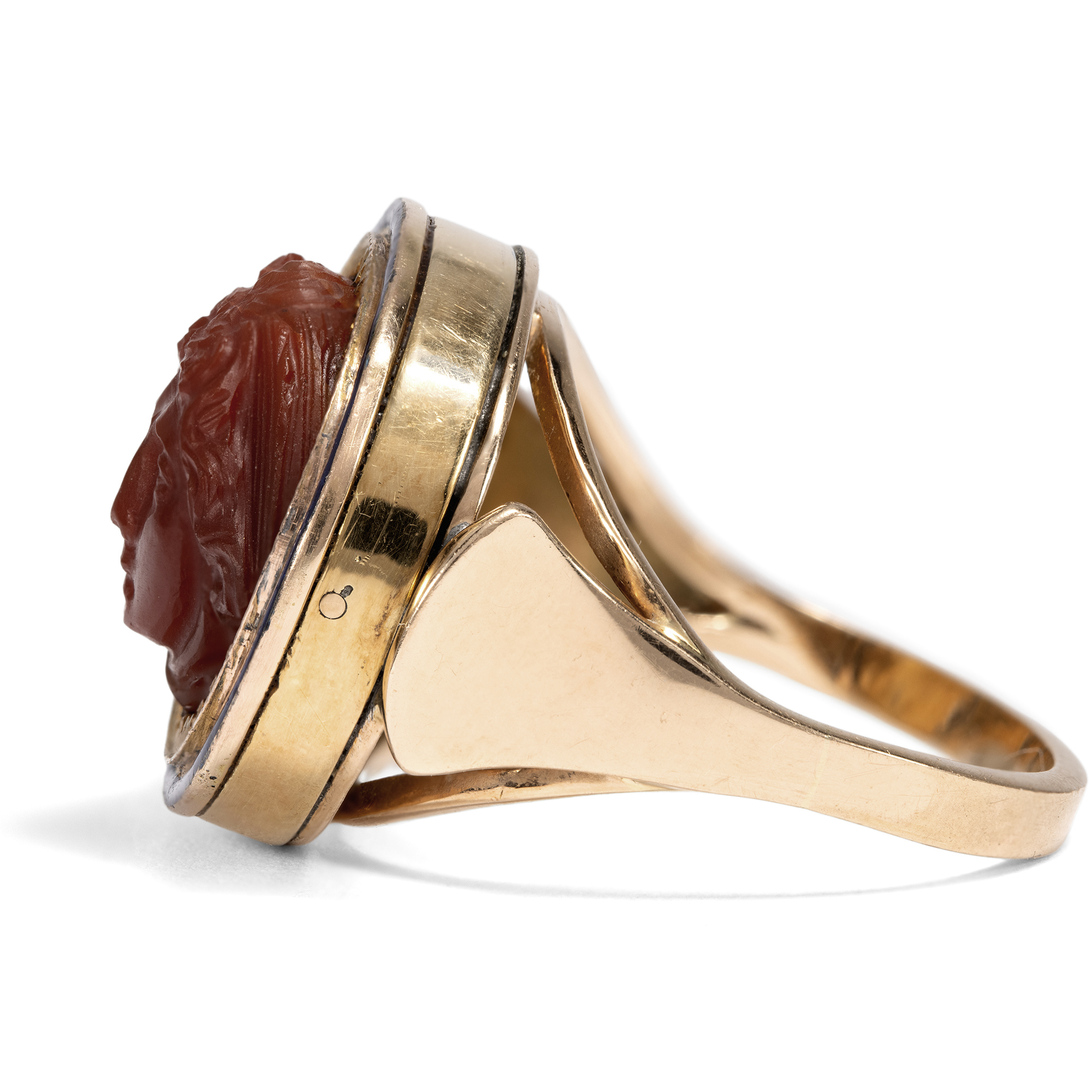
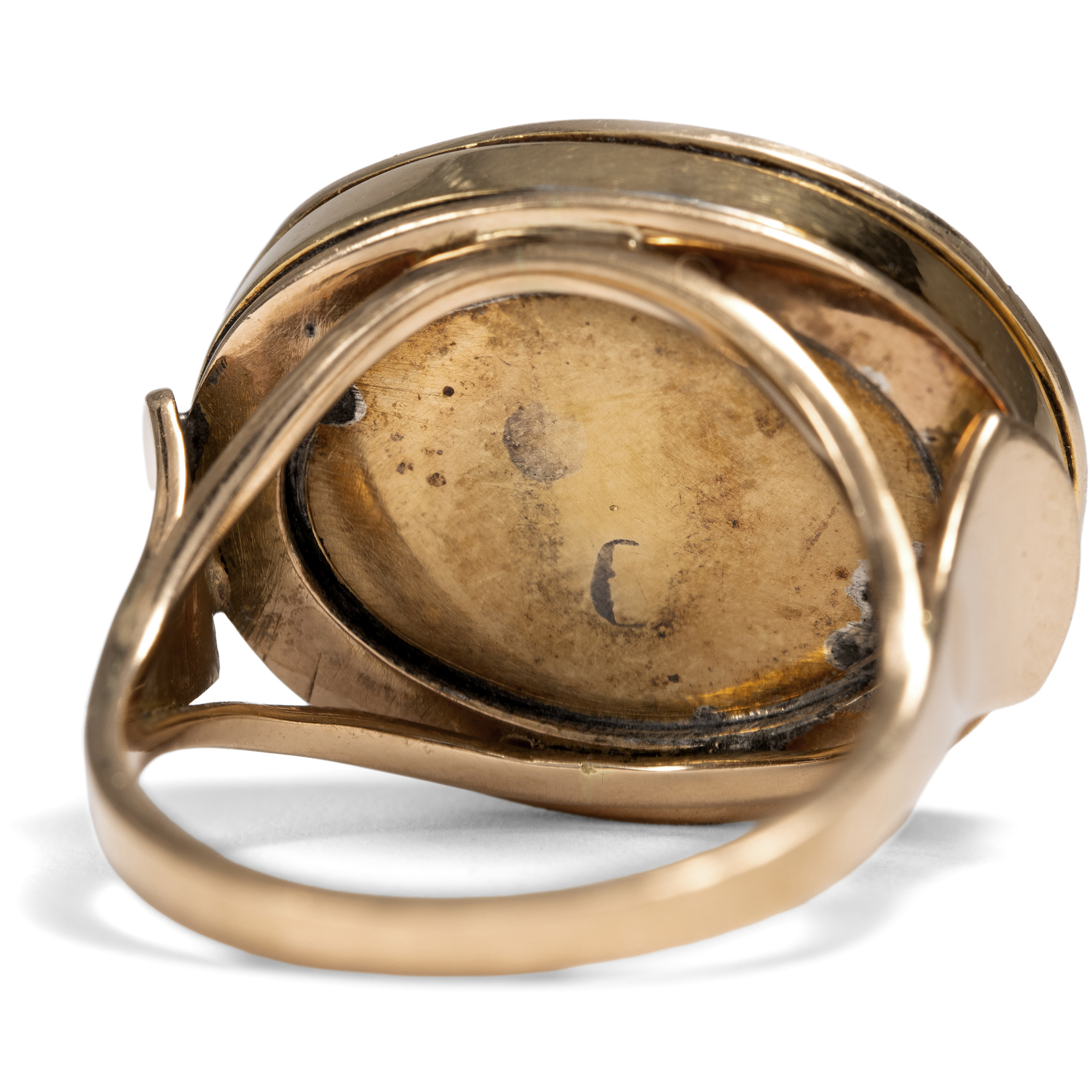
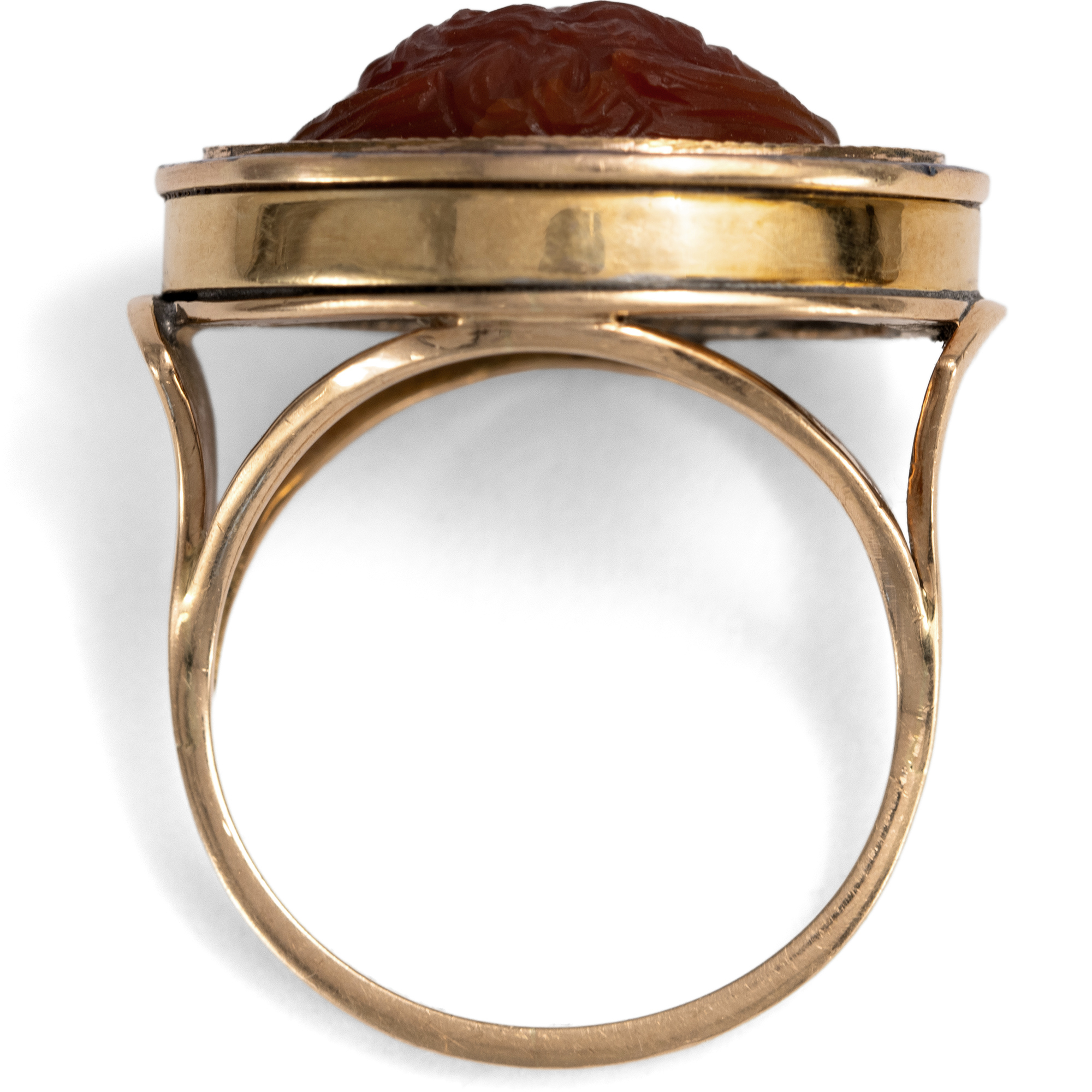
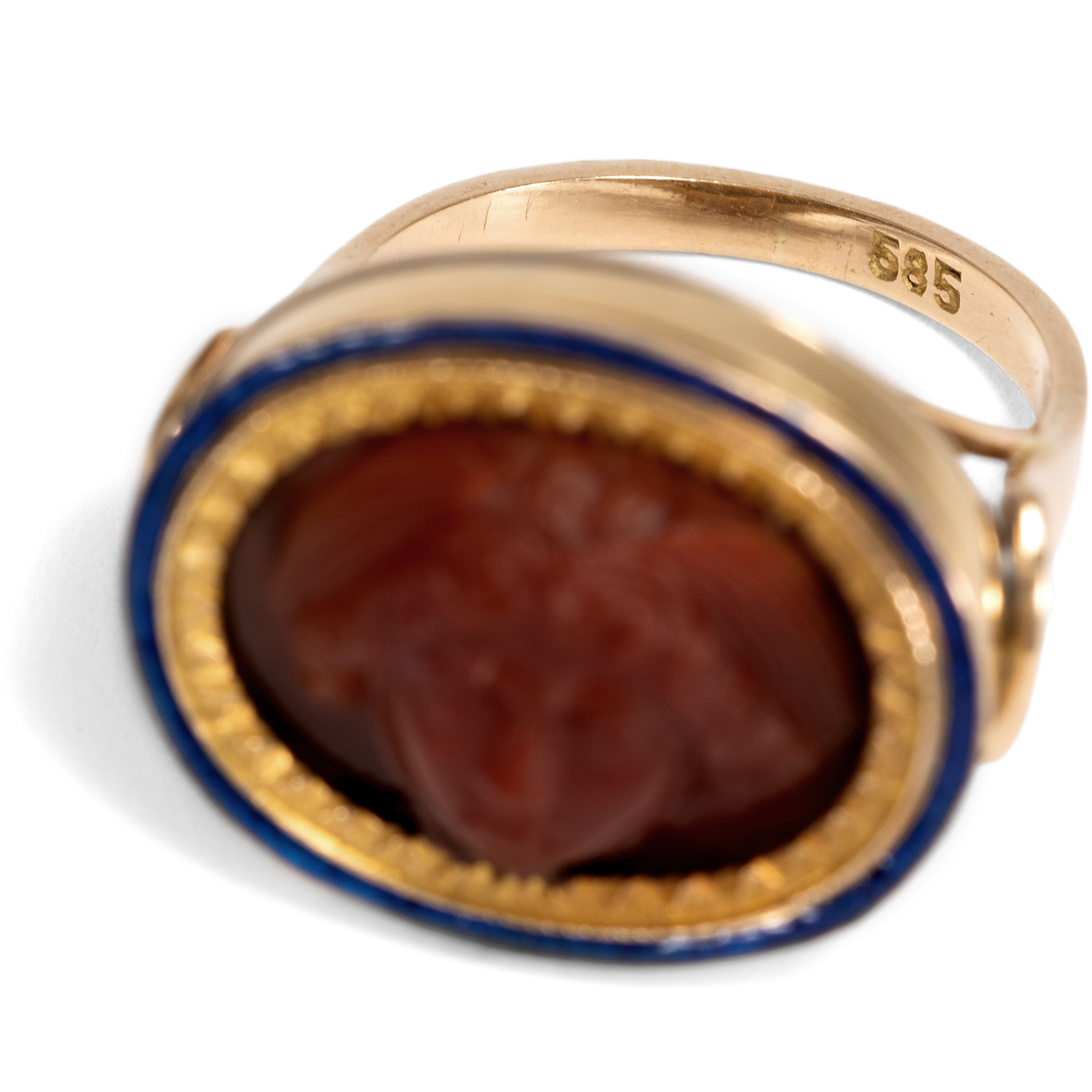
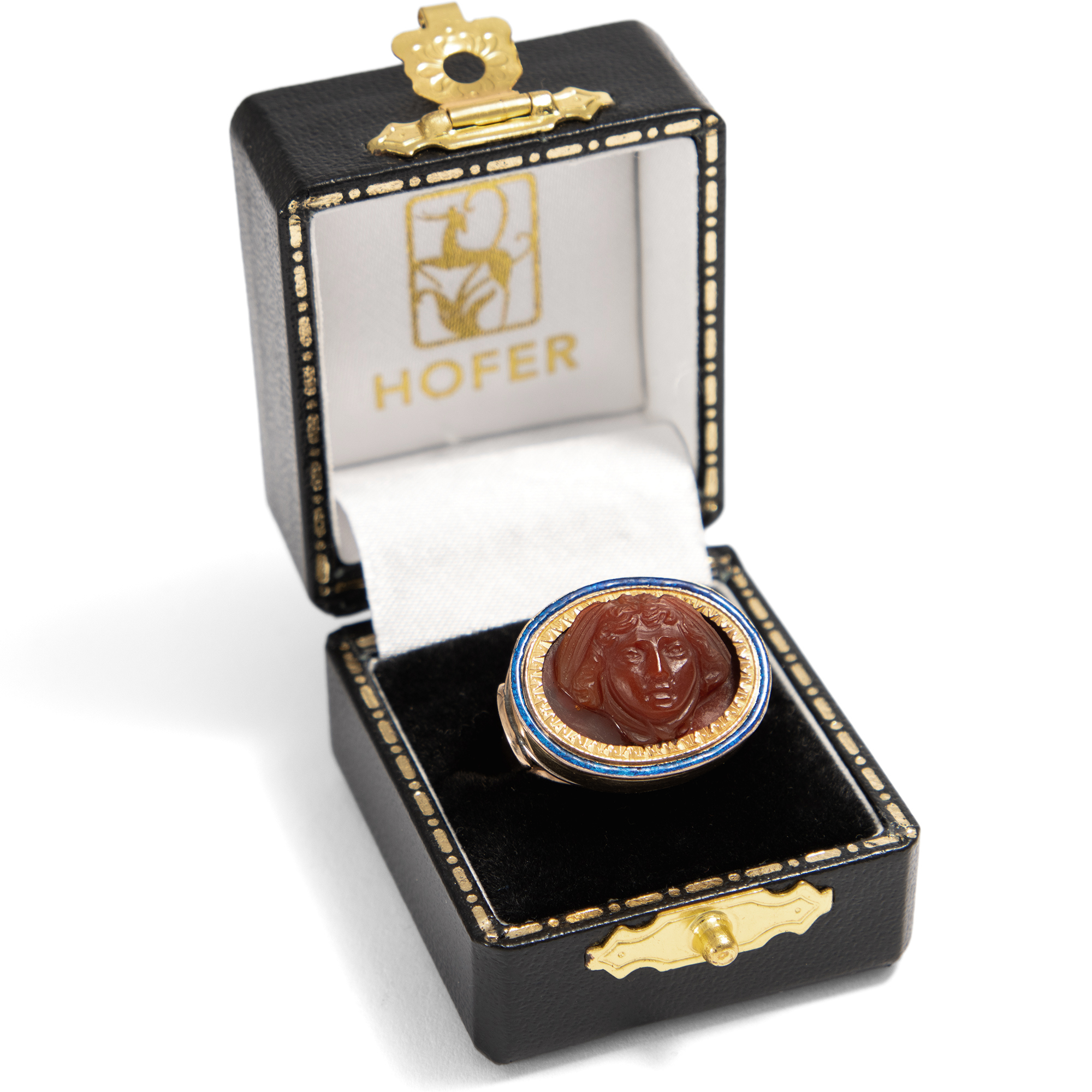
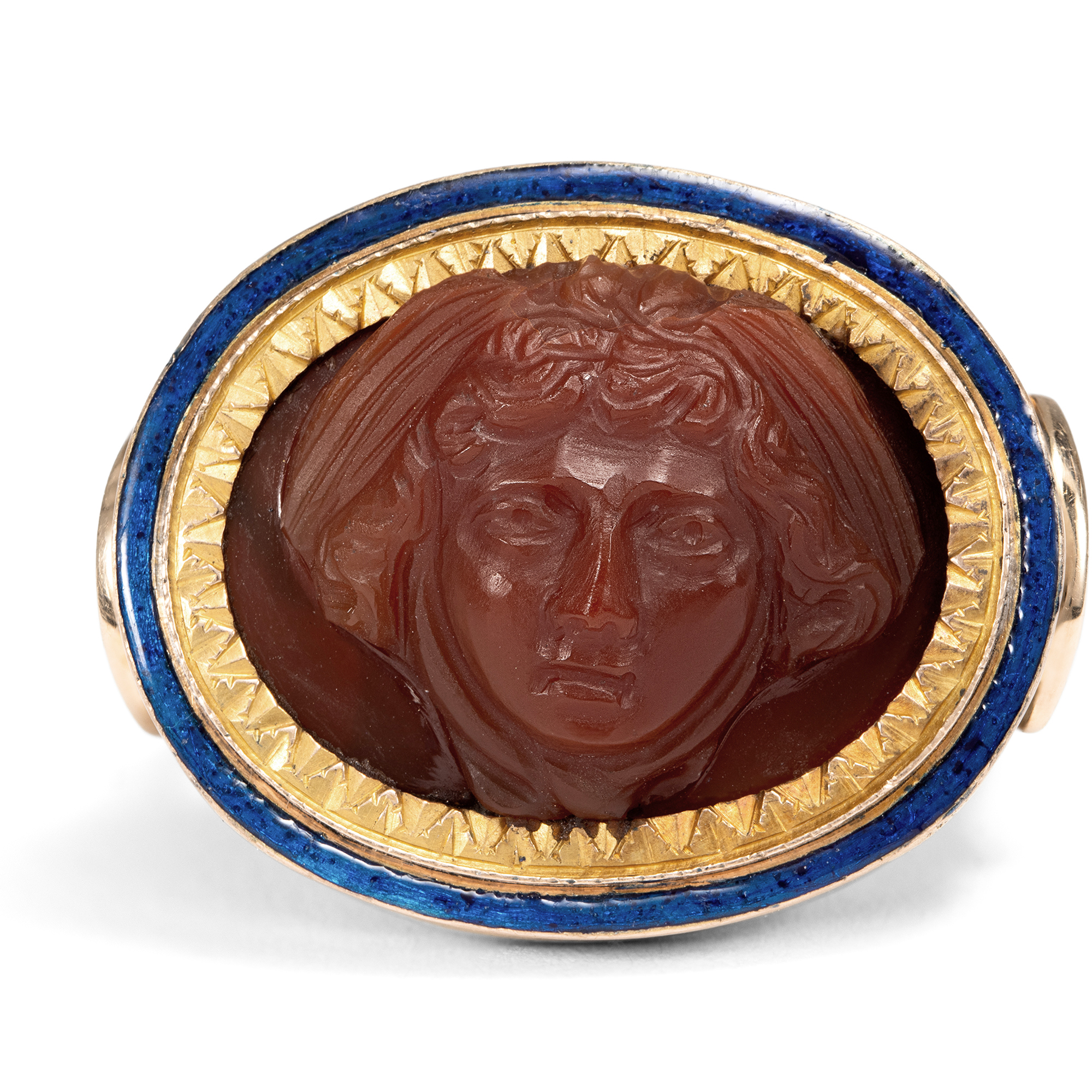
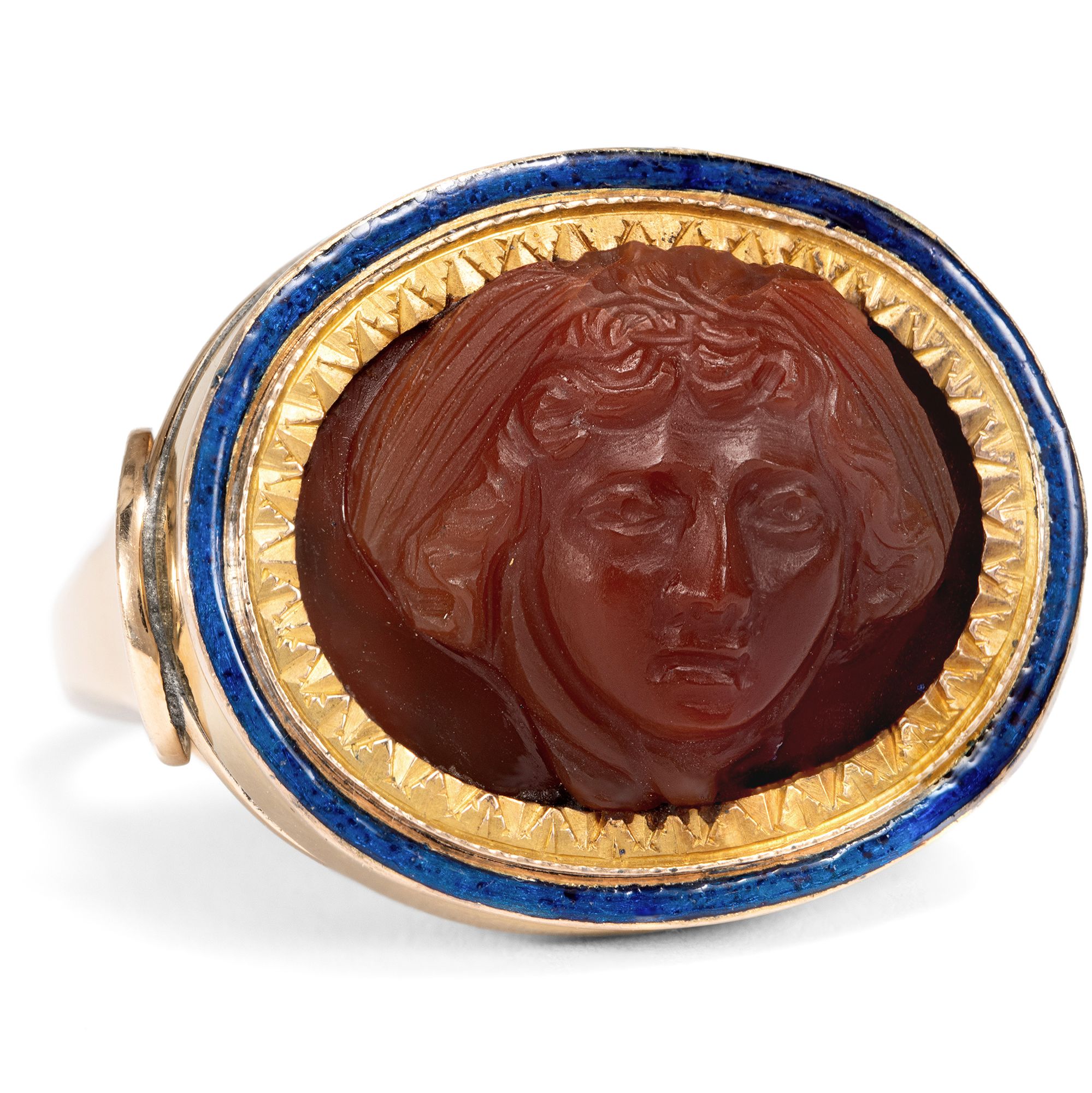
According to ancient legend, the Gorgon Medusa was a captivating beauty. But when Pallas Athena caught her with the sea god Poseidon, Athena was so enraged that she transformed Medusa into a winged monster with snake hair, destined from then on to strike terror into the hearts of men. Her terrifying appearance instantly turned every man to stone. Only the young Perseus was able to resist Medusa’s gaze through a ruse: He looked only at Medusa’s reflection in his polished shield and was thus able to behead the terrifying creature with a stroke of his sword. The goddess Athena eventually took the Gorgon’s head and mounted it on her shield. The “Gorgoneion” was intended to ward off misfortune and ensure victory over adversaries. Even in antiquity, depictions of Medusa’s severed head adorned numerous house and temple doors, as well as weapons, ships, and armor—and, not least, pieces of jewellery featuring cut gemstones and cameos. Writers and artists of the late Romantic period viewed Medusa from a new perspective. The writer Percy Bysshe Shelley dedicated a poem to the sight of her severed head, in which he observed: “Its horror and its beauty are divine”—the horror and beauty are divine. This aspect of Medusa—the union of the horrific and the beautiful—also made her a widely interpreted theme in fin-de-siècle Symbolism. People turned their gaze inward, making both the beautiful and the terrifying equally and unreservedly the subject of aesthetic contemplation: their interest lay in everything that could stir the mind and evoke deep emotions. The ring presented here draws on this important movement in European cultural history. Its design features the Gorgoneion—Medusa’s head entwined with snakes—rendered as a cameo in reddish carnelian. The Gorgoneion is modeled after the Medusa Rondanini, that famous ancient sculpture of which even Goethe owned a plaster cast. A golden palmette border set within a frame of blue enamel holds the sublime cameo. We believe that the ring face of the current ring was originally part of another piece of jewellery and was created around 1820. At some point during the 20th century, this element was then transformed into a ring. The ring came to us as it is, from the Charlottenburg district of Berlin.
Read more
Size & Details
Three-Dimensional Cameo of Medusa as a Gold Ring, c. 1820 & later
Beauty and Horror
€ 1,890.00 *
Content 1 piece
Incl. VAT, Shipping
Our Promise
Our Promise
Our Promise

We want you to be 100% satisfied! For that reason, we examine, describe and photograph all of our jewellery with the utmost care.

You can rely on our years of experience in the trade and our expertise as a professional art historians for reviews of the antique jewellery. As a member of various trade organisations and the British Society of Jewellery Historians, we remain committed to the highest possible degree of accuracy. In our descriptions, we always also indicate any signs of age and defects and never hide them in our photos – this saves you from any unpleasant surprises when your package arrives.

Should you for some reason not be satisfied, please don’t hesitate to contact us so that we can find a solution together. In any case, you can return any article within one month and we will refund the full purchase price.

Learn more