Conqueror of the World

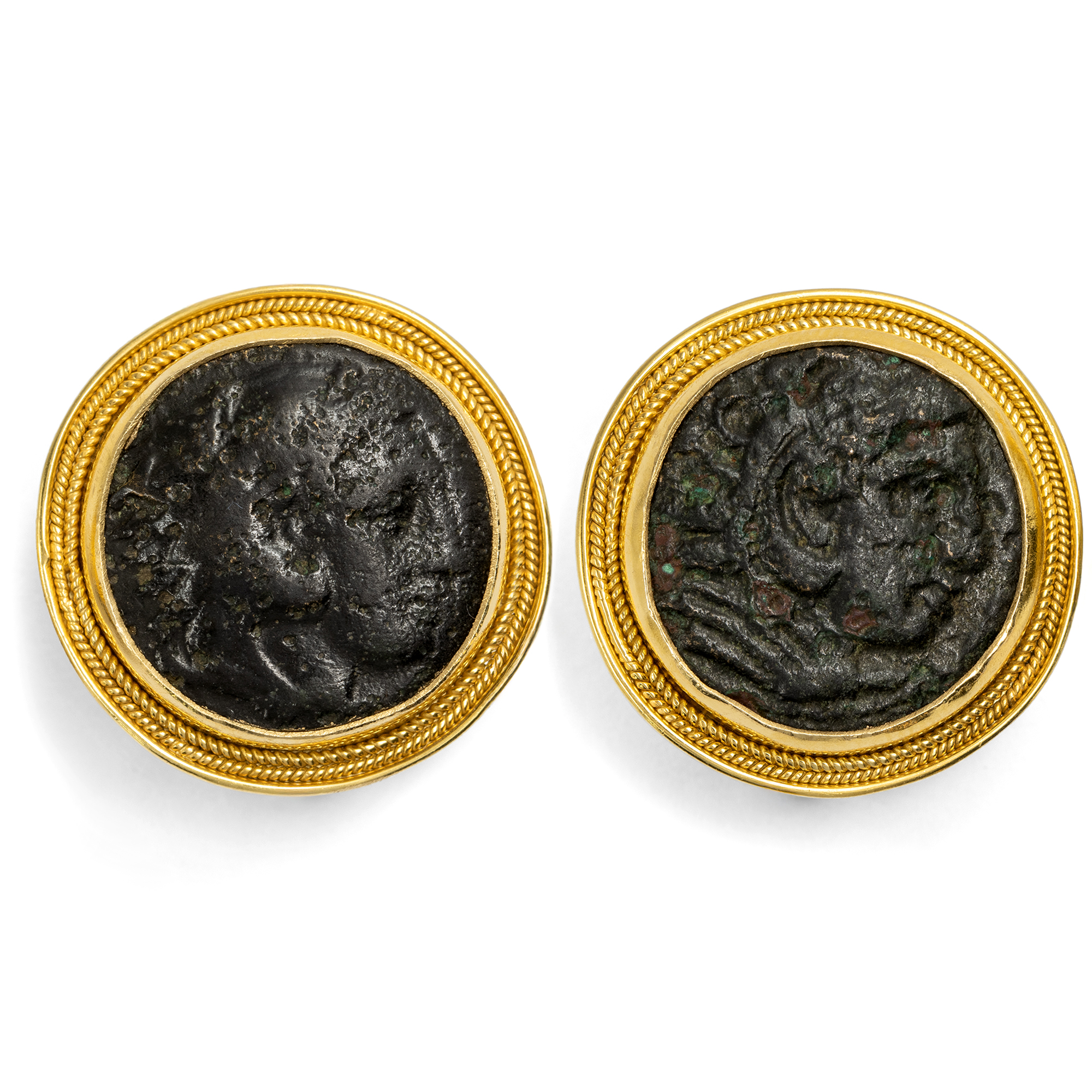
Vintage Earrings with Antique Bronze Coins of Alexander the Great, Greece, Circa 1985


€ 2,690.00 *
Content 1 piece
Incl. VAT, Shipping
Vintage Earrings with Antique Bronze Coins of Alexander the Great, Greece, Circa 1985
Description
This description was automatically translated from German. If you have any questions about this piece of jewellery, we will be happy to help!
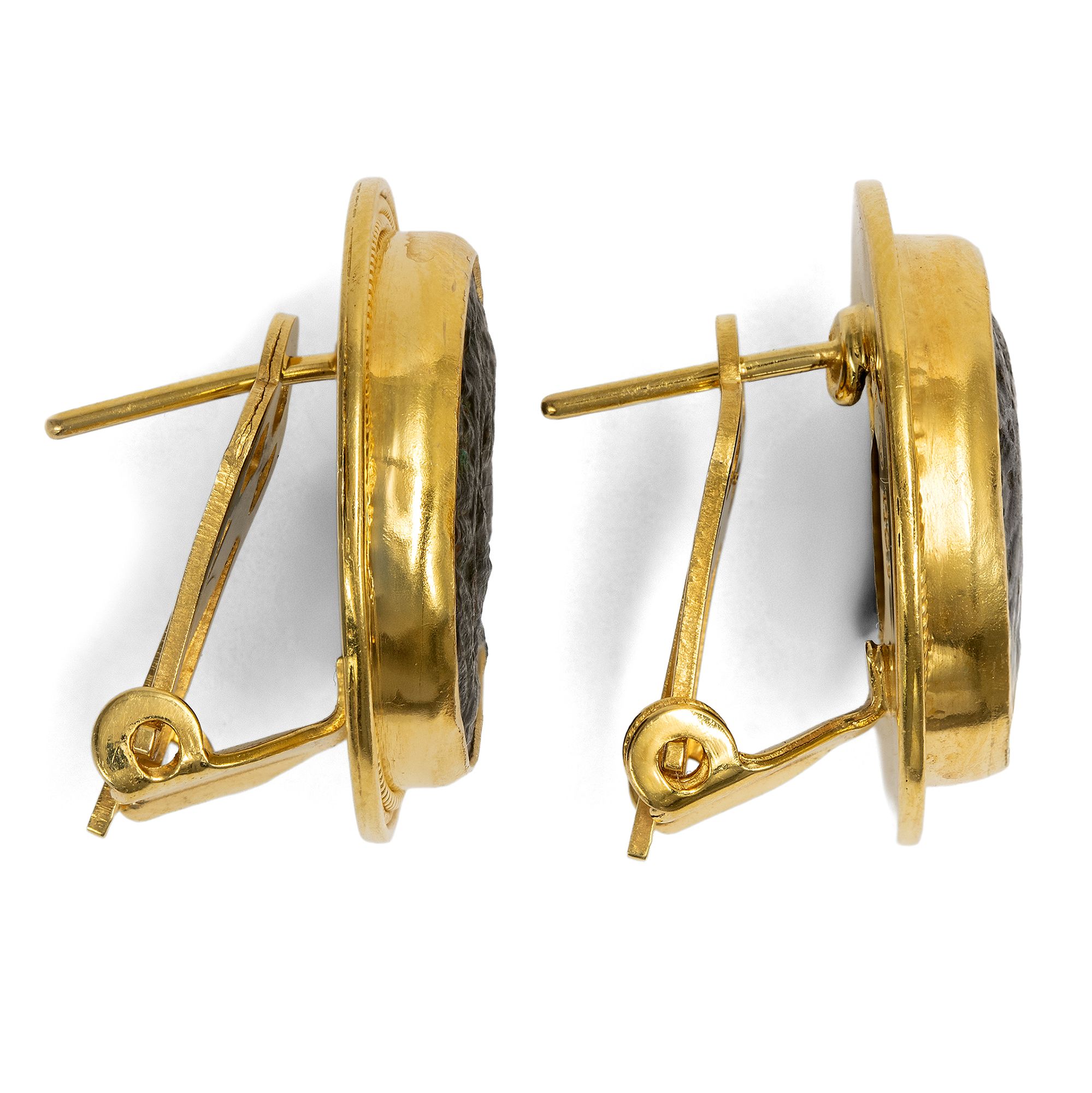
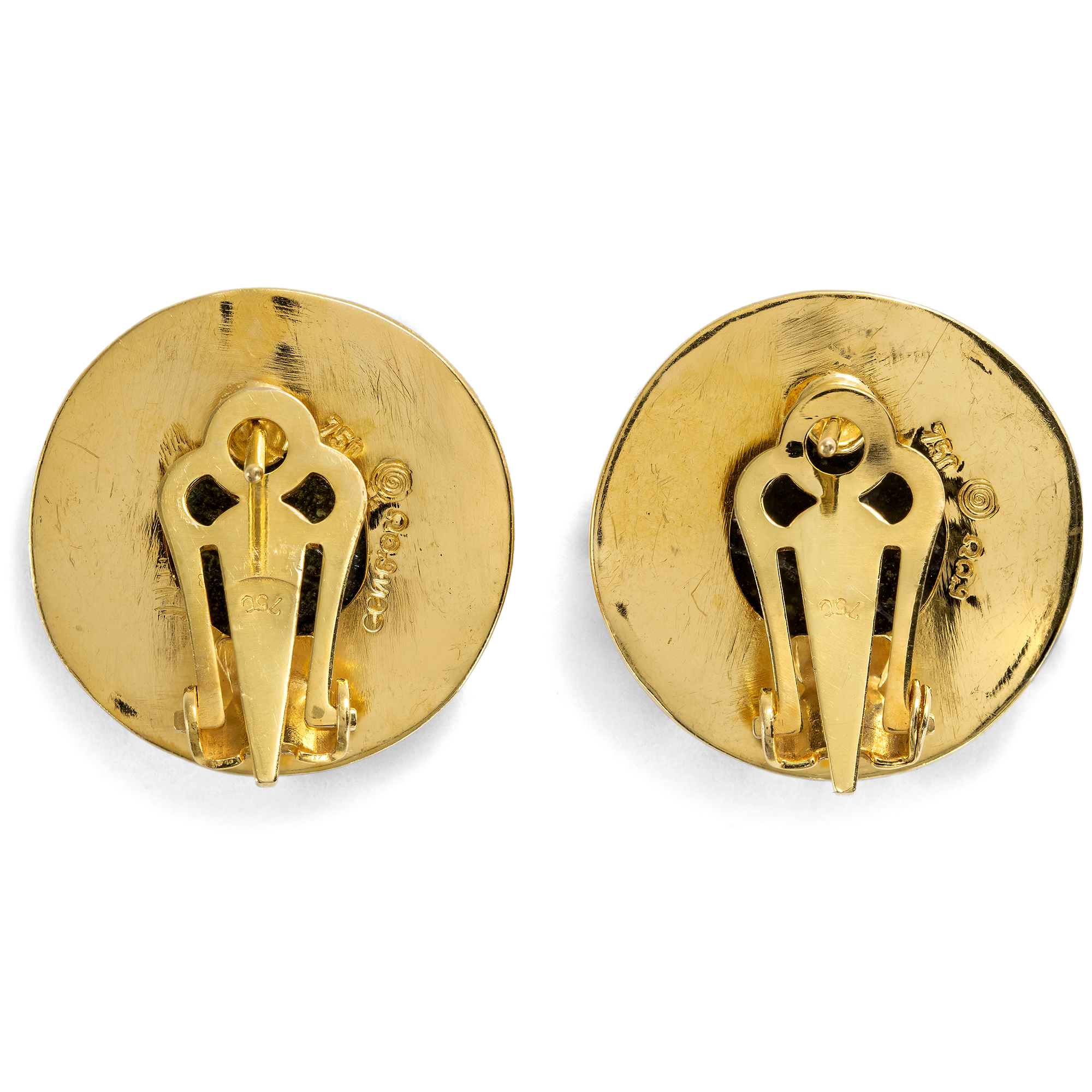
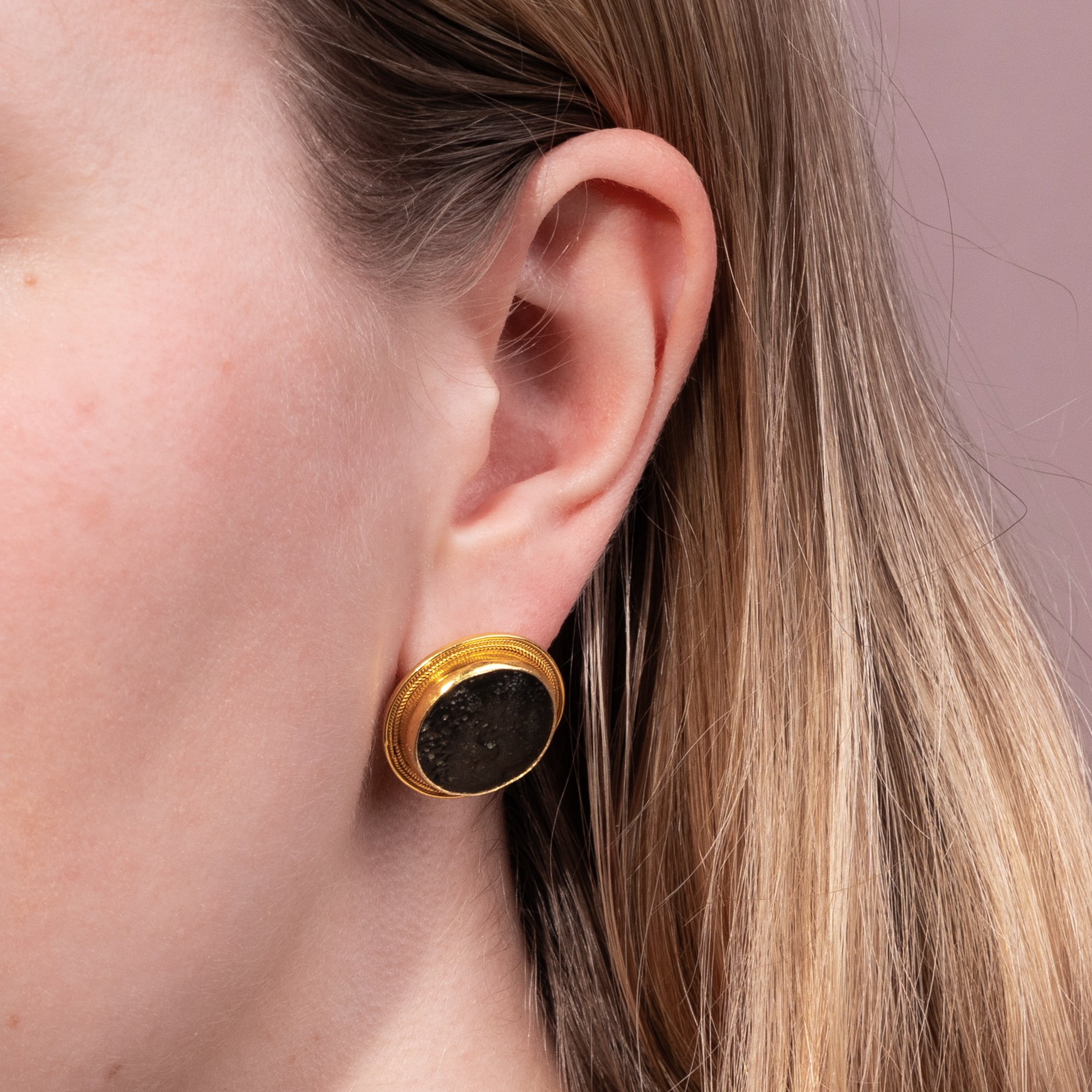
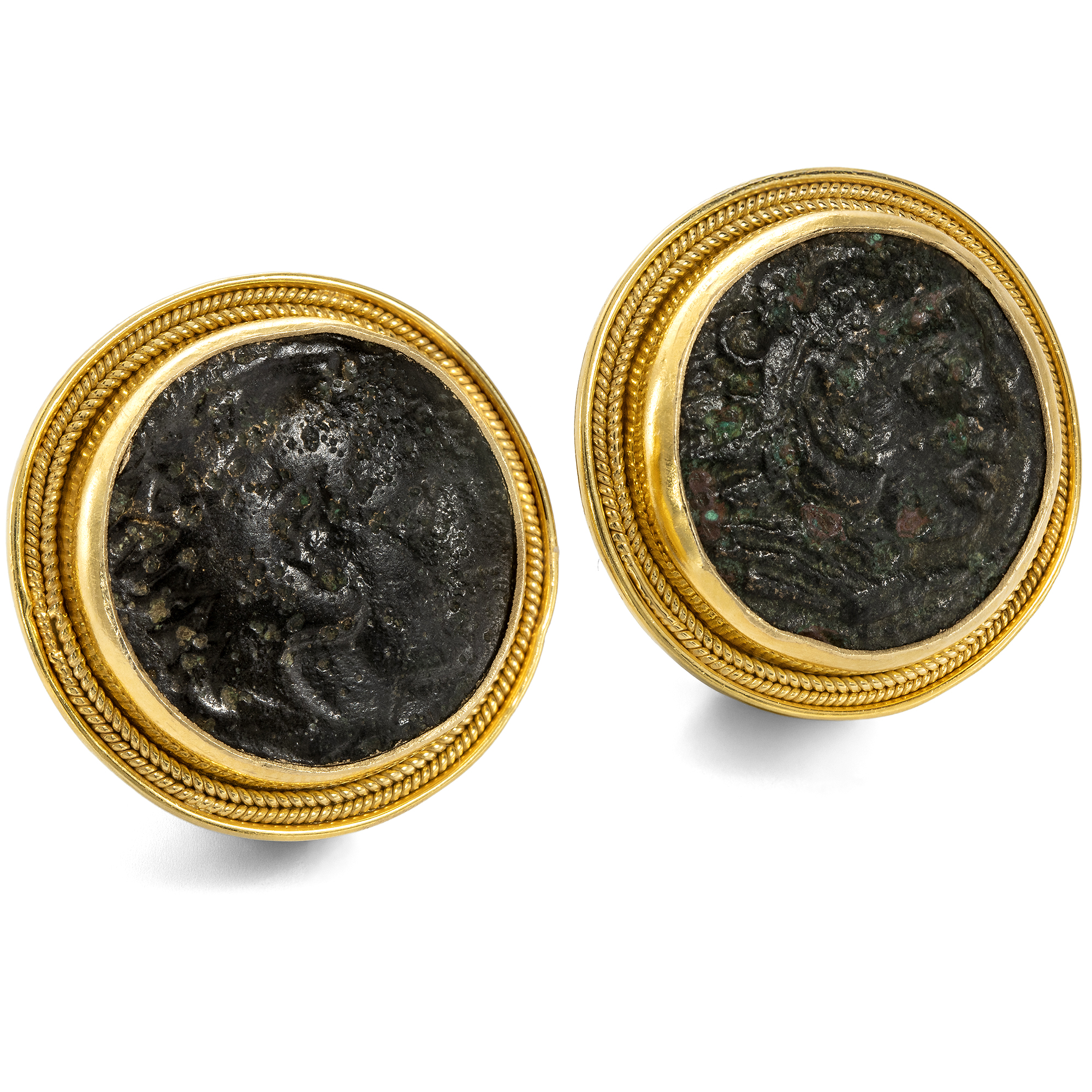
Each of these earrings features an ancient bronze coin from the reign of Alexander III of Macedonia (336–323 B.C.) or from the first few decades following his death. With a diameter of about 16 mm, they are among the smaller bronze coins that were minted for everyday transactions throughout the Macedonian realm. Unlike the famous silver tetradrachms, these coins were primarily intended for local circulation and were produced at numerous mints throughout the empire. Alexander III of Macedonia (356–323 B.C.), better known as Alexander the Great, is considered one of the most significant rulers of antiquity. As the son of Philip II, he ascended the Macedonian throne in 336 B.C. and, through his campaigns against the Persian Empire, created within a few years a world empire that stretched from Greece to the Indus River. His conquests marked the beginning of the Hellenistic era, during which Greek culture, language, and art spread across large parts of the eastern Mediterranean and the Near East. The coins depict the head of Heracles, facing right, wearing the skin of the Nemean Lion. This depiction recalls the first of the hero’s twelve labors: his victory over the invulnerable Nemean Lion. The Macedonian royal house traced its lineage back to Heracles, which is why Alexander deliberately featured the hero on his coins as a symbol of royal strength, bravery, and divine legitimacy. Although Heracles is officially depicted, scholars also interpret the image as an idealized allusion to Alexander himself. High-karat gold settings frame the coins, and their cord-style soldered joints mimic the design language of ancient pieces of jewellery. Clips with a clasp make the designs wearable. On the back, a small cutout offers a glimpse of the coins’ reverse. Here, one can make out Heracles’ club as well as a bow and quiver, accompanied by the Greek inscription “ΑΛΕΞΑΝΔΡΟΥ” (“[coin] of Alexander”). After Alexander’s death in 323 B.C., his successors—the so-called Diadochi—continued to mint this type of coin for decades with virtually no changes, making it one of the most famous and influential coin designs of the Hellenistic world. The earrings were made in Greece in the 1980s, where workshops such as Lalaunis had popularized the use of ancient artifacts and ancient-style designs. This beautiful pair found its way to us from Amsterdam.
Learn more
If the accounts of the Roman historian Suetonius (70–140 CE) are to be believed, Emperor Augustus was one of the first to collect “ancient royal and foreign coins” more than 2,000 years ago. The first attempts to study coins scientifically, however, date back to the 14th and 15th centuries. Notable figures from this period include the poet Petrarch and Bishop Stefan Mathias of Neidenburg, each of whom possessed an extensive collection of historical coins or, as they were called at the time, “coins from all countries.” In Germany, the ruling princes were among the first significant coin collectors. Thus, numismatic collections such as the State Coin Collection in Munich, the Numismatic Collection of the Dresden Art Collections, the Numismatic Collection of the Württemberg State Museum, and the Berlin Numismatic Collection trace their origins to such princely collections. In Austria, a coin collection was already part of the Habsburg emperors’ art chamber as early as the 16th century; Rudolf II, in particular, acquired a large number of coins.
Learn more
Read more
Size & Details
Vintage Earrings with Antique Bronze Coins of Alexander the Great, Greece, Circa 1985
Conqueror of the World
€ 2,690.00 *
Content 1 piece
Incl. VAT, Shipping
Our Promise
Our Promise
Our Promise

We want you to be 100% satisfied! For that reason, we examine, describe and photograph all of our jewellery with the utmost care.

You can rely on our years of experience in the trade and our expertise as a professional art historians for reviews of the antique jewellery. As a member of various trade organisations and the British Society of Jewellery Historians, we remain committed to the highest possible degree of accuracy. In our descriptions, we always also indicate any signs of age and defects and never hide them in our photos – this saves you from any unpleasant surprises when your package arrives.

Should you for some reason not be satisfied, please don’t hesitate to contact us so that we can find a solution together. In any case, you can return any article within one month and we will refund the full purchase price.

Learn more