Pecunia Non Olet!

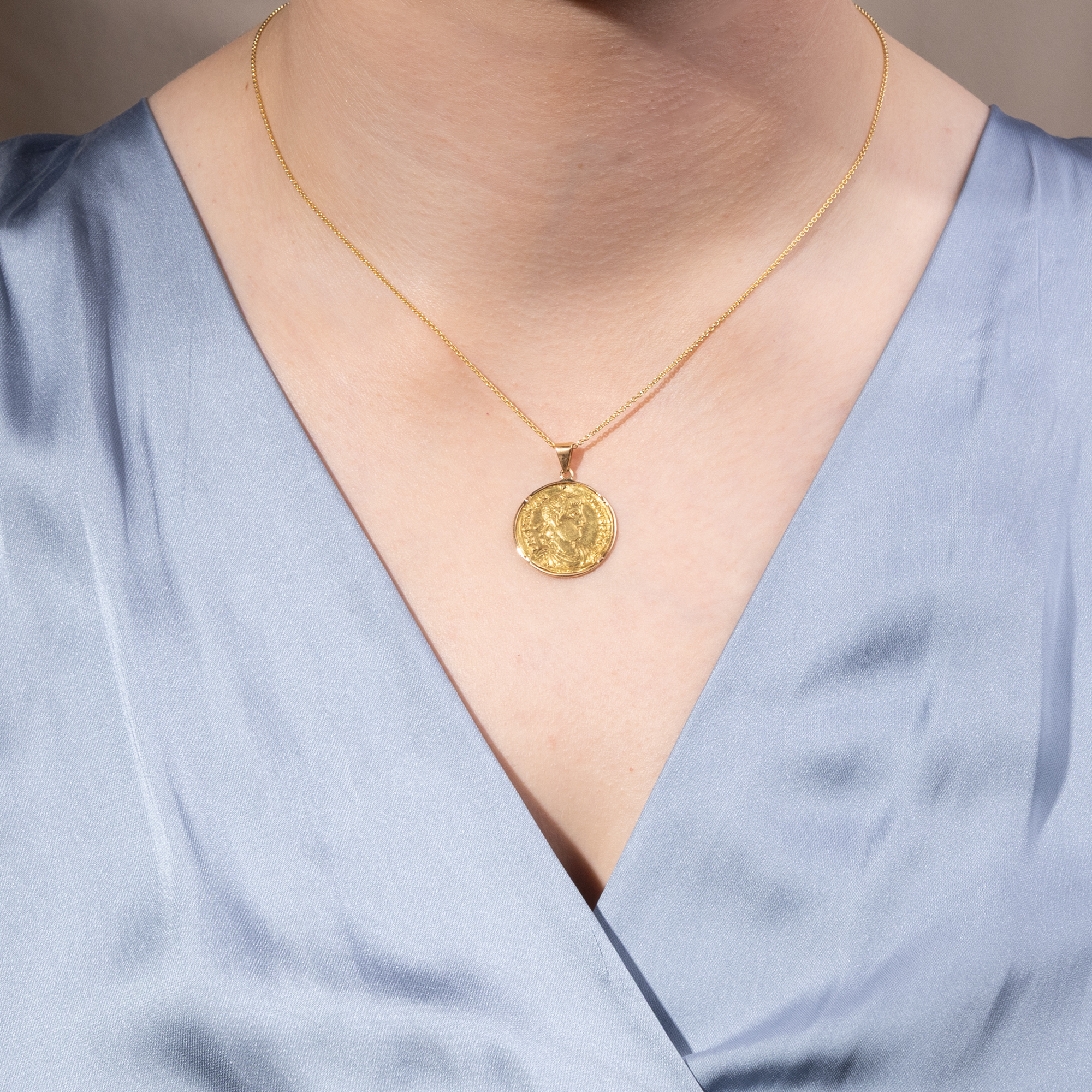
Pendant from Our Workshop Featuring an Antique Solidus of Emperor Constantine III, 407–408 AD


€ 3,980.00 *
Content 1 piece
Incl. VAT, Shipping
Pendant from Our Workshop Featuring an Antique Solidus of Emperor Constantine III, 407–408 AD
Description
This description was automatically translated from German. If you have any questions about this piece of jewellery, we will be happy to help!
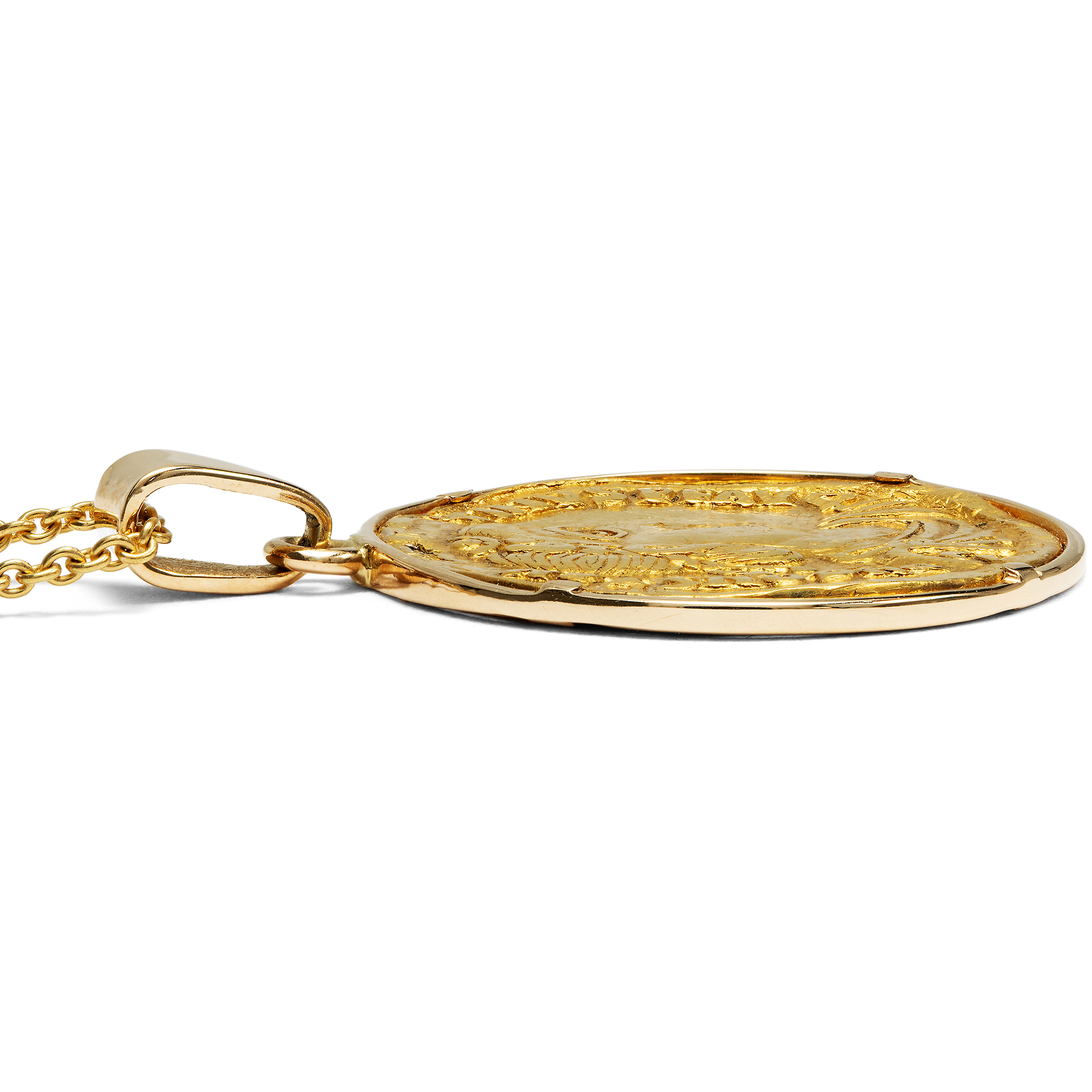
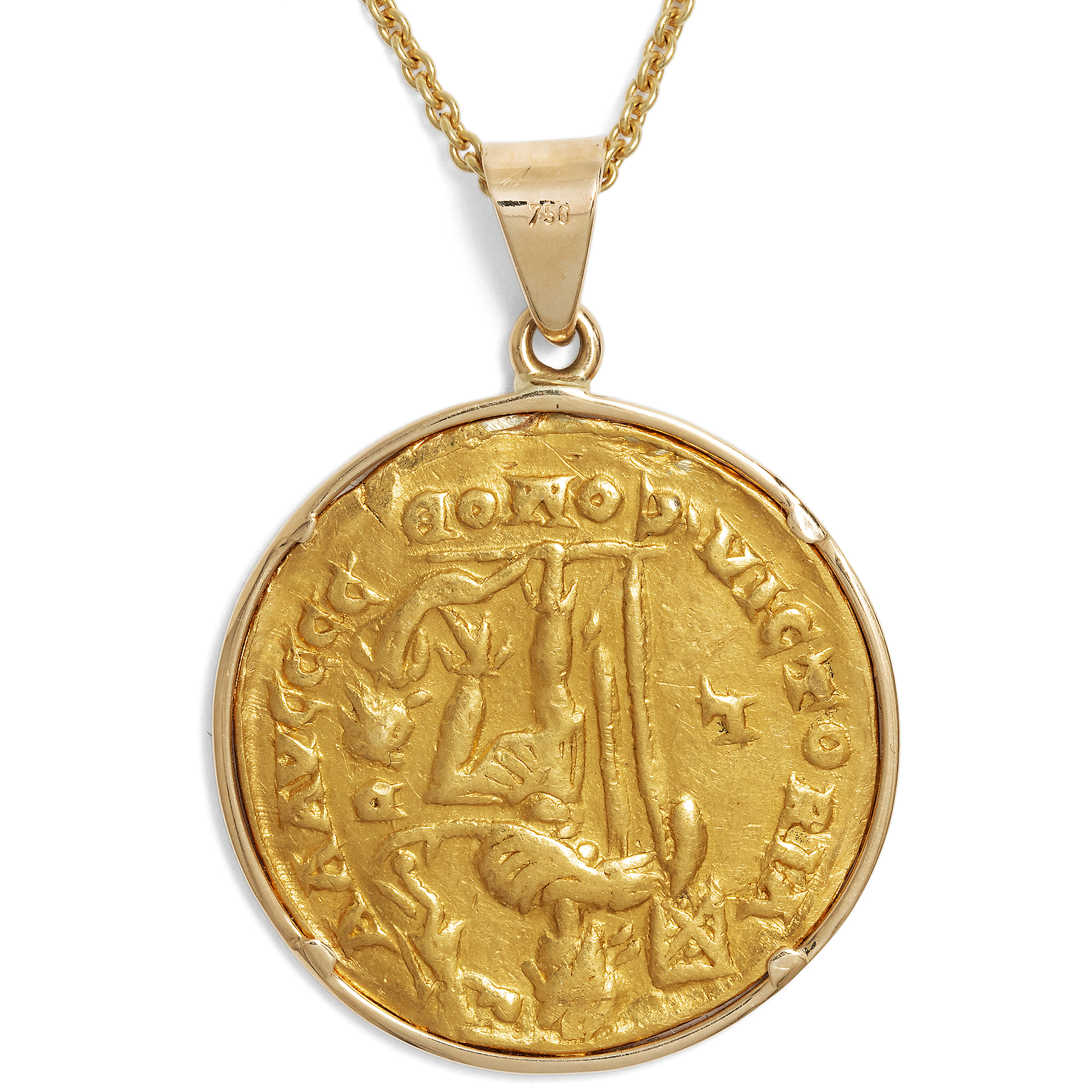
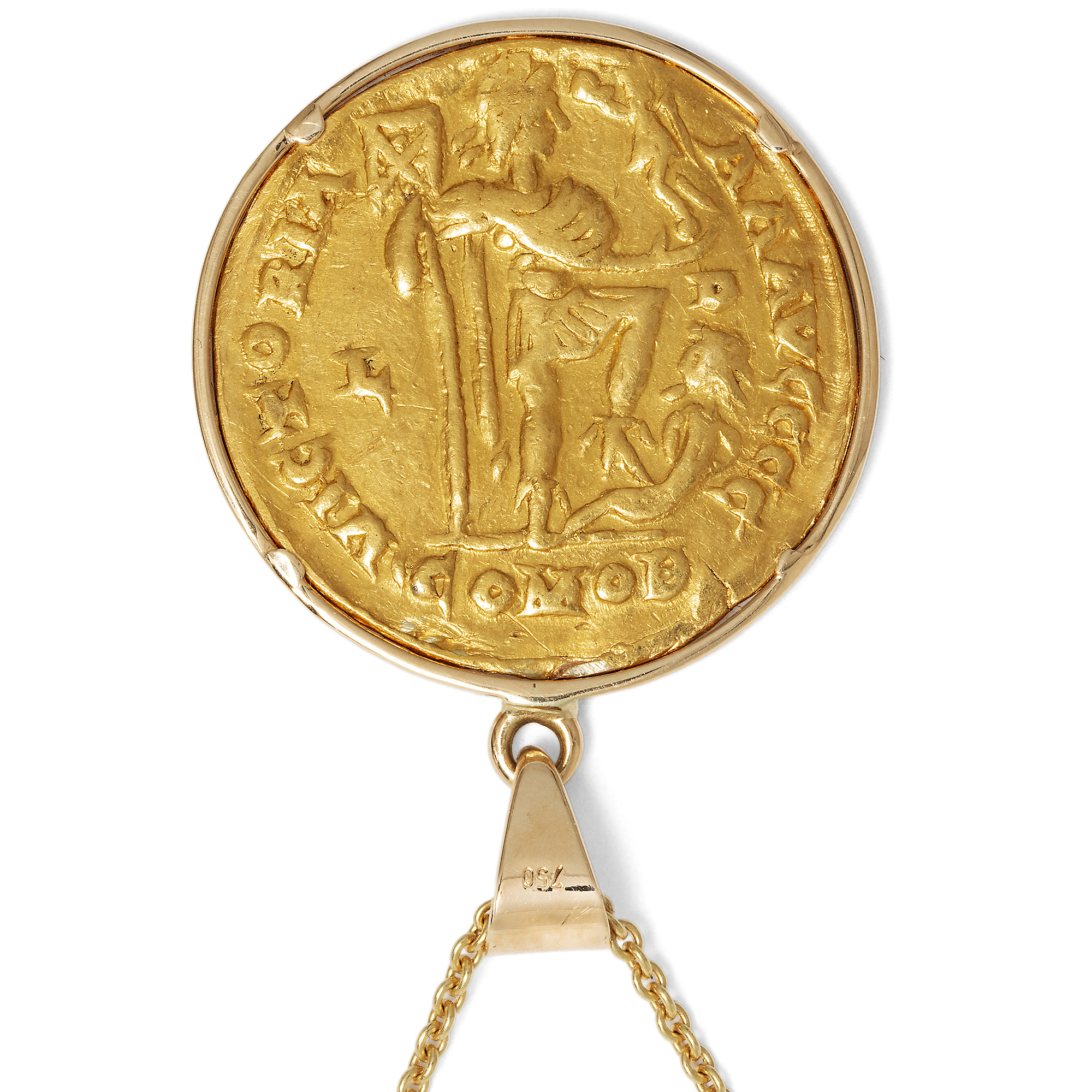
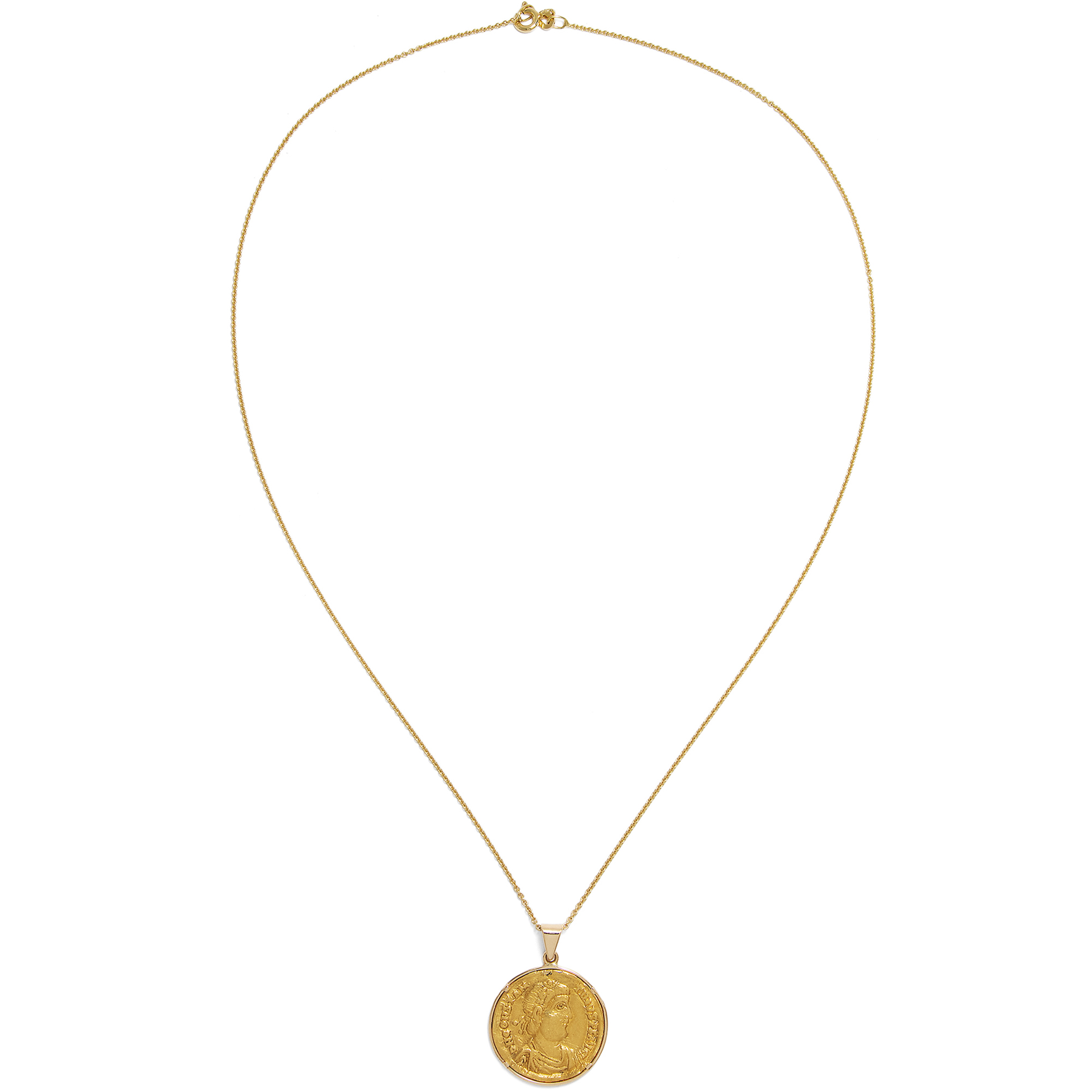
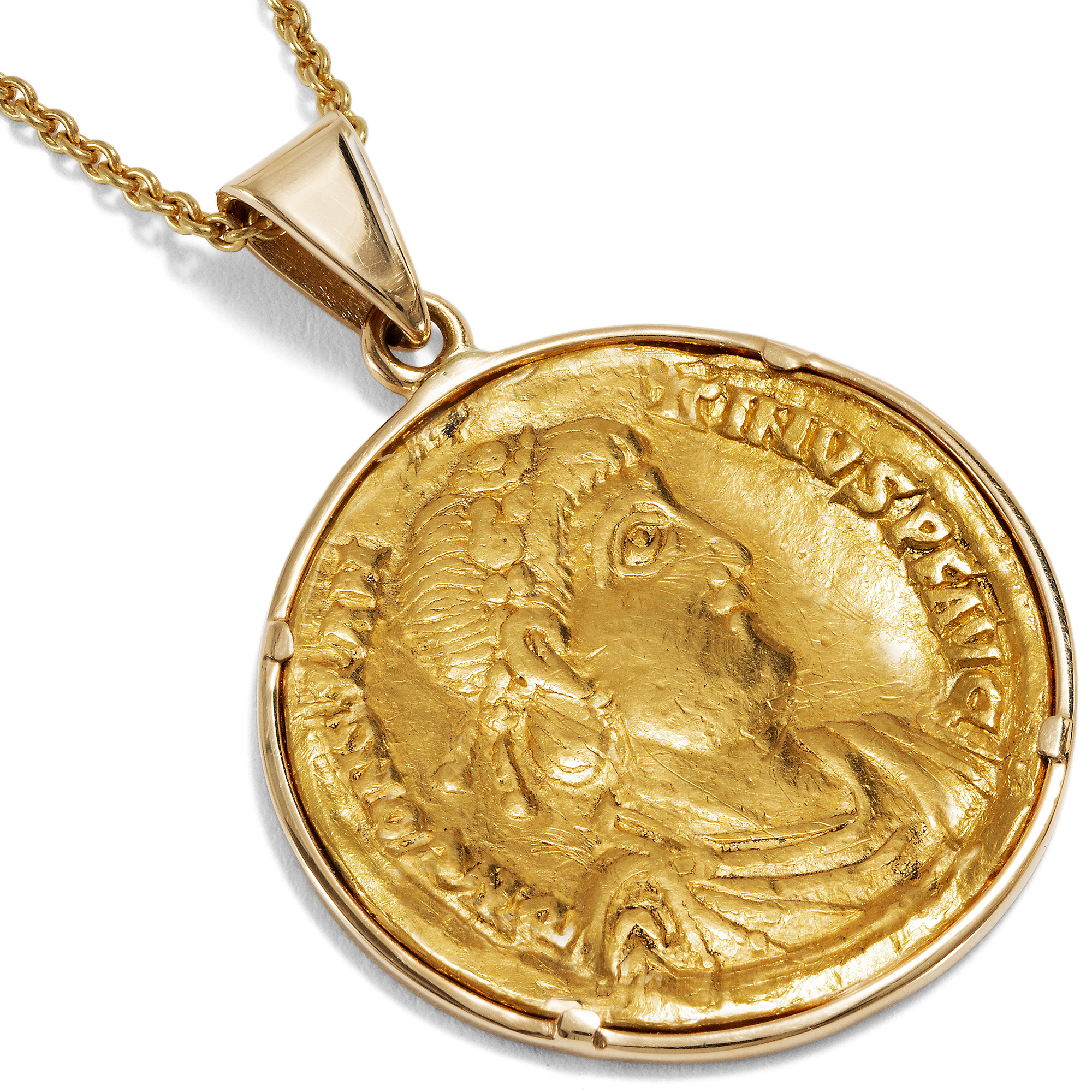
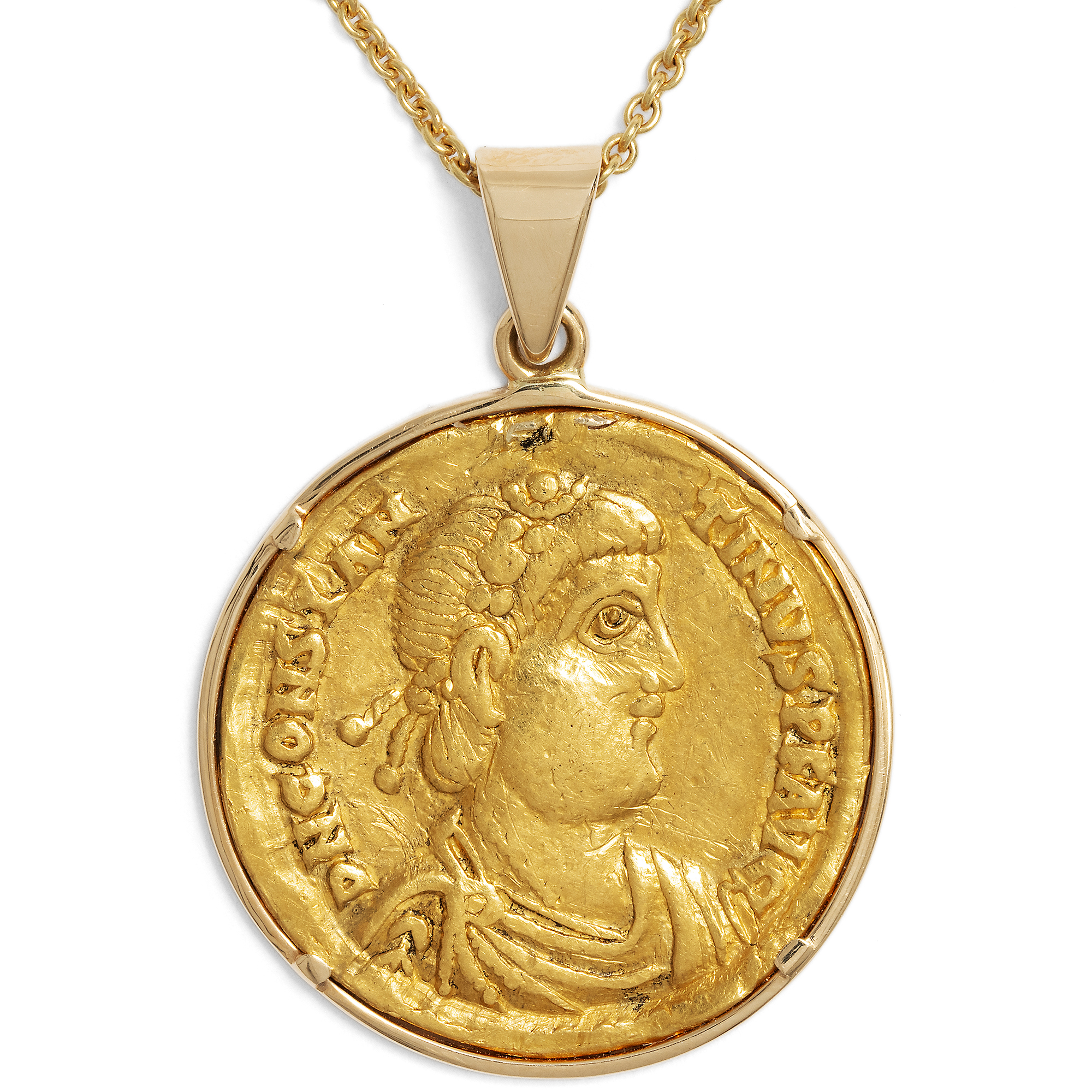
At first glance, owning a genuine antique object seems far-fetched: keeping at home items that we’re used to admiring in museums? In the case of ancient coins, this is indeed possible. The pendant shown here features such an ancient coin—a gold solidus bearing the portrait of the late Roman Emperor Constantine III. The coin was minted shortly after Constantine III came to power in 407 or 408. The obverse shows a bust of the emperor wearing a pearl diadem, facing right.The inscription reads: D N CONSTAN-TINVS P F AVG, standing for Dominus Noster Constantinus Pius Felix Augustus (Our Lord Constantine, the Pious, the Happy, and the Sublime). The reverse depicts the emperor standing to the right in military attire. His left foot rests on a bound prisoner lying on the ground. In his right hand he holds a military standard (signum), and in his left, a globe with the goddess of victory (globus niciger). The motif glorifies the emperor’s victory over his enemies and embodies his claim to rule over the Roman Empire. The inscription reads: VICTORI-A AAVGGG / L D // COMOB for Victoria Augustorum (The Victory of the Augusti). The unusual spelling with multiple “G”s refers to the recognition of several emperors reigning simultaneously. At the beginning of his reign, Constantine III recognized not only himself but also Arcadius, Honorius, and Theodosius II as Augusti on his coins. Constantine III was proclaimed emperor in 407 CE by troops stationed in Britain. In the face of severe Germanic incursions on the continent, he crossed over into Gaul and brought large parts of Gaul—and later Spain—under his control. His reign coincided with one of the most turbulent periods of late antiquity. After several military setbacks, he was defeated by Honorius’s troops in 411 AD, taken prisoner, and executed. Our solidus was minted in Lugdunum—modern-day Lyon—between 407 and 408 AD. The solidus itself had already been introduced by Emperor Constantine the Great at the beginning of the 4th century as a new Roman gold coin. With a standard weight of 1/72 of a Roman pound—about 4.5 grams of gold—it gradually replaced the older aureus and became the most important gold coin of late antiquity. Its exceptional stability in value made it the standard denomination in the Mediterranean region for centuries. In the Byzantine Empire, the solidus remained in use even into the 11th century and served as a model for many medieval gold currencies. Our solidus of Constantine III is one of the rare gold coins minted by a short-lived usurper. Due to his reign lasting only four years and the limited number of coins issued, this ruler’s gold coins are now among the most sought-after rarities in late antique numismatics. We have set this coin, with its beautiful design and excellent condition, in a simple setting that holds it securely without causing any damage. A modern gold chain allows you to wear it around your neck immediately.
Learn more
If the accounts of the Roman historian Suetonius (70–140 CE) are to be believed, Emperor Augustus was one of the first to collect “ancient royal and foreign coins” more than 2,000 years ago. The first attempts to study coins scientifically date back to the 14th and 15th centuries. Notable figures from this period include the poet Petrarch and Bishop Stefan Mathias of Neidenburg, each of whom possessed an extensive collection of historical coins or, as they were called at the time, “coins from all countries.” In Germany, the rising princes were among the first significant coin collectors. Thus, major numismatic collections such as the State Coin Collection in Munich, the Numismatic Collection of the Dresden Art Collections, the Numismatic Collection of the Württemberg State Museum, and the Berlin Numismatic Collection trace their origins to such princely collections. In Austria, a coin collection was already part of the Habsburg emperors’ Kunstkammer as early as the 16th century; Rudolf II, in particular, acquired a large number of coins. Thus, coin collecting has always been a pastime of the world’s monarchs.
Learn more
Read more
Size & Details
Pendant from Our Workshop Featuring an Antique Solidus of Emperor Constantine III, 407–408 AD
Pecunia Non Olet!
€ 3,980.00 *
Content 1 piece
Incl. VAT, Shipping
Our Promise
Our Promise
Our Promise

We want you to be 100% satisfied! For that reason, we examine, describe and photograph all of our jewellery with the utmost care.

You can rely on our years of experience in the trade and our expertise as a professional art historians for reviews of the antique jewellery. As a member of various trade organisations and the British Society of Jewellery Historians, we remain committed to the highest possible degree of accuracy. In our descriptions, we always also indicate any signs of age and defects and never hide them in our photos – this saves you from any unpleasant surprises when your package arrives.

Should you for some reason not be satisfied, please don’t hesitate to contact us so that we can find a solution together. In any case, you can return any article within one month and we will refund the full purchase price.

Learn more